
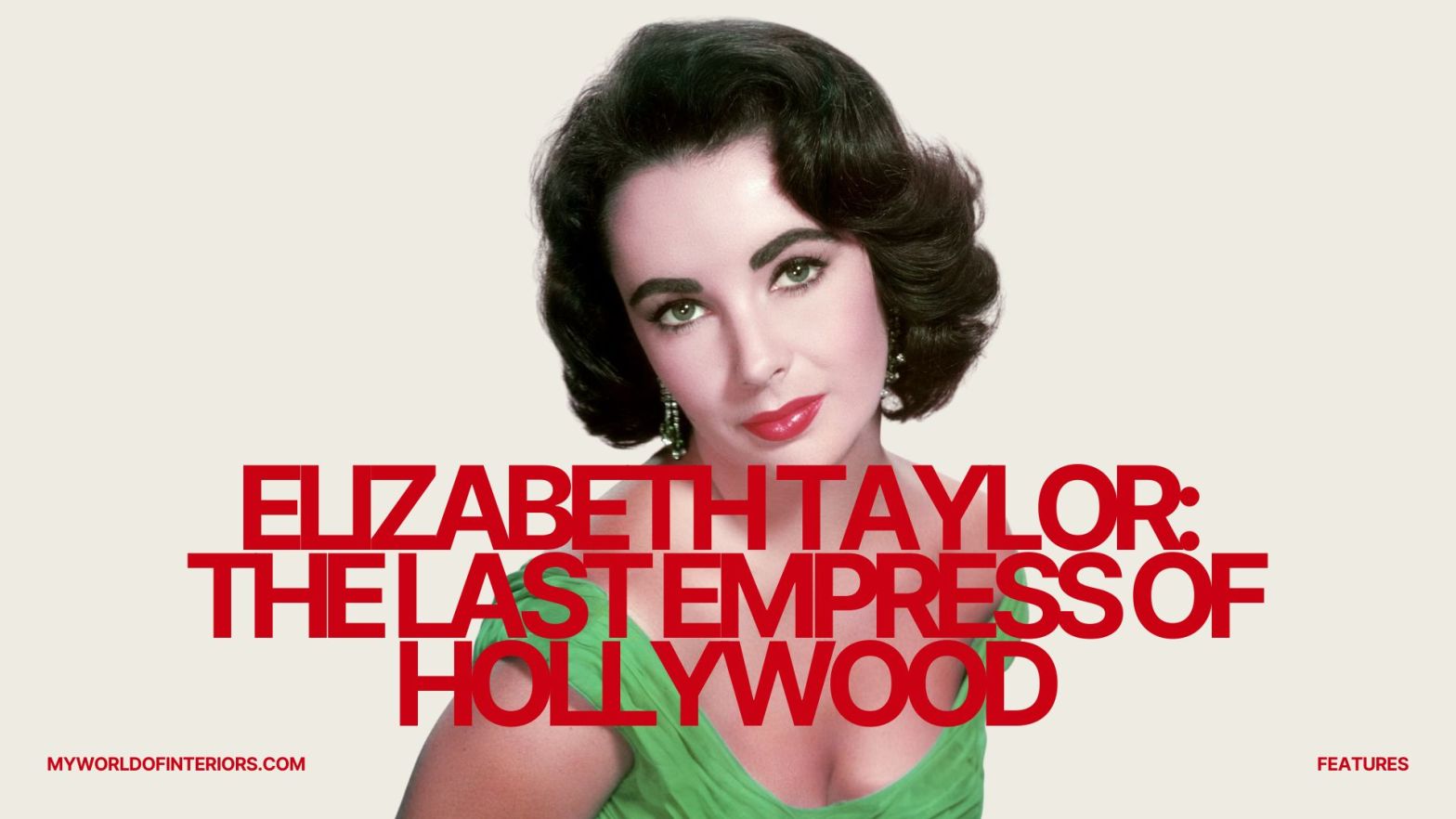
There are stars, and then there is Elizabeth Taylor. For over half a century, she was more than an actress: she was a phenomenon. With violet eyes ringed in dark lashes, a face sculpted like a cameo, and a voice both velvet and steel, Taylor embodied the glamour of Hollywood’s golden age and the tumult of modern celebrity. She was, by turns, ingénue, siren, diva, businesswoman, activist — and always herself.
Elizabeth Taylor did not simply act in films; she inhabited them, and often transcended them. Her life was a cinema in itself: marriages and scandals, triumphs and tragedies, jewels and causes, each act played out before the world. Few artists have blurred the line between persona and performance as completely. And yet, beneath the diamonds and headlines, she was a working actress of rare instinct, whose best roles rival the greats of 20th-century cinema.
From Child Star to Screen Siren
Born in London in 1932 to American parents, Taylor was raised in Los Angeles when her family relocated during World War II. By the age of ten, she was cast in National Velvet (1944), a role that catapulted her to instant stardom. Hollywood, ever in search of fresh faces, found in her a child star whose poise and beauty belied her years. Unlike so many who faded in adolescence, Taylor evolved, shedding the innocence of her early roles to become a sultry young actress in the 1950s.
By her early twenties, she was starring in A Place in the Sun (1951) opposite Montgomery Clift — a performance that revealed a depth and sensuality Hollywood had rarely seen in one so young. The chemistry between Clift and Taylor was electric, both on and off screen, setting the tone for a decade of roles in which Taylor emerged as one of cinema’s most magnetic presences.
Triumphs and Turmoil on Screen
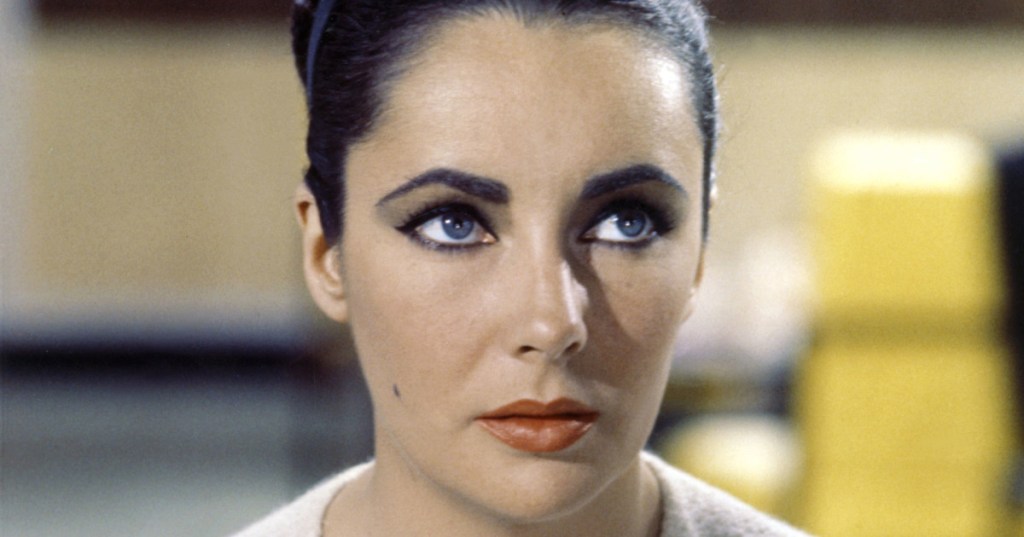
The 1950s and 1960s were Taylor’s imperial era. She received five consecutive Academy Award nominations, winning twice: for BUtterfield 8 (1960), in which she played a troubled call girl, and for Who’s Afraid of Virginia Woolf? (1966), where she transformed herself into Martha, the bitter, unraveling wife in Edward Albee’s corrosive drama. The latter performance remains one of the most fearless in film history — stripped of glamour, filled with venom and vulnerability, it confirmed Taylor as an actress of extraordinary power.
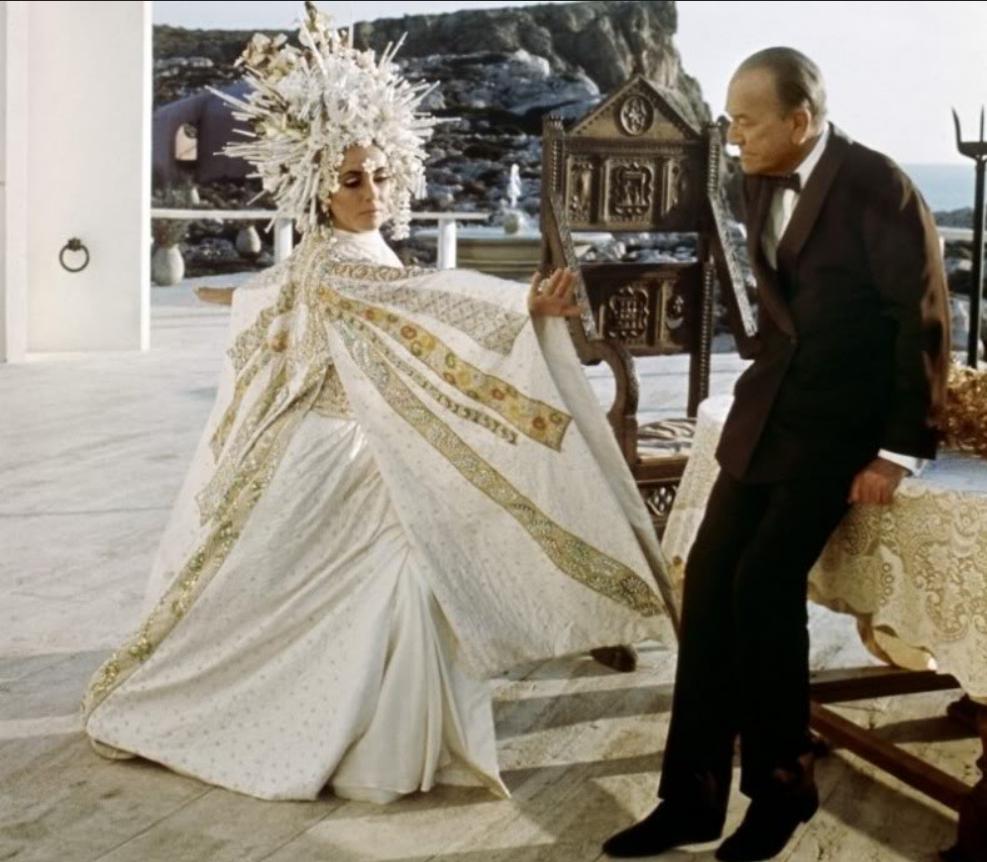
Yet it was Cleopatra (1963) that made her a global icon. The production was one of the most extravagant in Hollywood history — infamous for its cost overruns, delays, and scandals. But it was also the stage for Taylor’s great love affair with Richard Burton. Their chemistry ignited a frenzy, making them the most famous couple in the world. They married, divorced, remarried, and remained bound together in the public imagination. Their volatile romance, played out across tabloids and on screen in films like The Taming of the Shrew (1967), became as iconic as their performances.
Jewels, Marriages, Myths
Elizabeth Taylor’s personal life was inseparable from her legend. Married eight times to seven men, she was unapologetic about her search for love, declaring that she was “very moral about being married.” Her romances were tempestuous, her loyalty fierce. Alongside this was her famed love of jewels: the 33-carat Krupp Diamond, the 69-carat Taylor-Burton diamond, La Peregrina Pearl. For Taylor, jewels were not mere adornments but emblems of passion, drama, and permanence in a life of upheaval.
If her marriages and diamonds made headlines, they also underscored her unique place in culture: she lived publicly, larger than life, in a way few stars before or since have dared.
Reinvention and Activism
By the 1980s, as her film roles receded, Taylor reinvented herself. She became one of the first major celebrities to harness fame for activism, championing the fight against HIV/AIDS at a time when much of Hollywood remained silent. She co-founded the American Foundation for AIDS Research (amfAR) and later the Elizabeth Taylor AIDS Foundation, raising hundreds of millions of dollars and changing the public conversation around the disease.
Her courage was not only financial but moral: she visited patients, spoke publicly against stigma, and used her name as a shield. In doing so, Taylor pioneered the now-familiar model of celebrity activism — but hers was rooted in genuine passion and persistence.
The Enduring Icon
Elizabeth Taylor passed away in 2011, but her presence lingers everywhere: in the enduring brilliance of her films, in the philanthropic work that bears her name, and in the mythology of Old Hollywood glamour she represents. She was the last of the great studio stars, bridging the innocence of the 1940s, the sensuality of the 1950s, the excess of the 1960s, and the reinvention of the decades that followed.
Her image — violet eyes lined in kohl, diamonds glinting at her ears, laughter on her lips — remains eternal. But perhaps her greatest legacy lies in her contradictions: child star and scandalous adult, actress and activist, diva and humanitarian. She was all of them, unapologetically.
Elizabeth Taylor’s Legacy
To watch her today is to witness not only a performer but an era of cinema and celebrity that no longer exists. Taylor belonged to a Hollywood that made gods and goddesses of its stars — but she transcended even that system, shaping her own narrative.
She remains, quite simply, the last empress of Hollywood: fierce, flawed, dazzling, human. And like all empires, her legend endures beyond her reign.
Discover more from My World of Interiors
Subscribe to get the latest posts sent to your email.

