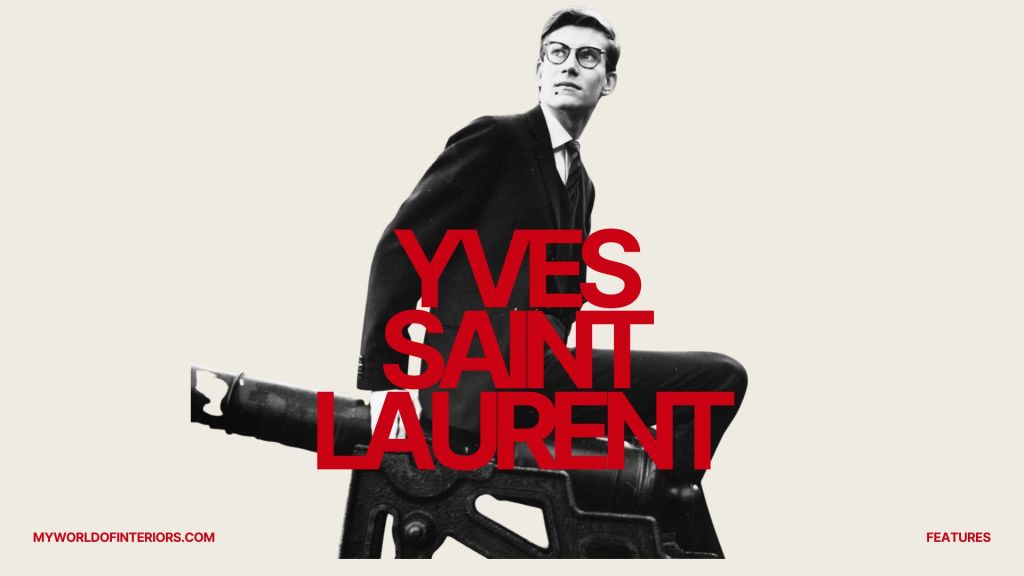
Few designers embody the idea of fashion as both art and revolution as completely as Yves Saint Laurent. For nearly half a century, he not only dressed women but reshaped the language of femininity, sexuality, and power. His designs were not merely clothes; they were statements — about liberation, about modernity, about the capacity of couture to mirror and shape its time.
Yves Saint Laurent was, as his mentor Christian Dior once said, destined for greatness. But even Dior could not have imagined that the shy boy from Oran would become the architect of twentieth-century fashion, a man whose name now stands alongside Chanel and Balenciaga as synonymous with elegance, innovation, and enduring style.
Early Life: A Precocious Talent
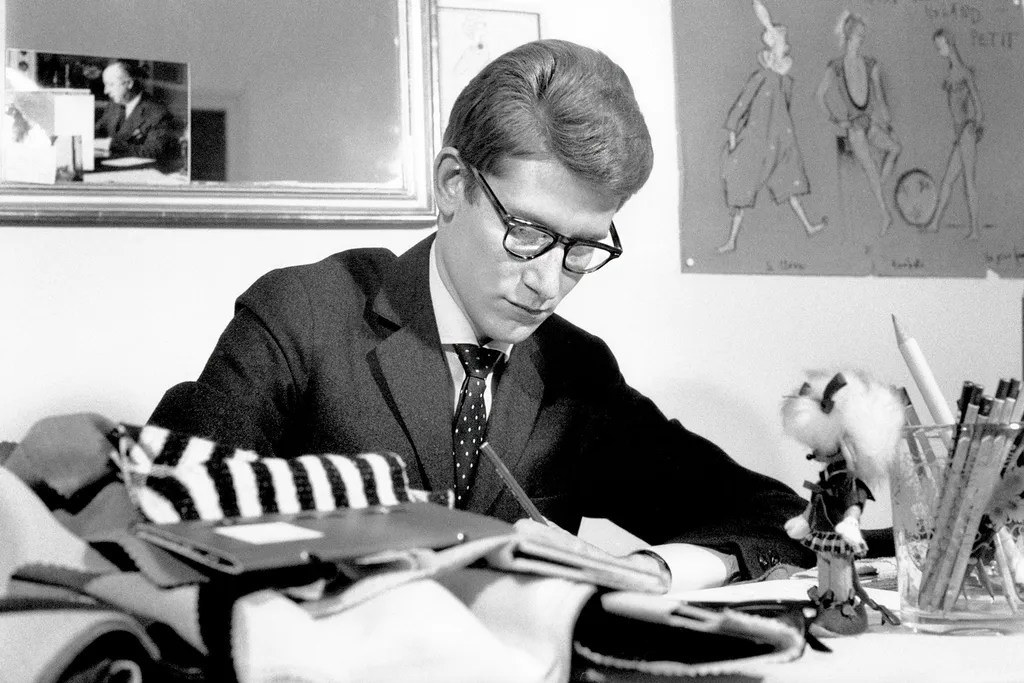
Born in 1936 in Oran, Algeria, then a French colony, Yves Saint Laurent grew up in a world marked by both privilege and displacement. A sensitive child, bullied for his delicate demeanor, he found refuge in sketching dresses and designing theatrical costumes. His imagination quickly exceeded the provincial world around him, and by his late teens he was in Paris, studying at the Chambre Syndicale de la Couture and winning design competitions that brought him to the attention of Christian Dior.
At just 21, following Dior’s sudden death in 1957, Saint Laurent was named head of the House of Dior. The responsibility was staggering. His debut collection — the Trapeze line — softened Dior’s rigid New Look silhouettes, signaling both continuity and a fresh, youthful eye. Overnight, he became the savior of a fashion house and the darling of Paris.
Reinventing Fashion
Saint Laurent’s career can be read as a series of revolutions.
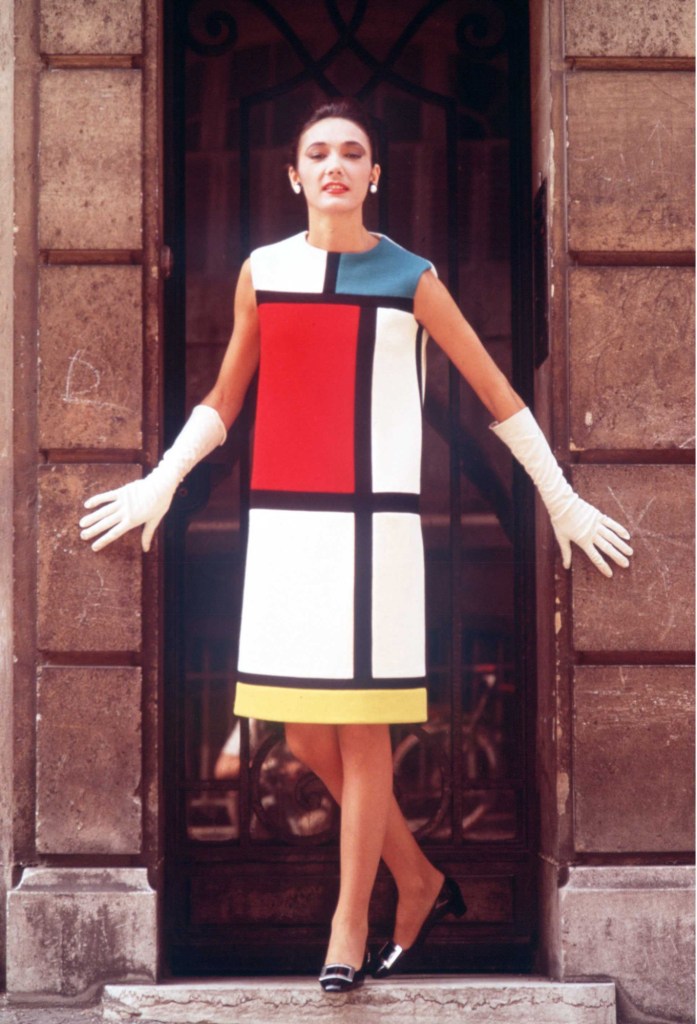
- The Mondrian Dress (1965): Inspired by Piet Mondrian’s paintings, Saint Laurent translated modern art into couture. With its flat planes of color and geometric composition, it collapsed the boundaries between canvas and cloth.
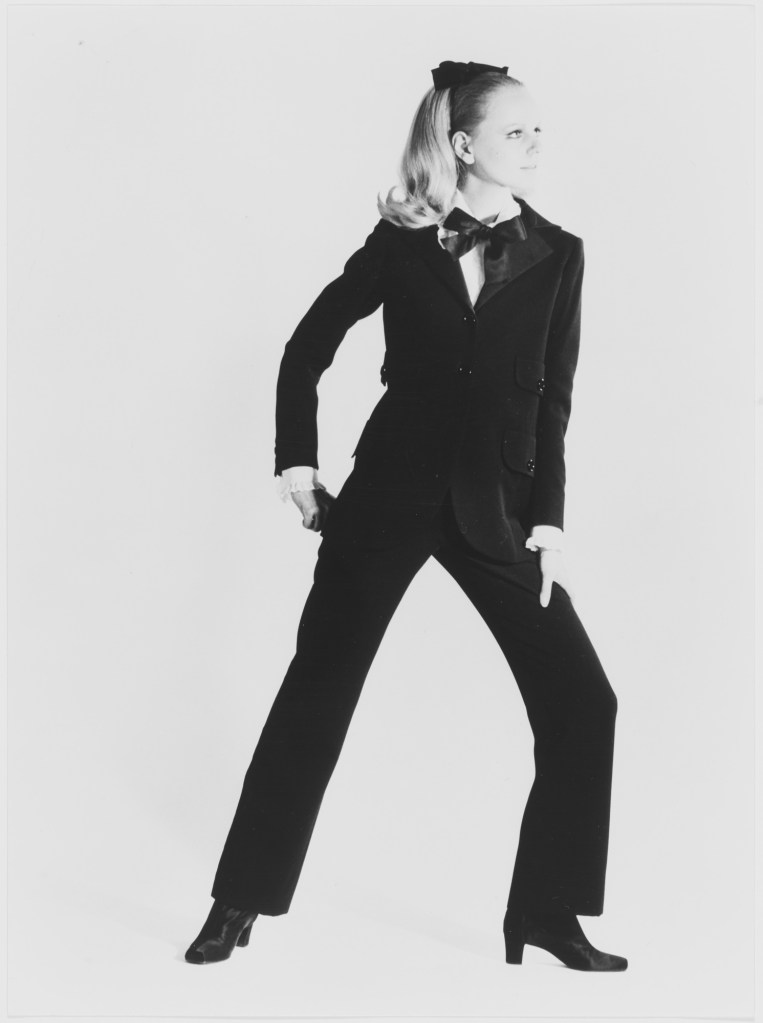
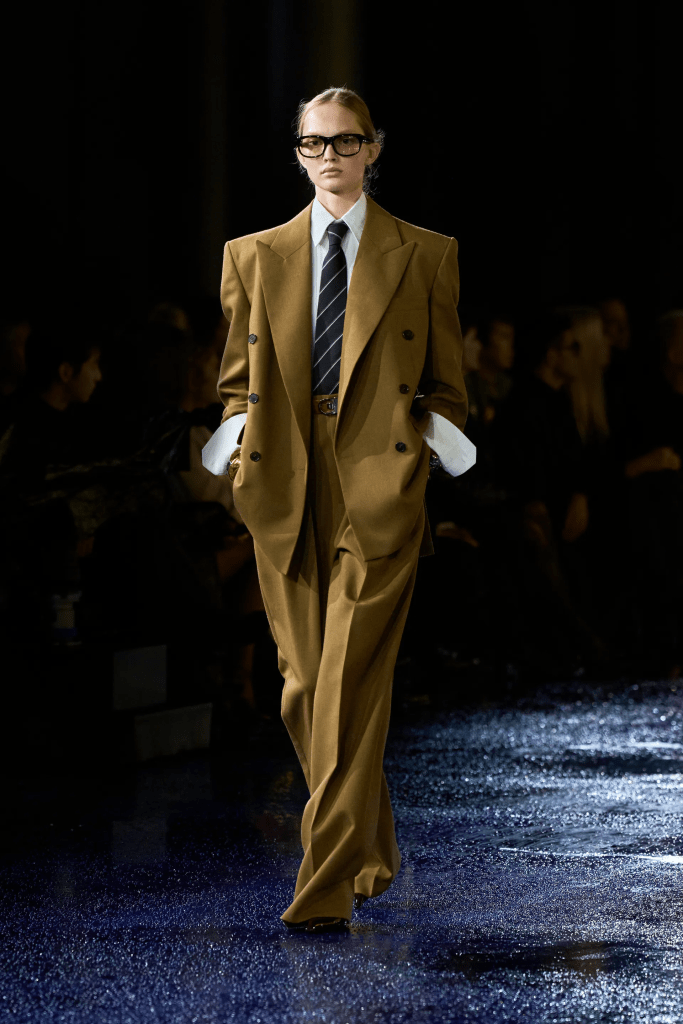
- Le Smoking (1966): Perhaps his most radical gesture. By adapting the tuxedo for women, he redefined gendered dress codes. The tailored suit, once reserved for men, became a symbol of female power and sensuality. “Chanel freed women,” it was said, “but Saint Laurent empowered them.”
- Ready-to-Wear: With the opening of his Rive Gauche boutique in 1966, Saint Laurent pioneered the democratization of couture. High fashion was no longer confined to salons; it entered the streets, accessible to a younger, wider clientele.
- Cross-Cultural Inspiration: From Russian peasants to African tribal art, from Marrakech caftans to Chinese jackets, Saint Laurent drew inspiration globally. His collections reflected not appropriation in the casual sense, but a genuine fascination with world cultures — though today, they also raise questions about the dynamics of East-West cultural borrowing.
- Muse and Myth: Saint Laurent’s muses — from Betty Catroux to Loulou de la Falaise, from Catherine Deneuve to Bianca Jagger — became embodiments of his aesthetic. Through them, his designs lived as personalities, not just garments.
The Man Behind the Myth
Saint Laurent himself was a paradox: shy, fragile, and introverted, yet capable of explosive creativity. He struggled with depression, addictions, and the pressures of fame. His lifelong partnership with Pierre Bergé provided both stability and business acumen; together they built the YSL empire.
He was also a man of contradictions: obsessed with elegance but drawn to counterculture, a perfectionist who courted chaos. In his ateliers, he could be exacting to the point of cruelty, but in his designs he offered women freedom. He famously said, “Chanel gave women freedom. I gave them power.”
Legacy: From Couture to Culture
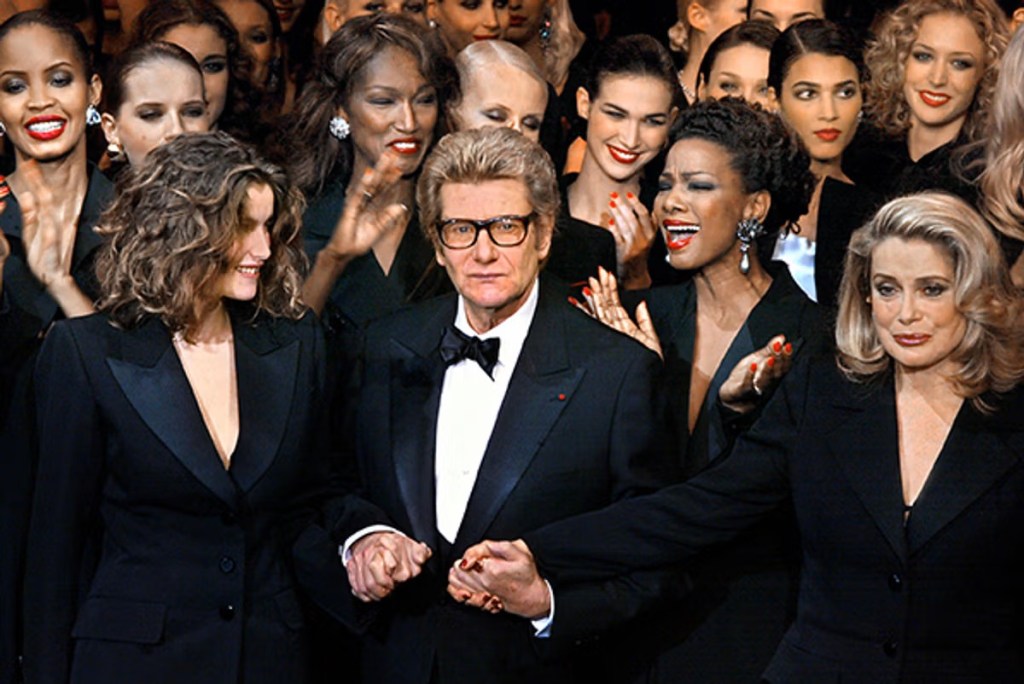
When Yves Saint Laurent retired in 2002, he did so as a legend. His final haute couture show at the Centre Pompidou was a retrospective of four decades, a reminder that he had not merely followed trends — he had authored them. He died in 2008, mourned not only by the fashion world but by global culture.
His legacy endures on multiple fronts:
- Design Vocabulary: Safari jackets, trench coats, jumpsuits, tuxedos, and transparent blouses — staples of modern wardrobes — all bear his signature.
- Fashion as Art: By incorporating painting, sculpture, and global traditions, Saint Laurent elevated fashion into dialogue with the avant-garde.
- Museums and Memory: The Musée Yves Saint Laurent in Paris and Marrakech preserve not only his collections but his studio, a secular shrine to a life devoted to beauty.
- Gender and Power: His tailoring for women anticipated today’s conversations on fluidity and empowerment. In YSL, women found clothing that could express both strength and sensuality, autonomy and allure.
Yves Saint Laurent Today
In today’s fashion landscape, dominated by rapid cycles and global branding, Saint Laurent’s legacy feels both foundational and urgent. Hedi Slimane, Anthony Vaccarello, and other creative directors at the house have all grappled with his myth, updating his vocabulary for a new century. Yet the essence remains: elegance sharpened by rebellion, glamour touched by modernity.
More profoundly, Saint Laurent’s work reminds us that fashion is never trivial. Clothes can embody politics, gender, art, and identity. A suit is never just a suit; a dress is never just a dress. For Saint Laurent, fashion was a way of shaping the modern self.
The Couturier Eternal
Yves Saint Laurent’s initials, YSL, remain etched not only on perfume bottles and handbags but in cultural memory. He was the designer who dared to translate painting into dresses, who made the tuxedo a weapon of seduction, who blurred the line between couture and streetwear, between gendered codes and liberated bodies.
In his quiet, troubled way, he did what only the greatest artists do: he changed how we see ourselves. And in that sense, Yves Saint Laurent will never go out of fashion.

Leave a Reply