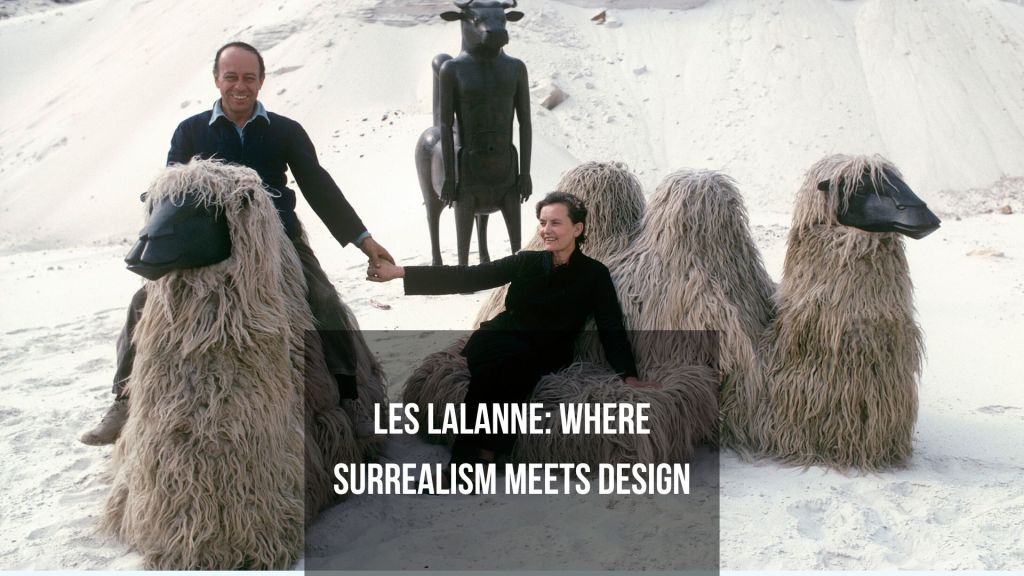
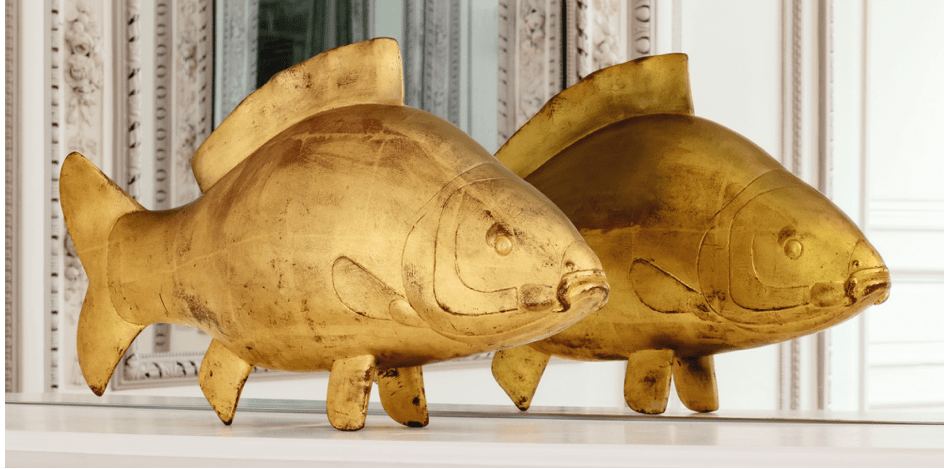
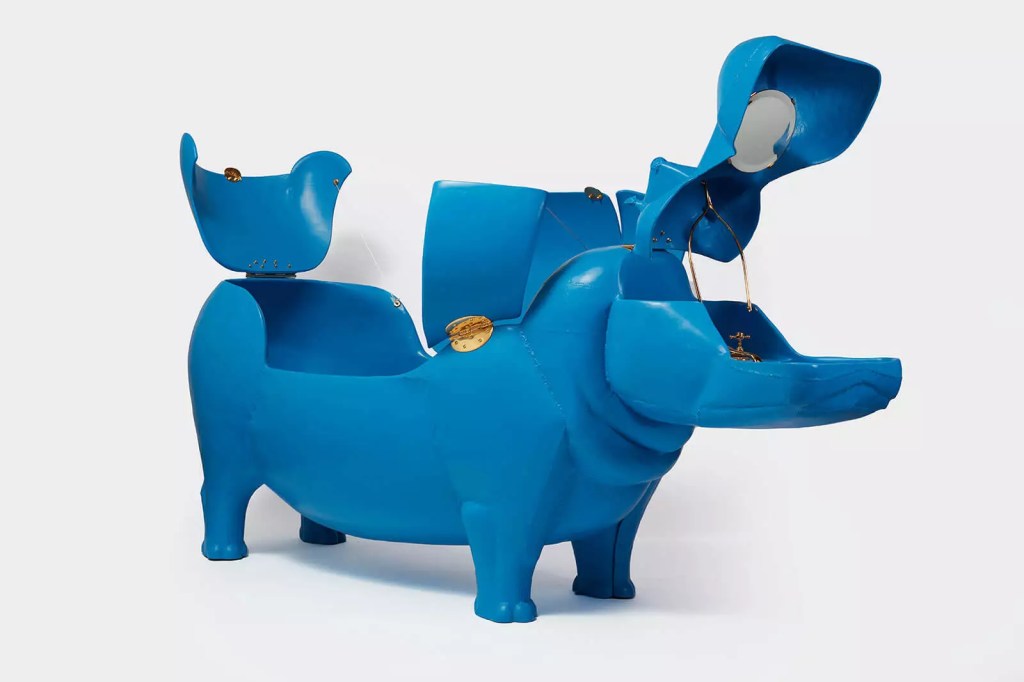
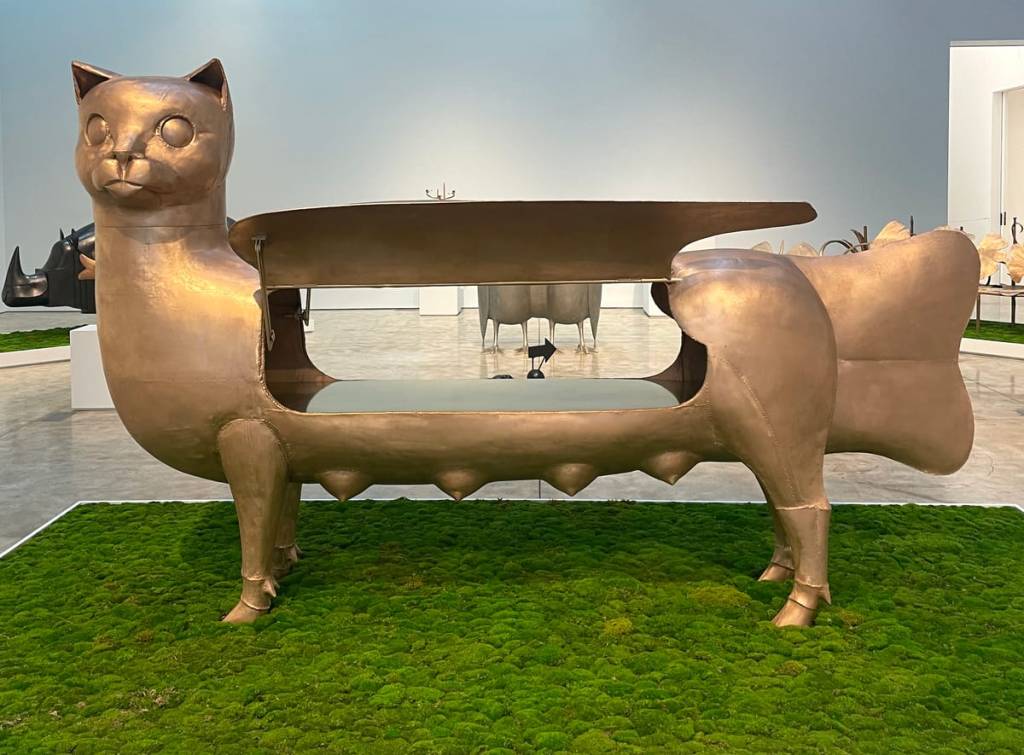
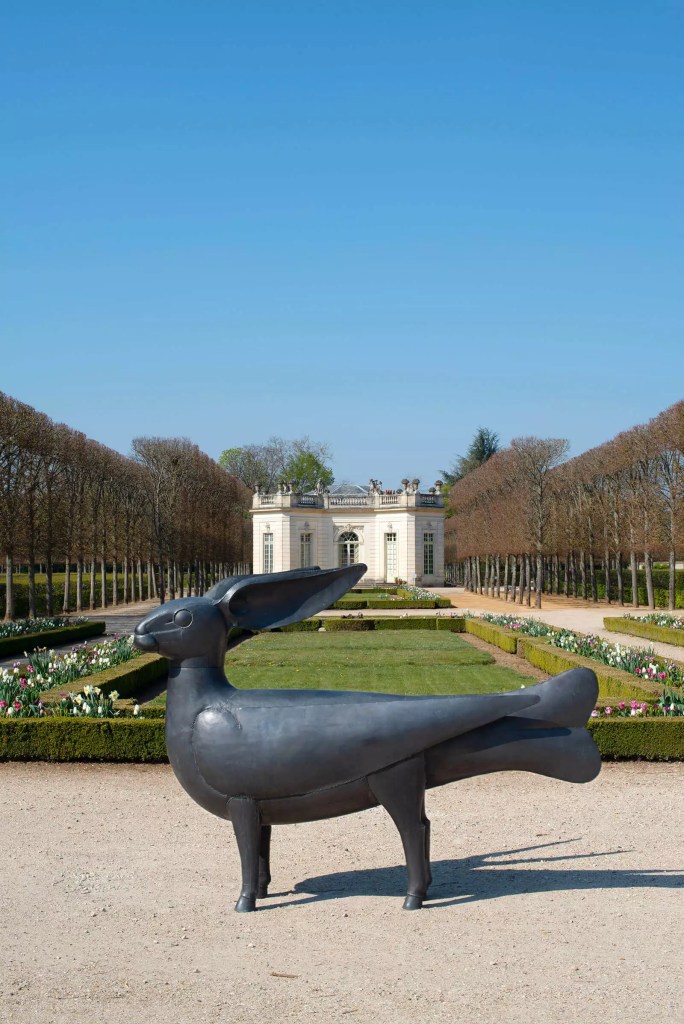
In the half-century arc of 20th-century design, few names shimmer with such eccentric magnetism as Les Lalanne. François-Xavier (1927–2008) and Claude (1924–2019) Lalanne were not just artists, not just designers—they were dreamers who translated the surreal into functional form. Their creations—sheep that double as stools, a cabbage sprouting chicken legs, gilded apples, and fantastical brass crocodiles—recast the language of furniture and sculpture as a world of wit, wonder, and desire.
Where most postwar designers wrestled with modernist austerity, the Lalannes offered enchantment. Their work was playful yet rigorous, childlike yet luxurious. To live with a Lalanne piece was to inhabit a universe where surrealism never ended, only acquired patina.
An Artistic Partnership
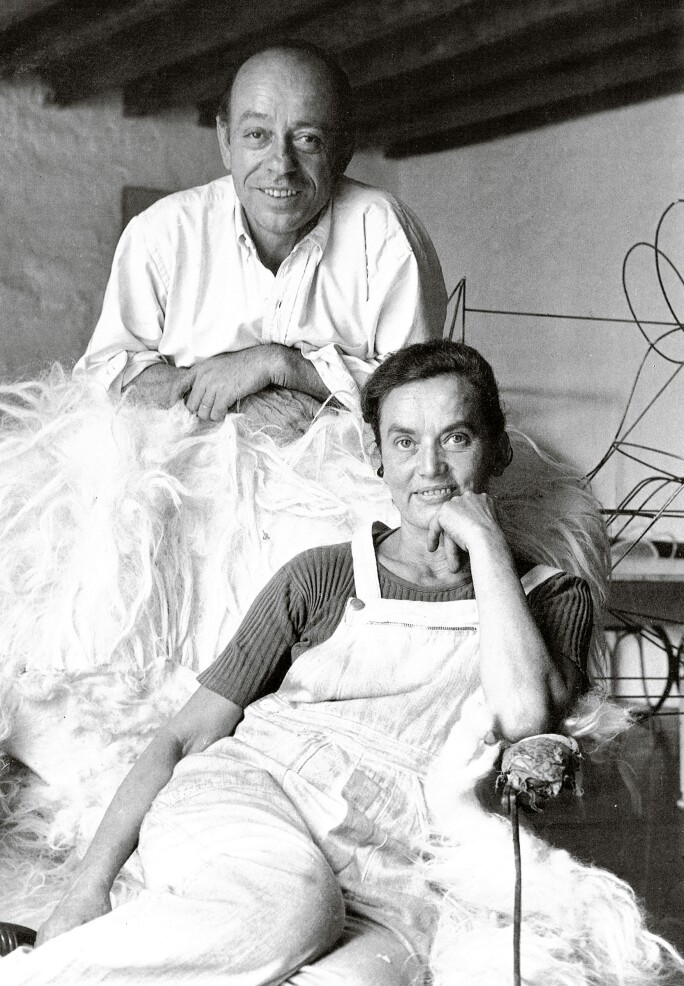
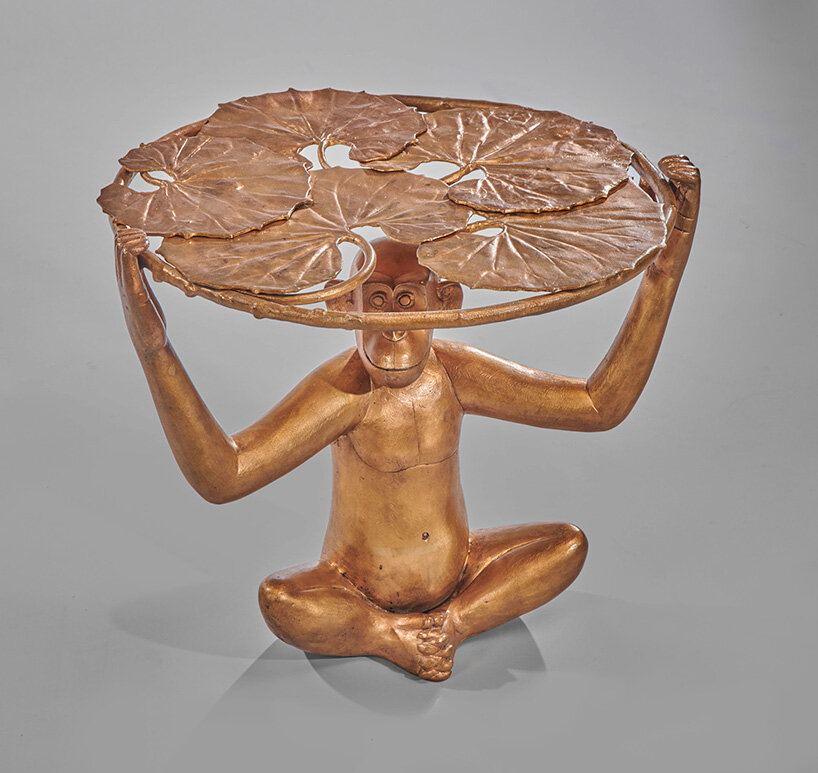
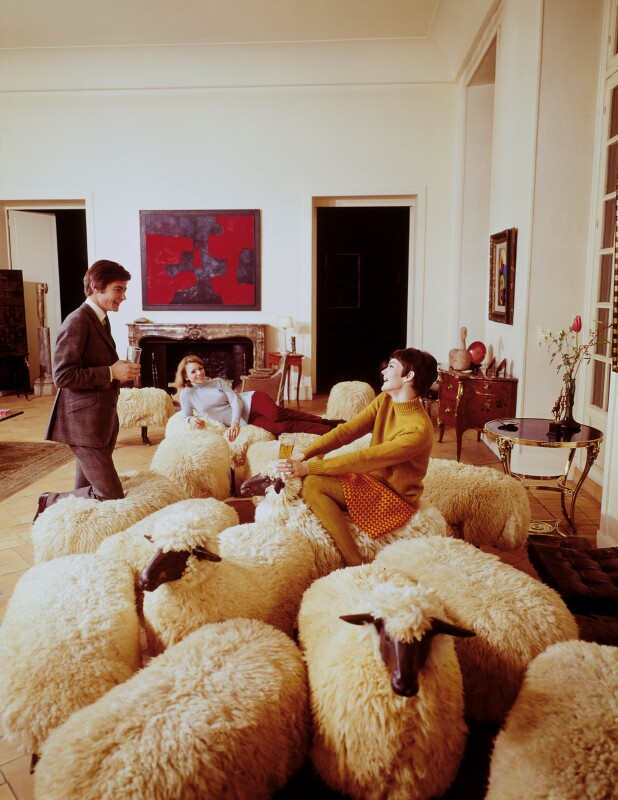
François-Xavier and Claude met in the heady ferment of postwar Paris, where art, fashion, and philosophy mingled freely. François-Xavier, trained as a painter, was drawn to animal forms—rhinoceroses, sheep, monkeys—that he rendered with monumental simplicity. Claude, by contrast, came from the world of metals and engraving, and brought a delicacy of texture to flora, insects, and organic motifs. Together, they became a complementary force: he monumental, she intricate; he humorous, she poetic.
They were, crucially, collaborators as much as spouses. Signing their work collectively as Les Lalanne, they blurred individual authorship, creating a unified world of hybrids, both natural and fantastical.
The World of the Improbable
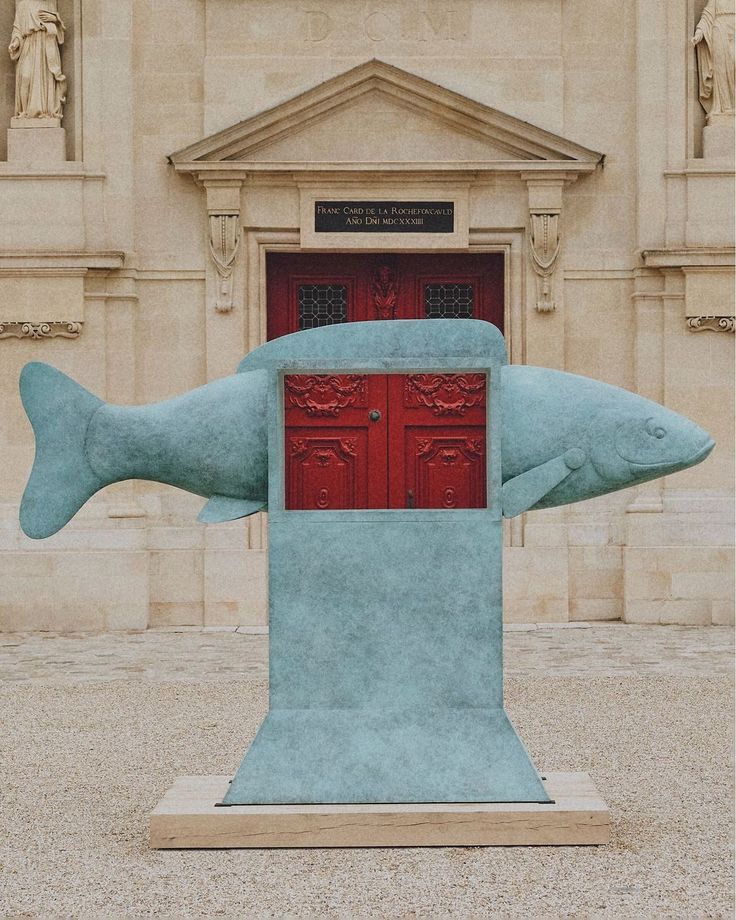
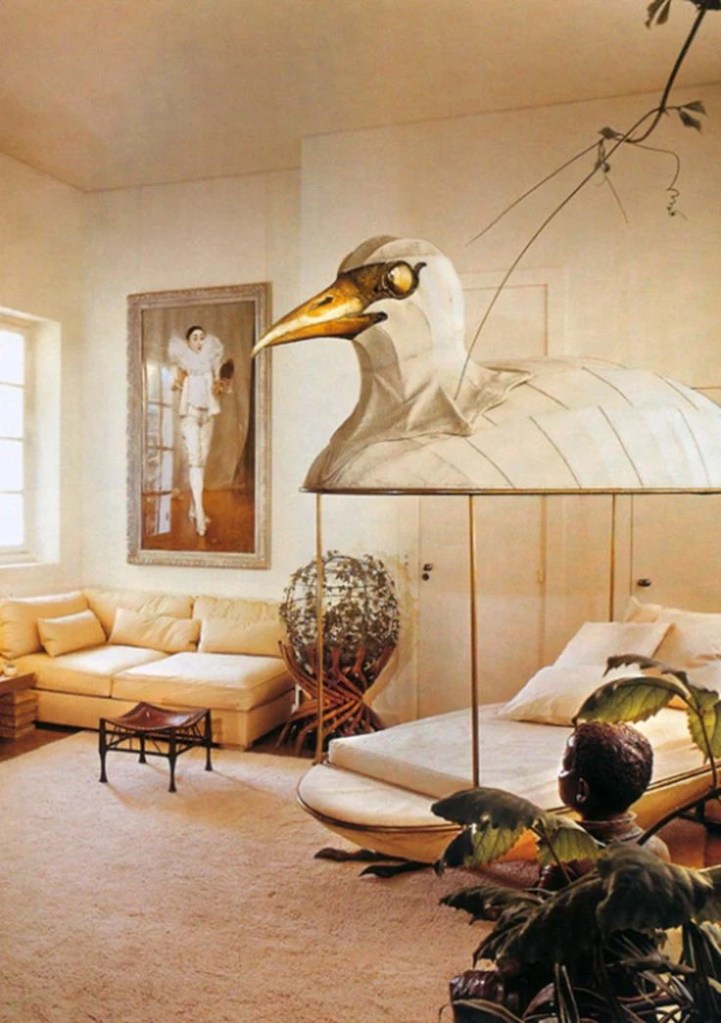
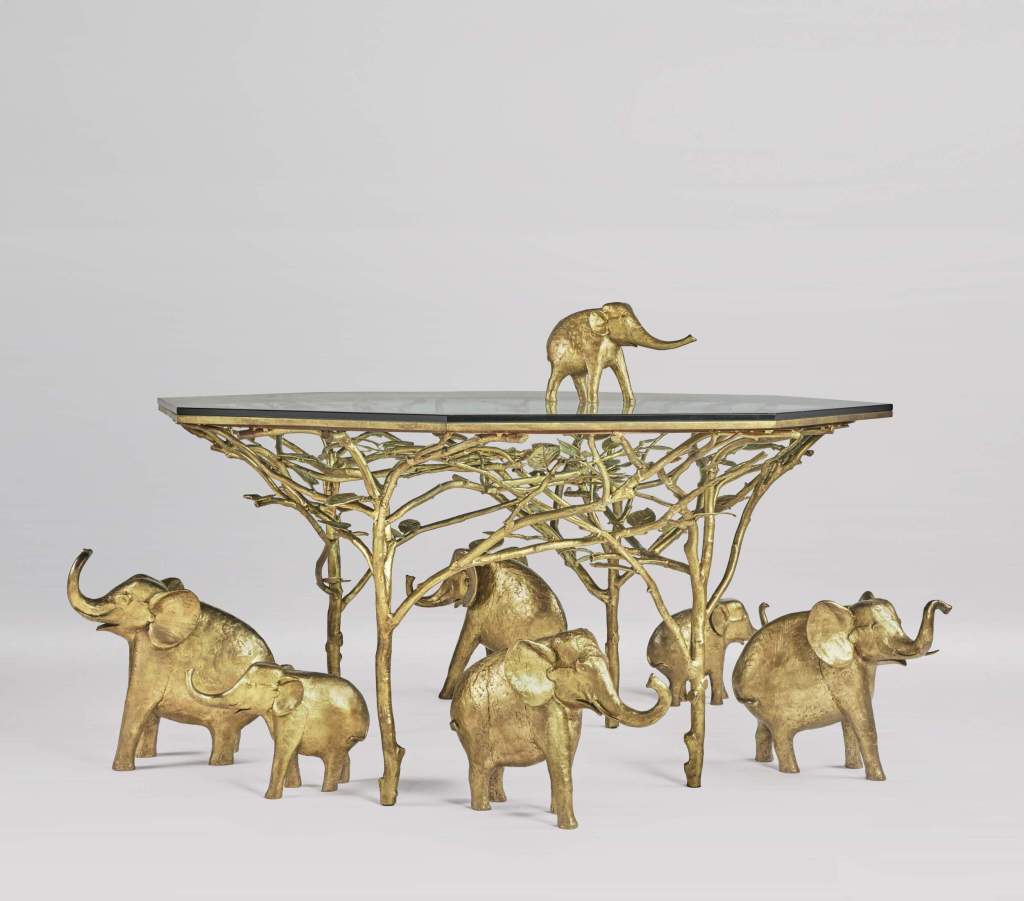
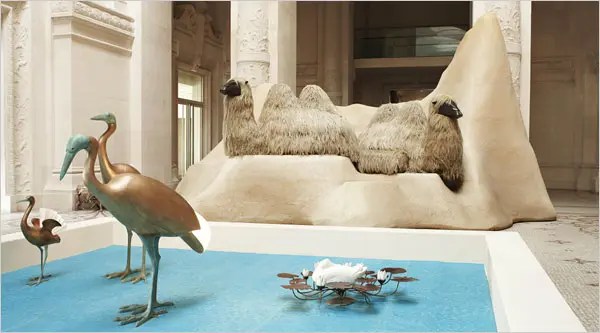
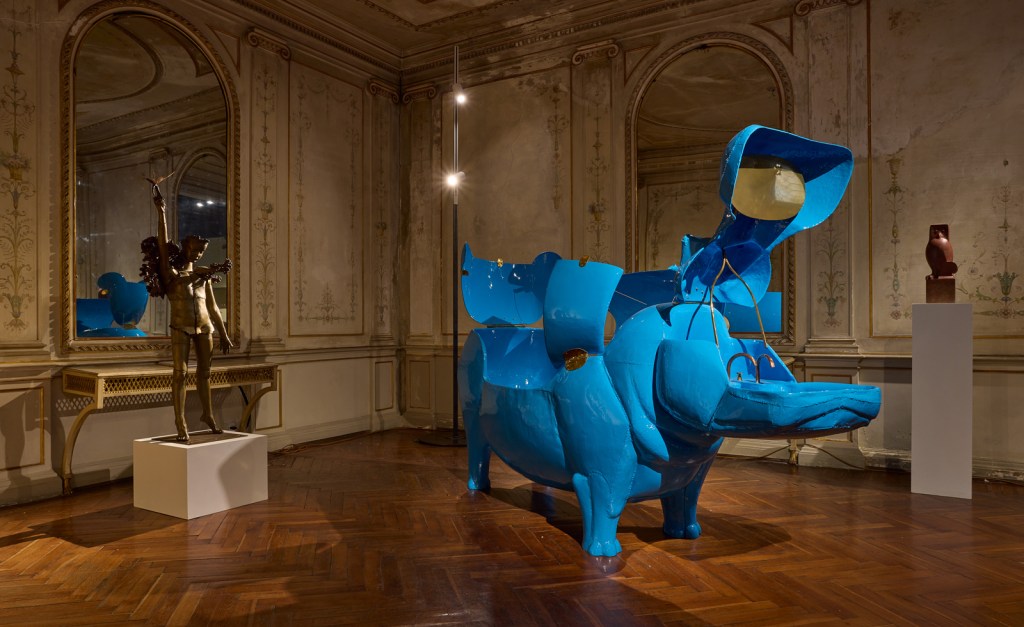
The Lalannes’ genius lay in collapsing categories. A sheep could be a sculpture, a seat, a flock populating a salon. A dining table might rest on life-sized ducks. A chandelier might sprout like a bouquet of branches. Their works carried the humor of Magritte, the tactile fantasy of Dalí, yet were eminently livable.
The 1960s marked their first major breakthrough, with exhibitions in Paris that captivated an avant-garde circle. Collectors such as Yves Saint Laurent and Pierre Bergé became their earliest patrons, integrating Lalanne furniture into interiors that defined the era’s glamour. The couple’s work appeared not only in galleries but also in fashion campaigns, opera sets, and private salons. To own a Lalanne piece was to signal membership in an aesthetic elite that prized both wit and sophistication.
Patrons, Fashion, and Fame
The Lalannes’ clientele reads like a roll call of cultural aristocracy: Karl Lagerfeld, Jane Holzer, Jacques Grange, Valentino. Their pieces populated the homes of Saint Laurent and Bergé, who assembled one of the largest private collections of Lalanne works. When that collection came to auction at Christie’s in 2009, it sparked a renaissance of interest in the duo’s whimsical designs.
Fashion adored them. Claude Lalanne designed metal bustiers and accessories for Saint Laurent and Dior, while François-Xavier’s sheep appeared in editorial spreads like totems of surreal chic. The line between fine art and applied art—already blurred in postwar Paris—was dissolved entirely in their practice.
Legacy of Enchantment
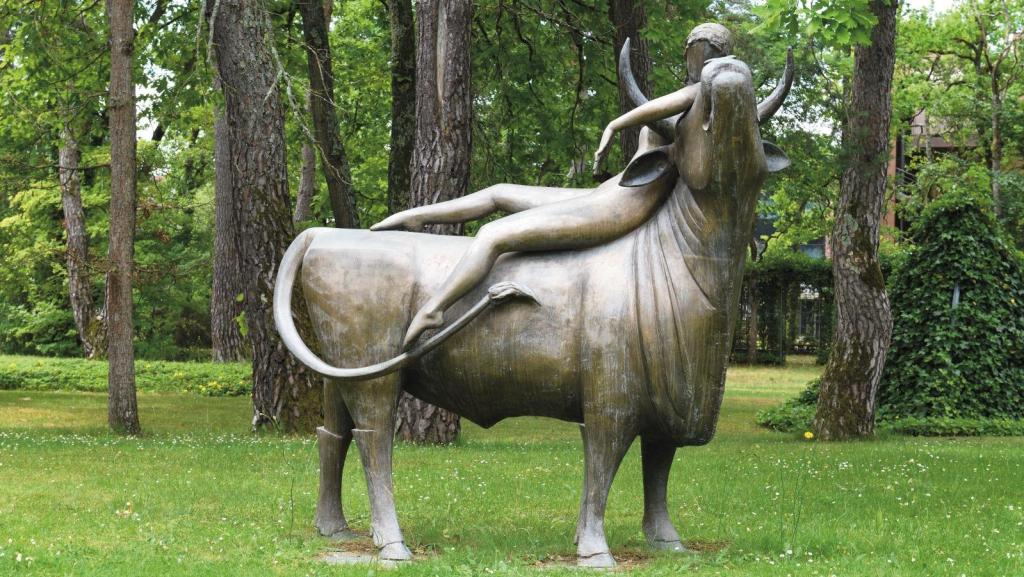
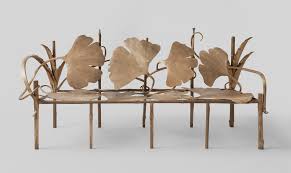
Though their creations are playful, they were also meticulously crafted, forged in bronze, copper, or gilt with the precision of haute joaillerie. This attention to material and form ensured that their works transcended novelty. They became objects of lasting beauty—sculptures one might sit upon, dream beside, inherit.
Auctions today confirm their place at the pinnacle of collectible design. A single Lalanne sheep can fetch millions. Entire herds are displayed in museum gardens and luxury estates, their humor undimmed by the passing decades.
The Enduring Allure
Claude outlived François-Xavier by more than a decade, continuing to create in their studio until her death in 2019. Together, they left a body of work that refuses categorization—neither furniture nor sculpture, but something liminal, playful, surreal.
Their art remains timeless because it addresses a primal desire: to live with beauty that also carries wit, to inhabit a space where the natural world is transformed into fantasy without losing its weight of bronze or marble.
If modernism sought to purify form, Les Lalanne insisted on enchantment. They proved that design could laugh, that sculpture could serve, that surrealism could be sat upon at dinner. And perhaps that is their greatest achievement: they returned delight to design without ever sacrificing rigor.

Leave a Reply