
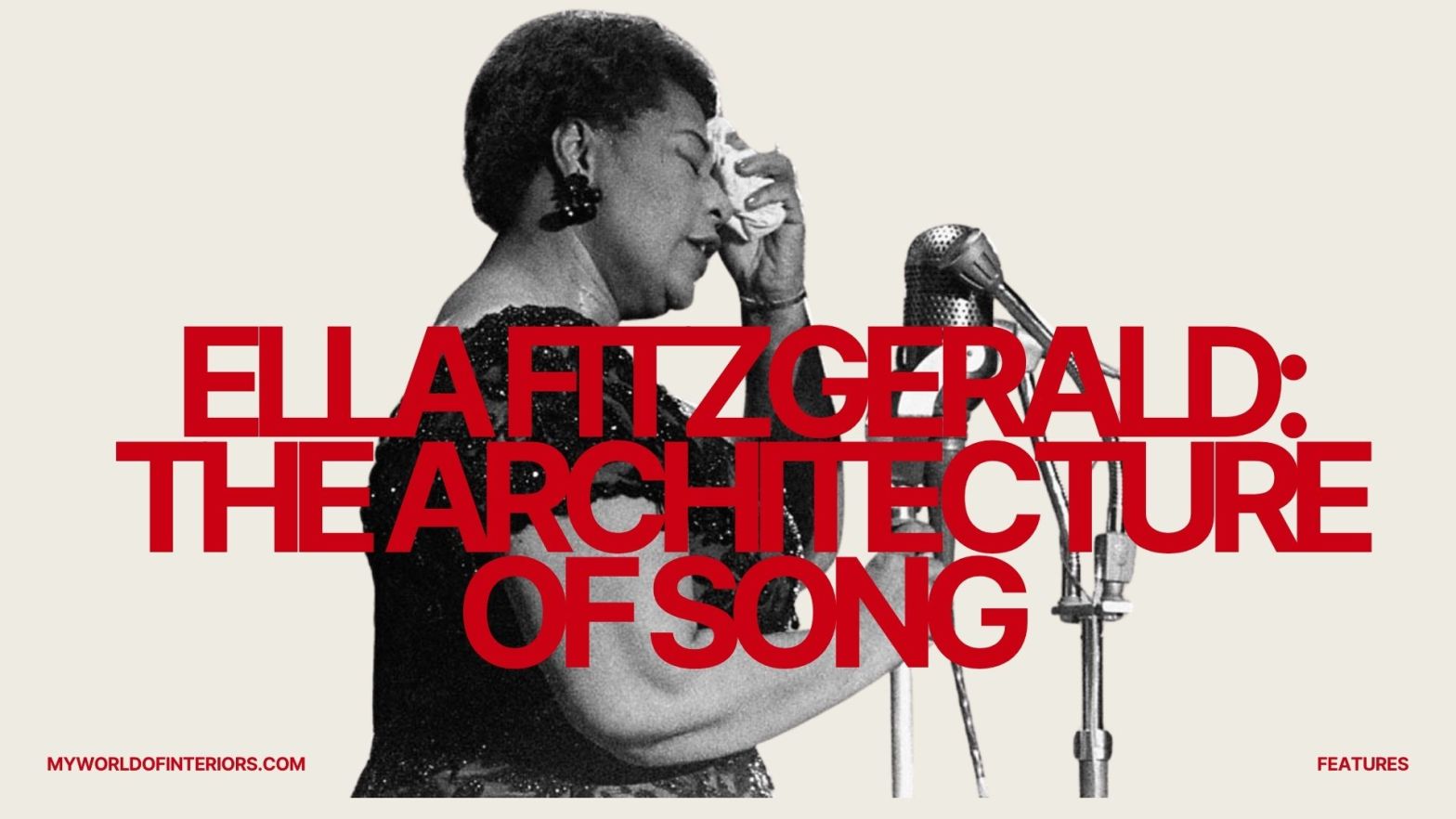
To speak of Ella Fitzgerald is to speak of precision, clarity, and grace so absolute that they verge on the metaphysical. Born in Newport News, Virginia, in 1917 and raised in Yonkers, Fitzgerald emerged from poverty and the turbulence of her early life to become one of the most celebrated voices of the twentieth century. Nicknamed “The First Lady of Song,” she was at once an emblem of jazz’s democratic vitality and a consummate craftswoman whose artistry transcended genre.
Her genius lay not merely in the beauty of her tone, but in her ability to treat the human voice as both instrument and storyteller: an instrument with the flexibility of a trumpet or saxophone, and a storyteller’s gift for imbuing every syllable with warmth, wit, or ache.
Early Career: The Swing Years
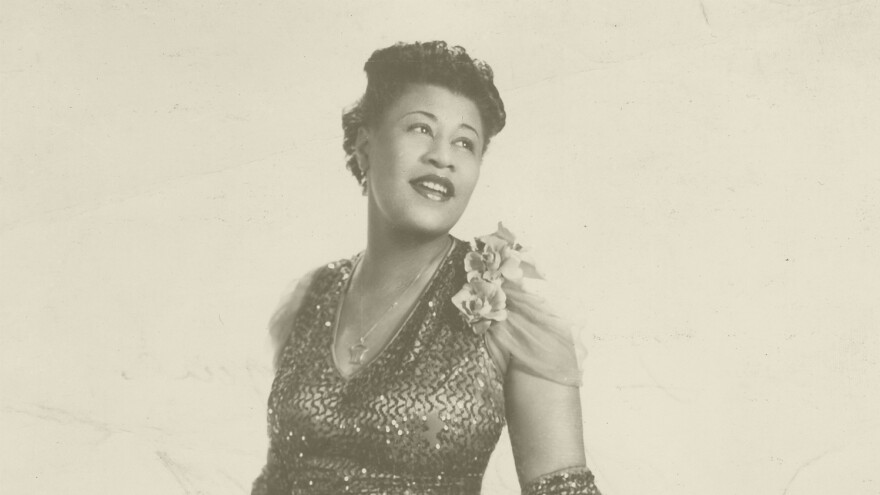
Fitzgerald’s career began in the swing era, when she joined Chick Webb’s orchestra after winning an amateur night at the Apollo Theater in 1934. At just 21, she recorded “A-Tisket, A-Tasket,” a playful nursery rhyme-turned-swing hit, which sold more than a million copies and established her as a star.
Unlike many of her contemporaries, Fitzgerald was not confined to one style. With Webb’s band, she mastered swing phrasing, learning how to float above the beat with a rhythmic ease that would become her hallmark. When Webb died in 1939, she briefly led the orchestra herself, an unusual position for a young woman at the time, signaling both her talent and her authority.
The Voice as Instrument: Scat and Improvisation
What made Fitzgerald unique in jazz history was her treatment of the voice as a full improvisational instrument. Her scat singing was not filler or gimmick but a profound extension of jazz improvisation. In performances like her legendary take on “How High the Moon,” she riffs with the agility of Dizzy Gillespie’s trumpet or Charlie Parker’s saxophone, weaving quotations from other tunes into spontaneous vocal architecture.
Her improvisations balanced technical virtuosity with sheer joy. Each phrase was exacting in pitch, yet playful in spirit. She could elongate a syllable into pure sound, shift register mid-phrase, or punctuate a line with a percussive consonant. To hear her scat is to hear the elasticity of language itself, liberated into music.
The Songbook Series: A Canon in Sound
If scat showed Fitzgerald’s virtuosity, the Songbook recordings demonstrated her historical vision. Beginning in 1956 with the Cole Porter Songbook, and continuing through collections of Gershwin, Rodgers & Hart, Ellington, and others, Fitzgerald systematically recorded the great American popular composers, effectively canonizing them.
The brilliance of these albums lies in her interpretive neutrality. Where Billie Holiday infused every line with autobiography, Fitzgerald often effaced her own persona, allowing the lyric and melody to shine. Her diction was crystalline, her pitch immaculate, her rhythmic sense unerring. She did not dramatize but revealed, letting the craft of songwriting meet the craft of singing in perfect balance.
In so doing, she preserved an entire era of American song, giving it permanence in recordings that remain definitive.
The Art of Clarity
Fitzgerald’s genius is often described as effortless, which risks underestimating the discipline beneath it. Her breath control was astonishing, enabling her to sustain long lines with seamless legato. Her intonation was flawless, anchoring her even in the most harmonically complex arrangements. Her diction was so clean that every word was intelligible without strain.
This clarity gave her performances a universality. While other jazz singers cultivated smoky intimacy or raw pain, Fitzgerald offered transparency: a voice where nothing obstructed the line between music and listener. In her, beauty itself seemed to sing.
Gender, Race, and Barriers
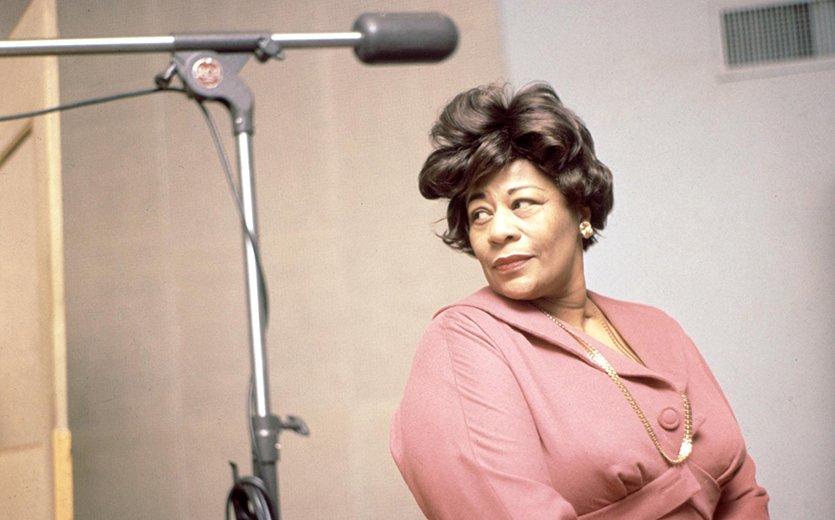
Fitzgerald’s career was not free of obstacles. As a Black woman in mid-century America, she faced segregation, discrimination, and the policing of female performers. Her weight, her looks, and her private reticence were often commented upon in ways her male peers never endured.
Yet she prevailed not by performing resistance overtly but by embodying excellence so irrefutable it could not be ignored. She sang in segregated clubs and later on the world’s greatest stages, often with the support of artists like Norman Granz, who made her the centerpiece of his Jazz at the Philharmonic tours. Her triumph was not only artistic but social: she expanded the space in which a Black woman could be recognized as a global cultural icon.
Legacy: The Genius of Transparency
Ella Fitzgerald’s legacy is paradoxical. Unlike Billie Holiday or Nina Simone, she is not primarily remembered as a confessional singer of suffering. Unlike Sarah Vaughan, she did not cultivate a lush, operatic persona. Instead, Fitzgerald offered something deceptively rare: art without excess, virtuosity without vanity, clarity without coldness.
Her recordings remain textbooks for singers and musicians: how to phrase, how to swing, how to honor melody while expanding it. Yet beyond craft, they radiate joy. Listening to her is to encounter music’s capacity to make order feel like delight, discipline feel like freedom.
Selected Essential Works
- “A-Tisket, A-Tasket” (1938) – The hit that launched her career with Chick Webb’s band.
- Ella Fitzgerald Sings the Cole Porter Songbook (1956) – The beginning of the monumental Songbook series.
- Ella Fitzgerald Sings the George and Ira Gershwin Songbook (1959) – Perhaps the definitive rendering of the Gershwin canon.
- Ella in Berlin: Mack the Knife (1960) – A live recording featuring her legendary improvised lyrics after forgetting the words.
- Ella and Louis (1956, with Louis Armstrong) – A collaboration blending Fitzgerald’s clarity with Armstrong’s gravel, a study in vocal contrast.
- How High the Moon (live performances, various) – Scat singing at its most virtuosic and playful.
Conclusion: The First Lady of Song
Ella Fitzgerald was a genius of balance: between instrument and lyric, improvisation and discipline, transparency and depth. She did not insist on herself but on the song, on the possibility that the human voice could approach the condition of pure music.
Her greatness lies not only in what she sang but in how she made singing itself into an art of clarity, joy, and precision. In her voice, we hear not only the story of jazz and the Great American Songbook, but the enduring possibility of music as order, play, and grace.
A Listening Pathway Through Ella Fitzgerald
Ella Fitzgerald’s career spanned more than five decades, and her recordings are vast. To appreciate her genius fully, it helps to move through her work in stages: the early swing years, the collaborations, the monumental Songbook series, and finally the late live performances that reveal her improvisational daring.
Stage I: The Swing Years — Youthful Spark
1. “A-Tisket, A-Tasket” (1938, with Chick Webb Orchestra)
Her breakthrough hit at 21 years old. Playful, girlish, rhythmically perfect — the start of her career as a swing star.
2. Decca Singles (1940s)
Listen to recordings like “I’m Beginning to See the Light” or “Stone Cold Dead in the Market” (with Louis Jordan). Here Fitzgerald hones her clarity and rhythmic bounce, establishing herself beyond novelty hits.
Stage II: Collaborations — Dialogue and Contrast
3. Ella and Louis (1956, with Louis Armstrong)
The contrast between Armstrong’s gravelly warmth and Fitzgerald’s silken clarity is one of the great pairings in jazz history. Their chemistry is tender, playful, unforced.
4. Ella and Duke Ellington: The Cotton Club Performances (1965)
Live collaborations with Ellington and his orchestra. Fitzgerald’s voice floats above Ellington’s textures, showing her ability to merge with large-band architecture while retaining intimacy.
Stage III: The Songbook Series — Canonization of the Great American Songbook
5. Ella Fitzgerald Sings the Cole Porter Songbook (1956)
The beginning of the legendary series. Every lyric is clear, every phrase balanced, Fitzgerald treating Porter’s wit and elegance with luminous precision.
6. Ella Fitzgerald Sings the George and Ira Gershwin Songbook (1959)
Often considered the pinnacle. Orchestral arrangements by Nelson Riddle frame Fitzgerald’s interpretations of standards like “But Not for Me” and “They Can’t Take That Away from Me.” Definitive versions.
7. Ella Fitzgerald Sings the Duke Ellington Songbook (1957–1959)
Unique among the Songbooks because Ellington himself participates. A dialogue between composer and interpreter, filled with mutual respect.
8. Ella Fitzgerald Sings the Rodgers and Hart Songbook (1956)
Showcases her ability to balance playfulness (“Manhattan”) with vulnerability (“Bewitched, Bothered and Bewildered”).
Stage IV: Improvisation and the Live Stage
9. Ella in Berlin: Mack the Knife (1960)
Her most famous live recording. After forgetting the lyrics mid-song, she improvises her own, scatting with wit and agility. A masterclass in spontaneity.
10. Ella at Juan-Les-Pins (1964)
Highlights her scat singing at its most virtuosic, transforming standards into pure improvisational landscapes.
11. Ella in Rome: The Birthday Concert (1958, released posthumously in 1988)
An incandescent live performance where Fitzgerald moves effortlessly between torch songs, swing, and scat, showing her at the height of her vocal powers.
Stage V: The Late Voice — Grace in Maturity
12. Whisper Not (1966, with Marty Paich)
The mature Fitzgerald: voice deepened slightly, interpretive warmth heightened. A lesser-known gem.
13. The Best Is Yet to Come (1982, with Count Basie Orchestra)
Late-career Fitzgerald, voice huskier but still swinging. A reminder of her endurance and adaptability.
Suggested Route
- Start with Ella and Louis for charm and accessibility.
- Move into the Cole Porter Songbook for precision and clarity.
- Immerse in Ella in Berlin to witness her improvisational genius.
- Return to The Gershwin Songbook to hear her at her most orchestral and definitive.
- Finish with a late live recording like Ella in Rome or The Best Is Yet to Come, to appreciate her longevity and grace.
Closing Note
Ella Fitzgerald’s pathway is not just a chronology but an education in what the human voice can do: swing, scat, sustain, clarify, and delight. To listen to her in sequence is to hear a life in music — youthful sparkle, mature mastery, playful invention, and enduring grace.
Discover more from My World of Interiors
Subscribe to get the latest posts sent to your email.

