
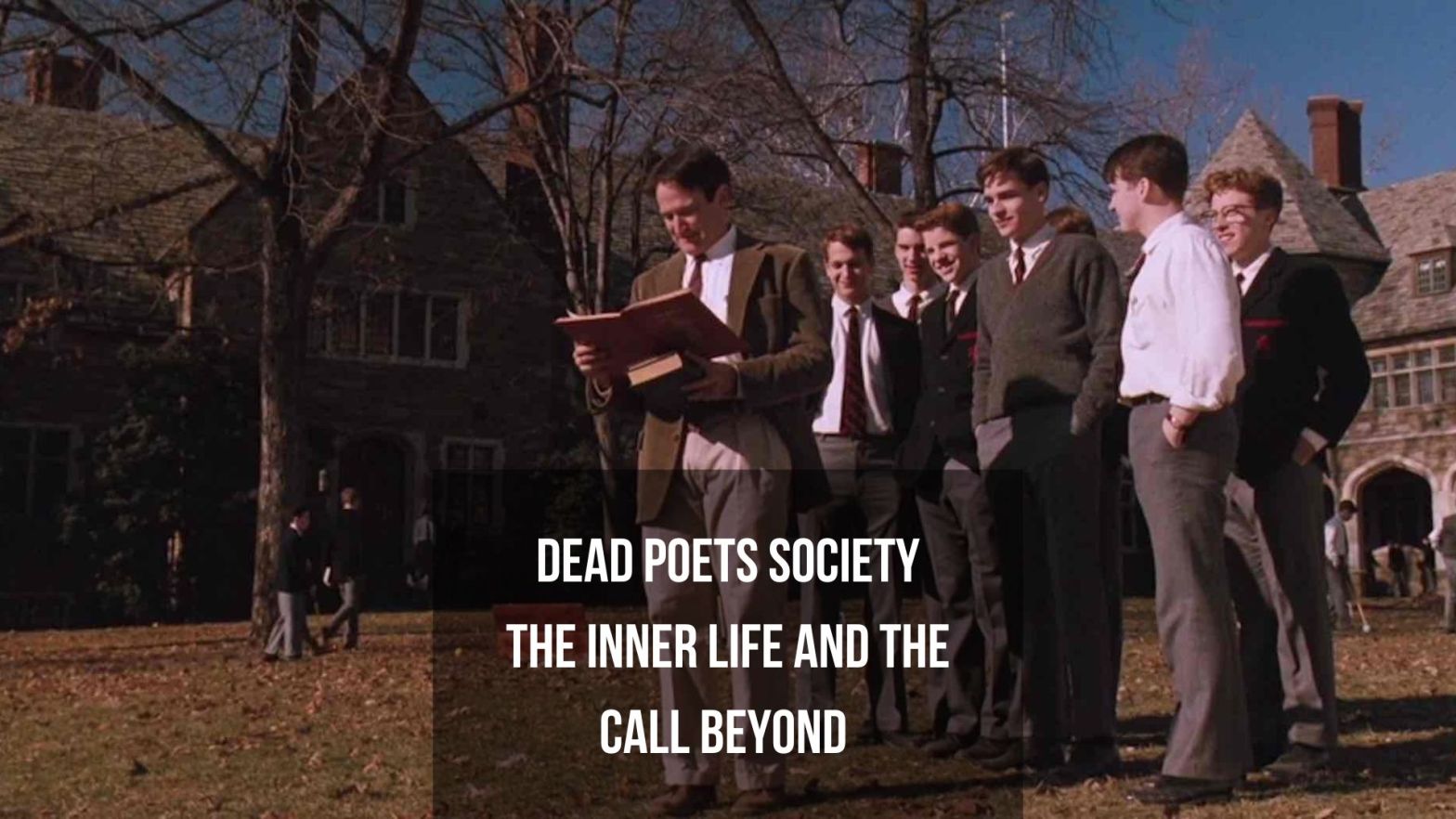
I remember first watching Dead Poets Society in fifth form. As a child with a rich inner life and a yearning for life beyond the school gates, and to meet people outside of village life who were worldly and exciting, this film hit me right where it changes things.
For teenagers with such inward intensity, Peter Weir’s 1989 film could feel like revelation. Here was a story in which literature itself opened hidden corridors, where a teacher dared to speak in the language of poetry rather than pedagogy, and where friendship was a covenant made under the canopy of words. The film did not merely present characters; it offered permission — to feel deeply, to yearn beyond the prescribed, to imagine life as something larger than achievement.
Story and Structure
Set in 1959 at the fictional Welton Academy, an elite Vermont boarding school, the film tells the story of a group of boys who encounter John Keating (Robin Williams), a new English teacher whose unconventional methods disrupt the school’s rigid traditions. Keating exhorts them to seize the day (carpe diem), to see poetry not as a dead letter but as a living force.
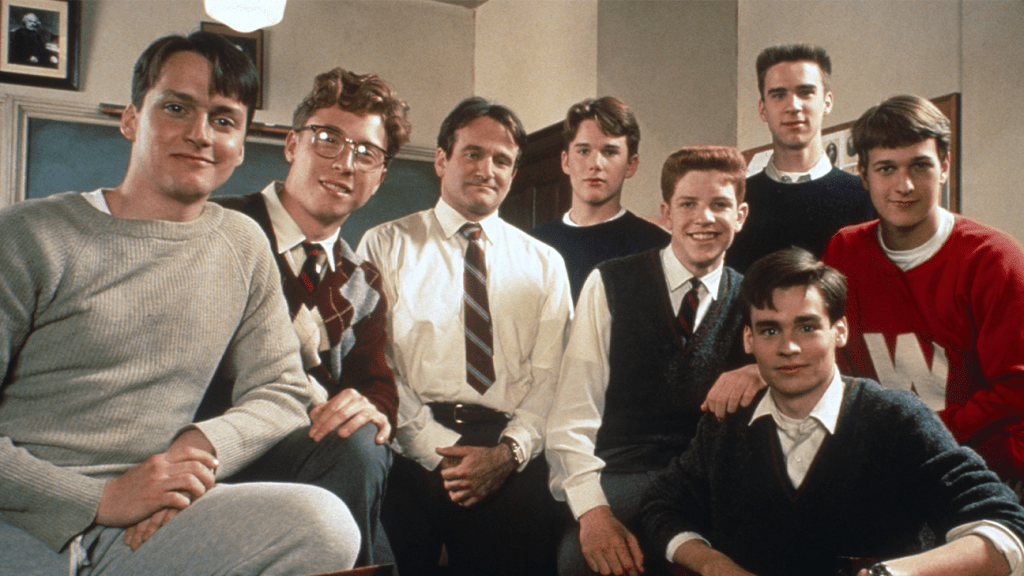
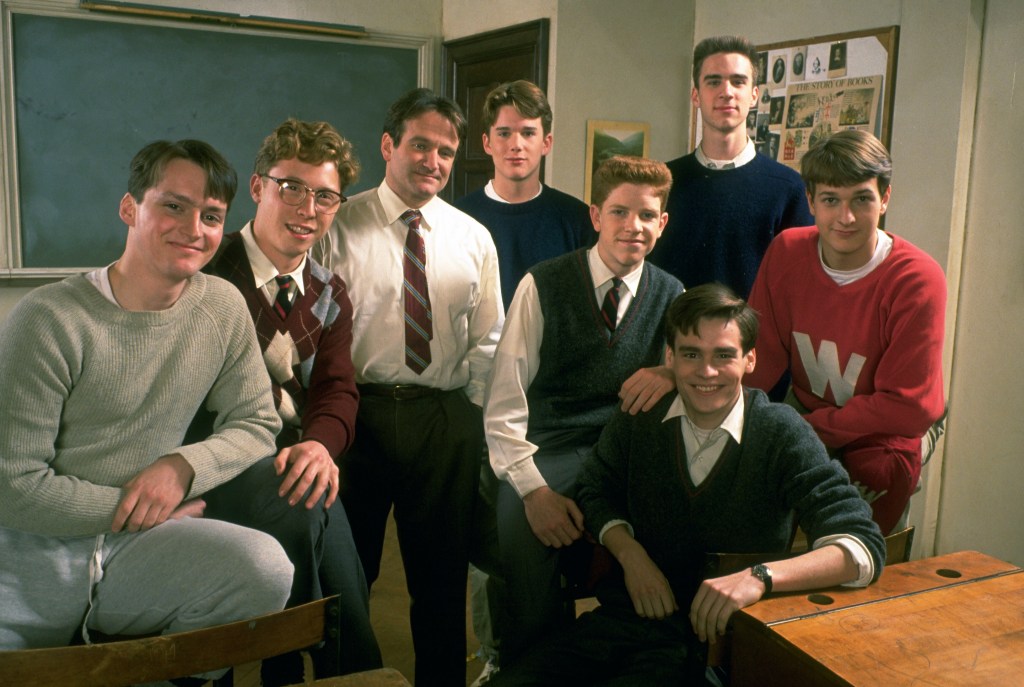
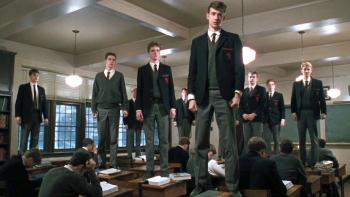
Neil Perry (Robert Sean Leonard), Todd Anderson (Ethan Hawke), Knox Overstreet (Josh Charles), Charlie Dalton (Gale Hansen), and others form a clandestine revival of the “Dead Poets Society,” sneaking off to a cave to read verse, share dreams, and taste freedom. The narrative tension rises as Neil’s passion for acting collides with his father’s authoritarian expectations. The tragic outcome — Neil’s suicide — fractures the group and leads to Keating’s dismissal, though not before the iconic stand-on-the-desk act of solidarity.
Performance and Persona
- Robin Williams (John Keating): Williams inhabits Keating with restraint unusual for an actor known for frenetic comedy. His energy is channelled into sincerity and quiet conviction. He doesn’t play the saintly rebel but the teacher who nudges rather than shouts, who ignites without consuming.
- Robert Sean Leonard (Neil Perry): Neil is the emotional center of the film. Leonard captures the vulnerability of a boy with incandescent dreams crushed by parental authority. His death is devastating not because it is shocking but because it feels inevitable, staged by the cruelty of a world that refuses imagination.
- Ethan Hawke (Todd Anderson): As the shy new boy, Hawke gives a performance of hesitations and silences, culminating in his raw, improvised verse scene — coaxed into speech by Keating — which embodies the film’s belief that the inner life longs for articulation. By the final “O Captain! My Captain!” Hawke’s arc completes: the boy of whispers becomes the boy who stands.
Themes: Carpe Diem and Its Shadows
The film’s slogan, carpe diem, has been quoted so often that it risks cliché. But in context, it carries depth: it is not an exhortation to indulgence but to recognition — that the inner life matters, that youth is fleeting, that art can open one to the world.
Yet the film complicates this. Keating’s teaching is liberating, but it collides with institutional and parental forces stronger than youthful desire. Neil’s death reframes carpe diem not as carefree joy but as a demand that risks confrontation with authority, tradition, even mortality. The film asks: can we seize the day without paying the price?
Academic and Intellectual Angles
Romanticism Reborn
At its core, Dead Poets Society stages a Romantic revival: the boys reciting Whitman, Byron, Thoreau, invoking poetry as life-force against utilitarian constraint. The cave society echoes the secret societies of European Romantic students, where art became resistance.
Education and Power
The film critiques institutional education as a factory of obedience. Welton’s “four pillars” — Tradition, Honor, Discipline, Excellence — are exposed as brittle dogma. Keating’s pedagogy destabilizes these, offering literature as liberation rather than catechism. Yet the system closes ranks; Keating is expelled, a reminder that institutions absorb rebellion by excising it.
Masculinity and Vulnerability
The film complicates masculine education in mid-century America: boys schooled for duty and success discover through poetry the legitimacy of vulnerability. Todd’s stammer, Neil’s longing, Knox’s romantic pursuit — each reveals fragility as much as desire. The tragedy arises not from weakness but from a world that cannot accommodate tenderness in boys.
The Poetics of Space
Cinematography frames the contrast between interiors and exteriors: the claustrophobic classrooms, the candlelit cave, the open fields. These spaces map the tension between control and imagination. The cave is not only secret but sacred: a womb of alternative possibility.
The Personal Resonance
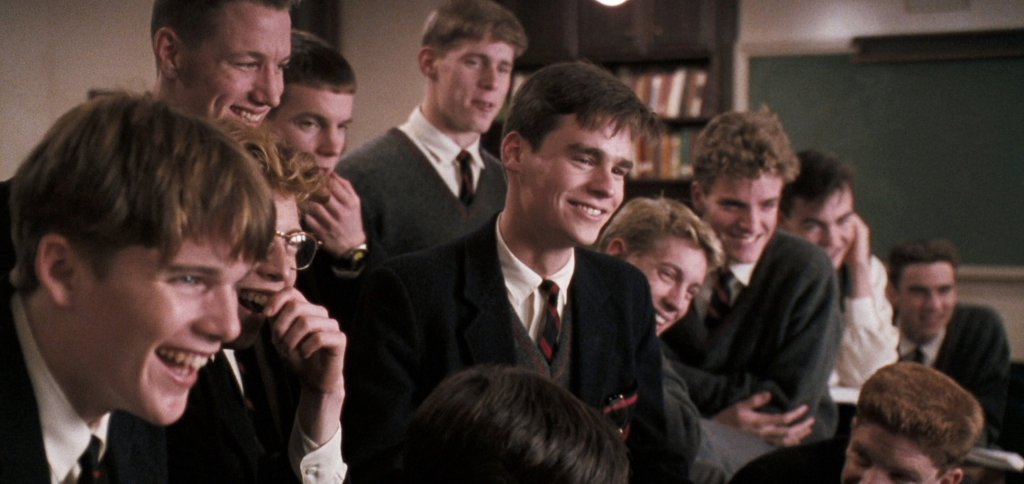
For those of us who first watched Dead Poets Society in adolescence, the resonance was immediate. We recognized ourselves in Todd’s shyness, Neil’s hunger, the yearning for a fellowship that spoke in verse rather than grades. The film’s cave gatherings mirrored our own notebooks and conversations, our longing for a space where inner life mattered.
In that sense, Dead Poets Society was less instruction than recognition. It told us we were not alone, that poetry could be a lifeline, that desire for a world beyond the walls of school was legitimate. The tragedy of Neil sharpened the warning, but the solidarity of Todd’s final act sustained the promise: the imagination cannot be fully extinguished.
Legacy
Upon release, the film was both acclaimed and critiqued. Some praised its emotional impact, others dismissed it as sentimental. Yet its endurance lies in the fusion of performance, story, and theme. It remains a touchstone for teachers who wish to inspire, for students who seek more than conformity, and for anyone who remembers being young with a secret inner life.
Academically, it invites debate about pedagogy, Romanticism, masculinity, and institutional authority. Personally, it remains unforgettable for those who saw in it a reflection of themselves at a moment when imagination seemed both dangerous and necessary.
Standing on the Desk
Dead Poets Society is, at heart, a film about recognition: the recognition of the self as more than student, of poetry as more than ornament, of life as more than obedience. For high schoolers with inward intensity, it was a mirror and a call. Watching it in youth, one could feel the walls of the classroom tremble, the possibility of other worlds flickering.
The final scene endures because it dramatizes what the film gave to its audience: the courage to stand, however precariously, on the desk of conformity and say: I see more, I want more, I am more.
Discover more from My World of Interiors
Subscribe to get the latest posts sent to your email.

