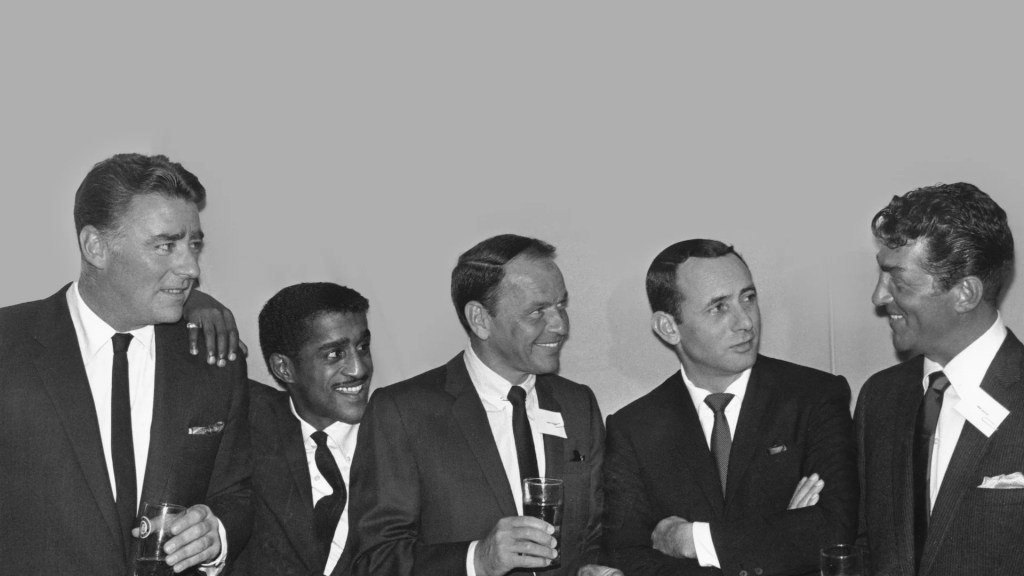
When Frank Sinatra walked into a room, the atmosphere shifted. His presence was magnetic: the fedora tilted just so, the cigarette smoldering between fingers, the voice as smooth as a velvet martini. But in the late 1950s and early 1960s, Sinatra’s charisma fused with the energies of a circle of friends who became more than just entertainers. Together, they were the Rat Pack—an ensemble of singers, actors, and comedians who turned Las Vegas into their playground, redefined Hollywood camaraderie, and embodied the glamour and contradictions of mid-century America.
Origins of a Pack
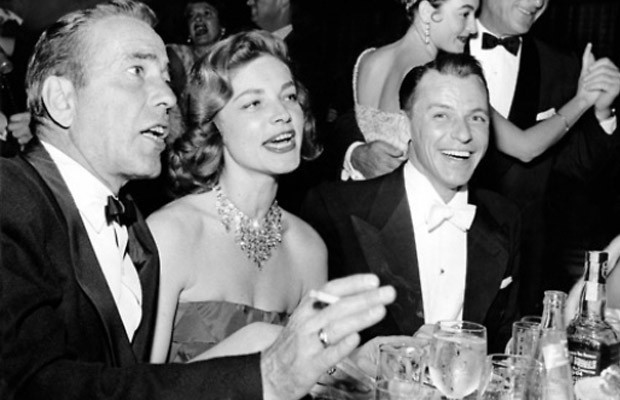
The Rat Pack did not begin with Sinatra. In the 1940s, Humphrey Bogart and Lauren Bacall presided over a loose gathering of Hollywood friends that included Judy Garland and David Niven. Bacall is said to have dubbed the group “a goddamn rat pack” after one too many late-night escapades.
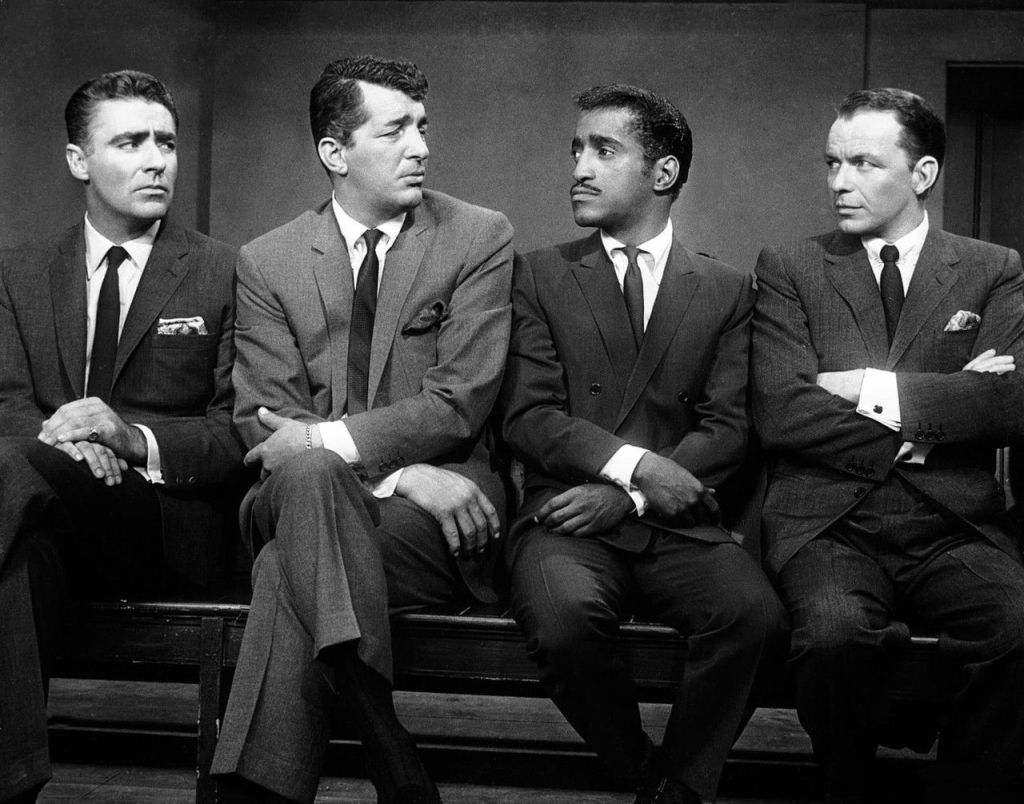
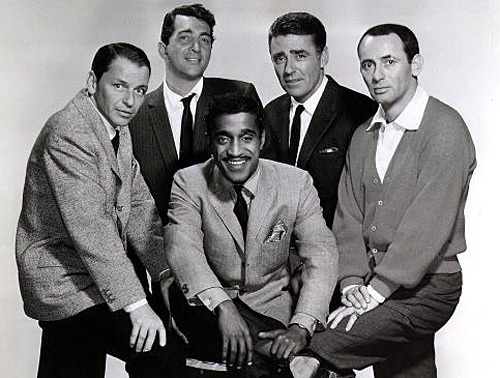
When Bogart died in 1957, Sinatra—already America’s most famous crooner—assumed the informal mantle. By then, he was no longer the skinny kid from Hoboken but the Chairman of the Board, a man whose voice, film career, and political connections made him a cultural force. Surrounding himself with a core group—Dean Martin, Sammy Davis Jr., Peter Lawford, and Joey Bishop—Sinatra reinvented the Rat Pack as a fraternity of showmen, jokers, and kings of the Vegas Strip.
Vegas as a Stage
The Rat Pack was inseparable from Las Vegas. In the late 1950s, the desert resort town was transforming into the capital of American entertainment, fueled by neon, mob money, and a postwar appetite for indulgence.
At the Sands Hotel and Casino, Sinatra and his friends turned nightclub shows into legendary events. They performed together unscheduled, riffing off one another with songs, banter, and bawdy jokes. Dean Martin’s laid-back charm and faux-drunkenness, Sammy Davis Jr.’s dazzling song-and-dance routines, Bishop’s deadpan wit, Lawford’s Hollywood polish—each role played against Sinatra’s authority, the gravity around which the group orbited.
The shows blurred the line between work and play. Audiences never knew what to expect: a half-finished ballad might dissolve into comedy; a joke might pivot into a heartfelt rendition of “One for My Baby.” For the fans, it felt like being invited to the world’s most exclusive party.
The Image of Cool
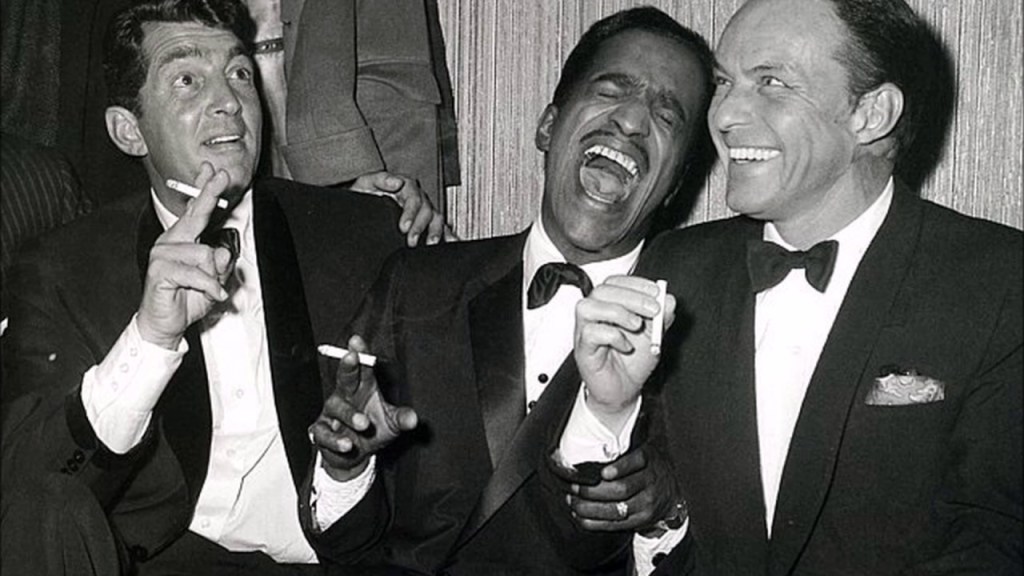
What set the Rat Pack apart was not just talent but image. They embodied an ideal of masculinity that combined elegance with irreverence. They wore tuxedos like second skins, carried highballs on stage, and projected a swagger that was equal parts charm and menace.
Their brand of cool was aspirational: working-class boys made good, living the American dream of money, style, and indulgence. But it was also exclusionary, steeped in mid-century attitudes toward women, race, and power. Sammy Davis Jr., the only Black member, often bore the brunt of racist jokes—even from his friends—though he was also embraced as one of the Pack’s stars.
Hollywood and Politics
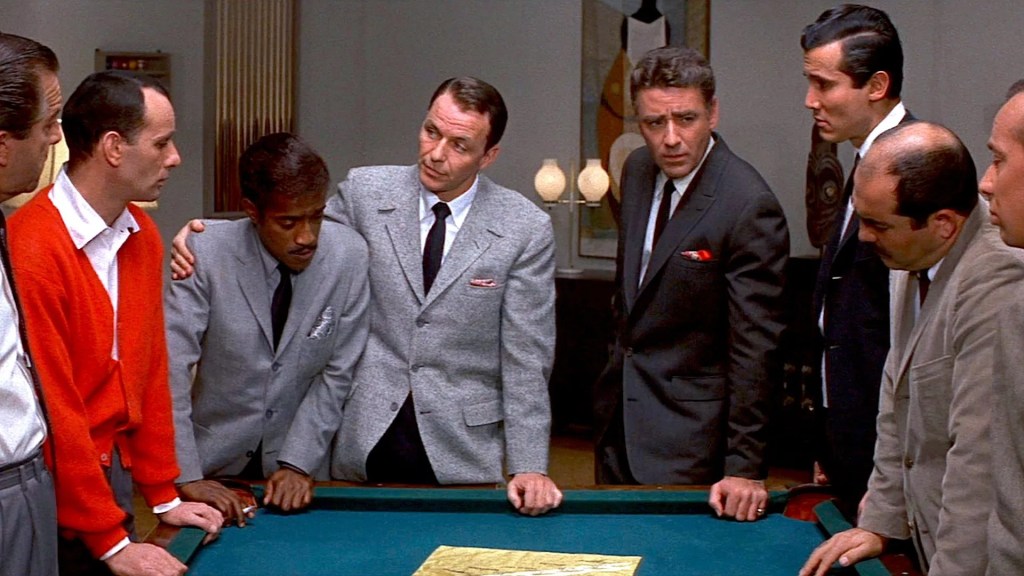
The Rat Pack was not confined to Vegas. They starred together in films, most famously Ocean’s 11 (1960), which captured their offstage persona in heist-film form: slick, playful, conspiratorial. Other films like Sergeants 3 and Robin and the 7 Hoods kept the formula alive, though none rivaled the original’s magic.
They also wielded political influence. Sinatra, a close ally of John F. Kennedy, mobilized the Pack to support JFK’s presidential campaign in 1960, performing at fundraisers and lending the campaign an aura of glamour. Peter Lawford, married to Kennedy’s sister Patricia, became the link between Hollywood and the White House. For a moment, the Rat Pack was not just entertainment but political theater.
Decline and Myth
By the mid-1960s, the Rat Pack began to unravel. Kennedy distanced himself from Sinatra due to the singer’s mob associations. Cultural tides shifted: the counterculture dismissed the tuxedoed swagger of the Pack as old-fashioned. Lawford drifted away, Bishop receded, and even Davis struggled with career highs and lows.
Yet Sinatra and Martin remained titans, and their image as part of the Rat Pack endured. The legend was sustained by nostalgia: record reissues, film revivals, and Las Vegas lore. By the time of Sinatra’s death in 1998, the Rat Pack had become myth, frozen in black-and-white photographs of martinis, cigarettes, and tuxedoed camaraderie.
Who Was Who in the Pack
Frank Sinatra – The Chairman of the Board
The undisputed leader. Sinatra’s charisma, voice, and connections held the group together. A perfectionist on stage and in life, he embodied both glamour and volatility.
Dean Martin – The Charmer
The crooner who made nonchalance an art. His easygoing banter, faux-drunk shtick, and irresistible grin balanced Sinatra’s intensity with levity.
Sammy Davis Jr. – The Showstopper
Singer, dancer, comedian, and multi-instrumentalist, Davis was the Pack’s most versatile talent. He brought energy and dazzling skill, while navigating the era’s racial barriers.
Peter Lawford – The Connector
The suave British actor whose Kennedy in-law status linked Hollywood to Washington. Though less musically gifted, he added polish and access.
Joey Bishop – The Straight Man
Comedian and writer, Bishop played the foil. His dry, understated humor grounded the Pack’s theatrics and often supplied their punchlines.
Legacy of the Rat Pack
The Rat Pack’s cultural legacy is twofold. On one hand, they represent a bygone era of American glamour: the golden age of Las Vegas, the style of tuxedoed masculinity, the elegance of men who could croon, joke, and charm an audience into ecstasy. On the other, they symbolize the excesses of mid-century celebrity: insularity, sexism, the blurring of entertainment with politics and power.
Yet the image persists because it still resonates. Their friendship, real or performed, speaks to a longing for community in an industry defined by competition. Their sense of play anticipates the improvisational freedom of modern comedy. Their style continues to inspire fashion designers, musicians, and filmmakers.
Above all, the Rat Pack remains shorthand for a certain idea of cool: one part Sinatra’s voice, one part Martin’s grin, one part Davis’s footwork, shaken together with bourbon and neon. A dream of America at its most glamorous—and its most complicated.
Essential Viewing & Listening
- Ocean’s 11 (1960) – The original Rat Pack film, a Vegas caper steeped in charm.
www.imdb.com - Live at the Sands (1966) – Sinatra backed by Count Basie, with Martin and Davis appearing during legendary Vegas runs.
http://www.allmusic.com - Robin and the 7 Hoods (1964) – Musical comedy showcasing the Pack’s playful dynamic.
www.imdb.com - The Rat Pack (1998, HBO film) – A dramatized account of their rise, politics, and personal tensions.
www.imdb.com

Leave a Reply