Mycenaean gold, enigmatic Cycladic figures, extraordinary bronze sculptures and a mechanical model of the heavens: Athens’ greatest archaeological collection reveals a far more complicated ancient world than the familiar story of classical Greece.
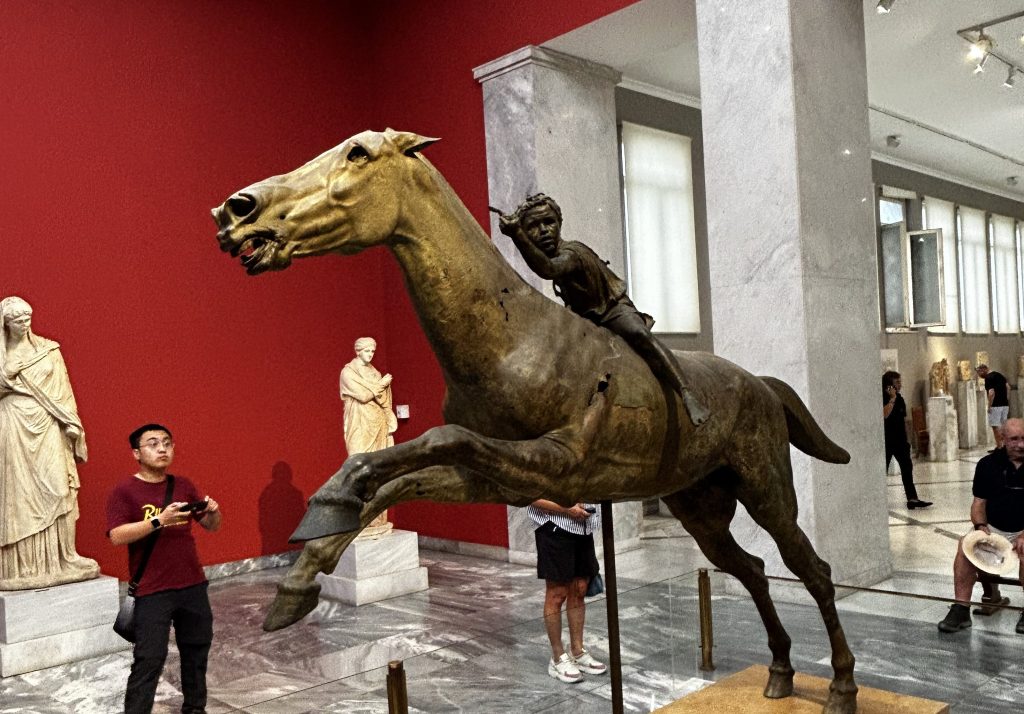
A bronze horse hurtles through the air, its legs extended in a gallop. The animal’s head is thrust forward, its mouth open, while a remarkably small rider leans over its back, one arm outstretched. Known as the Jockey of Artemision, the sculpture dates from approximately 140 BCE and was recovered in fragments from the seabed off the northern coast of Euboea.
The horse and rider are among the most remarkable works in Athens’ National Archaeological Museum. The sculpture’s dynamism is extraordinary, but its survival is almost as interesting. Much of the monumental bronze sculpture produced in antiquity disappeared when its valuable metal was melted down and reused. Works lost at sea occasionally escaped that fate, preserved for centuries beneath the water.
The circumstances of archaeological survival are fundamental to understanding this museum. Some of its greatest objects were recovered from graves, others from shipwrecks or settlements destroyed by natural disaster. What remains of the ancient world is consequently an uneven record, shaped by the habits of its inhabitants, the materials they employed and the accidents that determined what could be recovered.
Founded as an institution in 1829, initially on the island of Aegina, the National Archaeological Museum eventually acquired its permanent home in Athens. Construction of the present neoclassical building began in 1866 to designs by Ludwig Lange, with later modifications by Ernst Ziller. It opened to the public in 1889.
The collection now encompasses more than 11,000 exhibited objects, ranging from Neolithic antiquities to the Roman period. Its geographical reach extends beyond mainland Greece through the Aegean islands, Cyprus, Egypt and the wider Mediterranean. Taken together, the galleries offer an unusually comprehensive account of the artistic and material cultures from which ancient Greek civilisation emerged.
The gold of Mycenae
The Mycenaean galleries contain some of the most celebrated archaeological discoveries of the nineteenth century.
In 1876, the German archaeologist Heinrich Schliemann excavated the royal shaft graves at Mycenae, convinced that he had located the burial place of the Homeric king Agamemnon. Among the extraordinary quantities of gold recovered was a funerary mask whose carefully modelled face, prominent eyebrows and distinctive beard have become familiar far beyond archaeology.
Schliemann’s identification was mistaken. The so-called Mask of Agamemnon belongs to the sixteenth century BCE, several centuries before the period traditionally associated with the Trojan War. Its modern name nevertheless persists, a reminder of the powerful influence Homeric literature exercised over the development of Greek archaeology.
The mask is a particularly revealing object because it belongs to an earlier culture whose history was subsequently transformed through epic poetry. Its function was funerary, and its manufacture required remarkable skill in working thin sheets of gold. The individuality of the face has encouraged speculation about the person it represented, although the evidence does not establish whether it was intended as a faithful portrait.
Elsewhere in the galleries, intricately decorated daggers, signet rings, drinking vessels and jewellery reveal the considerable wealth concentrated within Mycenaean elite society. The technical sophistication of these objects also points towards extensive contacts with Crete, Egypt and the eastern Mediterranean.
The development of Mycenaean civilisation cannot be adequately understood as an isolated achievement of the Greek mainland. Its palatial institutions, artistic practices and commercial networks belonged to a closely interconnected Bronze Age world.
The strange familiarity of Cycladic sculpture
The Cycladic collection offers a strikingly different experience.
Produced during the third millennium BCE, the marble figures associated with the Cyclades are among the earliest and most distinctive representations of the human body in the Aegean. Many depict standing female figures with folded arms, inclined heads and sharply defined noses. Their geometrical simplicity has frequently invited comparisons with twentieth-century modernism.
Such comparisons can be useful, but they also risk imposing modern aesthetic preferences upon objects whose original functions remain uncertain.
The figures were not necessarily conceived as entirely white sculptures. Traces of pigment demonstrate that some possessed painted facial features, hairstyles and bodily markings. A large Cycladic marble head in the museum preserves evidence of black eyes and red lines beneath them, altering our understanding of its original appearance.
The museum also houses the celebrated musicians from Keros, including a seated harpist and a standing player of the double flute. Their carefully differentiated poses reveal an interest in bodily movement quite distinct from the formal restraint of the folded-arm figures.
The meanings of these sculptures remain disputed. Their frequent association with funerary contexts has encouraged interpretations involving death, fertility or religious practice, but no single explanation adequately accounts for the full range of objects and archaeological circumstances.
Their apparent familiarity is therefore somewhat deceptive. Modern viewers readily recognise their abstract forms, while the cultural ideas behind them remain largely inaccessible.
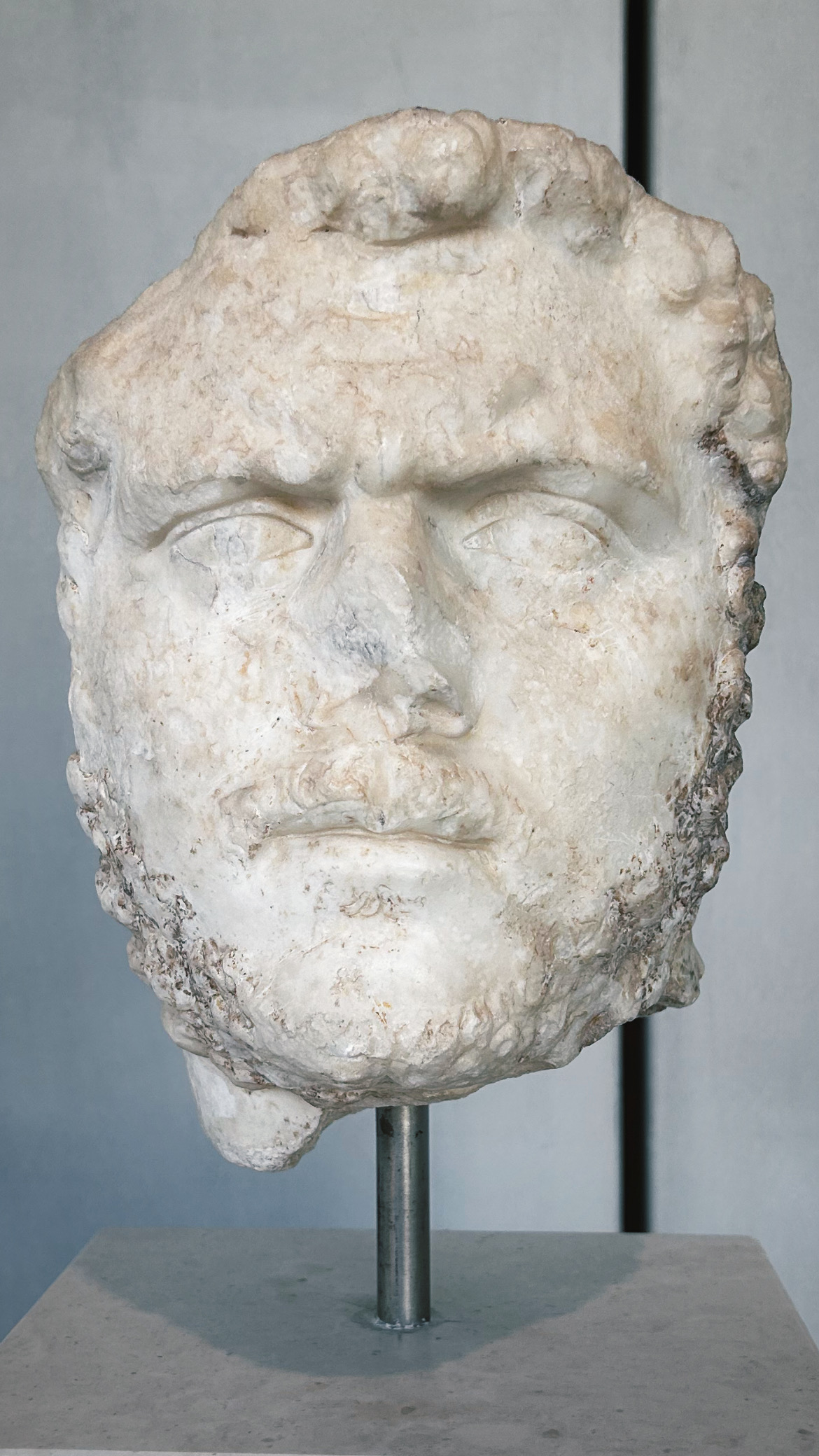
Bronze, movement and the human figure
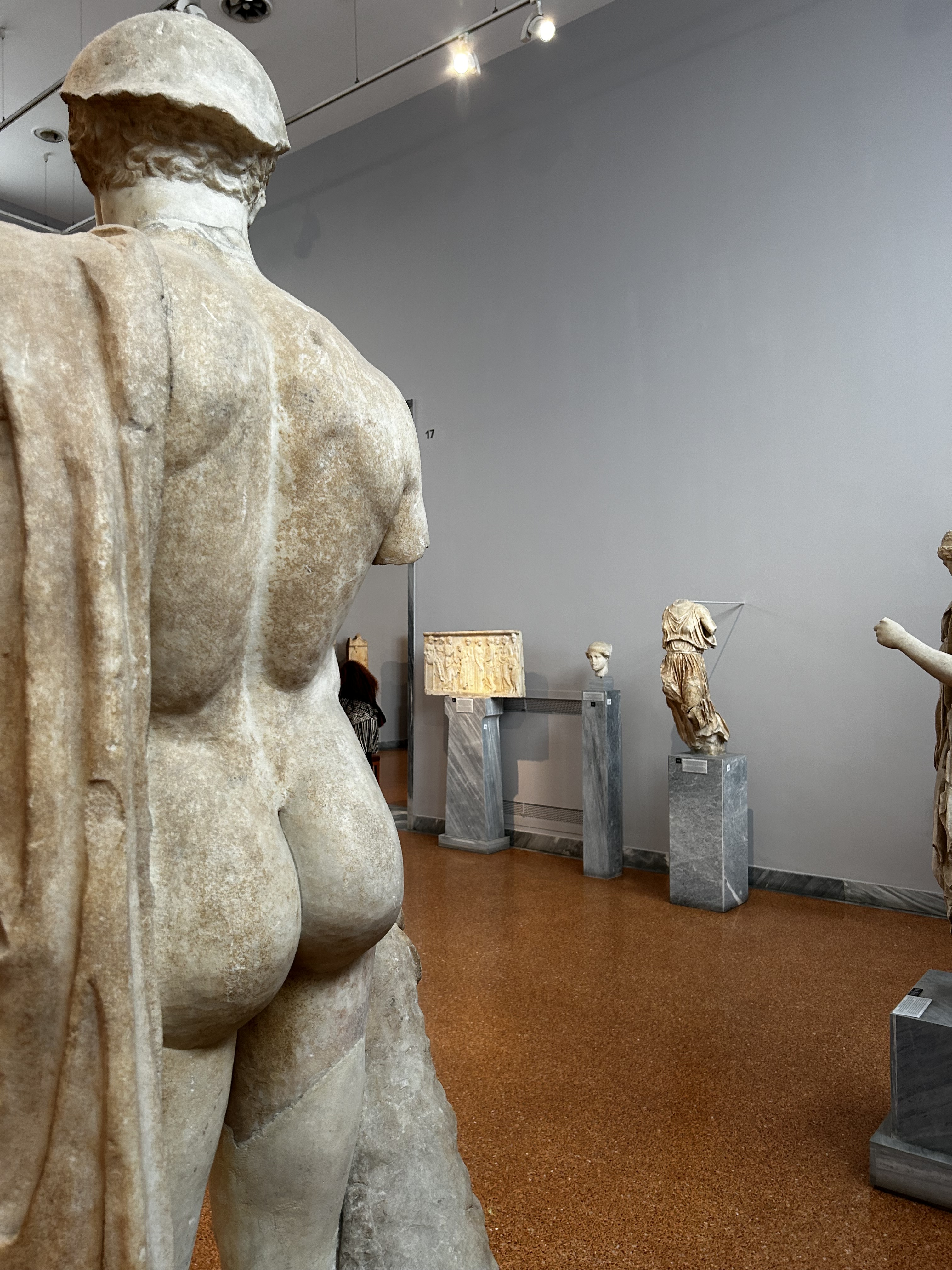
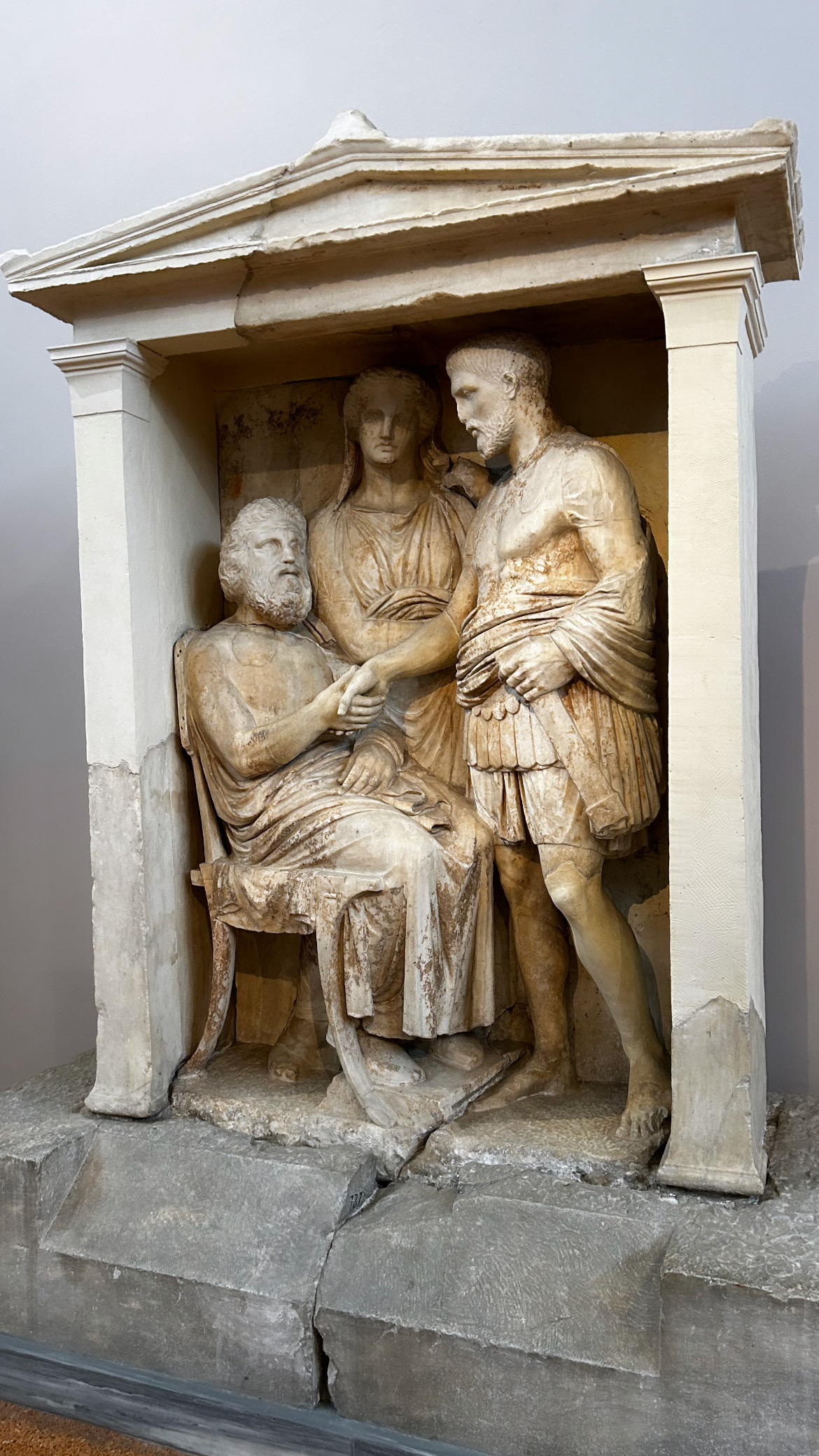
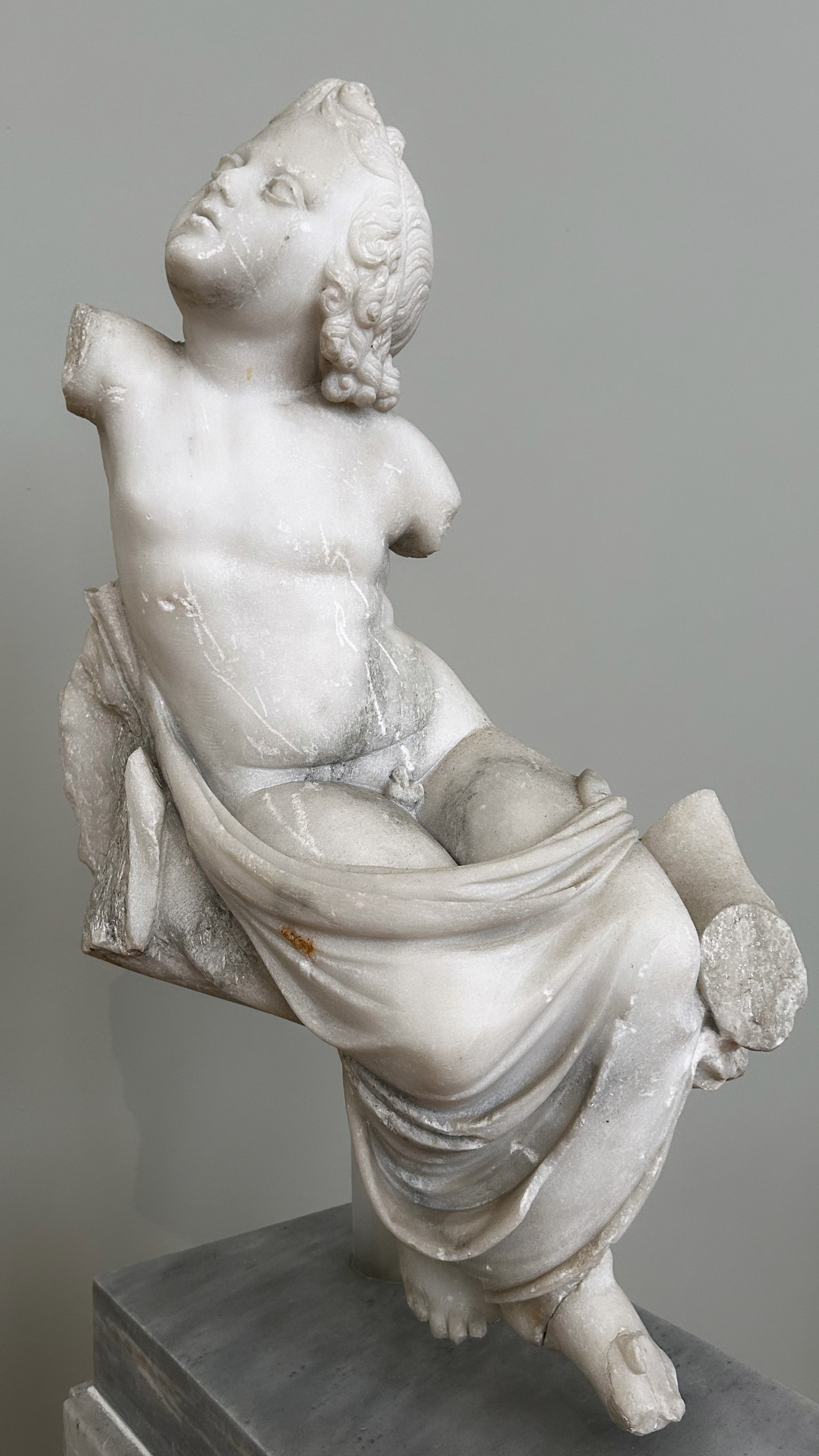
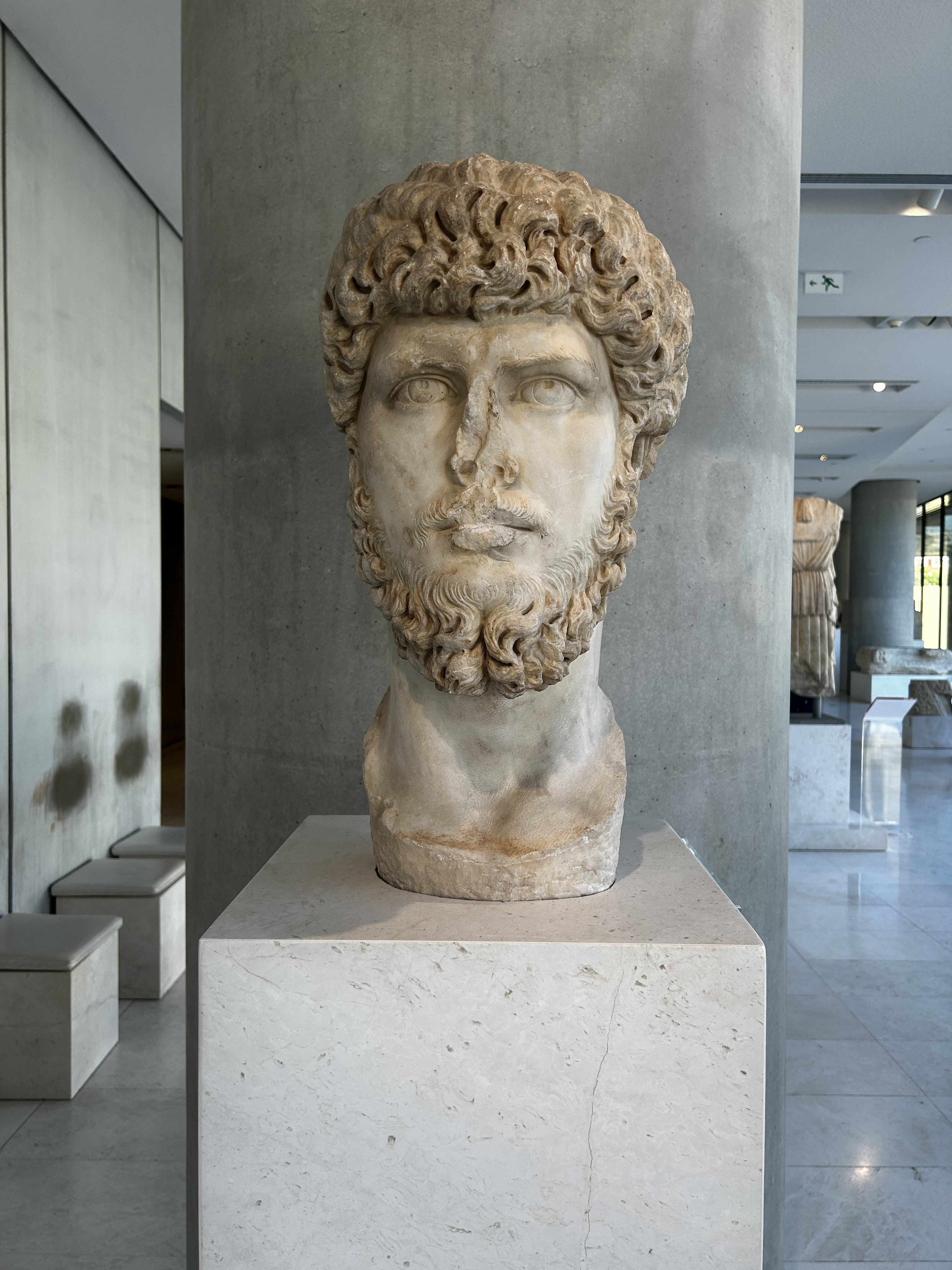
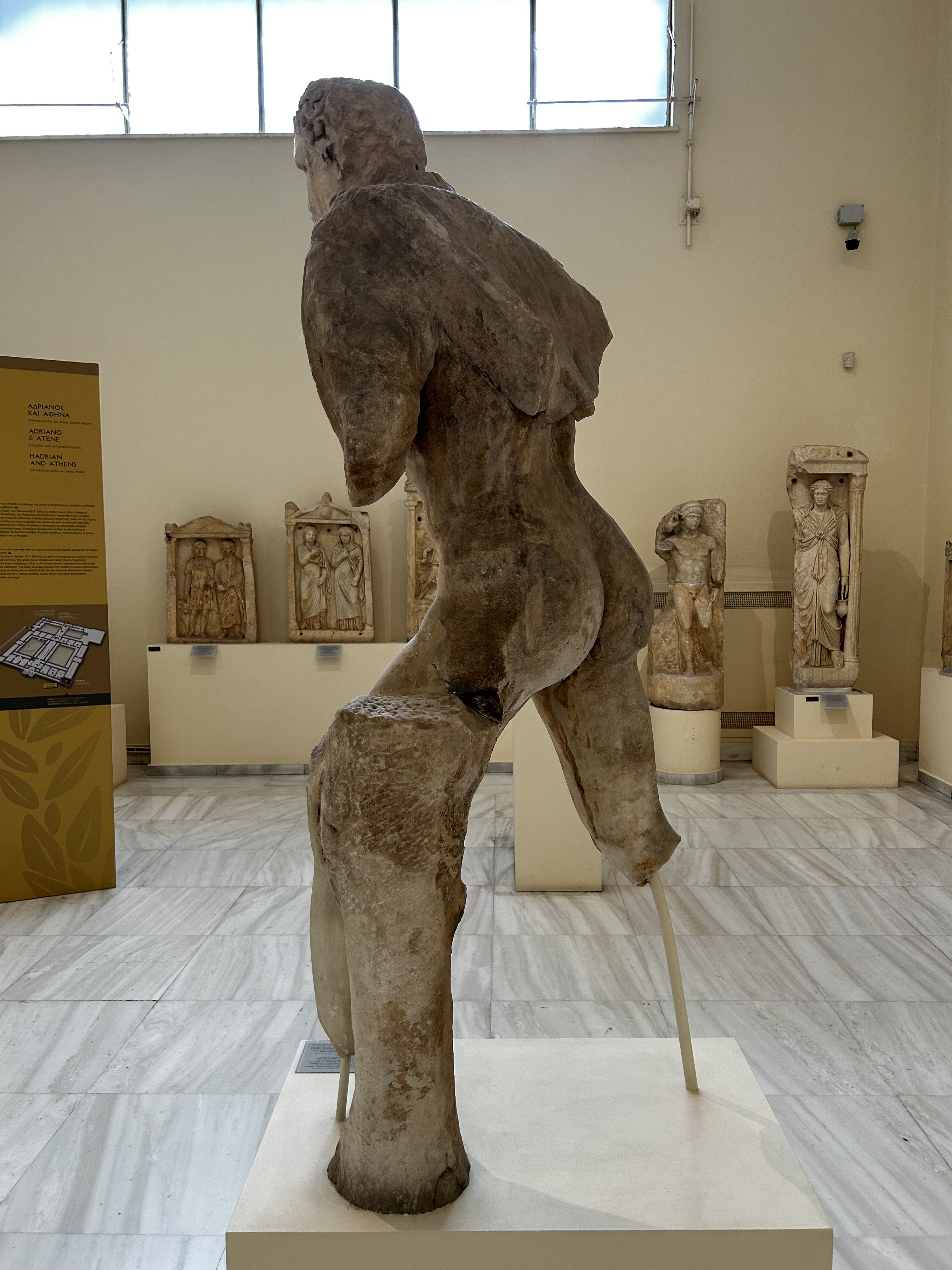
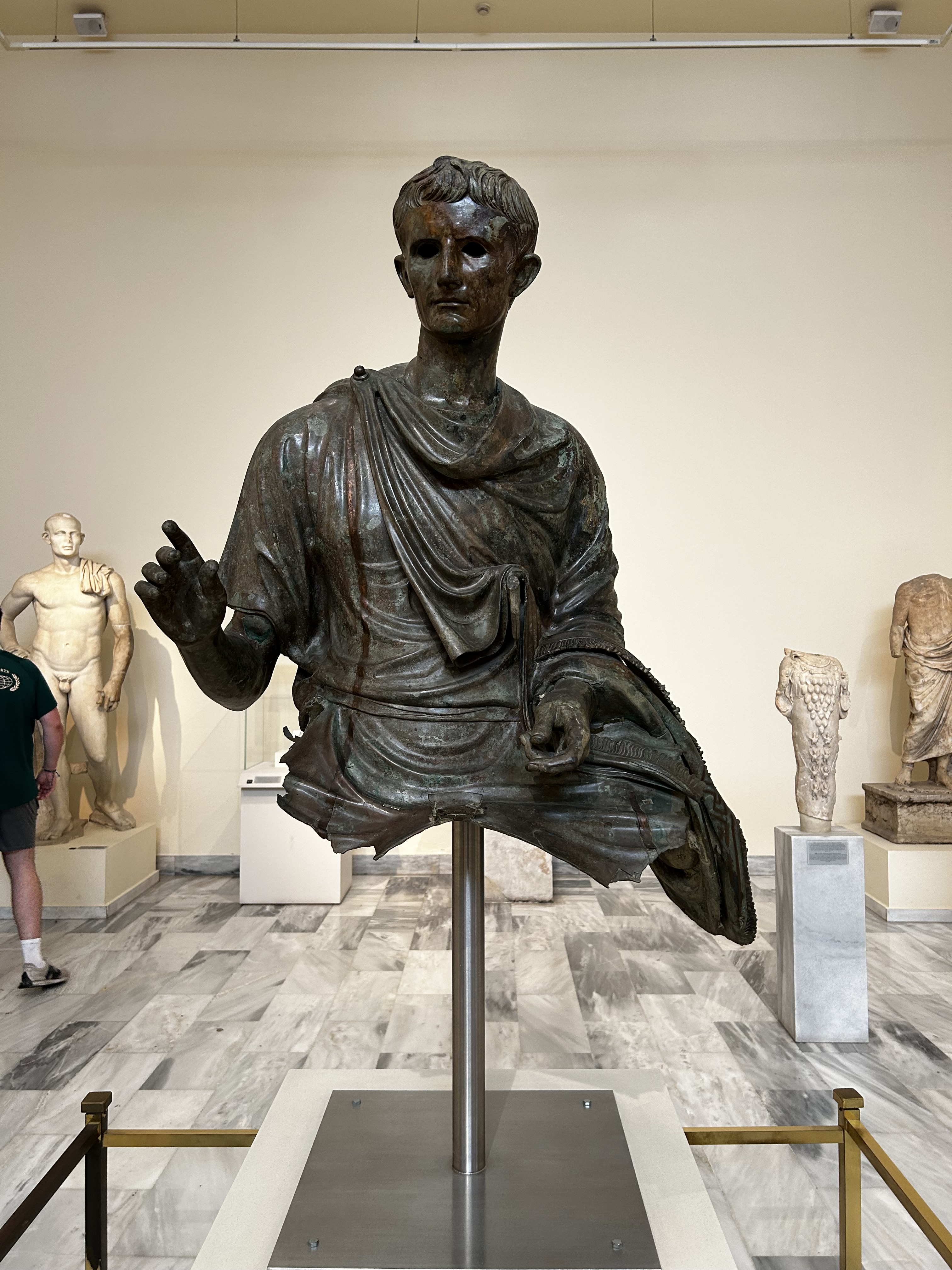
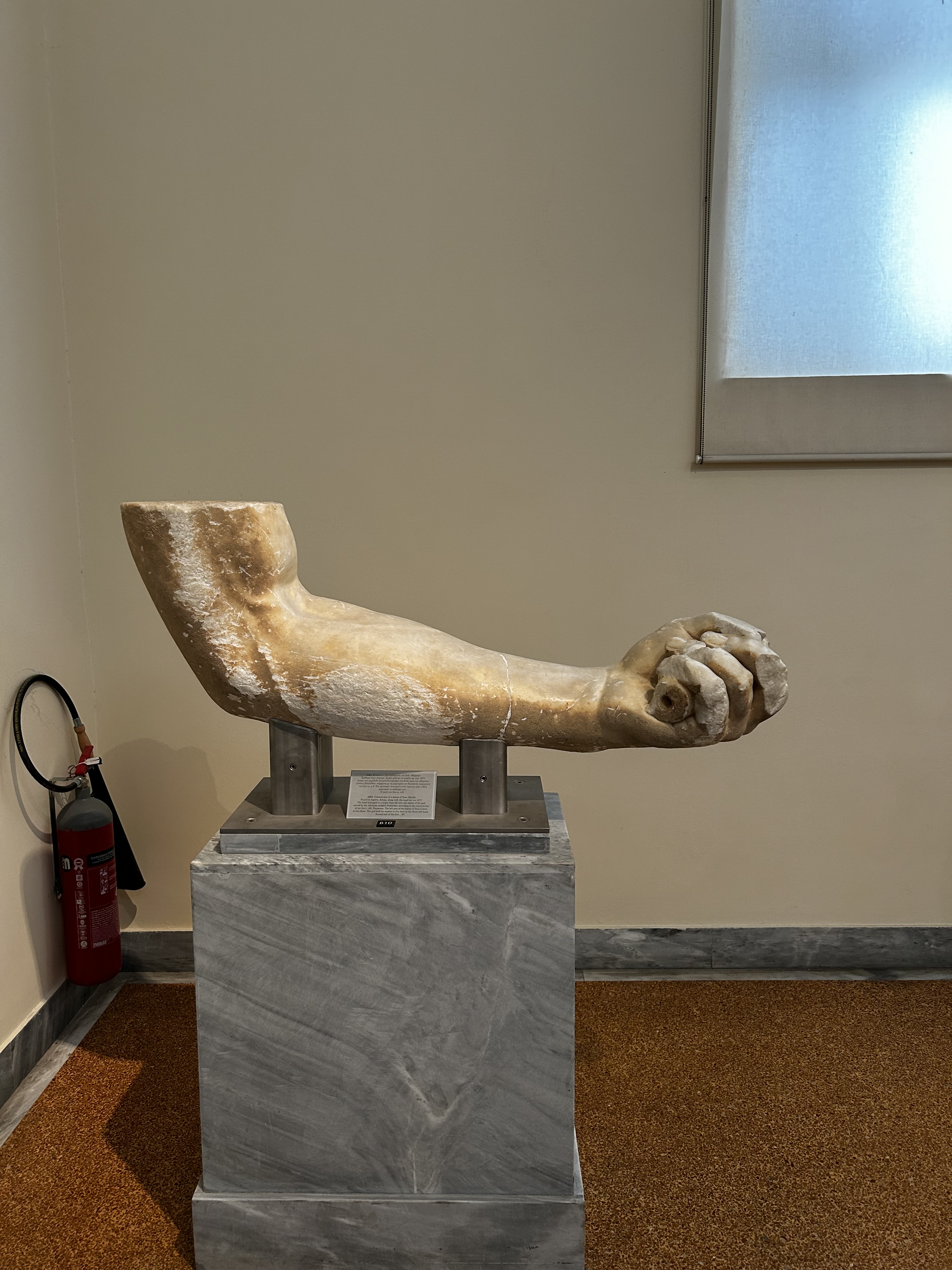
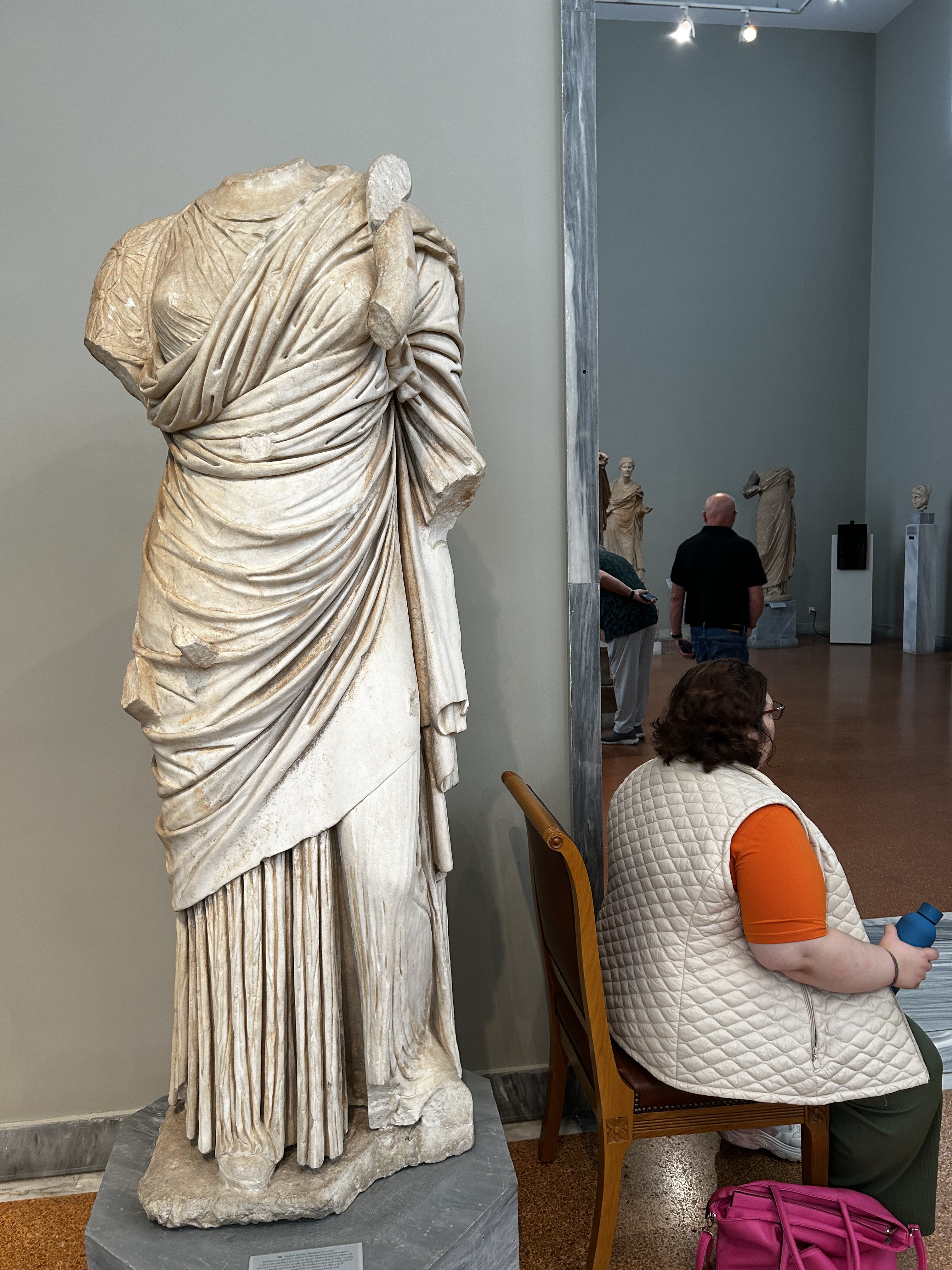
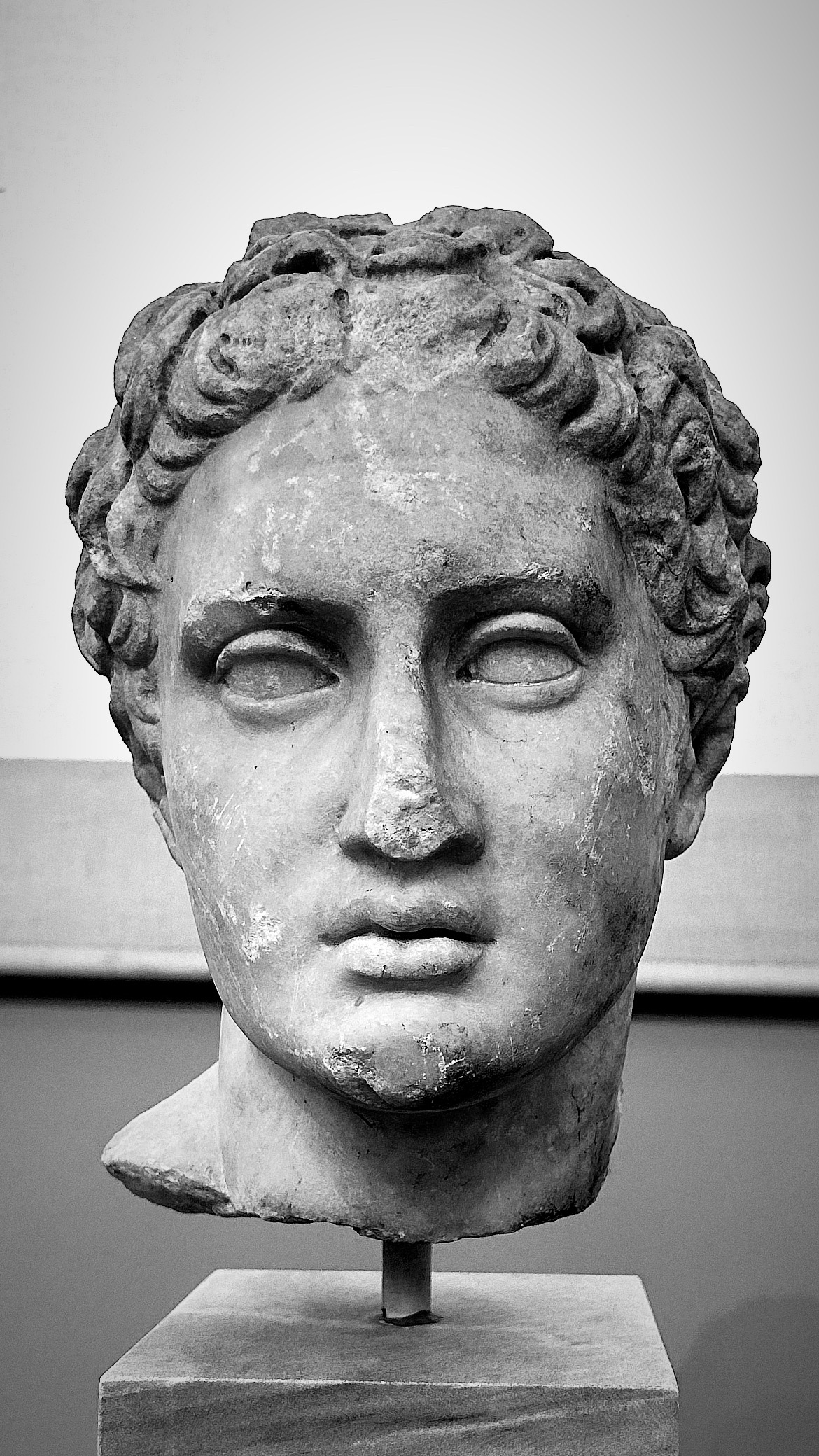
The museum’s sculpture collection provides an exceptionally detailed account of developments in Greek representations of the body.
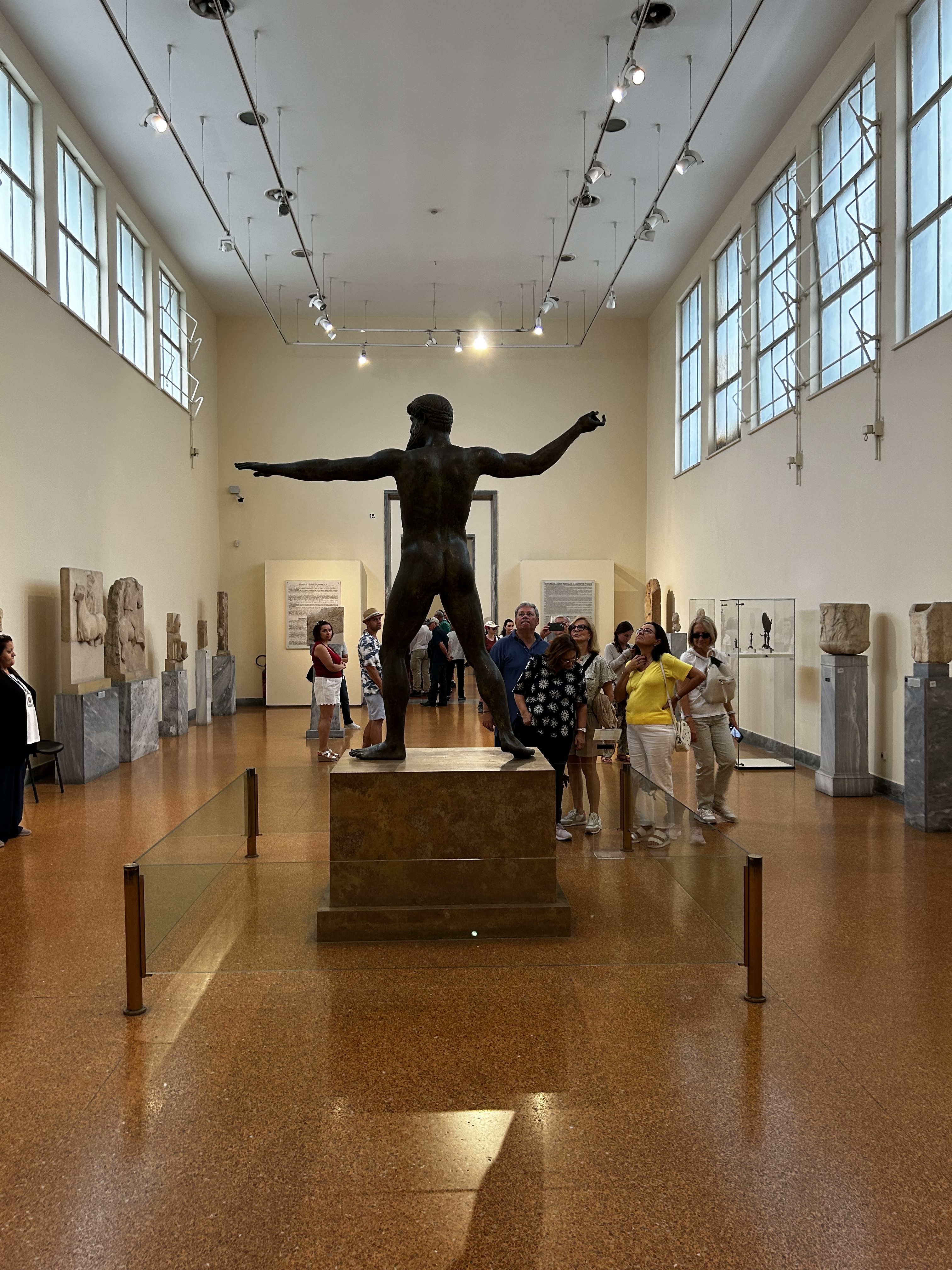
Among its most arresting works is the great bronze figure recovered from the sea near Cape Artemision, conventionally called the Artemision Bronze. Dating from around 460 BCE, the sculpture depicts a mature, bearded male deity standing with his legs apart and one arm extended.
Its precise identity remains unresolved. The figure may represent Zeus preparing to throw a thunderbolt or Poseidon holding a trident. Because the original attribute is missing, the question cannot be settled conclusively.
The sculpture’s power resides in its carefully calculated arrangement of the body. Although the arms are extended in an emphatic gesture, the figure remains balanced and controlled. The distribution of weight, articulation of the musculature and positioning of the limbs demonstrate the growing sophistication of Greek bronze casting during the early Classical period.
The Jockey of Artemision, encountered elsewhere in the sculpture galleries, belongs to a very different artistic moment.
Its galloping horse appears almost violently animated, while the young rider’s comparatively small body intensifies the impression of speed. The sculptor paid close attention to the animal’s musculature, the tension of movement and the contrasting proportions of horse and child.
The differences between these two bronzes are considerable. The earlier divine figure achieves its effect through equilibrium and controlled physical action. The Hellenistic horse and rider depend upon the representation of movement at its most unstable.
Their survival also provides a rare opportunity to examine original ancient bronzes rather than the Roman marble copies through which many celebrated Greek sculptures are principally known.
A painted world before the Parthenon
One of the museum’s most beautiful collections is devoted to the prehistoric settlement of Akrotiri on Thera, modern Santorini.
The volcanic eruption that devastated the island during the second millennium BCE preserved substantial remains of its buildings and interior decoration. The surviving wall paintings offer unusually extensive evidence of Aegean visual culture before the emergence of classical Greek art.
The celebrated Spring Fresco, dating from the sixteenth century BCE, depicts red lilies growing among irregular volcanic rock formations while swallows fly overhead.
Originally extending across three walls of a room, the painting creates an expansive landscape through a surprisingly economical arrangement of forms. The flowers appear to grow from the rocks themselves, while the birds introduce movement and changes of scale.
The work is particularly interesting for its treatment of the natural world. Its landscape is recognisable without attempting the systematic illusion of pictorial depth familiar from later European painting. Colour, contour and rhythmic arrangement establish a coherent visual environment.
Other paintings from Akrotiri depict boxing children and antelopes. Together with the settlement’s surviving pottery, furniture impressions and administrative objects, they reveal the sophistication of domestic environments within the Bronze Age Aegean.
The discovery of these interiors has been crucial to understanding how extensively painting and decorative art once occupied architectural spaces. The marble monuments that dominate modern perceptions of ancient Greece were only one part of a much richer visual culture.
The machine that calculated the heavens
An entirely different achievement appears among the museum’s metalwork collections.
Recovered in 1901 from an ancient shipwreck near the island of Antikythera, the Antikythera Mechanism initially appeared to be an assemblage of corroded bronze fragments. Subsequent investigations revealed an extraordinary system of interlocking gears, inscriptions and calibrated dials.
Dating to the first century BCE, the mechanism was designed to calculate astronomical and calendrical cycles. Its surviving components and inscriptions indicate functions involving the movements of the Sun and Moon, the relationship between solar and lunar calendars, and the prediction of eclipses.
The instrument demonstrates a sophisticated understanding of mathematical astronomy translated into mechanical engineering. Its design incorporated astronomical cycles developed through centuries of observation, including knowledge associated with Babylonian astronomy.
The mechanism remains the subject of extensive scientific research. Advances in imaging technology have made it possible to examine inscriptions and internal components that were previously inaccessible, although aspects of its original configuration are still debated.
Its significance extends beyond the ingenuity of one ancient device. The surviving fragments suggest the existence of specialist technical knowledge and manufacturing capabilities that are scarcely represented in the archaeological record.
A museum preparing for change
The National Archaeological Museum has retained much of the character of a nineteenth-century collecting institution. Its long sequences of galleries, densely arranged cases and chronological displays reward sustained attention, although the scale of the collections can make a visit demanding.
A major architectural transformation is now planned.
In 2023, David Chipperfield Architects, working with the Greek practice Tombazis & Associates, won the international competition to expand and refurbish the museum.
The proposal introduces new galleries largely below a raised landscaped garden, preserving the architectural prominence of the original neoclassical building. The design also includes improved research facilities, exhibition spaces and public amenities, with a new entrance facing Patission Street.
On 16 October 2026, the relevant Greek Ministry of Culture advisory councils gave favourable opinions on the project’s final design studies, following revisions intended to reduce the visual impact of the extension. Concerns had been raised that the new structure might obscure the historic façade, demonstrating the difficulties involved in adapting an important nineteenth-century building to contemporary museum requirements.
The expansion is intended to provide significantly more space for the collections and allow objects currently held in storage to be displayed.
It presents an important museological opportunity. The museum’s holdings are extensive enough to support interpretations extending beyond the conventional chronological development of Greek art, including closer examination of technological innovation, commercial exchange, regional differences and the everyday uses of objects.
The existing galleries already contain abundant evidence of these histories. A Mycenaean funerary mask, a painted Cycladic face, the remains of a Bronze Age interior and a sophisticated astronomical instrument each illuminate different aspects of antiquity. Their importance lies partly in how much they reveal about cultures whose surviving objects remain an incomplete record of their achievements.
Visiting the National Archaeological Museum
The National Archaeological Museum is located at 44 Patission Street (28th of October Street), Athens, a short distance from Omonia and Victoria.
The museum operates seasonal opening hours. From 4 May to 15 November 2026, it is open Wednesday–Monday, 8 am–8 pm, and Tuesday, 1 pm–8 pm. Winter hours begin on 16 November. General admission is currently €20.
The temporary exhibition Pylos of Nestor: A Mycenaean Kingdom Revealed has been extended until the end of January 2027.
Allow several hours for the permanent collection, particularly the Mycenaean galleries, the Archaic and Classical sculpture, the bronze collection and the prehistoric wall paintings from Thera.

