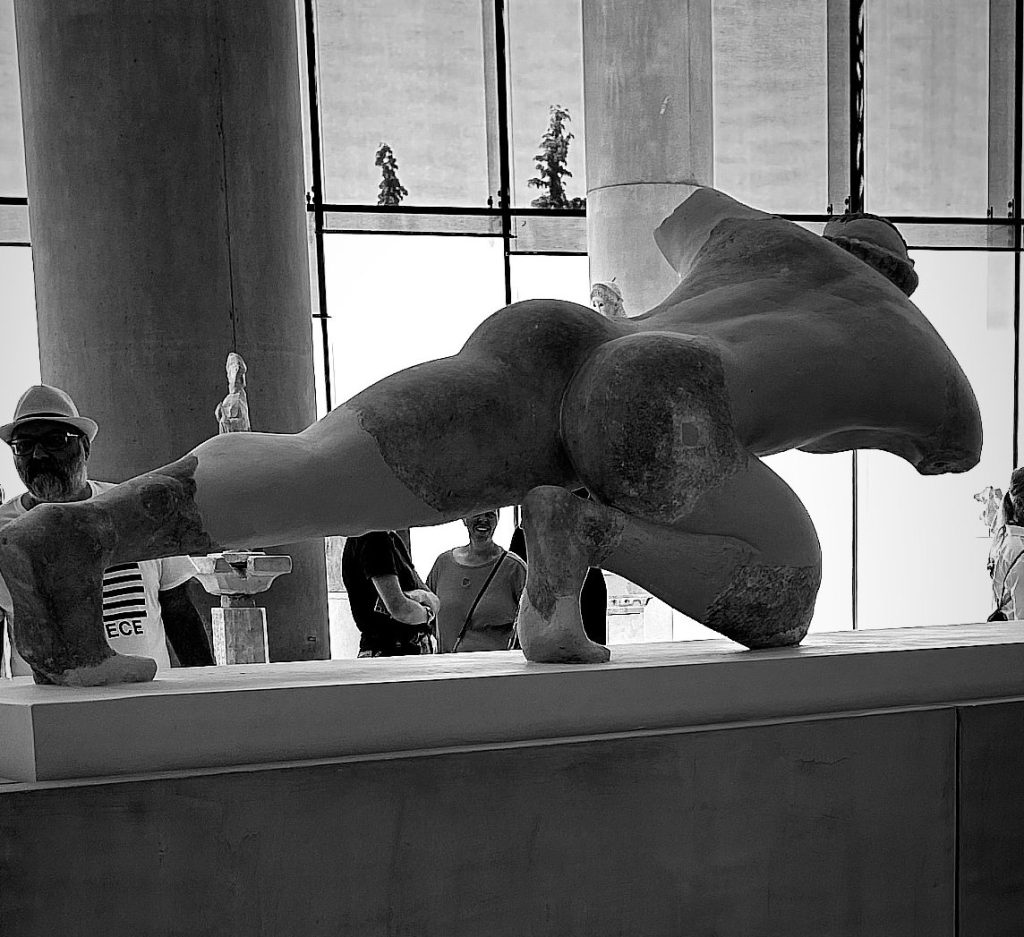
Bernard Tschumi’s museum in Athens offers a remarkable encounter with ancient Greek sculpture, while its architecture raises questions about archaeology, cultural ownership and the presentation of antiquity.
Beneath the glass floors of the Acropolis Museum lie the remains of an Athenian neighbourhood inhabited over many centuries. Houses, courtyards, wells and workshops occupy the ground upon which one of Europe’s most ambitious archaeological museums was constructed. The arrangement is unusual: the building stands above the archaeological site that complicated its own construction, supported by columns carefully positioned to preserve the surviving structures.
Opened in June 2009, the museum was designed by the Swiss-French architect Bernard Tschumi in collaboration with the Greek architect Michael Photiadis. Its location, approximately 300 metres southeast of the Parthenon, was central to the architectural proposal. The museum would house the surviving sculptures of the Acropolis while maintaining a direct visual relationship with the monuments from which they originated.
The result is a building whose organisation is unusually dependent upon its contents. The top floor follows the orientation of the Parthenon rather than that of the streets below. Glass walls expose the galleries to the changing Attic light, while the circulation through the building broadly follows the historical development of the Acropolis.
Tschumi, whose architectural thinking has frequently examined the relationship between space, movement and human activity, approached the museum through three interdependent considerations: its archaeological setting, its sculptural collection and the movement of visitors. The building’s concrete, steel and glass have been arranged to accommodate all three, although their demands were occasionally contradictory.
The extensive glazing, for example, required careful technical consideration. The architectural team worked with specialist glass designers to reconcile the desire for natural light with the need to protect ancient marble from solar radiation and excessive heat. Low-iron glass, ultraviolet protection, shading screens and ceramic coatings were incorporated into the façade.
The museum’s apparent simplicity conceals a considerable engineering and conservation effort.
Before the classical Acropolis
The collections begin on a gently ascending ramp in the Gallery of the Acropolis Slopes. Its gradient recalls the historical approach to the sanctuary, while the objects displayed along its sides introduce aspects of Athenian life frequently neglected in accounts of the city’s great monuments.
The slopes accommodated religious sanctuaries, domestic buildings and places of public activity. Offerings associated with the worship of Dionysos, Asklepios and other deities reveal a religious landscape considerably more varied than the familiar image of the Acropolis as the domain of Athena alone.
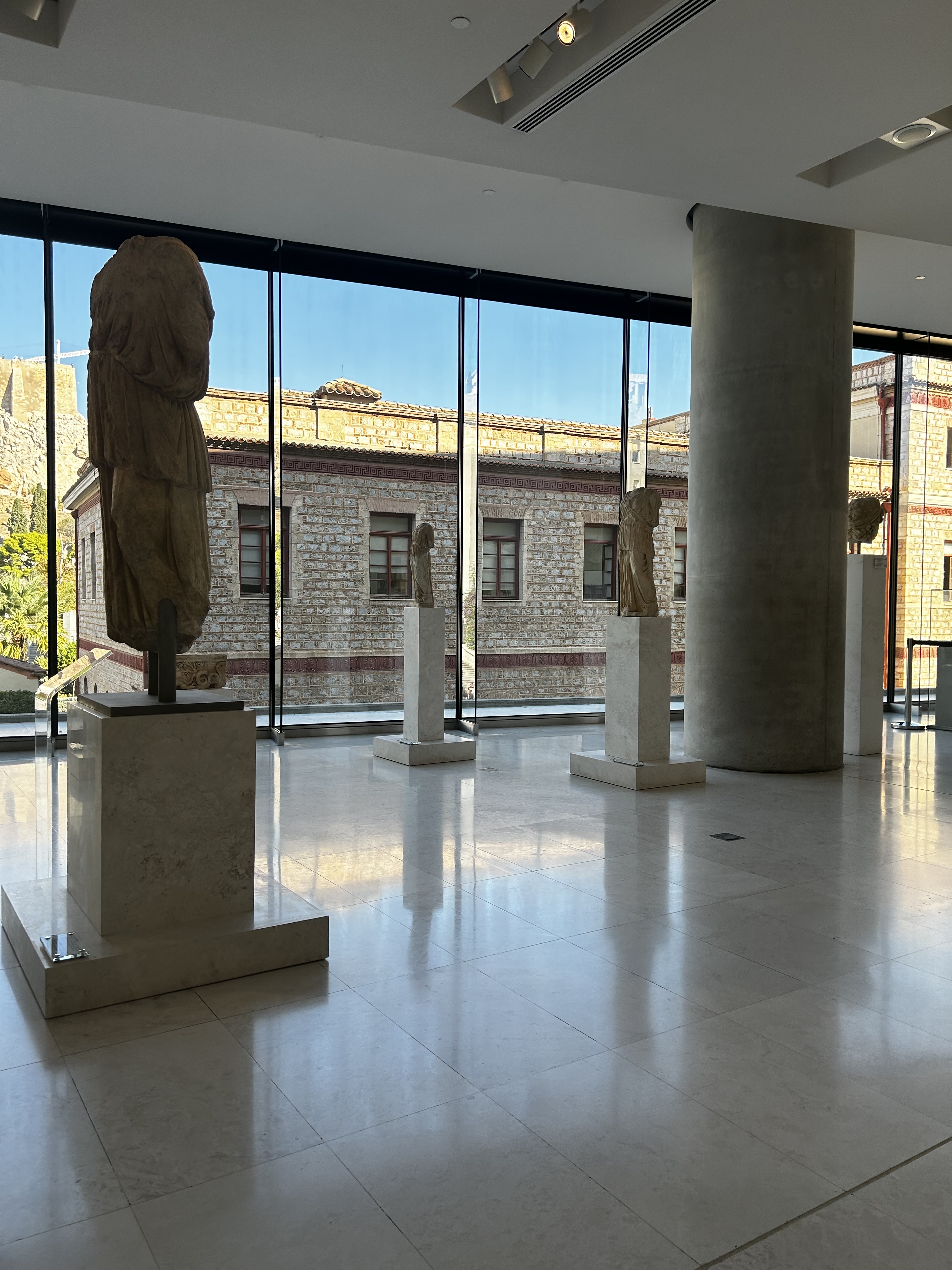
The first-floor Archaic Acropolis Gallery is among the museum’s finest spaces. Here, freestanding sculptures are arranged in a large, naturally illuminated room, allowing visitors to examine them from multiple angles.
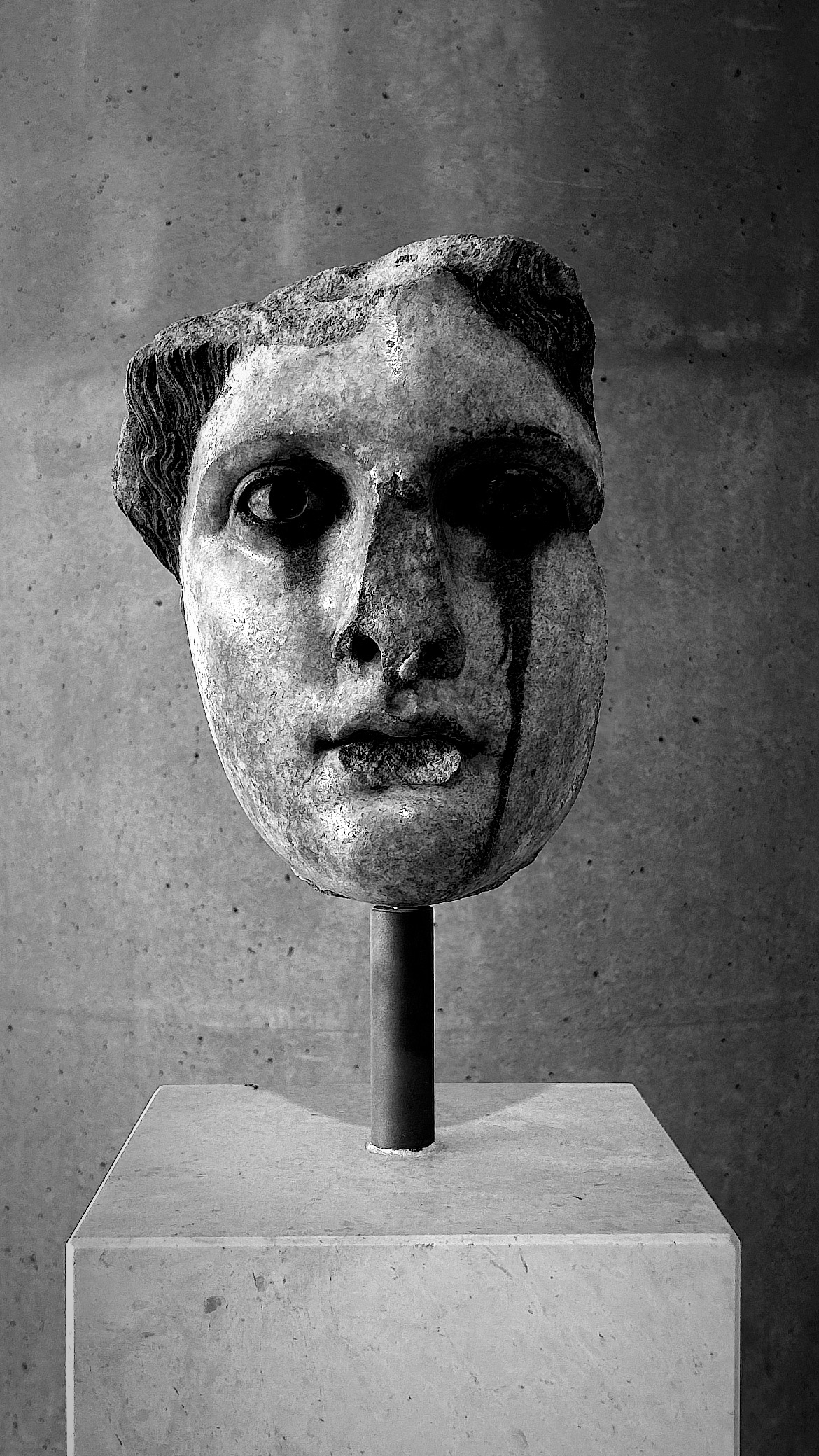
The female korai, dedicated at the sanctuary during the sixth and early fifth centuries BCE, are particularly rewarding. Their elaborate hairstyles, patterned garments and carefully differentiated expressions reveal an artistic culture concerned with surface, ornament and the representation of the human figure.
The celebrated Peplos Kore, dating from approximately 530 BCE, provides an instructive example. Although its surviving marble appears predominantly pale, scientific examination has identified evidence of an elaborate painted costume. The figure’s garments incorporated blue and green colouring, floral ornament, small animals and decorative borders. Holes in the sculpture indicate the former presence of metal attachments, including jewellery and a head ornament.
The statue’s precise identity remains uncertain. Traditionally understood as a young woman making a dedication, it has also been interpreted as a representation of a goddess, possibly Artemis.
Such details challenge the persistent modern conception of ancient Greek sculpture as an art of unadorned white marble. The original statues belonged to a visually complex environment of painted architecture, coloured stone and metal ornament. Their present condition reflects centuries of deterioration and the historical preference for treating the surviving marble surface as aesthetically complete.
Nearby, the Kritios Boy, generally dated to shortly after 480 BCE, demonstrates a significant development in the representation of the body. His weight rests on one leg, while the other remains relaxed. The resulting adjustments to the hips and torso suggest the beginnings of the naturalistic equilibrium that would become central to classical sculpture.
The contrast between the Archaic korai and the Kritios Boy is instructive, although the transition between artistic styles was neither immediate nor uniform. The gallery makes it possible to examine these developments through individual works rather than treating classical naturalism as an inevitable culmination of Greek art.
The Parthenon at eye level
The museum’s architectural argument becomes most explicit in the Parthenon Gallery, a glass-walled space occupying the uppermost level.
Its rectangular core reproduces the orientation and dimensions of the Parthenon’s cella, the enclosed central chamber of the temple. Around this structure, the surviving sculptures of the Ionic frieze are displayed in their original sequence, although at a considerably lower height than they occupied on the building itself.
The arrangement transforms the experience of examining the reliefs. The original frieze extended approximately 160 metres around the upper exterior walls of the cella. Its 115 sculpted blocks contained hundreds of human and animal figures, including horsemen, musicians, attendants and participants in what is generally interpreted as the procession of the Greater Panathenaia, the principal festival honouring Athena.
At the museum, visitors can follow the Parthenon frieze around the rectangular core, observing the changing density of figures and the sculptors’ treatment of overlapping bodies, horses and drapery.
The metopes, originally positioned above the temple’s outer columns, are displayed between steel supports corresponding in number to those columns. Sculptures from the great pediments are arranged at either end of the gallery, where their surviving forms can be examined from different viewpoints.
This presentation allows close examination of architectural sculpture that was originally intended to be seen from considerable distances. It inevitably changes the relationship between the viewer and the work, replacing the conditions of ancient religious architecture with those of a modern museum.
The gallery also makes the fractured history of the Parthenon’s sculptures impossible to overlook.
Original marble blocks are displayed alongside plaster casts representing works held elsewhere, principally in the British Museum. Their juxtaposition provides a visual account of what survives, what has been displaced and what remains missing altogether.
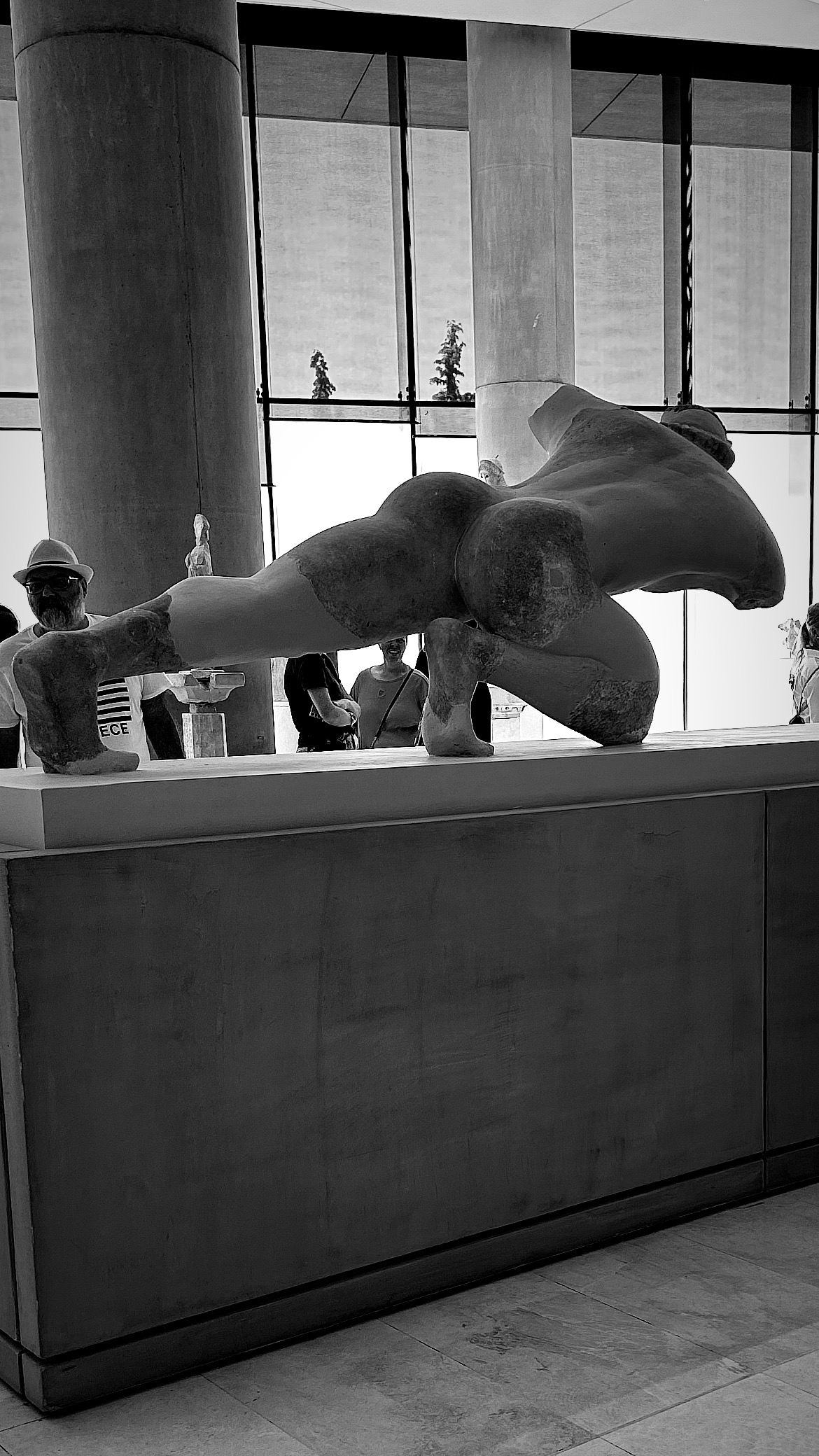
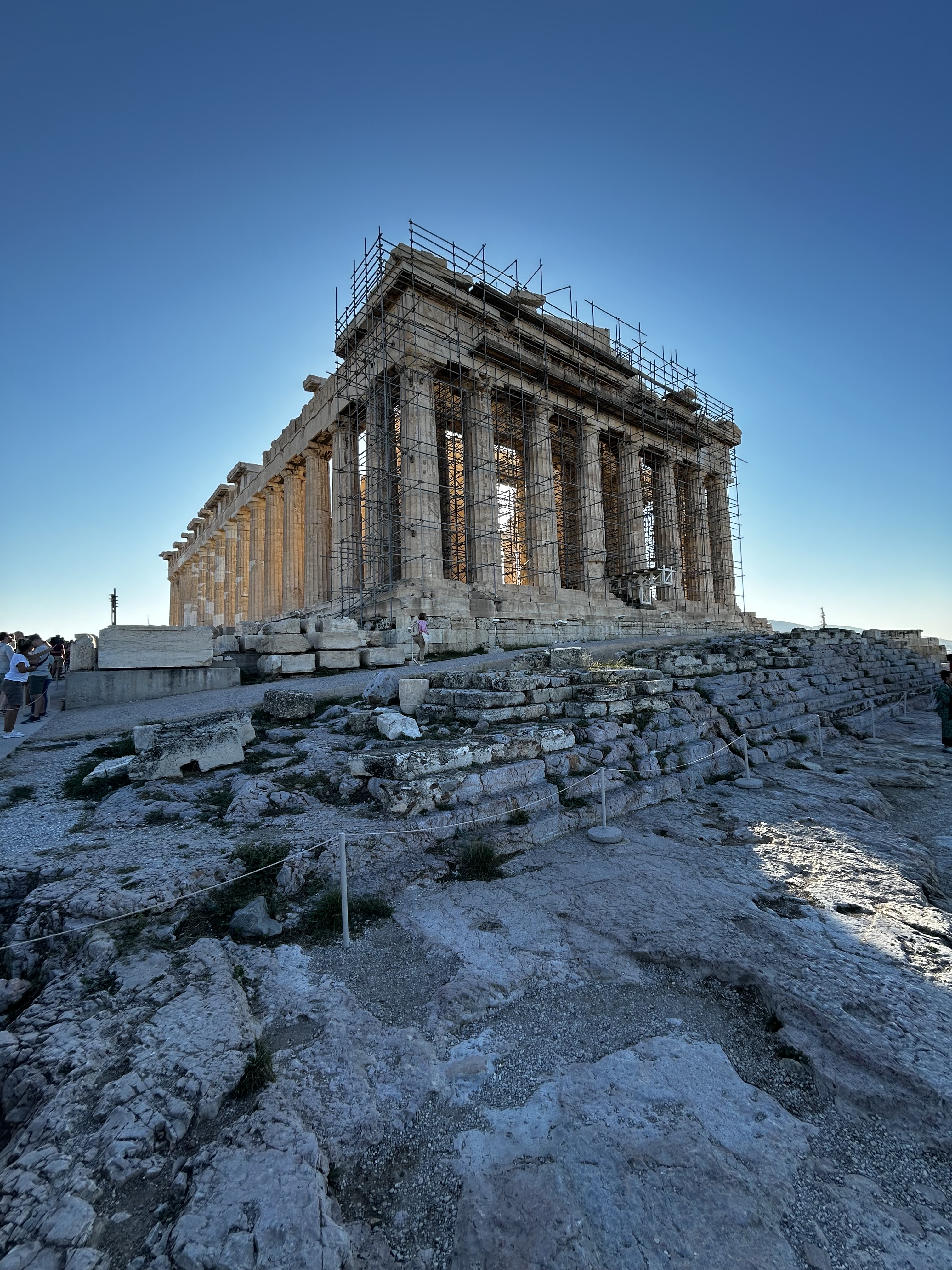
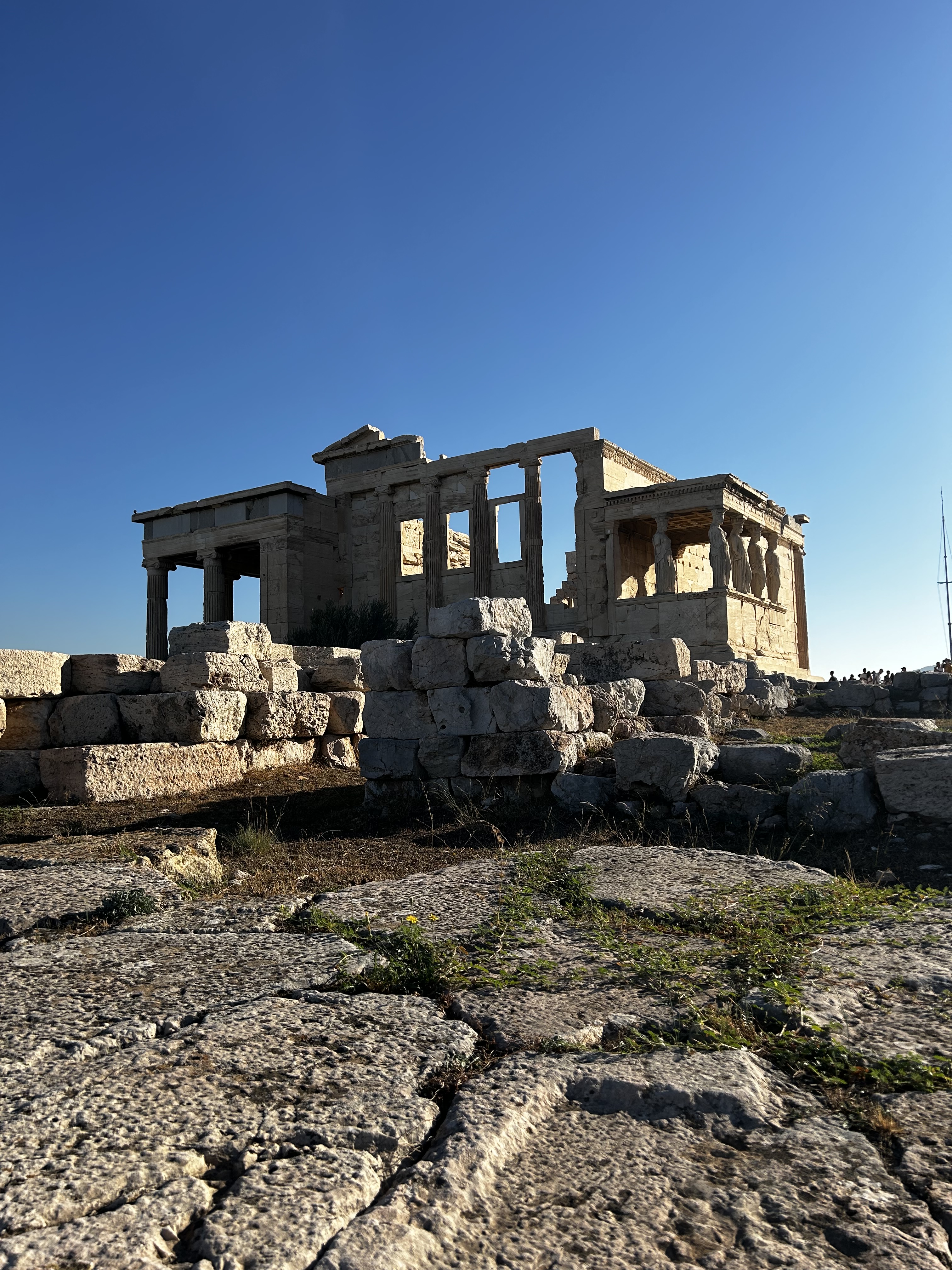
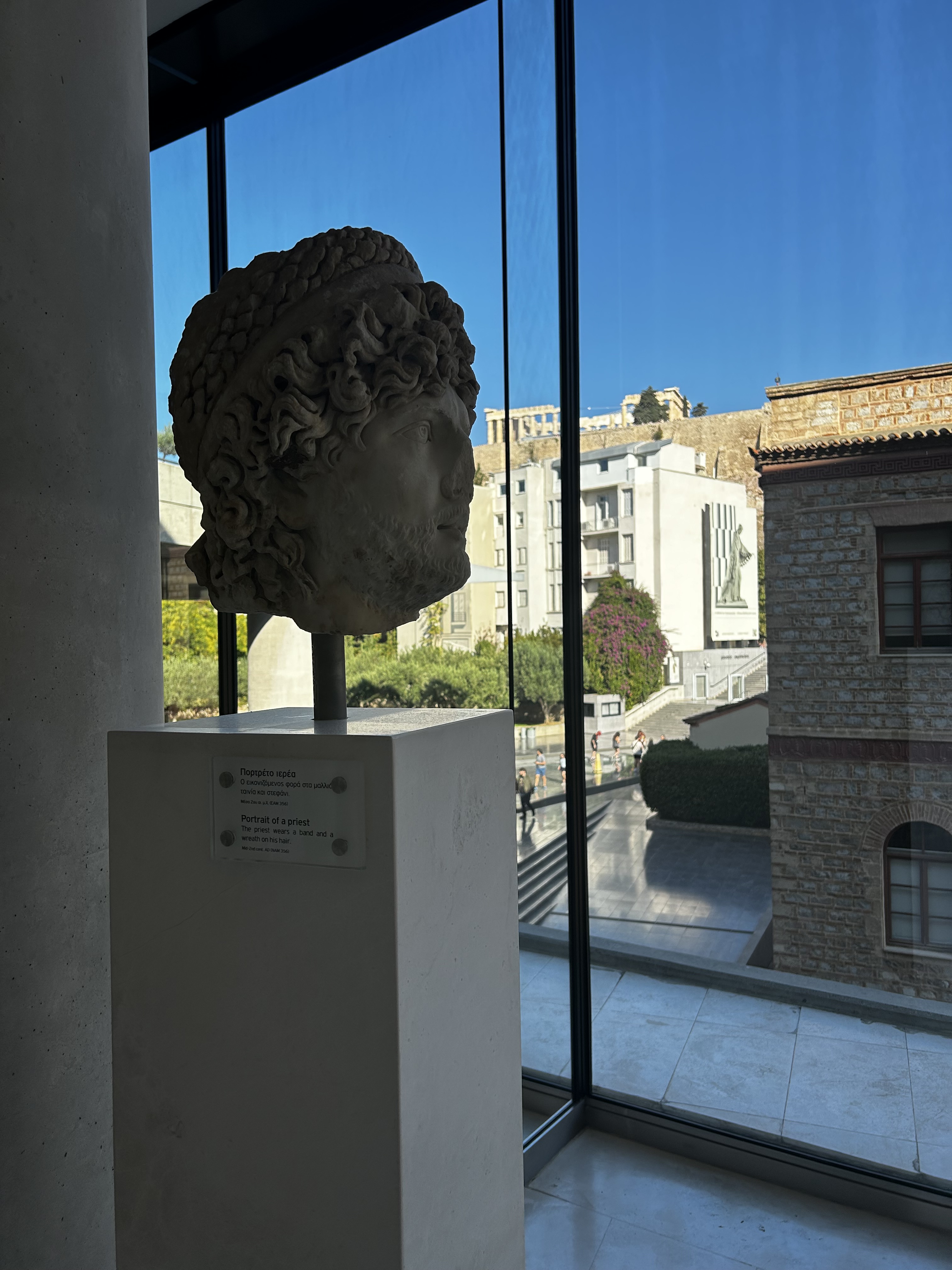
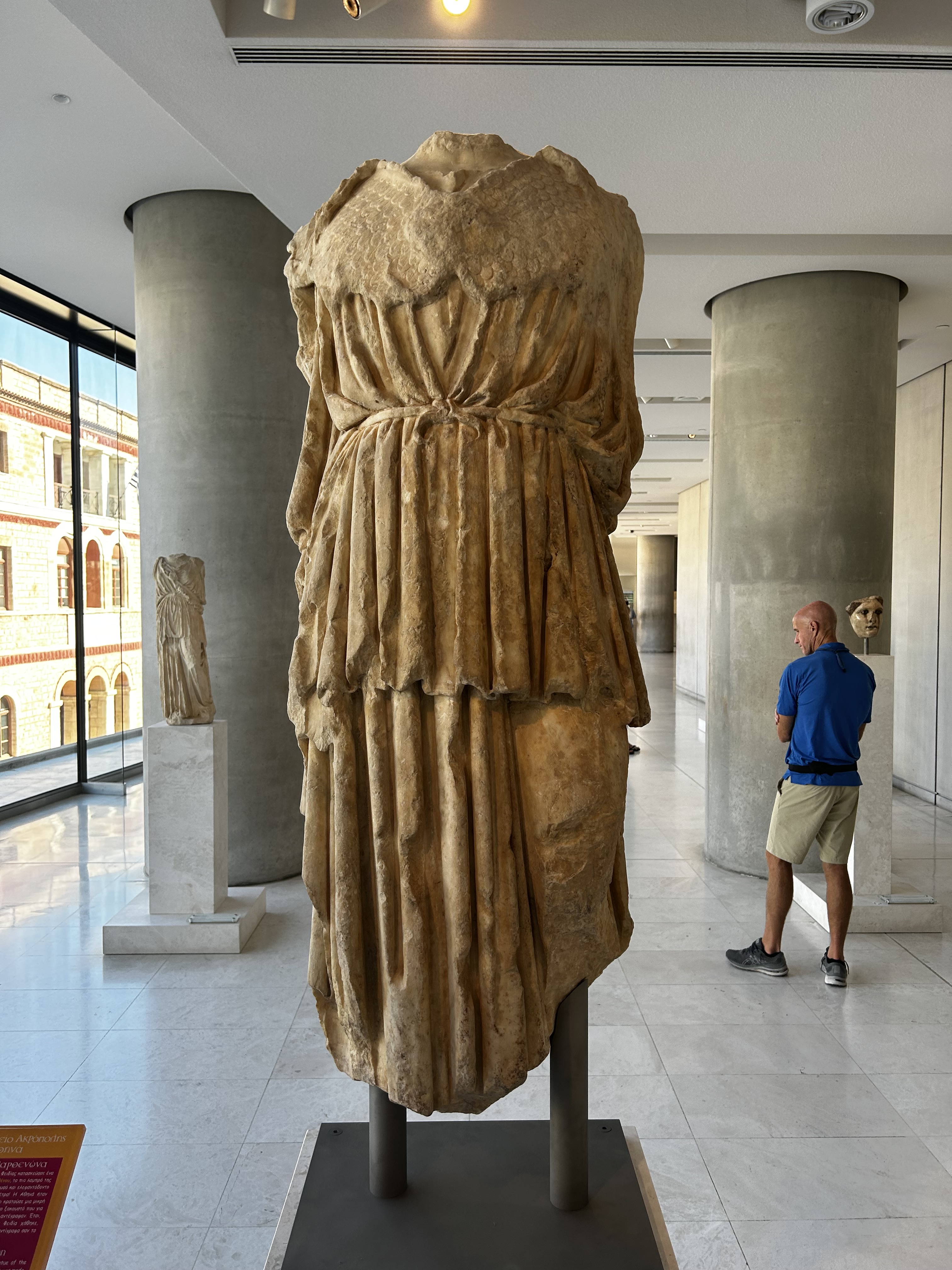
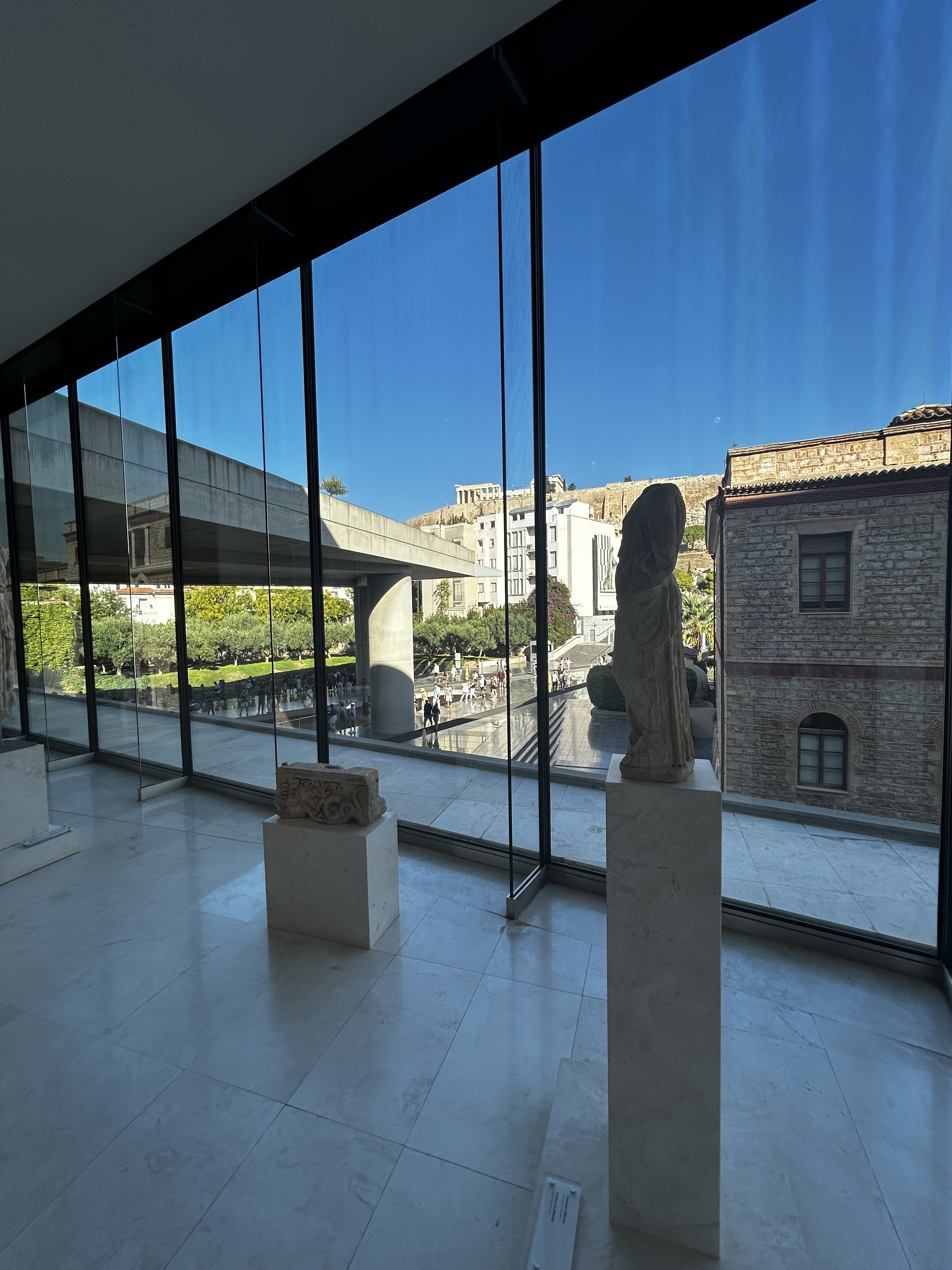
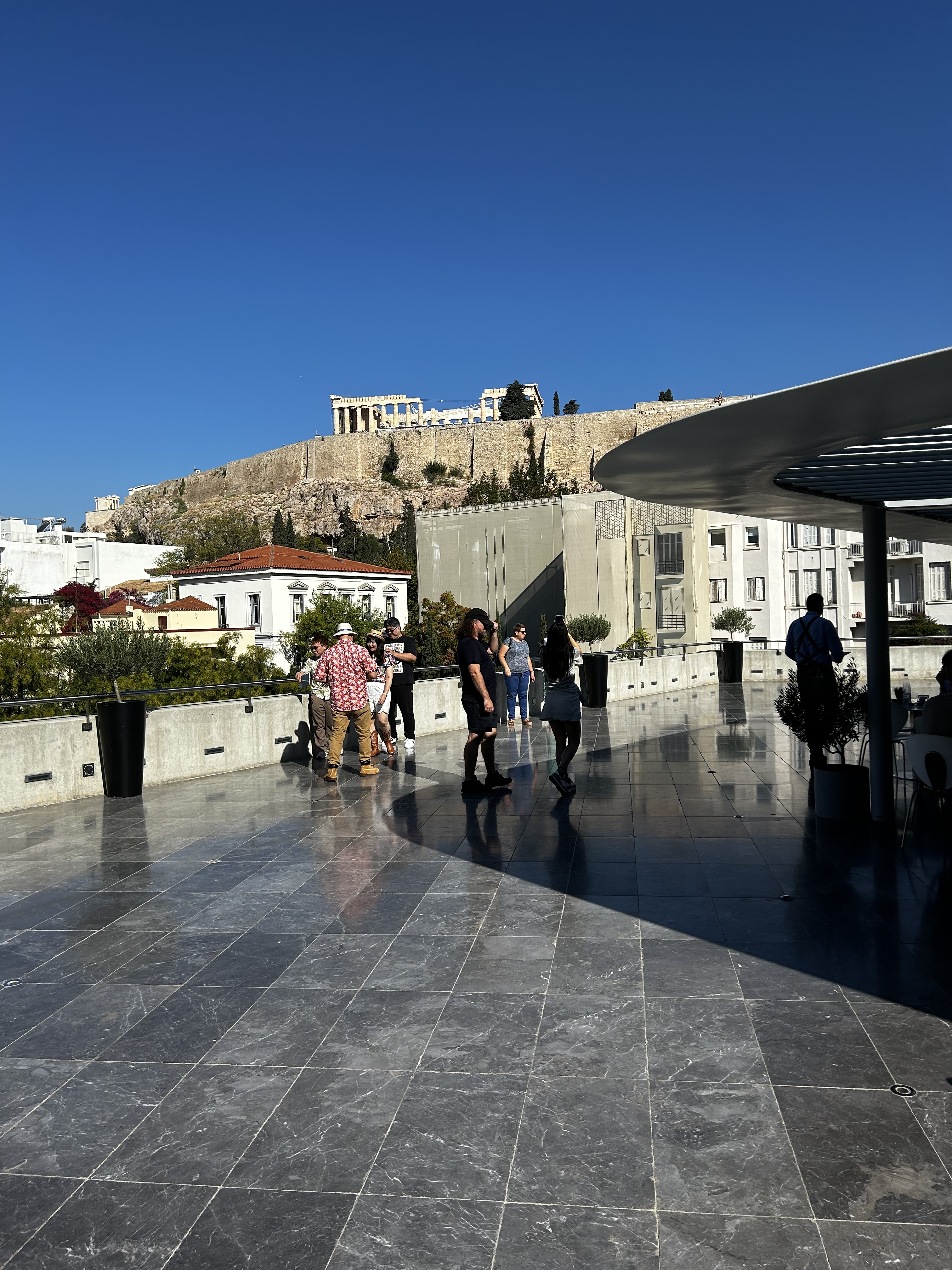
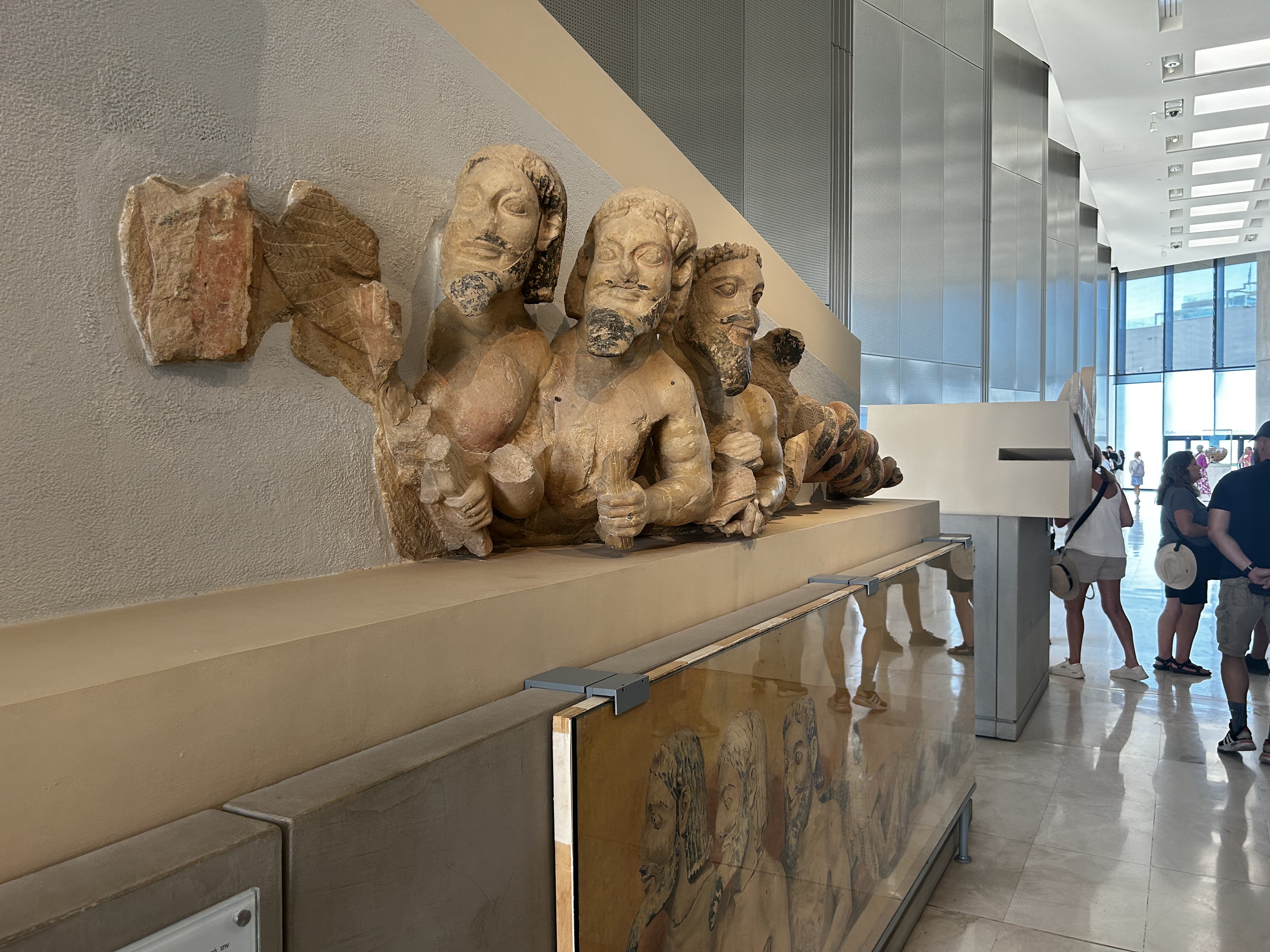
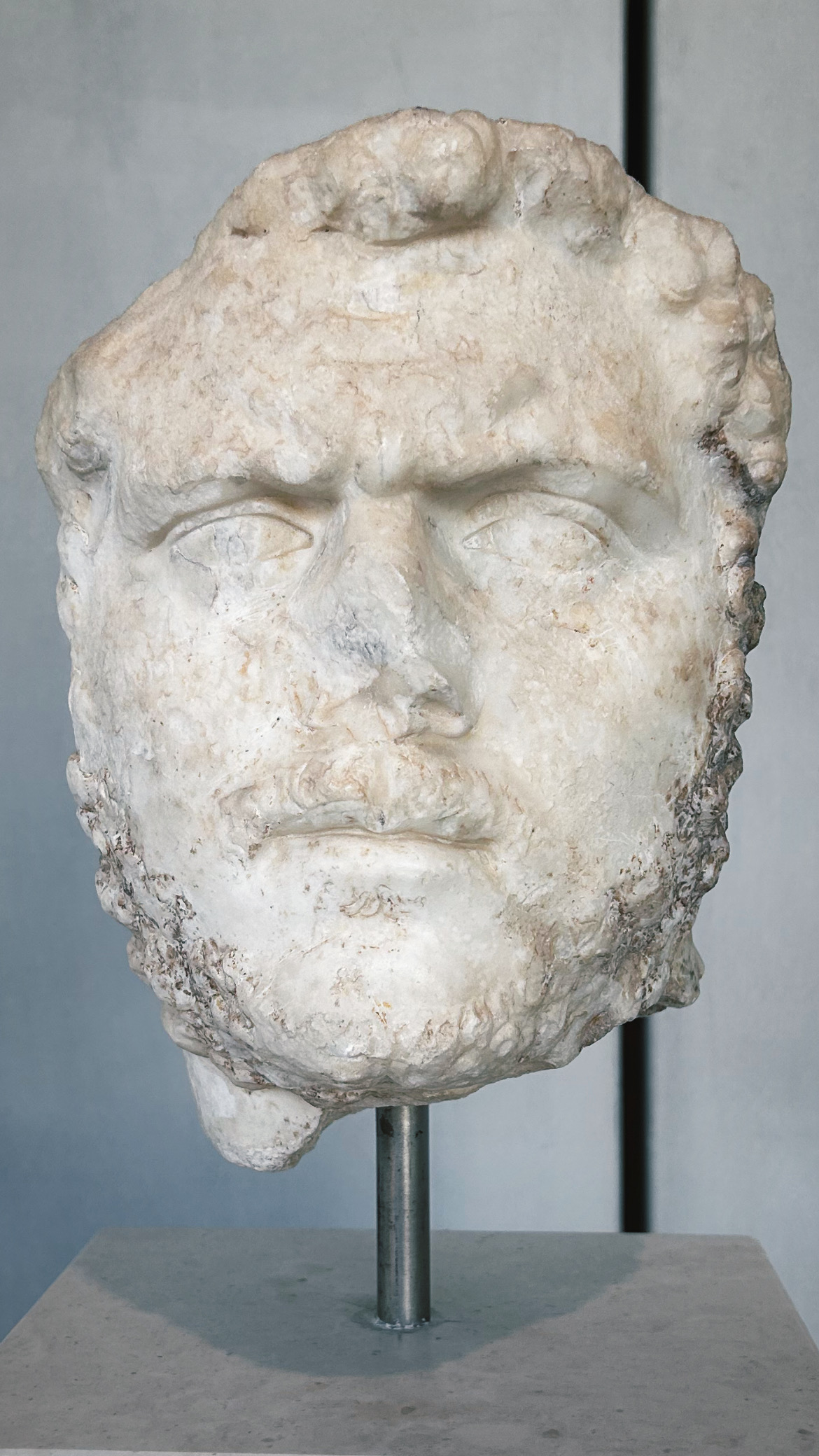
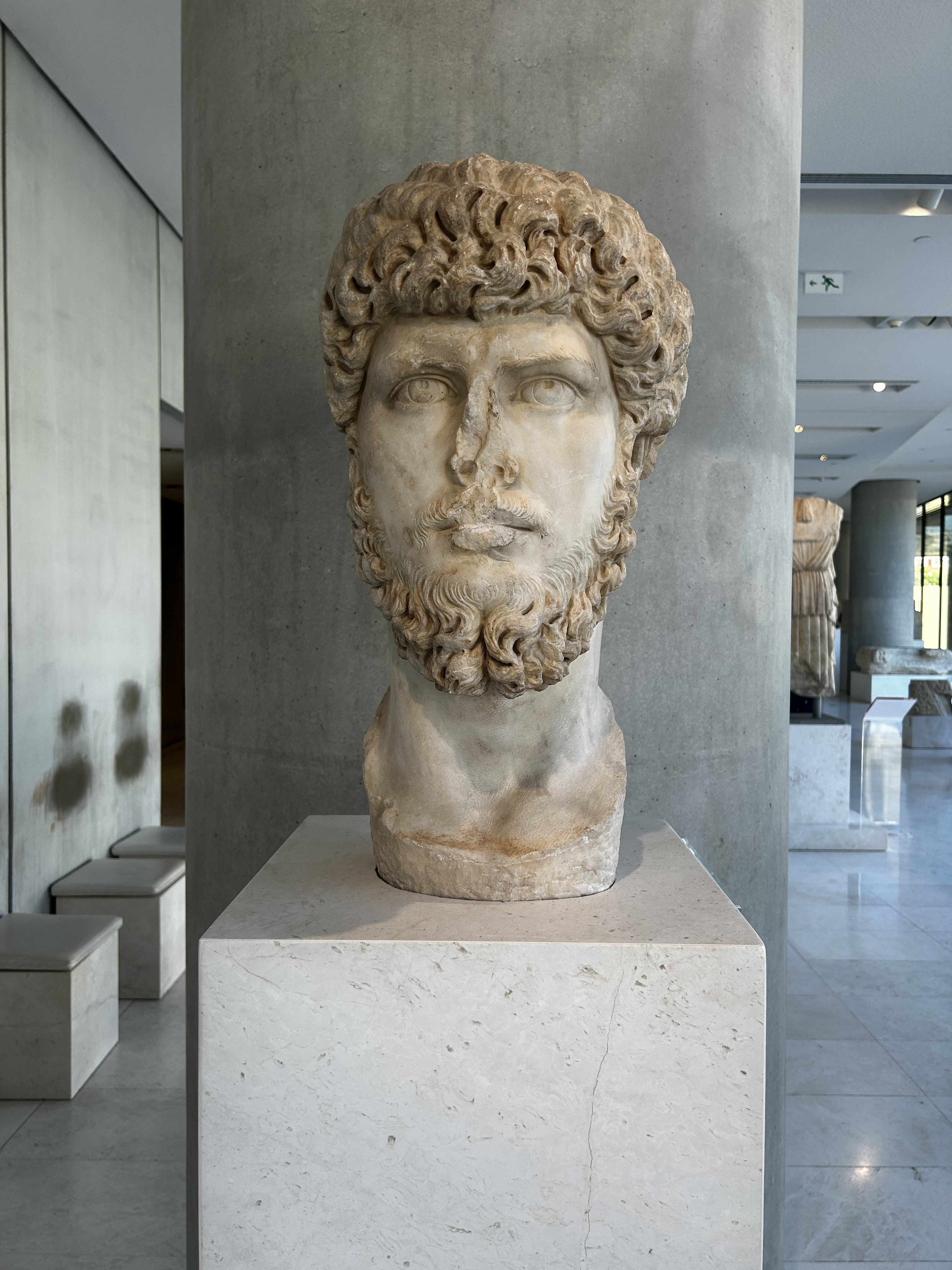
The division originated largely in the early nineteenth century, when Thomas Bruce, seventh Earl of Elgin, removed substantial portions of the sculptures from Athens while serving as British ambassador to the Ottoman Empire. The legality and legitimacy of those removals have remained disputed, and the Greek government has pursued their reunification for decades.
The Acropolis Museum is itself an argument in that debate. Its Parthenon Gallery was conceived to accommodate the surviving architectural sculptures within sight of the building for which they were created.
The British Museum has defended its legal ownership and the value of presenting the sculptures within an international collection. Greek authorities have maintained that these works form parts of a single architectural and sculptural composition whose reunification is essential to understanding the monument.
The dispute remains unresolved. In October 2026, British Museum chairman George Osborne reiterated his support for a possible rotating display arrangement. Greek authorities have resisted arrangements that would require them to recognise British ownership of the sculptures, while the British Museum Act of 1963 continues to constrain their permanent transfer.
There is an interesting architectural consequence to this political disagreement. The Parthenon Gallery presents the sculptures according to their original relationship with the temple, making the fragmentation of that arrangement immediately apparent. The building’s design gives particular force to the Greek argument without requiring lengthy explanatory texts.
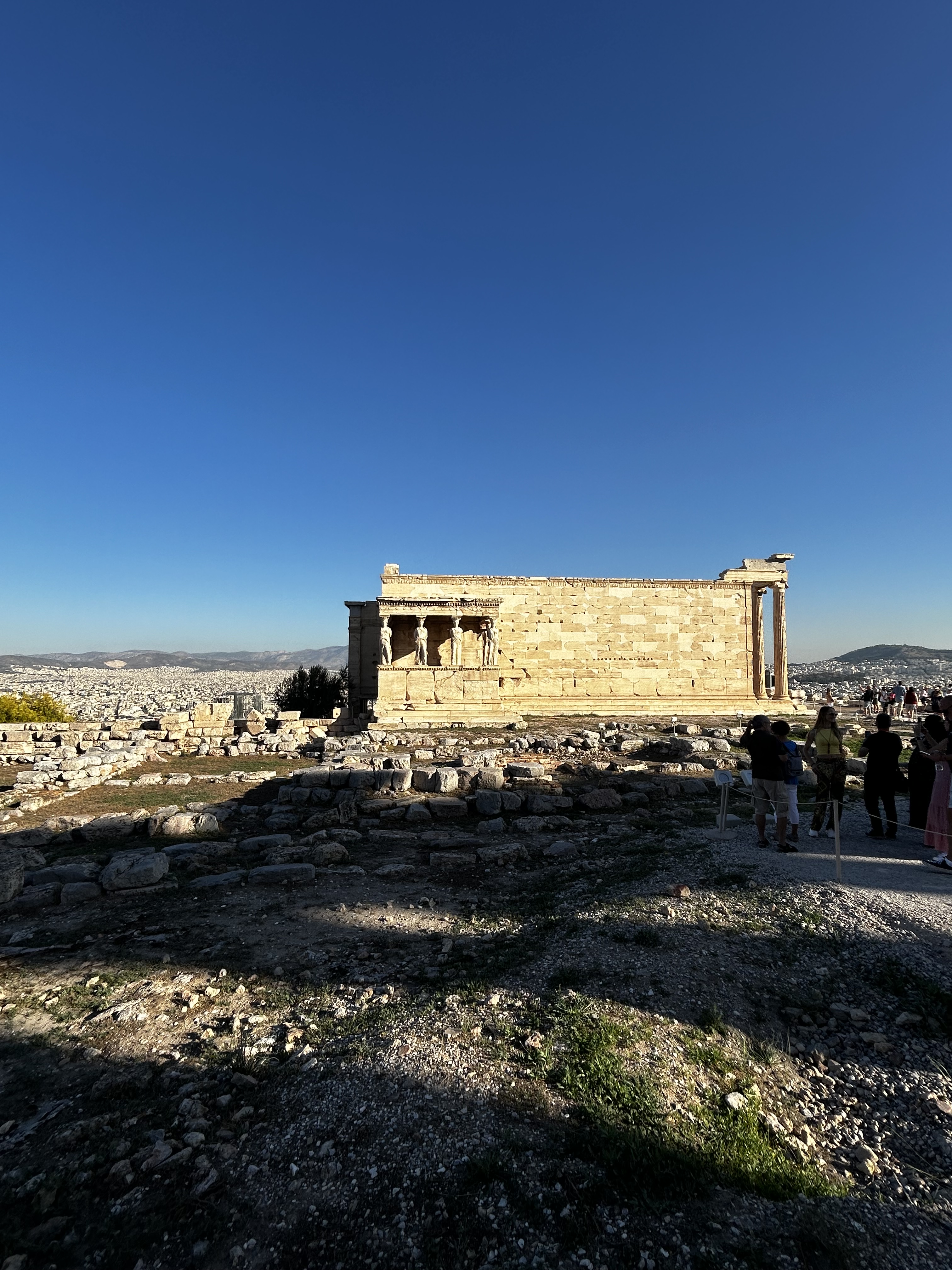
Elsewhere on the first floor, the museum displays sculptures from the other major monuments of the Periklean building programme, including the Propylaia, the Temple of Athena Nike and the Erechtheion.
The five surviving Caryatids from the Erechtheion are among the most remarkable. Originally serving as architectural supports for the temple’s south porch, they combine the structural function of columns with the representation of standing female figures.
Their hair is intricately carved, their garments fall in carefully differentiated folds, and the positioning of their bodies balances the demands of architectural support with the appearance of human movement.
A sixth Caryatid remains in the British Museum. The five in Athens were removed from the Erechtheion in 1979 to protect them from atmospheric pollution, and the figures standing on the monument today are reproductions.
Between 2010 and 2014, the originals underwent a conservation programme using laser technology to remove accumulated surface deposits. The work was conducted within the museum itself, avoiding the risks associated with transporting the sculptures to an external conservation laboratory.
The city beneath the museum
The archaeological excavation beneath the building offers an important counterpoint to the monumental sculpture above.
Opened to visitors in 2019, the remains comprise streets, houses, courtyards and commercial spaces belonging to a neighbourhood inhabited from the fourth millennium BCE into the Byzantine period. The site demonstrates how the southern slopes of the Acropolis continued to accommodate ordinary urban life through successive changes in Athens’ political and religious history.
In June 2024, the museum inaugurated a dedicated Excavation Museum, displaying approximately 1,150 objects recovered from the site.
Among them are cooking utensils, jewellery, writing implements, lamps and children’s toys. A small clay money box, a bronze stylus and a terracotta horse offer evidence of domestic activities rarely represented in the grand narratives of classical Athens.
The excavation is particularly valuable because it gives material substance to the lives of people who occupied the city without necessarily participating in its most celebrated artistic and political achievements.
The historical emphasis shifts from the patronage of great temples and public monuments to the practical organisation of households, the distribution of water, commercial exchange and the continuity of religious practices.
There is an inevitable tension within a museum devoted to one of the most celebrated archaeological sites in the world. The Parthenon, with its immense artistic reputation and political significance, commands disproportionate attention. The museum’s architecture reinforces that hierarchy by placing its sculptures in the most prominent gallery.
Yet the excavation introduces a different understanding of ancient Athens, grounded in the accumulated evidence of daily habitation. It is worth allowing time for this final part of the collection, particularly after the intensity of the Parthenon Gallery.
The remains beneath the building show that the history of Athens cannot be confined to the monuments constructed during its fifth-century BCE ascendancy. The city continued to change, accommodate new communities and develop new forms of domestic and religious life long after the classical sanctuary had been transformed.
All images: copyright Birgitte / My World of Interiors
Visiting the Acropolis Museum
The Acropolis Museum is located at 15 Dionysiou Areopagitou Street, in the Makryianni district of Athens, close to the Acropoli metro station.
The museum is open throughout the year, with seasonal variations in opening hours. Friday evenings offer extended admission until 10 pm. The archaeological excavation and its dedicated museum are included in general admission.
The second-floor restaurant has a terrace overlooking the Acropolis. Current opening hours, admission prices, exhibitions and events can be found on the official museum website.

