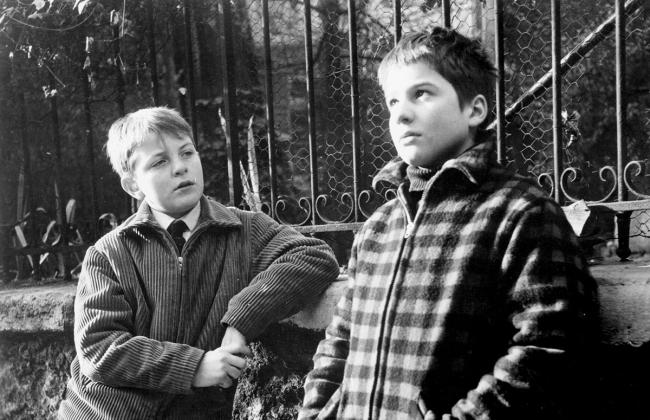
The coming of age film is cinema’s most personal genre and its most dishonest one, and the dishonesty runs in a specific direction: it tells us that growing up is a journey with a destination, that the confusion and the pain and the loss of childhood have a purpose, that the person who emerges from the experience is better and more complete than the person who entered it. This is a lie, or at best a half-truth, and the films that matter in this tradition are the ones that know it is a lie and say so — that understand growing up not as an ascent but as a permanent subtraction, that recognise the self we lose in becoming who we are is not recovered or transcended but simply gone, and that the going is worth grieving. The greatest coming of age films are not celebrations of growth. They are elegies for what growth costs.
Every human being who has ever watched a film has been a child, and every human being who has ever been a child has survived the specific violence of becoming an adult — the discovery that the world is indifferent to what you feel, that the people you love are fallible, that time moves in only one direction and takes everything with it. Cinema has returned to this subject obsessively since its earliest decades because the subject returns obsessively to us: the experience of growing up is the experience that all other experiences are measured against, the loss that makes all subsequent losses comprehensible, the wound that never entirely closes. The question is not whether cinema can address this subject — it always has and always will — but whether it can address it honestly, with the full weight of what it actually means rather than the consoling narrative we would prefer.
The consoling narrative is the Bildungsroman in its most debased form: the young person who is confused becomes clear, who is wounded becomes strong, who is lost becomes found. There is nothing wrong with this structure as such — it maps onto a real enough aspect of human development — but in its most conventional cinematic form it smooths away the specific texture of what growing up actually feels like, which is less like a journey toward clarity than like a series of doors closing behind you, each one shutting off a version of yourself that will not be available again. The films that tell this latter truth — that growing up is irreversible, that the cost is real and permanent, that the destination is not resolution but simply adulthood, with all its compromises and accommodations — are the films that stay with us longest, because they are the films that recognised something we knew and had not been told we were allowed to say.
The four hundred blows and the open sea
François Truffaut’s The 400 Blows, made in 1959 and the film that effectively launched the French New Wave and established the modern coming of age film as a serious cinematic form, is the place to begin any serious discussion of the genre because it does something that almost no film before it had done: it refuses resolution entirely. Antoine Doinel, twelve years old, neglected by parents who are barely present and barely interested, failing at school, caught in a series of small lies and petty crimes that escalate until he is sent to a juvenile detention centre, escapes and runs — and the film ends with him at the sea, which he has never seen before, and the camera freezing on his face in a close-up that has become one of the most famous images in cinema history.
The frozen face is not resolution. It is a question, held open, and Truffaut’s refusal to answer it is the film’s most radical act. Antoine has arrived at the sea — at something vast and open and beyond the boundaries of the world that has been closing around him — and we do not know what it means, because Truffaut understands that at twelve years old, at the moment of first escape, you do not know what it means either. The film ends in the middle of becoming. It ends with the future still undetermined, with the boy neither saved nor destroyed, with the question of what he will make of himself as open as the horizon behind him. This is not ambiguity for its own sake. It is honesty about the condition of adolescence, which is precisely the condition of being in the middle of something that has not yet declared what it is.
What Truffaut does that is most important — and most influential on everything that follows — is take the child’s inner life entirely seriously, without condescension and without sentimentality. Antoine is not a symbol of innocence corrupted by a corrupt world. He is a specific boy with a specific temperament, specific desires, specific ways of lying and surviving and finding small pleasures in a life that is mostly indifferent to him. His situation is shaped by social forces — the cramped Paris apartment, the distracted parents, the brutal school system — but he is not reducible to those forces. He is himself, stubbornly and completely, and Truffaut’s camera — and Jean-Pierre Léaud’s performance, which is as natural and as unperformed as a documentary subject — attends to that selfhood with a respect that the adults in the film never manage.
Kes and the thing that cannot be saved
Ken Loach’s Kes, made in 1969 in the mining communities of South Yorkshire, is the British film that makes the same argument as The 400 Blows in a completely different register and with a completely different conclusion — a conclusion so bleak and so precisely observed that it has never quite found the wide audience it deserves, because it refuses every consolation that audiences have been trained to expect. Billy Casper, fifteen years old, youngest child of a family barely holding together in a town where the only future available is the pit, finds a kestrel and trains it, and the training of the bird is the first thing in his life that he has been good at, that he has pursued with patience and intelligence and love, that has been entirely his own.
What happens to the kestrel — what Billy’s older brother Jud does to it in an act of casual, thoughtless cruelty that is not even meant as cruelty, that is simply the overflow of his own misery onto the only target available — is the film’s central event, and Loach films it with a restraint that is itself a form of argument. There is no operatic grief, no cathartic release, no suggestion that the loss will make Billy stronger or clearer or more equipped to face what his life will be. There is simply the loss, and the specific quality of Billy’s face when he understands what has happened, and the town continuing around him, and the future that was always going to be the pit.
Kes is a film about class as a form of destiny, about the way social structures determine not just what is available to a person but what they are capable of imagining for themselves. Billy is not less intelligent or less feeling than the boys at the grammar school across town. He is simply on the wrong side of a line that was drawn before he was born, and the system that surrounds him — the school that writes him off, the careers officer who offers him a choice between the pit and the pit’s surface — does not see him as a person whose possibilities matter. Loach sees him. The film sees him. And in seeing him, in attending to his intelligence and his tenderness and his specific gift for the kestrel with the same fullness that The 400 Blows attends to Antoine, it makes the indictment irrefutable.
Stand by Me and the knowledge you cannot unknow
Rob Reiner’s Stand by Me, made in 1986 from Stephen King’s story The Body, occupies a very different place in the cultural landscape from Kes or The 400 Blows — it is a mainstream American film, warmly received, widely beloved — and it is also, beneath its accessible surface, one of the most honest films about childhood ever made in Hollywood. Four boys walk along a railway track in rural Oregon to find the body of a missing boy, and what the journey does to them is the film’s real subject: not the body, which is almost beside the point, but the specific quality of the friendship they have, which is the last of its kind, the last friendship that will be as complete and as unconditional as it is, because they are twelve and on the threshold of the world that will separate them.
The film’s narrator, the adult Gordie looking back, knows this — knows that the summer of the walk was the last summer of something irreplaceable, that the four boys never had that quality of friendship again, that two of them were dead before he reached thirty. And the film holds both things simultaneously: the beauty of what the boys have and the knowledge that it will not last, the specific pleasure of the walk and the shadow of its ending. This is the structure of elegy, and Stand by Me is an elegy in the fullest sense — a film about something precious in the process of being lost, filmed with the love of someone who understood exactly what it was worth and exactly what it would cost.
The performances of the four boys — River Phoenix in particular, in a performance of such complete emotional intelligence that it is almost unbearable to watch knowing what happened to him — carry the full weight of what the film is asking. Phoenix’s Chris Chambers is the boy who will not escape the reputation the town has assigned him, the boy who knows this and refuses to be defeated by it and is defeated by it anyway, and what Phoenix does with that knowledge — how he holds it in his face and his body and the specific quality of his friendship with Gordie — is one of the great performances in American cinema, and one of the most completely realised portraits of adolescent male friendship that the screen has produced.
Y Tu Mamá También and the end of summer
Alfonso Cuarón’s Y Tu Mamá También, made in Mexico in 2001, is the most sexually explicit film on this list and the most politically sophisticated, and the two qualities are connected: Cuarón understands that the sexual awakening of adolescence is inseparable from the political world in which it takes place, that the road trip his two teenage protagonists take across Mexico with an older woman is simultaneously a journey into adulthood and a journey through a country whose poverty and beauty and injustice they are only beginning to see. The film’s narrative of two friends, Julio and Tenoch, competing for the same woman while their friendship unravels is gripping enough in its own terms, but what makes it a great film is the voiceover — a narrator who periodically interrupts the boys’ story to describe the lives of the people they pass, the village that will be flooded for a dam, the migrant worker who dies in an accident, the specific texture of a Mexico that exists just beyond the frame of their adolescent self-absorption.
This voiceover is the film’s most daring formal choice, and its most generous one. It insists that the boys’ story, however vivid, however fully felt, is not the only story — that growing up in a particular place and time means growing into an awareness of the world that surrounds you, and that this awareness, once acquired, changes everything. The film ends with the boys’ friendship over, with the summer’s journey behind them, with both of them moving into adult lives that will be different and diminished compared to what they had together. The loss is real and the film does not soften it. But it also insists that the loss is not all there is: that the world the boys are entering, however they enter it, is a world that exists independently of their feelings about it, and that the going out to meet it — even badly, even selfishly, even with your eyes half closed — is better than not going.
Moonlight and the architecture of self
Barry Jenkins’ Moonlight, made in 2016, is the film that most completely updates the coming of age tradition for the twenty-first century, and it does so by doing something the tradition had largely avoided: placing at its centre a black gay man in the American South and treating his inner life — his confusion, his desire, his specific experience of being a body in the world — with the same complete seriousness that Truffaut brought to Antoine and Loach brought to Billy. The film’s triptych structure — Chiron at nine, at sixteen, at twenty-something — is one of the most elegant formal decisions in recent cinema, and it makes a specific argument about identity: that we are not one person but several, that the self is not continuous but interrupted, that who you are at nine and who you are at sixteen and who you are as an adult are genuinely different people connected by memory and desire and the specific damage done to each of them.
The central relationship of the film — between Chiron and Kevin, the boy he loves and who betrays him and who he finds again twenty years later — is handled with such delicacy and such precision that it constitutes a complete account of what first love does to a person. Not the romance of first love, which cinema has always been able to render, but the architecture of it: the way it shapes everything that follows, the way the person who first sees you as you want to be seen becomes the measure against which all subsequent seeing is judged, the way the loss of that person creates a wound that heals over and remains as a scar you find by accident, years later, when you press on something you thought was fine.
Jenkins shoots the film with a closeness to his actors — particularly Trevante Rhodes in the final section, carrying the whole history of the character in the specific way his body inhabits space — that recalls Cassavetes in its refusal to manage the emotional temperature, its trust that what is there is enough. The film is the most complete argument for the coming of age film as an art form that recent cinema has produced: a demonstration that the genre at its best is not nostalgia or consolation but a precise instrument for understanding how we became who we are, and what it cost.
The Tree of Life and the impossible question
Terrence Malick’s The Tree of Life, made in 2011, is the most ambitious coming of age film ever made and the most difficult, and the difficulty is inseparable from the ambition: Malick wants to place the experience of one boy growing up in 1950s Texas inside the context of the universe itself, to ask what human childhood means against the age of stars and the evolution of life, and the question is either profound or pretentious depending on where you stand. It is both, in the way that the most ambitious art is always both — reaching for something larger than it can fully grasp and producing in the reaching something that the more modest alternative could never achieve.
What the film does that is undeniably extraordinary is render the texture of childhood consciousness — the specific quality of perception that children have, in which the physical world is simultaneously more vivid and more mysterious than adult perception allows, in which the garden and the light and the sound of a parent’s voice and the mystery of death are all of equal and overwhelming weight — with a sensory immediacy that no other film has achieved. The childhood sequences, shot by Emmanuel Lubezki with a fluidity and a luminosity that make the past feel genuinely present, are among the most beautiful passages in cinema, and they earn their place in the cosmic frame that Malick has built for them not through argument but through the sheer force of what they make you feel.
The film’s argument — that the experience of childhood, fully attended to, contains within it the question of what existence means — is not one that every viewer will accept, and Malick does not make it easy to accept. But the films that this essay has been building toward — the films that take the genre seriously enough to ask the largest questions it can bear — all share with The Tree of Life the conviction that childhood is not merely biographical. It is philosophical. The confusion and the wonder and the grief of growing up are not just developmental stages. They are the first serious encounter with the questions that will occupy us for the rest of our lives: what is the world? What am I in it? What do I owe the people I love? What do I lose when time passes and cannot be recovered?
Boyhood and the camera that does not stop
Richard Linklater’s Boyhood, made over twelve years with the same cast and released in 2014, is the formal answer to the question of how cinema can represent the passage of time in childhood most honestly: by actually passing time, by filming the same boy from age six to age eighteen and letting the camera record what time does to a face and a body and a sensibility. The result is unlike any other film ever made, and the unlikeness is the point — the experience of watching Mason grow up in real time, watching the actor Ellar Coltrane change before your eyes across nearly three hours, produces a quality of feeling that cannot be achieved any other way. You are watching time pass. You are watching a childhood happen. And the watching is the grief, because you understand, with a clarity that no conventional narrative can produce, that each version of this boy is passing as you watch it, that the six-year-old is already gone, that the twelve-year-old is already gone, that the eighteen-year-old will be gone before the film is over.
Linklater’s great subject across his whole career — from Dazed and Confused to the Before trilogy to this — is time and what it takes, and Boyhood is the fullest statement of that subject: a film that uses the formal properties of cinema — its ability to capture specific faces at specific moments and hold them permanently — to make the passage of time visible as a continuous process rather than a series of dramatic events. Mason’s life contains no great tragedies, no defining catastrophes, no single moment of revelation that transforms him. It contains instead what most lives contain: a series of ordinary experiences that accumulate, imperceptibly, into a self. The film is the most complete argument that cinema has produced for the idea that ordinary experience, attended to with enough patience and enough love, is not less worthy of the camera than the dramatic. It is more worthy, because it is truer to what most of us actually live.
What the genre knows
The films gathered in this essay — and the dozens of others that belong to the same conversation, from Truffaut’s continuing Antoine Doinel series to Stand by Me to the Iranian coming of age films of Abbas Kiarostami to Céline Sciamma’s Girlhood to the whole rich tradition of the Japanese school film — share a conviction that the experience of growing up is one of the most important subjects that cinema can address, and that it can only be addressed honestly by those willing to tell the full truth about what the experience costs.
The consoling version of this story — growth as gain, adolescence as prelude, the pain as necessary preparation for the reward of adult stability — is not false exactly, but it is incomplete in ways that matter. The films that tell the fuller truth understand that what we lose in growing up is not compensated by what we gain, that the self we were at nine or twelve or sixteen is not a lesser version of the self we become but a different self entirely, that the gap between them is real and cannot be closed, that time is not a journey toward completion but a series of irreversible departures.
This is a hard truth and cinema has always found ways to soften it. The films that refuse to soften it — that hold the open sea at the end of The 400 Blows, the kestrel’s absence in Kes, the frozen frame of Boyhood‘s final image, the specific weight of Chiron’s body in the diner in Moonlight — are the films that stay. They stay because they told us something we knew and had not seen acknowledged, something about the experience of becoming ourselves that the consoling narrative had never quite found room for. They stay because they respected us enough to tell us the truth.
Watch The 400 Blows first, for the frozen face and what it means that Truffaut will not resolve it. Watch Boyhood for the experience of time as continuous loss. Watch Moonlight for the architecture of a self shaped by love and damage and desire and the specific weight of being this body in this world. Watch Kes for what it means when the thing that saves you is not enough to save you. And then ask yourself what you remember of your own childhood — what images remain, what losses still ache, what version of yourself you recognise in any of these faces — and understand that this is why the genre exists, and why it will never be exhausted.
Sources and further reading
François Truffaut, The Films in My Life (1978) — his collected writings on cinema, essential for understanding the New Wave context from which The 400 Blows emerged and the tradition of filmmaking it established.
Roger Ebert, The Great Movies (2002) — contains some of the finest short critical essays on coming of age films written in English, particularly on Kes, Stand by Me, and Boyhood.
Timothy Shary, Generation Multiplex: The Image of Youth in Contemporary American Cinema (2002) — the most thorough academic survey of the American coming of age film, valuable for its breadth and its attention to genre conventions.
Barry Jenkins, interviews collected in Moonlight: The Complete Screenplay (2017) — Jenkins’ own account of the film’s making and intentions, illuminating and generous.
A suggested viewing order for those new to the genre: The 400 Blows (1959) first, as the founding text of the modern form. Then Kes (1969) for the British tradition. Then Stand by Me (1986) as the American mainstream at its most honest. Then Y Tu Mamá También (2001) for the Latin American dimension. Then Moonlight (2016) and Boyhood (2014) as the two finest recent examples of the form, each taking a completely different approach to the same question: what does it cost to become yourself, and who do you lose in the becoming?

