By Bergotte
Dolly Rebecca Parton, January 19, 1946 — August 25, 2026
Dolly Parton died yesterday in Nashville, Tennessee, after a brief battle with cancer. She was eighty years old. Sixteen months earlier, she had lost Carl Dean, her husband of nearly six decades, and she had said openly that she had not taken care of herself while taking care of him, that grief had made her careless with her own body, that she had let things go that she should not have let go. That she died as she lived — putting someone else first, loving someone so completely that the self was temporarily set aside — is not a tragedy. It is a portrait. There will be time, in the weeks and months ahead, for the full reckoning with what she made and what she meant. This is not that reckoning. This is the thing that must be said today, while the loss is still raw: that Dolly Parton was one of the greatest songwriters America has ever produced, that she was a woman of such genuine, structural, non-performative goodness that the world around her was measurably better for her presence in it, and that the rhinestone exterior — the wigs and the sequins and the jokes about her own appearance — was not a disguise but an argument, the argument that a woman from the Tennessee mountains with a fourth-grade-educated father and eleven brothers and sisters and a childhood of genuine poverty had exactly as much right to take up space, to be magnificent, to shine as brightly as she chose, as anyone who had ever walked onto a stage. She chose to shine very brightly. The world is darker today.
The girl from Locust Ridge
She was born on the 19th of January 1946, in a one-room cabin on the banks of the Little Pigeon River in Sevier County, Tennessee, the fourth of twelve children born to Robert Lee Parton and Avie Lee Caroline Owens. Her father was a tobacco and corn farmer who could not read or write. Her mother was a woman of great natural intelligence and musical gift who sang her children the old songs of the Smoky Mountains — the hymns and the ballads and the folk songs of the Appalachian tradition that would form the bedrock of everything Dolly subsequently made. They were poor in the material sense and, in every other sense, abundantly provided for.
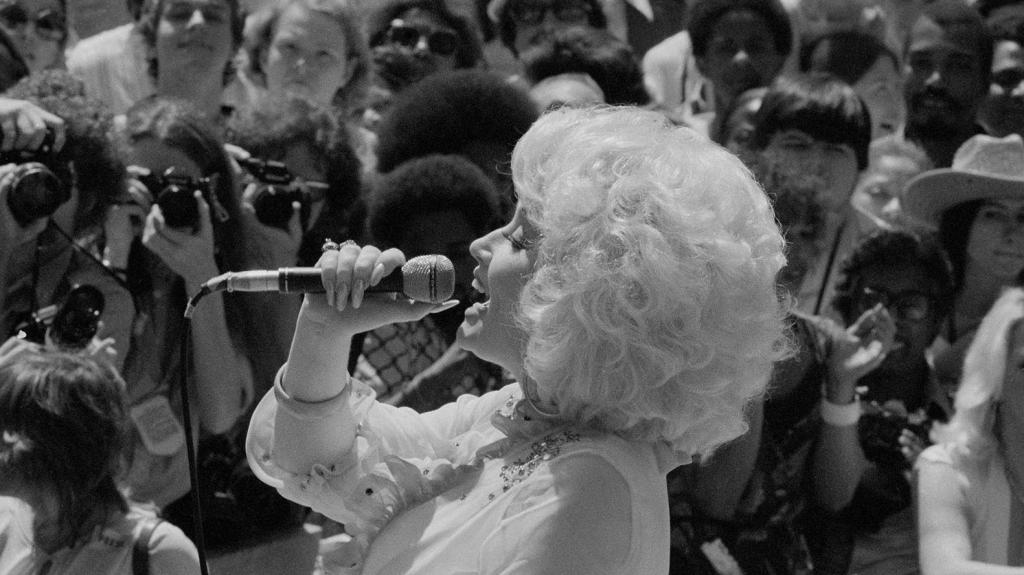
She knew she was going to be a star before she had any evidence that this was possible. She has said so, repeatedly, without embarrassment or false modesty, because false modesty was never something she had time for. At ten she was performing on local radio. At thirteen she recorded her first single. On the day she graduated from high school in 1964 — the first person in her immediate family to do so — she got on a bus to Nashville. Her uncle Bill Owens, who had believed in her talent from the beginning and who accompanied her on the journey, has said that she told him on that bus that she was going to be the biggest female star in country music. She was seventeen.
She was not wrong. She was also, in being right, not simply lucky or simply talented. She was strategic, determined, business-minded in a way that the music industry — which preferred its female artists grateful and compliant — consistently underestimated, and she was armoured against its underestimation by the specific self-knowledge of someone who had always understood that what she had inside her was real and worth protecting.
The songwriter first
The tributes pouring in today speak, properly and movingly, of Dolly Parton’s kindness and her philanthropy and her warmth and her ability to make every person she met feel seen and valued. All of this is true and all of it matters. But the first and most important thing to say about Dolly Parton, the thing that the rhinestone glamour and the philanthropic legend can sometimes overshadow, is that she was a songwriter of the first order — a craftsperson of the popular song whose best work belongs in any serious discussion of the form’s greatest achievements.
She wrote more than three thousand songs across her career. Three thousand. The number is not simply a testament to productivity. It is a testament to a musical intelligence so restless and so generative that it could not be stopped — to someone for whom the making of songs was as natural and as necessary as breathing, the primary form in which she thought and felt and processed the world.
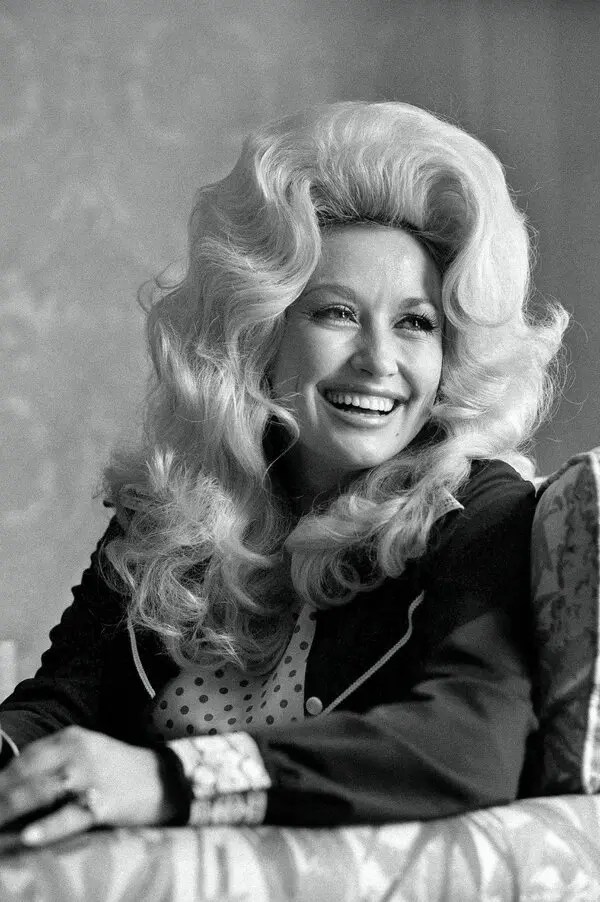
“Jolene” is the song that demonstrates most clearly what she could do in three minutes of popular music. Written in 1973, recorded in a single session with the vocal apparently done in one take, it is the address of a woman to a more beautiful woman who is threatening to take her man — and the address is not angry, not accusatory, but pleading, the specific pleading of someone who knows they are outmatched and is appealing to the mercy of the person with the power. “Jolene, Jolene, Jolene, Jolene — I’m begging of you please don’t take my man.” The repetition of the name — four times in the first line, the melody rising and falling on each syllable — is one of the most formally perfect openings in the history of the popular song. The vulnerability is total. The tune is irresistible. The combination creates an experience that is impossible to hear neutrally: you are immediately, helplessly inside the feeling, inside a woman’s fear of losing something she cannot afford to lose, and the feeling is so precisely rendered that it transcends the specific situation and becomes the universal condition of anyone who has ever loved something they were afraid of losing.
She wrote it, by her own account, in about ten minutes. She was twenty-seven.
I Will Always Love You and what it was actually about
“I Will Always Love You” is her other masterpiece, and it has been so thoroughly occupied by Whitney Houston’s 1992 recording — the greatest vocal performance in the history of popular music, arguable but arguable in Houston’s favour — that the song’s origins and its actual subject matter have been partially obscured.
Dolly Parton wrote it in 1973 about leaving Porter Wagoner. Porter Wagoner was the country star who had given her her national break, who had featured her on his syndicated television show from 1967 onward, who had helped make her famous. He did not want her to leave. He believed, with some justification, that his investment in her career entitled him to some control over its direction. She disagreed. She was going to go. She wrote the song and sang it to him as a way of saying what she needed to say — that she was grateful, that she loved him in the way you love someone who has given you something irreplaceable, and that she was leaving anyway, and that neither the gratitude nor the love changed the necessity of the leaving.
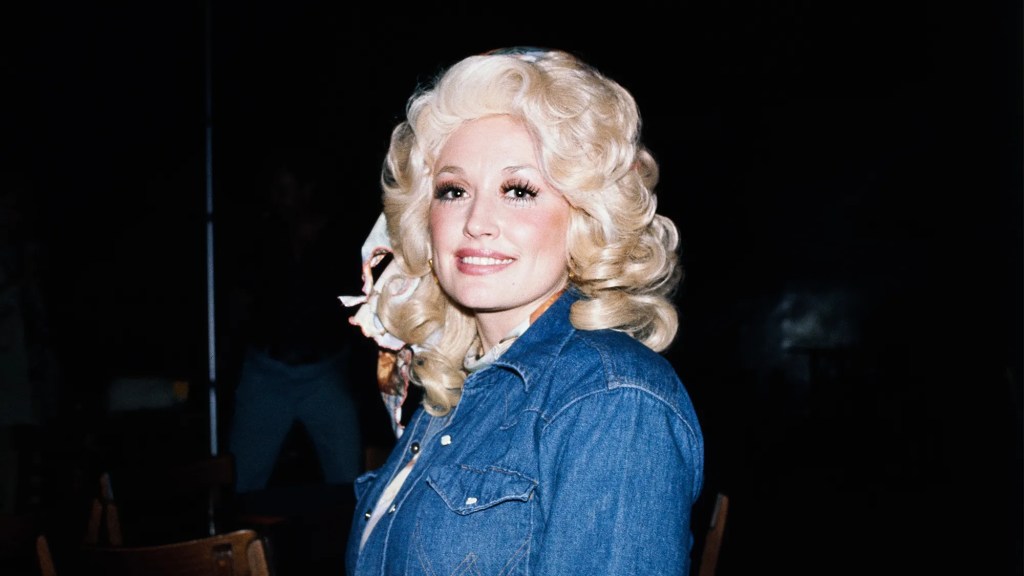
This is the song’s actual subject: the ability to love someone and still leave. The ability to say thank you and goodbye in the same breath. The ability to honour what was given without being defined by it, without allowing the gratitude to become a cage. It is one of the most profound things any artist has said in a popular song, and it is said so simply — the melody so direct, the language so unadorned — that its profundity arrives before you have had time to prepare for it.
She later wrote that when she told Wagoner she had written a song for him, he assumed it was going to be something appreciative, something that acknowledged his role in her success. He was not wrong about that. He did not anticipate the rest of it. She sang it to him in his office. He cried. He told her it was the best song she had ever written. He let her go.
What she did with the money and the platform
The Imagination Library began in 1995 in Sevier County, Tennessee — her home county, the place where Robert Lee Parton had farmed and could not read. The idea was simple and complete: every child under the age of five in the county would receive a free book by post every month, from birth to the first day of school. No means test. No application. Just a book, arriving in the mailbox, addressed to the child by name.
She founded it in her father’s honour. He had never learned to read. She had always believed, with a specificity and a force that went well beyond sentiment, that this was something that could be changed — that the cycle of poverty and limited education could be interrupted if you put books in children’s hands early enough and made reading feel like something that was for them, that arrived with their name on it, that was theirs without condition.
By 2026, the Imagination Library was operating in five countries and had gifted over three hundred million books. The research literature on its effects is extensive and consistent: children enrolled in the programme arrive at school more ready to learn, more confident with books, more likely to read independently. The programme has been expanded state by state across America, county by county across the United Kingdom and Canada and Australia, with the same result everywhere: books arriving by post, addressed to children by name, courtesy of a woman who grew up in a one-room cabin in Tennessee and decided that what happened to her father would not keep happening if she had anything to say about it.
She donated one million dollars to the Vanderbilt University Medical Center in 2021 to support their COVID-19 vaccine research — the research that produced the Moderna vaccine. She did so quietly, without fanfare, and only acknowledged it when pressed. She had a talent for giving that matched her talent for making music: the generosity instinctive, systematic, aimed at the structural rather than the symptomatic, offered without the requirement of gratitude or recognition.
The performance of herself
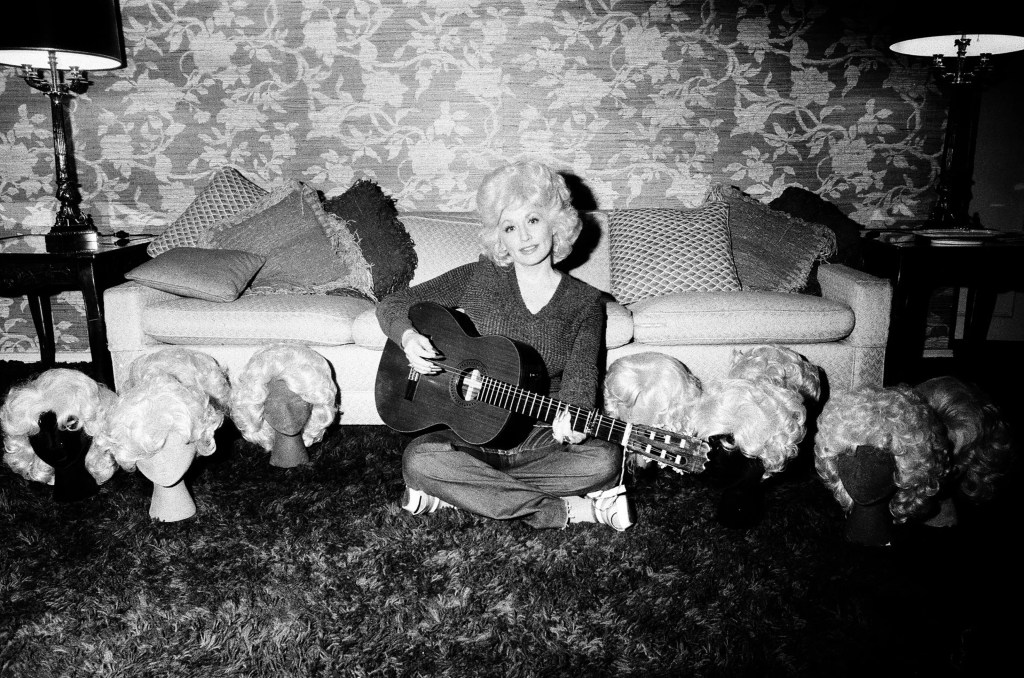
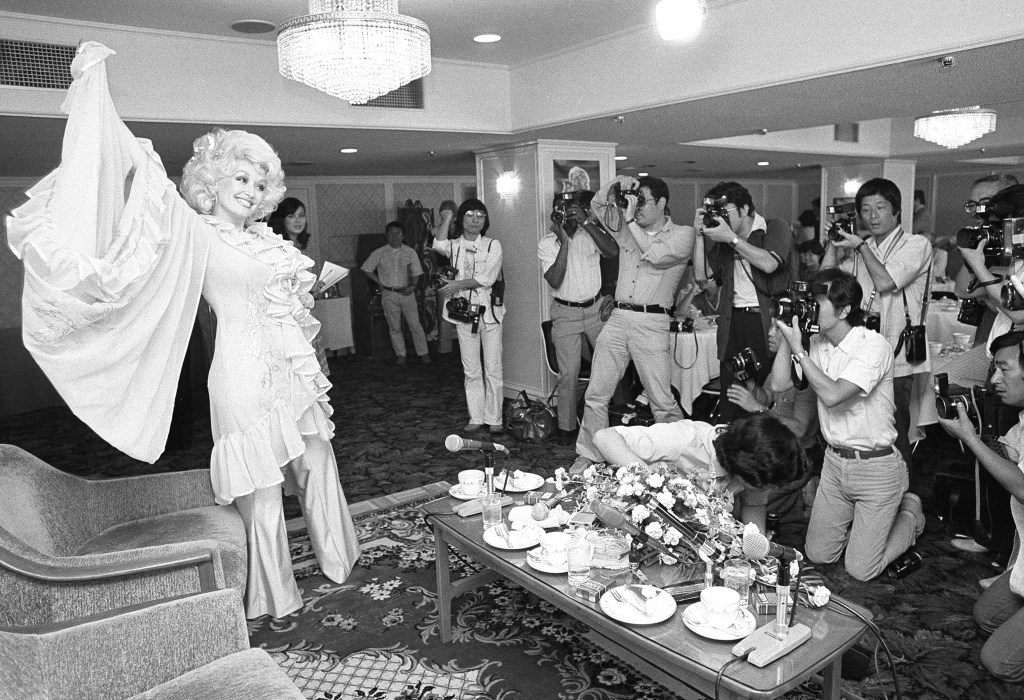
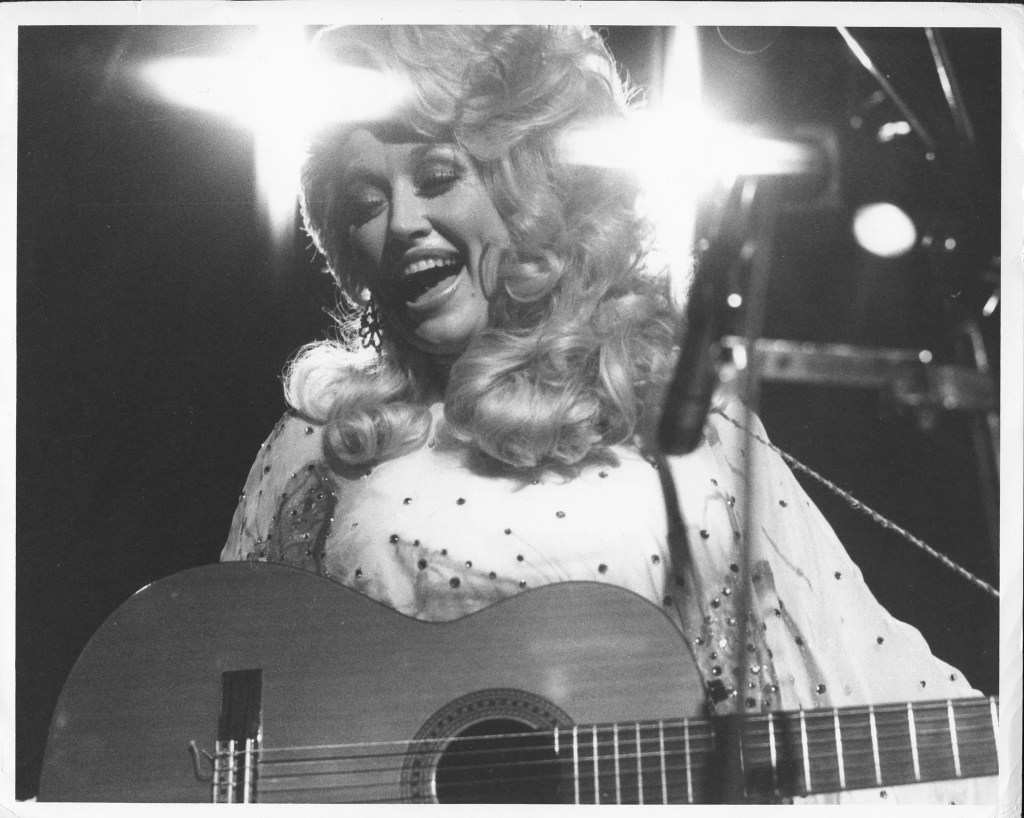
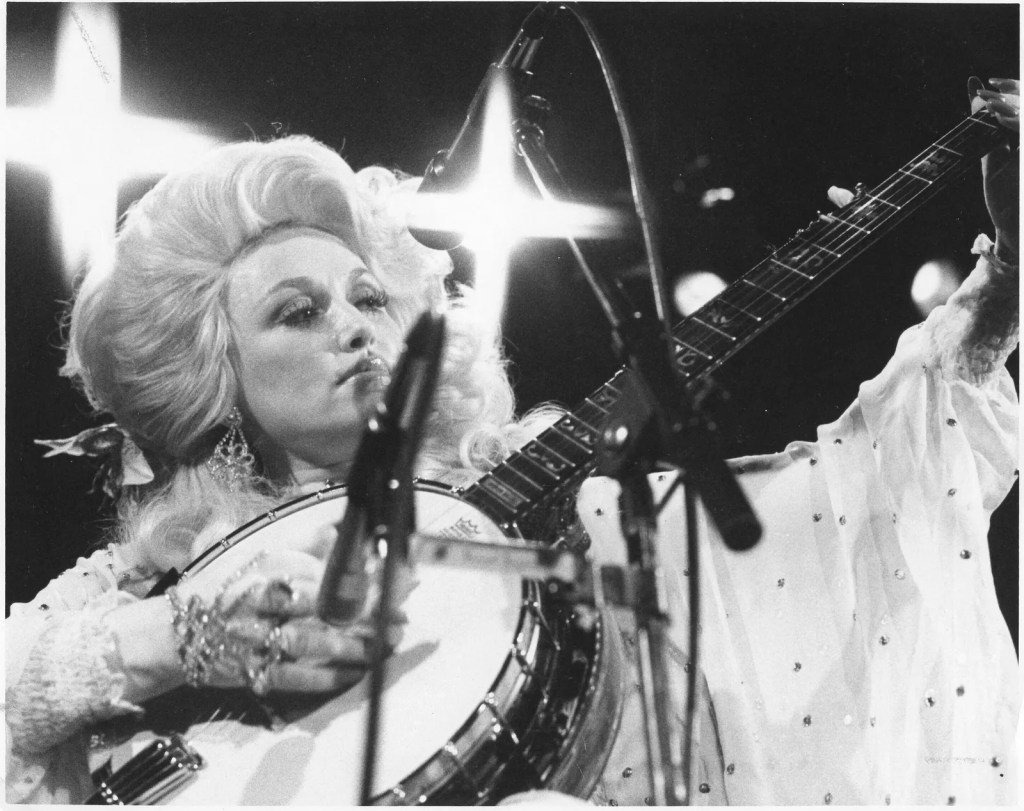
The wigs, the sequins, the jokes — “it takes a lot of money to look this cheap,” she said, and said it again, and made it a philosophy — have been so thoroughly documented and so widely celebrated that it is easy to mistake the surface for the whole. The rhinestone exterior is not the whole. But it is not nothing, either. It is, in fact, a position.
Dolly Parton was a woman who grew up poor and female in the mid-twentieth-century American South, in an industry that had very specific ideas about what women from her background could be and how they should present themselves. She could have presented herself with the kind of understated elegance that the industry’s image-makers preferred — the look that said: I may have come from a cabin in the Smokies but I know how to dress like a lady. She chose the opposite. She chose more. More hair, more colour, more jewellery, more everything. She chose the version of herself that was most completely, most unapologetically itself — the Appalachian girl amplified to the point of mythology, the mountain woman who had looked at the limits the world wanted to place around her and decided to exceed them in every dimension simultaneously.
This was not vanity. It was philosophy. She was saying, in every appearance, in every interview, in every self-deprecating joke about her own excess: I am exactly what I look like, and what I look like is a woman who decided to take up as much space as she needed, and the space I needed turned out to be quite a lot, and I make no apology for any of it.
The self-deprecating humour — the jokes about her figure, her hair, her image — was never genuinely self-deprecating. It was the opposite: the pre-emptive ownership of the joke, the refusal to let anyone else have it, the transformation of potential mockery into the material of her own performance. She was always, in every public moment, in complete control of the Dolly Parton story. She wrote it, performed it, and held the copyright.
What the other artists knew
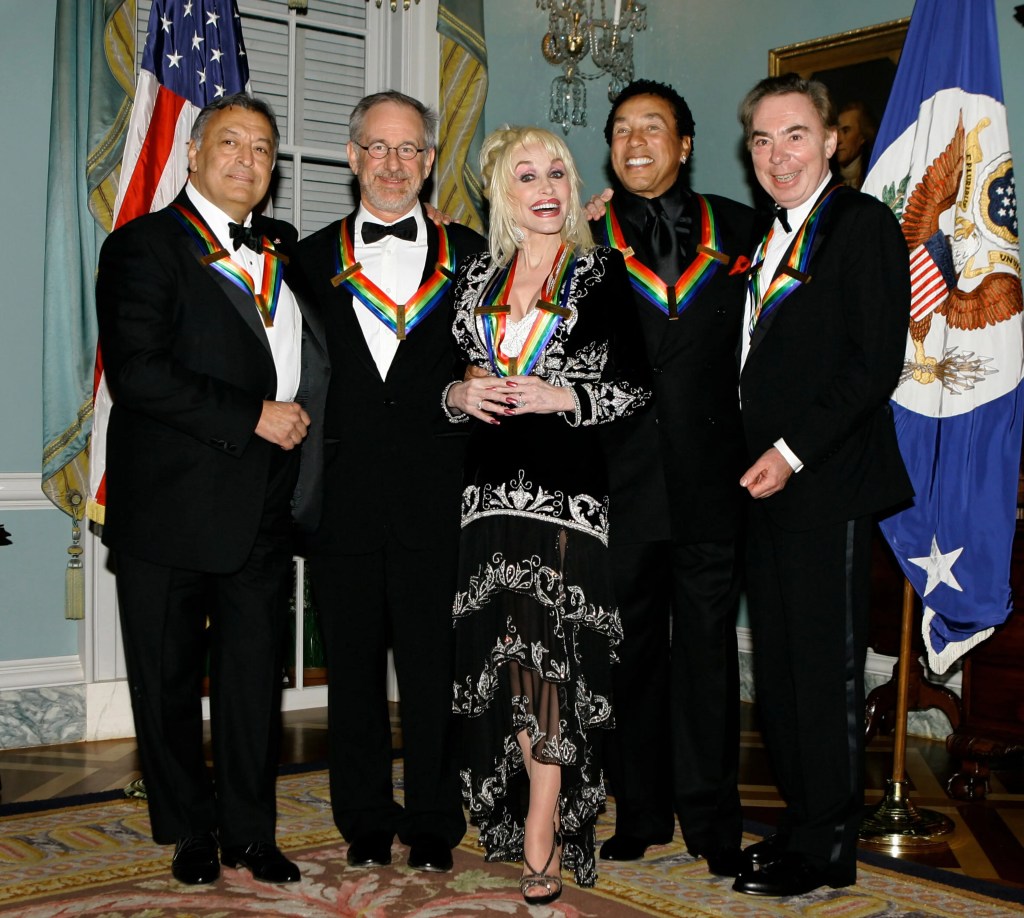
The roster of major artists who have cited Dolly Parton as a primary influence is so long and so various — country, pop, rock, folk, soul — that it effectively constitutes a history of American popular music across the past half century. Emmylou Harris and Linda Ronstadt recorded with her. Whitney Houston made “I Will Always Love You” the definitive statement of her own genius. Miley Cyrus is her goddaughter and has spoken about her influence with a consistency that goes beyond celebrity tribute. Kacey Musgraves — perhaps the most serious inheritor of the Parton tradition in the current generation — has said that Dolly showed her it was possible to be completely yourself in country music and to do it without compromise and to succeed.
The Kacey Musgraves observation is the most important. What Dolly Parton demonstrated, across seven decades of work, was that authenticity and commercial success were not incompatible — that you did not have to choose between the music you needed to make and the audience you needed to reach, that the audience would find you if you trusted the work, if you made it with the full force of who you actually were rather than the adjusted, moderated, industry-approved version. She never moderated. She expanded. And the audience came, in their hundreds of millions, because the thing she was offering them was the thing that the unmoderated, fully inhabited self always offers: the real thing, in contact with which people feel less alone.
The last songs
After Carl Dean died in March 2025, she released “If You Hadn’t Been There” — a song she wrote as a tribute to him, a song that allowed the public the briefest, most controlled glimpse into the private love that had sustained her career and her life for sixty years. Dean had been famously, determinedly private — he had almost never appeared in public with her, had given almost no interviews, had lived the life of an ordinary man married to the most extraordinary of women with a grace and a self-containment that she described as the most remarkable thing she had ever witnessed. The song said: you made me dream more than I dared. You made me possible. I wouldn’t be here if you hadn’t been there.
It was the most personal song she had ever released, and it was also — characteristically — a gift to everyone who had ever been sustained by a love they feared they had not adequately acknowledged. She made her private grief universal. She always did.
She had been unwell since his death, by her own admission — the caring had taken its toll, the grief had made her careless with herself, the body had paid the price that long bereavement sometimes exacts. She died yesterday, in Nashville, surrounded by her family, in the city she had arrived in sixty-two years ago on a bus from Sevier County, seventeen years old, absolutely certain of herself.
What she gave the world
Her nephew Bryan Seaver, announcing her death in a video posted to her Instagram, said: “Dolly was a farmer, just like her daddy. He farmed the soil. She farmed songs and happiness.”
There is nothing left to add to that. It is the most accurate and the most beautiful description of her that has been offered, in the hours since her death, by anyone. She farmed songs and happiness. She did it for seven decades. She did it from a position of genuine poverty and made from it a position of genuine abundance — not hoarded, not protected, given away as fast as it was made, in books and in music and in the specific, structural, lasting way that a woman gives things away when she intends for the giving to outlast the giver.
The Imagination Library will continue. The songs will continue. “Jolene” will continue to be the most formally perfect three minutes in country music. “I Will Always Love You” will continue to be the most honest thing anyone has said about gratitude and leave-taking and the love that persists after the relationship has ended. “Coat of Many Colors” will continue to be the most dignified possible account of childhood poverty, the account that refuses both shame and sentimentality and insists instead on the plain truth: we were poor, we were loved, we were enough. “9 to 5” will continue to be the funniest and sharpest piece of labour organising ever disguised as a pop song.
She will not continue. This is the fact that sits at the centre of yesterday’s news and that no amount of tribute can dissolve. The world contained Dolly Parton for eighty years and is now required to manage without her, which it will do, imperfectly, missing her in ways both grand and small, in the moments when her particular quality — the warmth, the wit, the absolute refusal of self-pity, the joy that was not naivety but was something harder and more earned than naivety, the joy of someone who knew exactly what the darkness looked like and chose the light anyway — would have been exactly what was needed.
She will always love us. She always did. The songs are the proof, and the songs do not expire.
Rest now, Dolly. You more than earned it.
Dolly Parton is survived by her brothers Randy, David, Denver, Bobby, Floyd, and Larry, and her sisters Stella, Cassie, Rachel, and Freida. Her husband Carl Dean predeceased her in March 2025. In lieu of flowers, the family requests donations to Dolly Parton’s Imagination Library at imaginationlibrary.com.
Selected discography and further reading
Essential recordings
“Dumb Blonde” / “Something Fishy.” Monument Records, 1966. The debut single that announced, even at twenty, the wit and the formal command.
Hello, I’m Dolly. Monument Records, 1967. The debut album.
“Jolene.” RCA Victor, 1973. Begin here.
“I Will Always Love You.” RCA Victor, 1974. And then here.
Coat of Many Colors. RCA Victor, 1971. Her most personal and most complete album, the songs drawn directly from the childhood in Sevier County.
9 to 5 and Odd Jobs. RCA Victor, 1980. The commercial peak, and the proof that popular success and artistic integrity were never incompatible.
Trio (with Linda Ronstadt and Emmylou Harris). Warner Bros., 1987. The great collaboration, and one of the finest country albums of its decade.
The Grass Is Blue. Sugar Hill Records, 1999. The bluegrass album that won her Grammy awards she had long deserved and reminded everyone of where the music came from.
If You Hadn’t Been There. Butterfly Records, 2025. Her final single, released in the days after Carl Dean’s death. The most personal thing she ever gave the public. The most generous.
On the life and work
Parton, Dolly, with Robert K. Oermann. Dolly: My Life and Other Unfinished Business. HarperCollins, 1994. The autobiography, written with characteristic directness and wit; essential primary material.
Miller, Stephen. Smart Blonde: Dolly Parton. Omnibus Press, 2008. The most thorough critical biography; particularly strong on the songwriting and the business intelligence.
On the Imagination Library
The Imagination Library’s own research archive, available at imaginationlibrary.com, contains extensive documentation of the programme’s reach and its educational effects. The University of Tennessee’s longitudinal studies of the programme’s impact on school readiness are the most rigorous available evidence of what three hundred million books, mailed to children who did not ask for them but received them anyway, actually does.
On the music itself
Bufwack, Mary A., and Robert K. Oermann. Finding Her Voice: Women in Country Music, 1800–2000. Vanderbilt University Press, 2003. The most thorough account of the tradition within which Parton worked and which she transcended; the chapters on the 1970s are particularly illuminating for understanding what she was doing in the years of her greatest songwriting.
