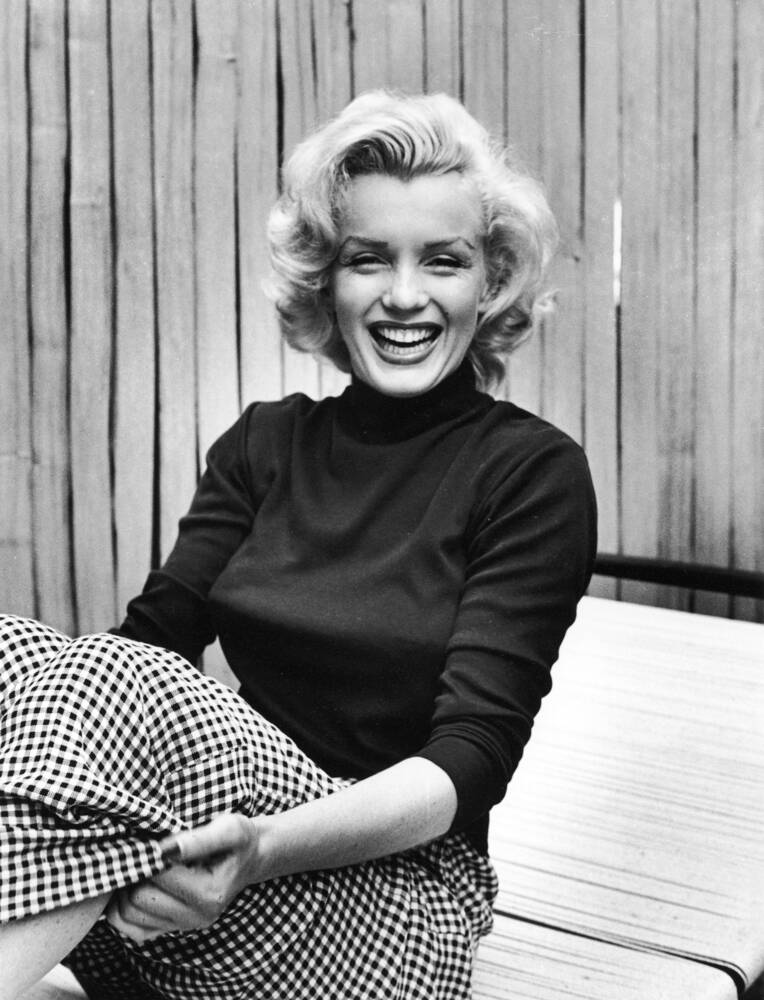
By Bergotte
Published June 1, 2026 — on the occasion of her hundredth birthday
Marilyn Monroe was born one hundred years ago today, and she has never stopped being alive. Not alive in the way that the famous dead are alive — as a cultural reference, as a poster on a wall, as a costume at a party — but alive in the specific and irreducible way that a great screen performance is alive: present, immediate, reaching through the decades with a quality of feeling so complete and so undefended that the screen between her and you ceases to function as a screen. She was the most famous woman in the world for a decade, and she has been the most famous woman in the world ever since, and this persistence is not the persistence of mythology, though mythology has certainly accrued around her, but the persistence of genuine and irreplaceable art — the art of a woman who understood, perhaps better than anyone who has ever stood in front of a camera, that the truth is the most powerful thing you can show, and who showed it completely, and who was destroyed by the world’s inability to accept that the woman who showed it so completely was a real person rather than an image.
Norma Jeane Mortenson was born on June 1, 1926, in Los Angeles, the illegitimate daughter of a woman who could not care for her and a man who was never identified, and she spent her childhood in a series of foster homes and an orphanage with the specific vulnerability of a child who has learned that she cannot rely on the permanence of love. She married at sixteen to avoid another stint in the orphanage. She was discovered by a photographer when she was working in a factory during the war. She changed her name. She bleached her hair. She invented Marilyn Monroe from the raw materials of Norma Jeane Mortenson with the same combination of intelligence and desperation and imagination that the best artists always bring to their work, and the invention was so complete and so compelling that it eventually consumed the inventor, which is the oldest story in art and the one that the world has spent sixty years telling about her without quite understanding that the story is a tragedy rather than a cautionary tale.
The invention and the person behind it are not separable, which is the first thing to understand about Monroe and the thing that most accounts of her life and career get wrong. She was not a simple woman who was exploited by a cynical industry, though the industry exploited her. She was not a blank surface on which men projected their desires, though men projected their desires on her. She was not a victim of her own beauty, though her beauty was both her gift and her prison. She was a complicated, intelligent, emotionally acute, artistically serious woman who created a persona of such overwhelming power that it became the primary fact of her existence, and who spent her entire career trying to make the world see the person inside the persona, and who never quite succeeded, and who died at thirty-six with the attempt still in progress.
What she was doing on screen
The most persistent misunderstanding about Monroe is the misunderstanding about whether she could act. The answer is so obvious to anyone who has watched her seriously that it barely requires stating, and yet it requires stating because it has been stated so rarely and so adequately. She could act. She could act brilliantly. She was doing something on screen that very few performers have ever managed, and she was doing it in films that were not always worthy of her, and she was doing it in the face of an industry that persistently treated her as a commodity rather than an artist, and the fact that she managed it in these conditions is the measure of how extraordinary the gift was.
What she was doing is what this series has spent twenty-one essays trying to describe in various filmmakers and performers: she was being completely present. Not performing presence, not demonstrating feeling, not executing a prepared emotional response to a scripted situation, but actually being there, in the room, with everything she had, unprotected by the distance that most professional performers maintain between themselves and the material. When she cries on screen, she is crying. When she laughs, she is laughing. When she wants something, you feel the wanting as an immediate physical fact rather than a represented emotion, and this quality of immediacy is the thing that makes watching her unlike watching almost anyone else.
The great paradox of Monroe is that the persona she created — the blonde, breathy, soft-focused sexual ideal — required a quality of vulnerability and openness that should have been impossible to maintain in the full glare of global celebrity, and she maintained it because it was not a performance but a genuine and unchosen quality of her nature, the quality of a woman who could not quite stop being entirely herself in front of the camera no matter what the camera represented. The persona was armour, carefully constructed, but the armour was transparent, and what showed through it was the real person, the Norma Jeane who had never been entirely safe, and the combination of the armour and the transparency is what made her unique.
Some Like It Hot and the comic gift
Billy Wilder’s Some Like It Hot, made in 1959 and consistently ranked among the greatest comedies ever made, is the film that makes the fullest case for Monroe as an artist, and the case is made in the most direct possible way: the film is funnier because of her, funnier in scenes she is in than in scenes she is not, funnier in the precise proportion of her presence, and this is true regardless of the fact that the production was famously difficult and that her behaviour during it — the inability to remember lines, the late arrivals, the constant need for retakes — drove Wilder and her co-stars to the edge of their professional patience.
The difficulty and the performance are not in contradiction. They are the same thing. Monroe could not learn lines easily because she was not working from the lines — she was working from the feeling, from the emotional reality of the scene, and when she finally found the feeling everything else, including the lines, arrived with it. The famous scene in which she reaches into a box of chocolates saying where is the bourbon, which required forty-seven takes, is perfect. It is not perfect despite the forty-seven takes. It is perfect because of them, because the forty-seventh take has in it everything the previous forty-six discarded, because the specific quality of Sugar Kane reaching for something she needs with the combined innocence and determination of someone who has never quite been given what she needed is present in that take as it could not have been present in the first.
Sugar Kane is Monroe’s most complete comic performance and also, if you attend to it properly, her most emotionally complete performance — a character whose comedy is inseparable from her sadness, whose cheerful resilience in the face of one disappointing man after another is both funny and heartbreaking, whose famous line about how she always gets the fuzzy end of the lollipop lands as a joke and then immediately after as something true and terrible and borne with more grace than it deserves. This is what Monroe does that nobody else does: she makes you laugh and then immediately makes you feel that the thing you laughed at was also something to grieve, and the transition between the two is so fast and so complete that you barely notice you have crossed it until you are on the other side.
The serious films and the serious woman
The cultural narrative about Monroe that has most persistently obscured her actual achievement is the narrative that divides her career into the comedies, which are acknowledged as successful, and the dramatic films, which are treated as evidence of her ambition exceeding her abilities. This narrative is wrong. Bus Stop, made in 1956 and directed by Joshua Logan, contains a performance of such raw emotional honesty that it constitutes an argument by itself: Monroe as Chérie, the saloon singer whose dreams of being a performer are as genuine as her circumstances are unpromising, brings to the role a quality of stubborn, unprotected hope that is the opposite of the glamorous image she was simultaneously projecting to the world. She had trained extensively with Lee Strasberg at the Actors Studio by this point, and the training shows — not as technique applied from outside but as a depth of access to the character’s inner life that makes every scene feel excavated rather than performed.
The Misfits, made in 1961 from a screenplay Arthur Miller wrote for her, directed by John Huston with a cast including Clark Gable and Montgomery Clift, is the film that most explicitly confronts the question of what Monroe was doing as a serious dramatic performer, and the answer it gives is the same answer that Bus Stop gave but at greater length and with greater weight. Roslyn Taber, the divorced woman who falls in with a group of men clinging to the remnants of the American West, is Monroe’s most fully realised dramatic creation: a woman whose sensitivity to the suffering of the world around her is both her most valuable quality and the one that makes the world most difficult to live in, and Monroe plays her with a completeness that makes the familiar separation of comedy and drama irrelevant. She is funny and she is heartbreaking and she is real, simultaneously and without any apparent effort, because these qualities were not separate in her and the characters she played at her best were not required to separate them.
The film was made while her marriage to Miller was collapsing, while her health was deteriorating, while the cost of being Marilyn Monroe was becoming finally and completely unpayable, and the exhaustion and the damage are in the performance as they are in the film, and they do not diminish what she does but deepen it, because what she was always doing was bringing everything she had to whatever she was working on, and at the end of her life everything she had included things she should not have had to carry.
What she knew about the camera
Monroe’s relationship with the camera is one of the most discussed and least understood phenomena in cinema history. The conventional account — that the camera loved her — reverses the actual relationship. She loved the camera. She understood it completely, understood what it could see and what it could not, understood the specific language of the close-up and the medium shot and the way light falls on a face, and she used this understanding with the instinctive precision of a born visual artist.
There is a famous account, given by various photographers and cinematographers who worked with her, of watching Monroe step in front of the camera and become, in some unnameable way, more than she had been a moment before — not more glamorous or more beautiful but more present, as if the camera’s attention was a form of energy she could absorb and redirect. This quality of photographic responsiveness is not simply physical beauty, which is common, but something more specific: the ability to exist in the relationship with the lens as if the lens were a person, as if being seen by the camera was a form of being known rather than being recorded, and to communicate through that relationship feelings of sufficient complexity and depth that the still image contains within it an entire emotional state.
Bert Stern’s photographs of her, taken in 1962 six weeks before her death and published as The Last Sitting, are the most complete document of this quality. She was thirty-five and unwell and the photographs are both beautiful and heartbreaking, and what is heartbreaking is not the evidence of mortality — though that is there — but the evidence of the gift, still present and still complete, still doing what it had always done, the face still finding its relationship with the lens with the ease of someone for whom being seen is the most natural thing in the world and the most complicated.
The century and what it did to her
To understand what Monroe means to the century that has passed since her birth, it is necessary to understand what the century did to her, because the two are inseparable: she was shaped by the forces that shaped the twentieth century, and she became in her person and her fate a figure through which those forces could be seen most clearly.
She was born into poverty and instability and grew up in an America that had specific and limiting ideas about what women were for. She became the most desired woman in the world at a moment when desire was itself a form of power, and she attempted to use the power that desire gave her to become what she actually wanted to be — a serious actress, a respected artist, a person whose intelligence was acknowledged rather than excused. She failed, not because the intelligence was not there but because the world was not ready to accept that the woman in the white dress over the subway grate could also be reading Ulysses on the set between takes, which she was, and that the two facts did not cancel each other out, which they do not.
The world’s refusal to see her whole is the wound at the centre of her story, and it is a wound that the century has been slowly, imperfectly, trying to heal ever since. The feminist reclamation of Monroe that began in the 1960s and continues to the present — the insistence that she was a victim of the industry and of the men around her, that she deserves our sympathy and our outrage — is better than the earlier dismissal but is still, in its own way, incomplete. She was not only a victim. She was an artist, and the art deserves attention on its own terms, not only as evidence of what the world did to her but as evidence of what she was able to do in spite of it.
The hundredth birthday and the enduring love
The question this birthday asks is not why we remember Marilyn Monroe — the question barely requires asking, because you cannot spend an hour in any city in the world without encountering her image — but why we love her, which is a different question and a more interesting one.
We love her because she was entirely herself in front of the camera at a time when being entirely yourself was the most dangerous thing a woman could be. We love her because the vulnerability she showed — the genuine, unprotected, unchosen vulnerability of someone who could not quite maintain the distance that safety requires — was real, and we recognised it as real, and we recognised in it something of our own most unguarded moments. We love her because she was funny in the way that only the genuinely wounded can be funny — with the complete commitment of someone who has decided that joy, however temporary, is worth the cost of producing it. We love her because she tried, consistently and at enormous personal cost, to be taken seriously as an artist, and because the trying was more dignified than the world’s refusal to take her seriously.
And we love her because she found, in the specific relationship between her face and the camera, a way of being present that no amount of time has been able to diminish. The films are sixty years old and more. The photographs are older. And in all of them she is there, completely and immediately there, the real person inside the persona reaching through the decades with a quality of feeling so complete and so undefended that the screen between her and you ceases to function as a screen.
That is what a hundred years looks like when the life inside them was fully lived. That is what she gave us. It is more than enough, and it was never enough, and she deserved so much more than the world managed to give her, and the gift she left behind is not diminished by the cost at which it was made. She was one hundred years old today, and she is still alive, and she will be alive as long as there are screens and people willing to look at them with attention and with love.
Happy birthday, Norma Jeane.
Sources and further reading
Norman Mailer, Marilyn (1973) — flawed, brilliant, impossible to ignore, a book that tells you as much about its author as its subject but contains some of the finest writing about Monroe’s screen presence that exists.
Barbara Leaming, Marilyn Monroe (1998) — the most thorough and the most sympathetic biographical account, particularly strong on the serious films and the Actors Studio period.
Sarah Churchwell, The Many Lives of Marilyn Monroe (2004) — the essential critical account of how Monroe has been interpreted and misinterpreted across the decades, indispensable for understanding the gap between the myth and the person.
Bert Stern, The Last Sitting (1982) — the photographs speak for themselves, and they say more than any biography.
For those coming to her for the first time: Some Like It Hot (1959) for the comic genius, then Bus Stop (1956) for the dramatic depth, then The Misfits (1961) for the whole of her. Gentlemen Prefer Blondes (1953) for the specific quality of intelligence she brought to the dumb blonde persona she simultaneously inhabited and subverted. And then, in whatever order you find them, everything else.
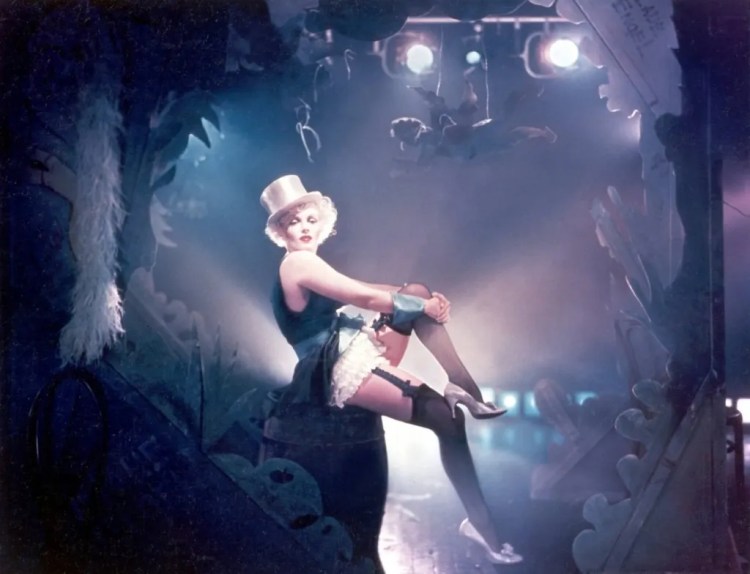
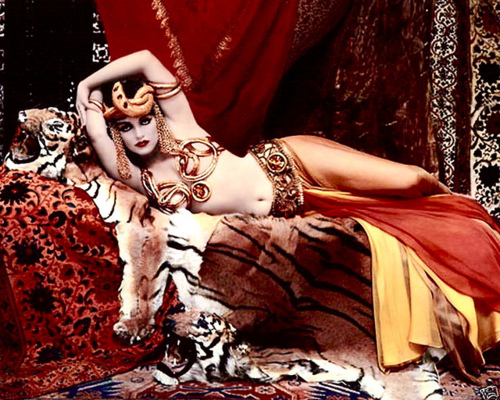
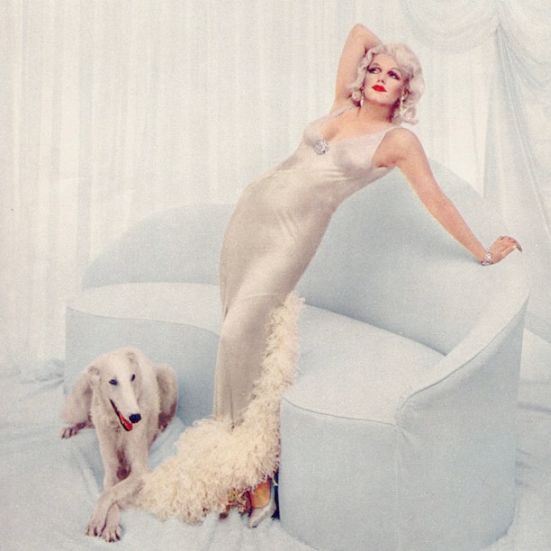
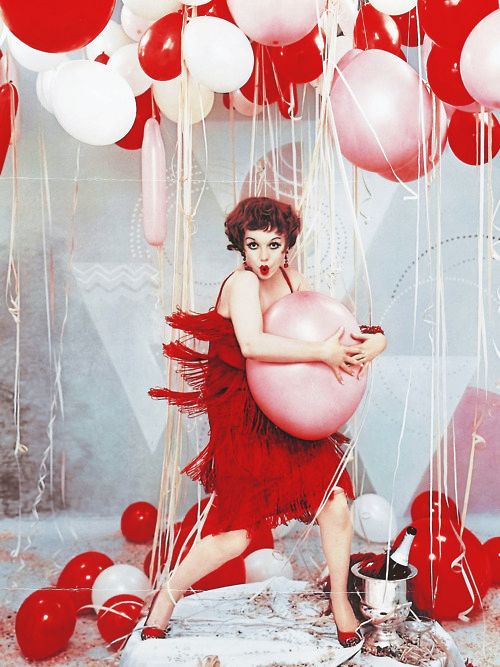
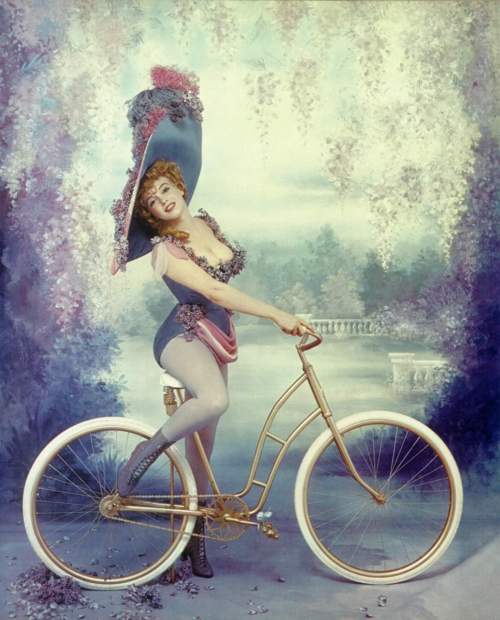
The photographs accompanying this essay: In 1958, Life Magazine invited Marilyn Monroe and photographer Richard Avedon to recreate images of five celebrated actresses of different eras. Entitled “Fabled Enchantresses,” the piece was part of the magazine’s December 22 “Christmas” issue and included an article by Marilyn’s playwright husband, Arthur Miller, entitled “My Wife, Marilyn.” Here she poses as: Clara Bow, Lillian Russell, Theda Bara, Jean Harlow and Marlene Dietrich.

Leave a Reply