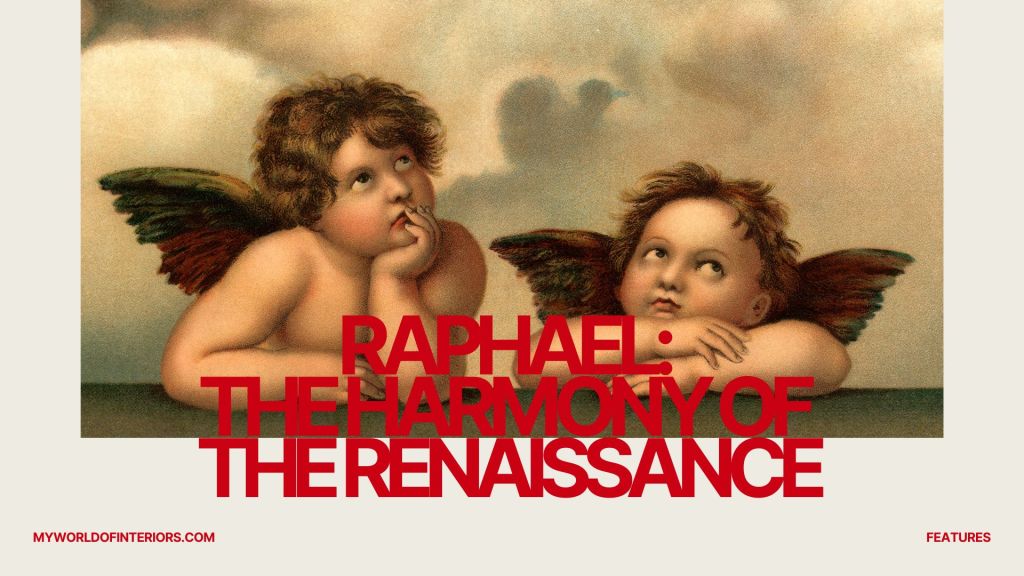
When Raphael died suddenly in 1520 at the age of just 37, Rome fell into mourning. His funeral at the Pantheon drew crowds of artists, courtiers, and clergy, all stunned by the loss of a painter whose genius had seemed inexhaustible. According to Vasari, Raphael’s death left “the art of painting bereft of light.” Even in a century of giants — Leonardo da Vinci, Michelangelo, Titian — Raphael was revered as the artist who embodied the very ideal of the Renaissance: grace fused with intellect, beauty anchored in clarity.
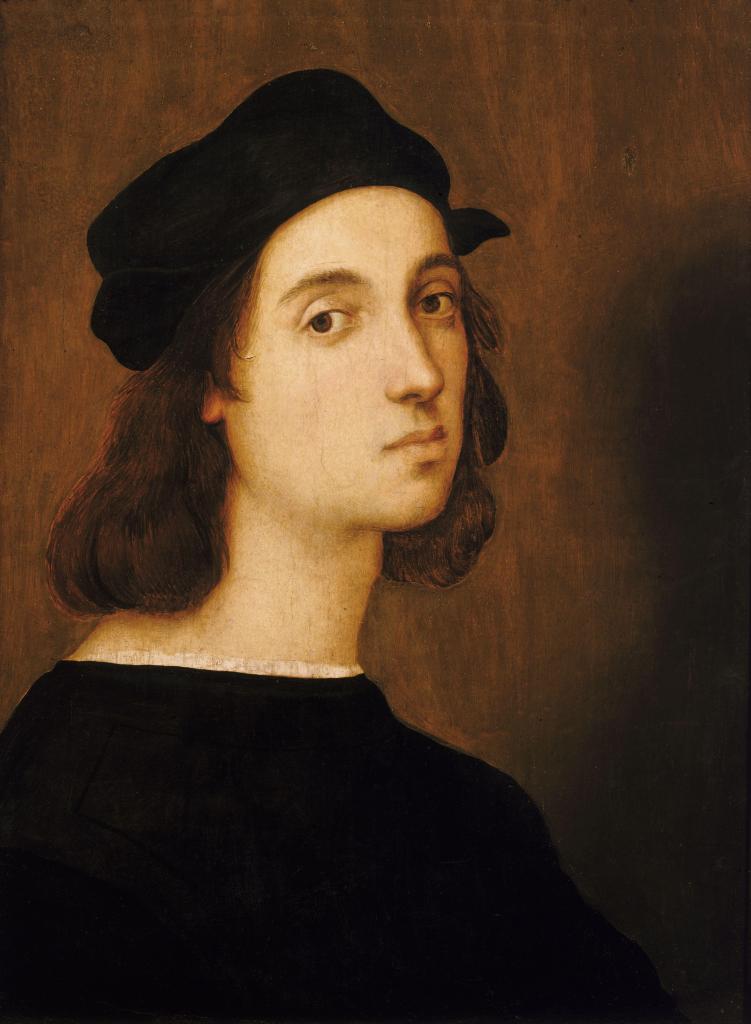
Five hundred years later, Raphael remains a paradox. His works are so serenely perfect that they risk being taken for granted. Where Michelangelo astonishes with muscular force and Leonardo seduces with enigmatic depth, Raphael persuades with harmony. His art is lucid, balanced, humane — qualities that, in our age of spectacle, can seem almost invisible. Yet it is precisely in this clarity that Raphael’s radical achievement lies: he showed how painting could be at once intellectual and sensuous, mathematical and emotional, classical and profoundly modern.
From Urbino to Florence: The Making of a Master
Raffaello Sanzio was born in Urbino in 1483, a city whose ducal court prized humanist learning and the visual arts. Trained by his father Giovanni Santi, a court painter, and later influenced by Pietro Perugino, Raphael absorbed early on the principles of clarity, proportion, and order.
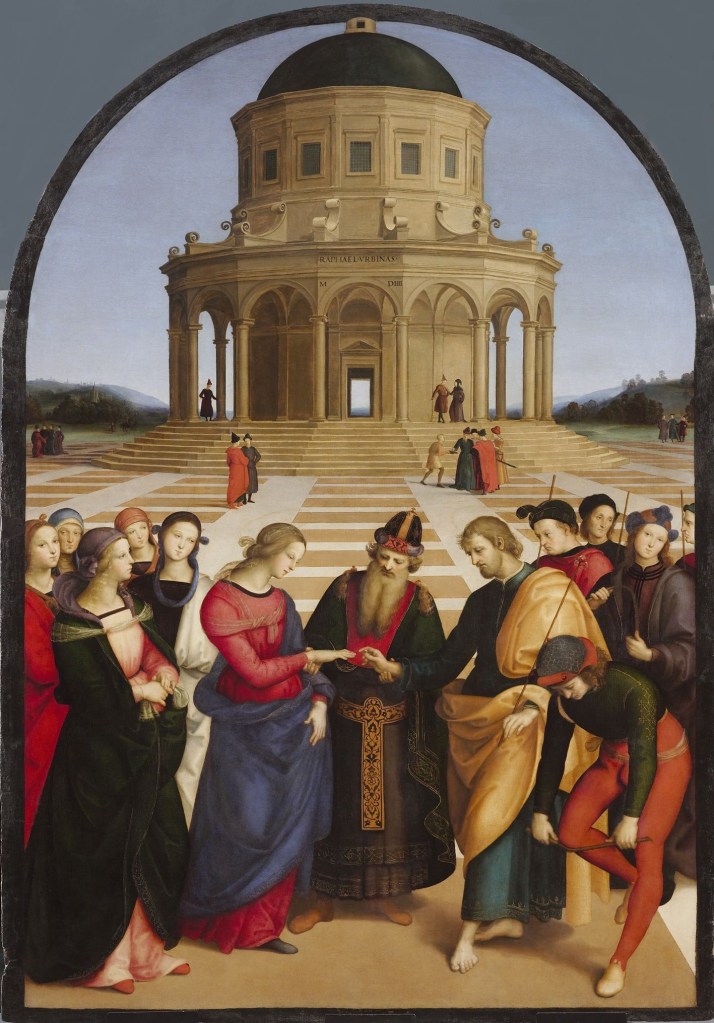
By his late teens he was already producing altarpieces that revealed an extraordinary gift for composition. His Marriage of the Virgin (1504), now in Milan, demonstrates this precocious talent: figures arranged in a harmonious circle, a temple receding in perfect perspective, every gesture contributing to narrative clarity.
When Raphael moved to Florence around 1504, he encountered the achievements of Leonardo and Michelangelo. From Leonardo he absorbed the use of sfumato and the psychological intimacy of figures; from Michelangelo, a sense of sculptural power. Yet Raphael transformed these influences into something distinctly his own: a gentler, more balanced classicism.
Rome and the Vatican: Painting as Philosophy
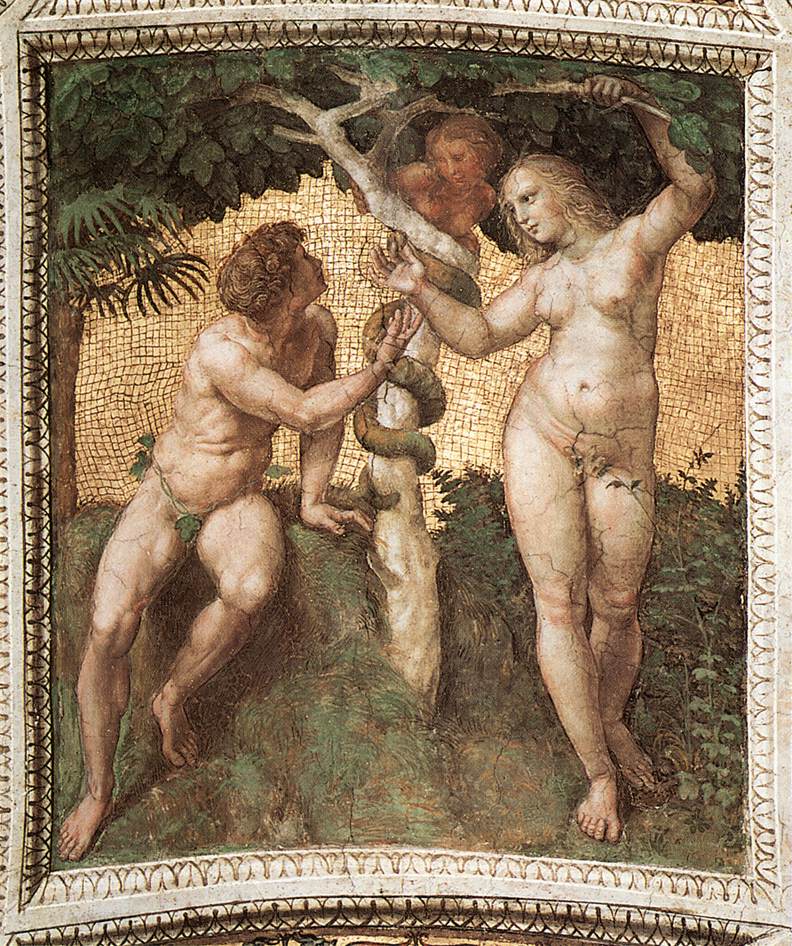
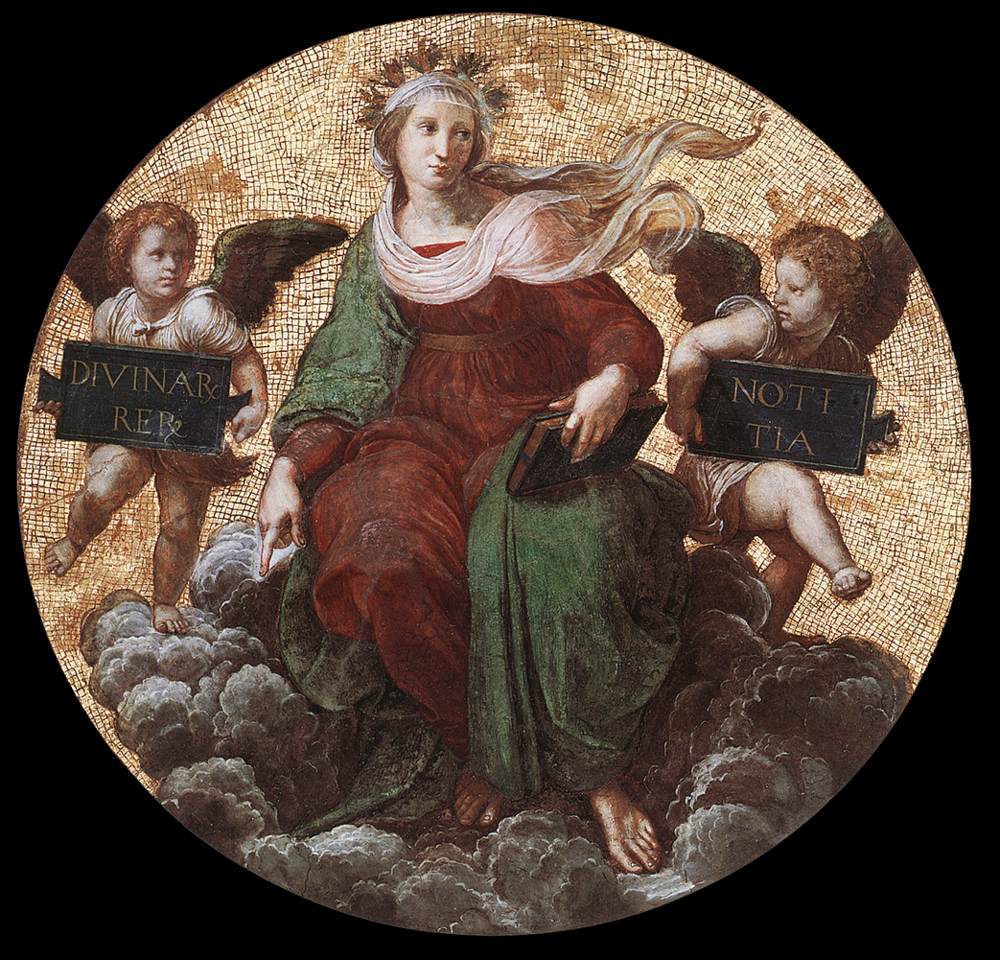
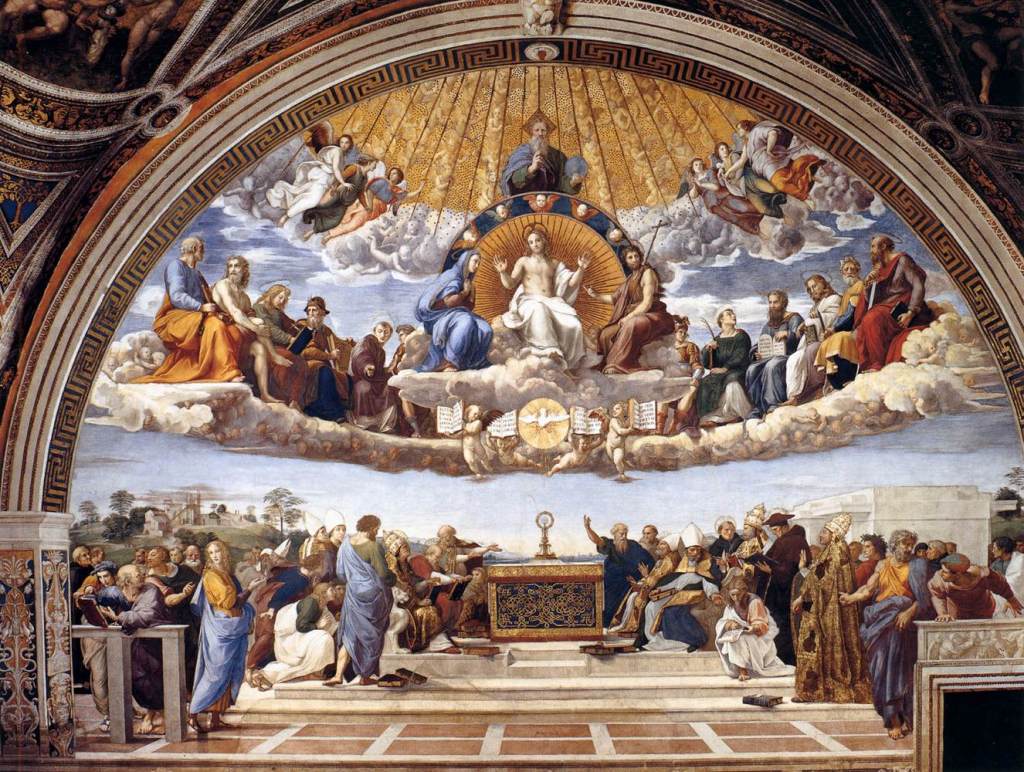
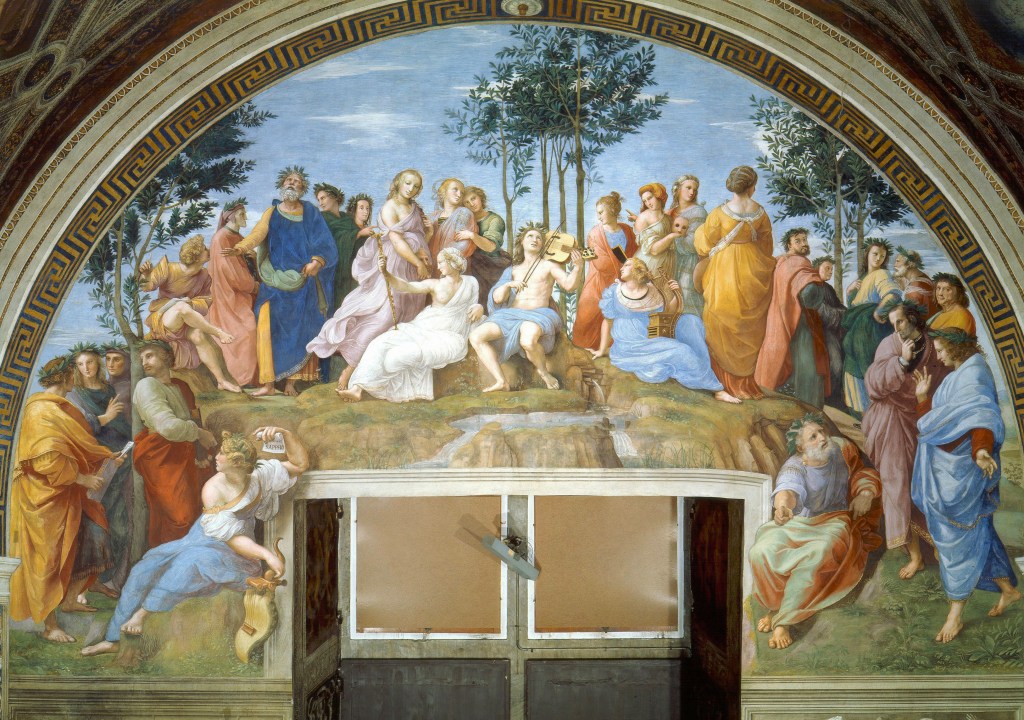
Raphael’s true breakthrough came in Rome, where Pope Julius II summoned him in 1508 to fresco the papal apartments in the Vatican. The result was the Stanze di Raffaello, a series of rooms that remain among the defining achievements of High Renaissance art.
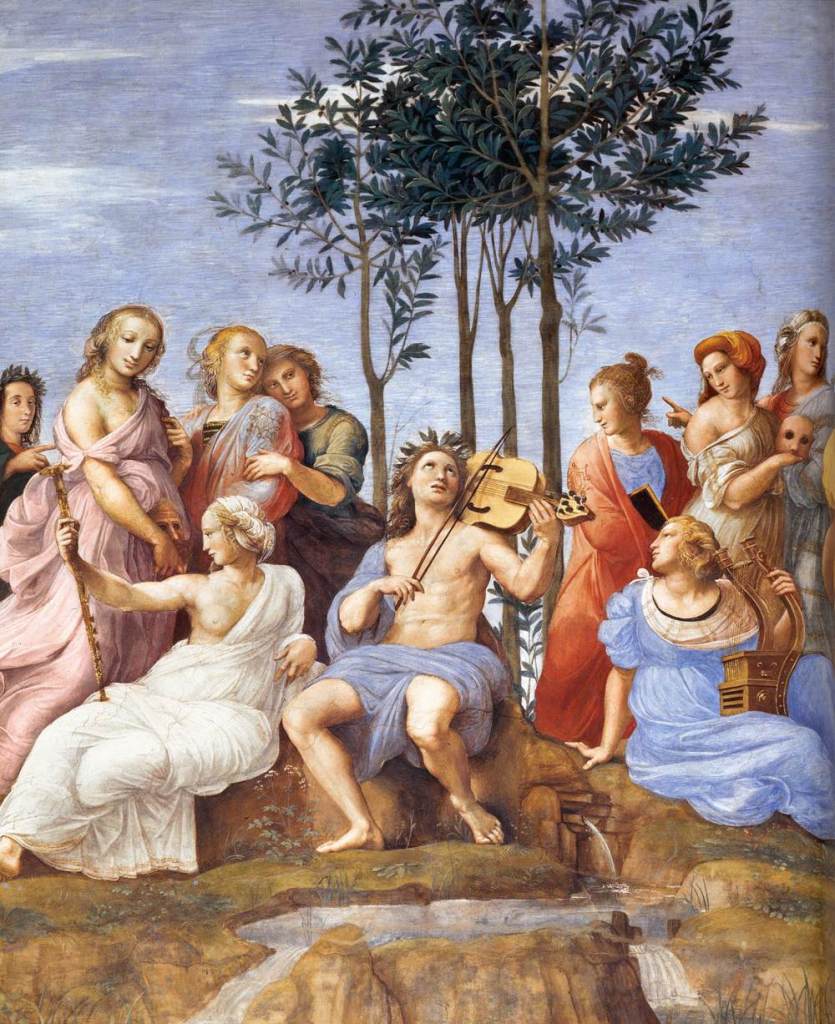
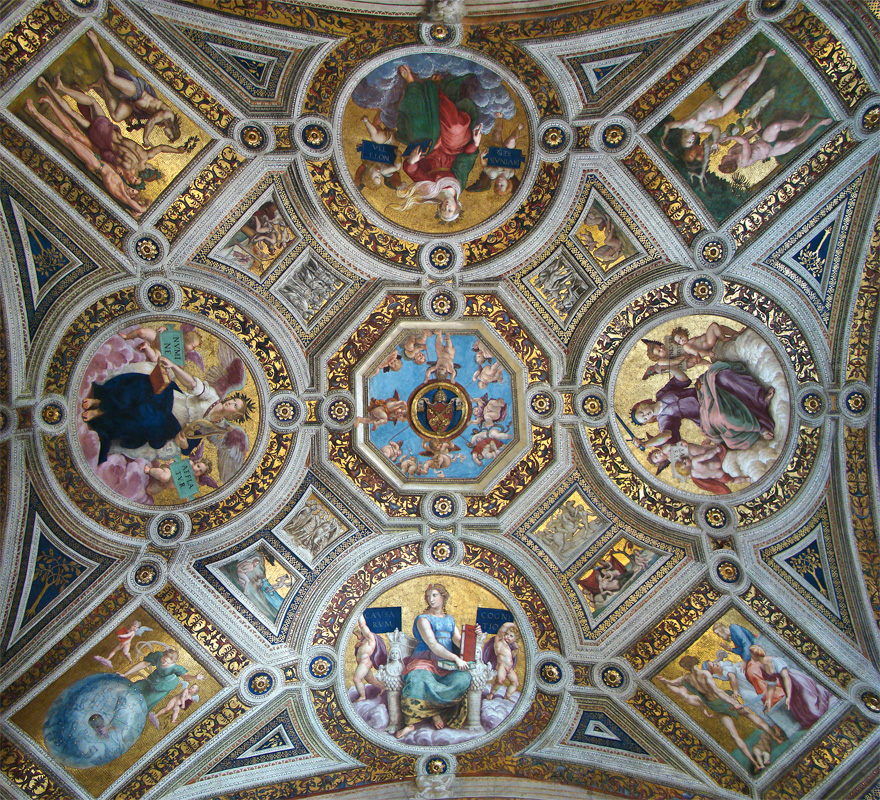
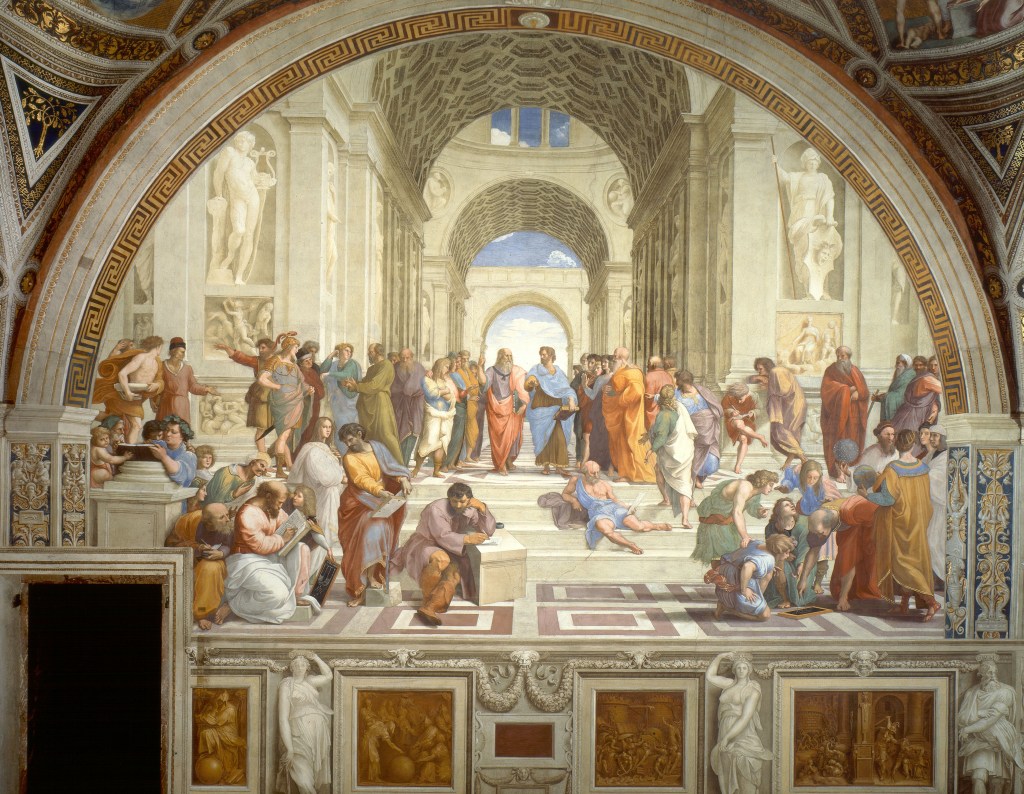
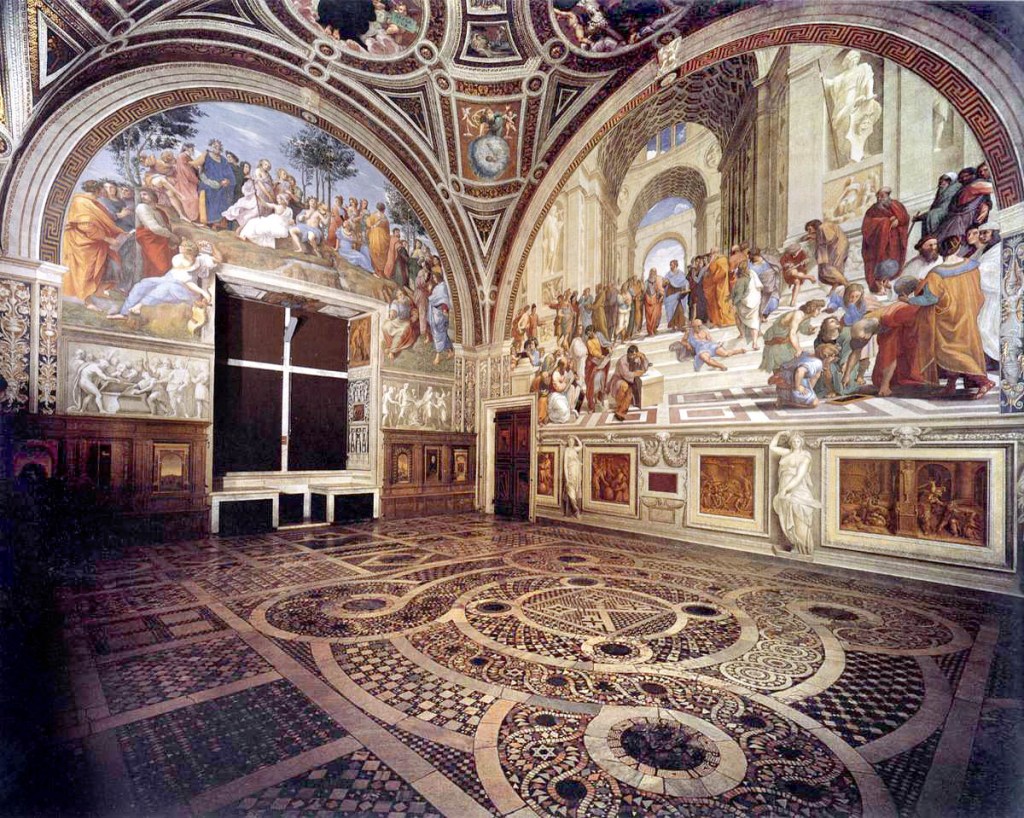
The most famous, the School of Athens, presents philosophy as a grand architectural stage. At its center stand Plato and Aristotle, flanked by mathematicians, scientists, and thinkers — all depicted with the clarity of portraits. The fresco is more than allegory; it is an embodiment of humanist ideals. The architecture echoes classical harmony, the figures are arranged in balanced groups, the gestures are animated yet ordered. Knowledge becomes visible, embodied in form.
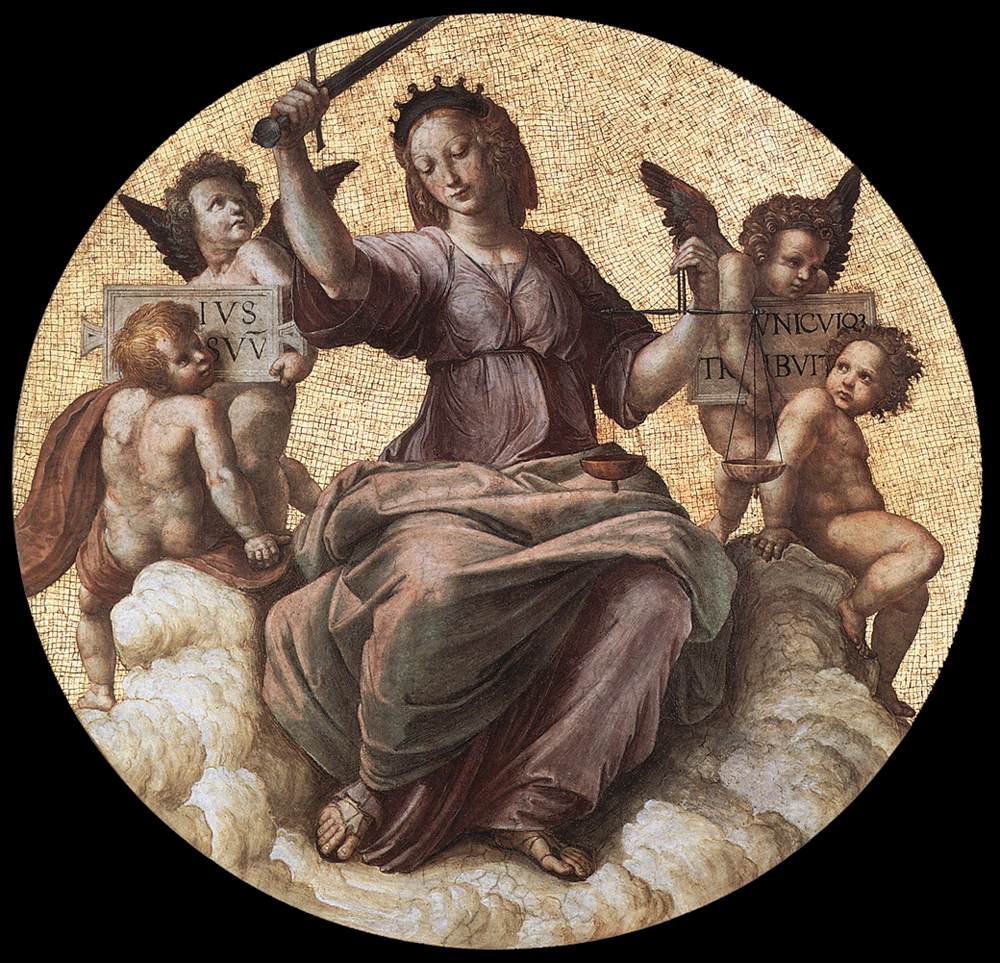
Other frescoes in the Stanze explored theology, poetry, and law, creating a program that united all branches of human inquiry under the authority of art. Raphael’s achievement was not only painterly but intellectual: he gave visual form to the Renaissance synthesis of faith and reason, antiquity and modernity.
The Madonna and the Human Face of the Sacred
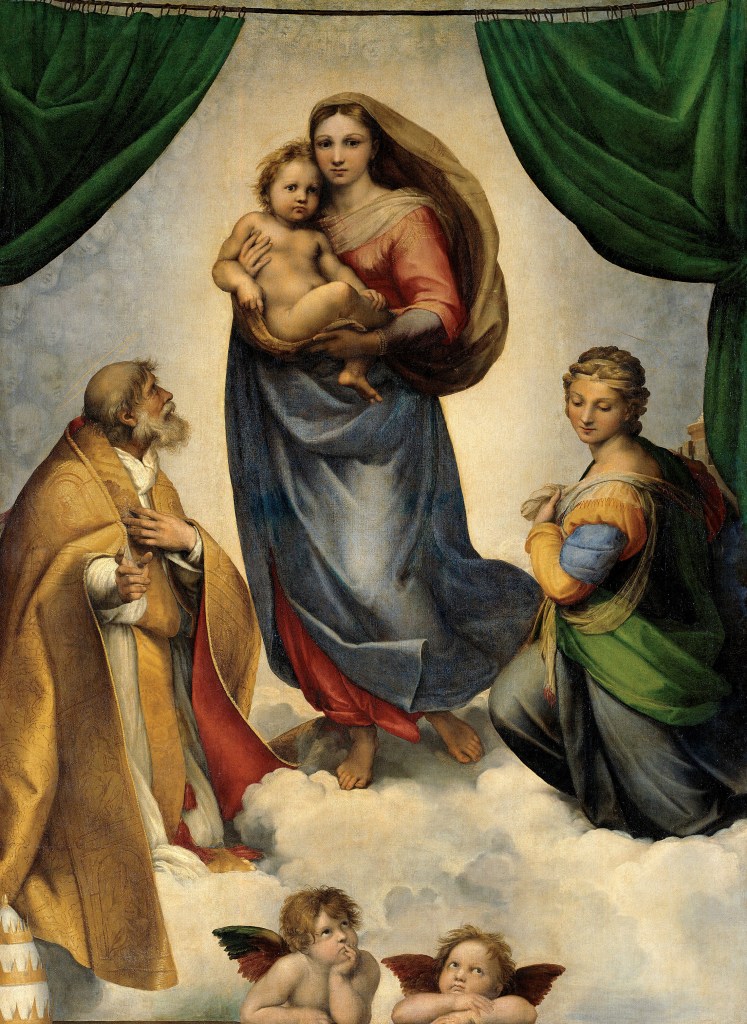
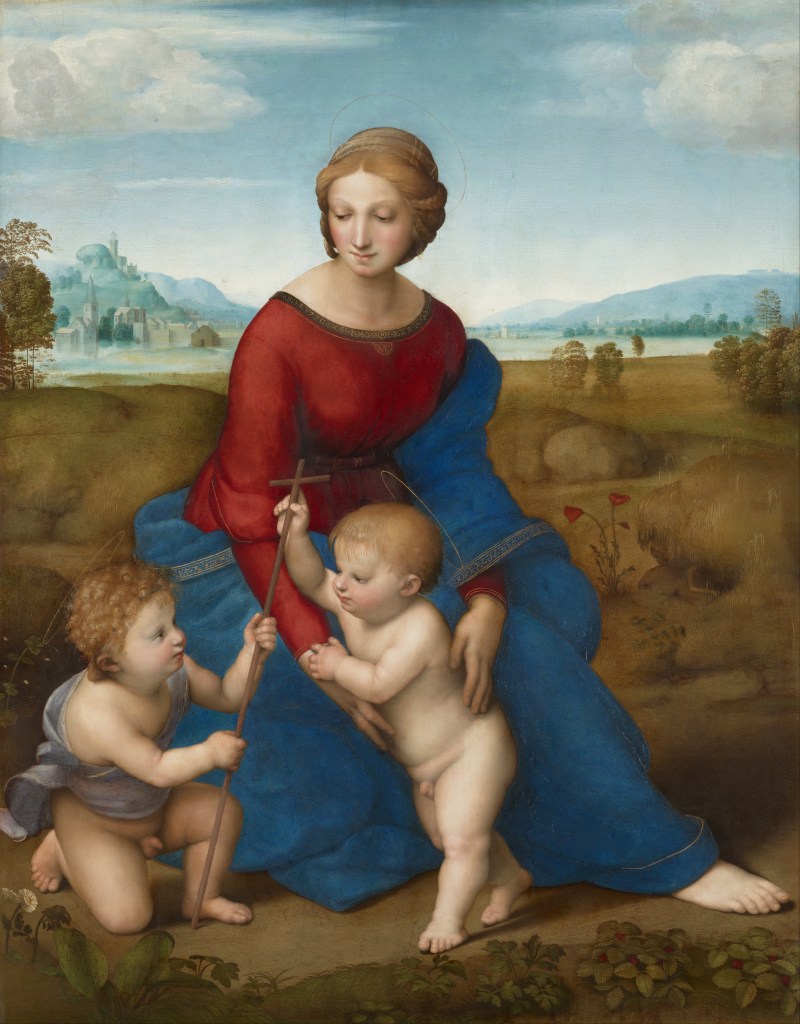
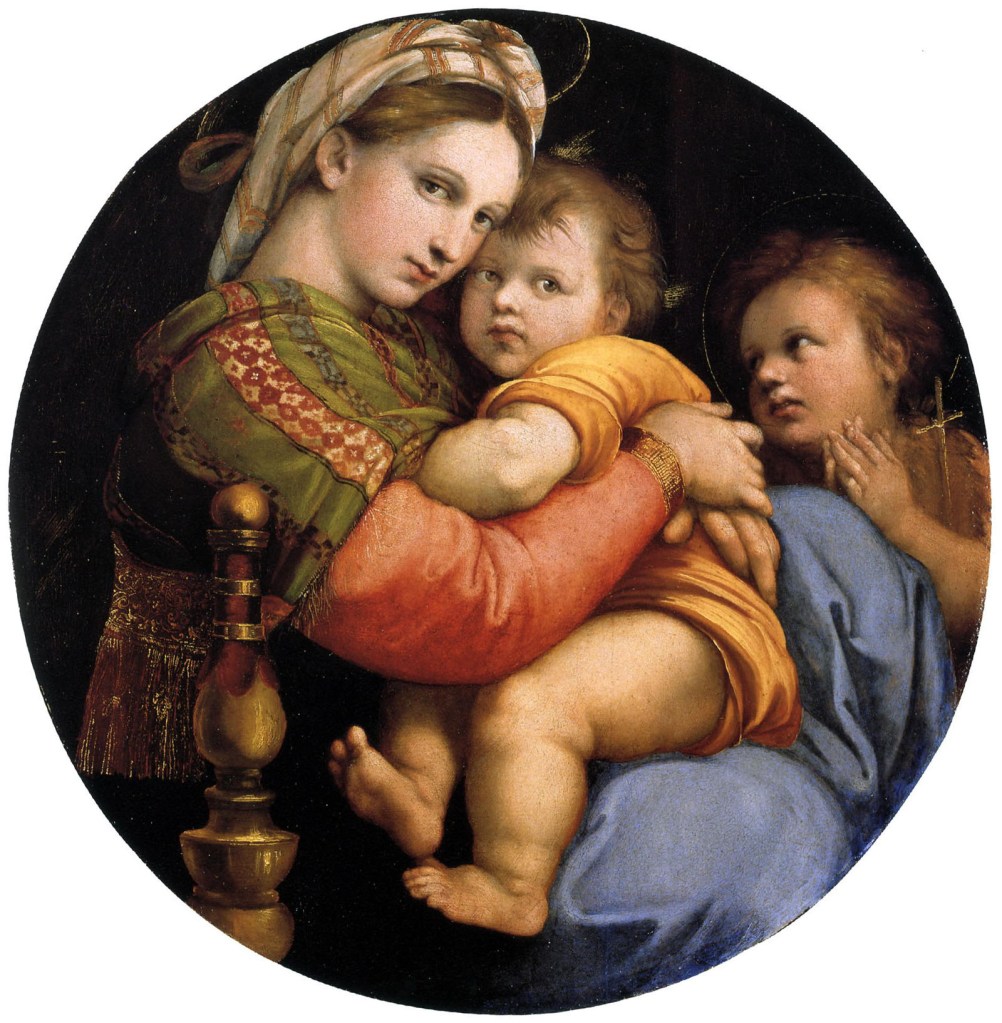
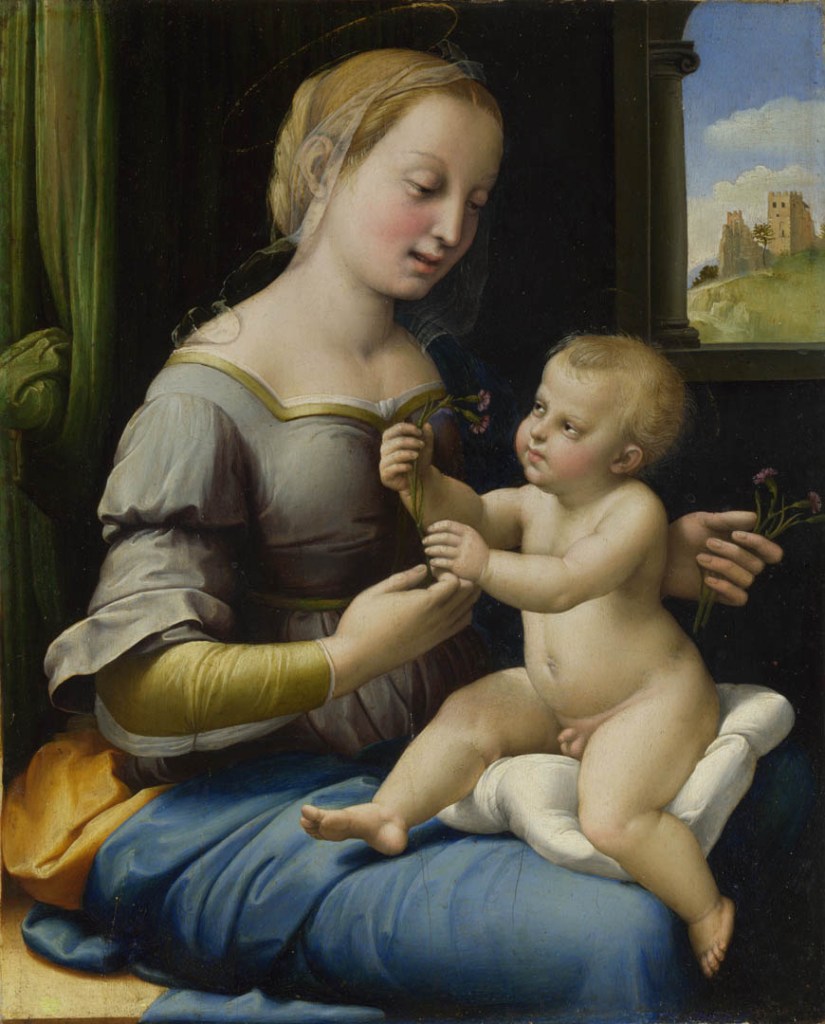
Parallel to his monumental commissions, Raphael produced an astonishing number of Madonnas, each an exploration of intimacy between mother and child. Works like the Sistine Madonna (1512–13), the Madonna of the Meadow (1506), and the Madonna della Seggiola (1514) combine theological significance with human tenderness.
Where earlier depictions emphasized the Madonna’s majesty, Raphael emphasized her humanity. His Virgins are affectionate mothers, their gestures natural, their expressions tender. The divine is made approachable, incarnate in the familiar rhythms of human love. These images, reproduced endlessly in prints, became some of the most widely circulated sacred images in European history.
Architecture, Tapestry, and the Expanding Horizon
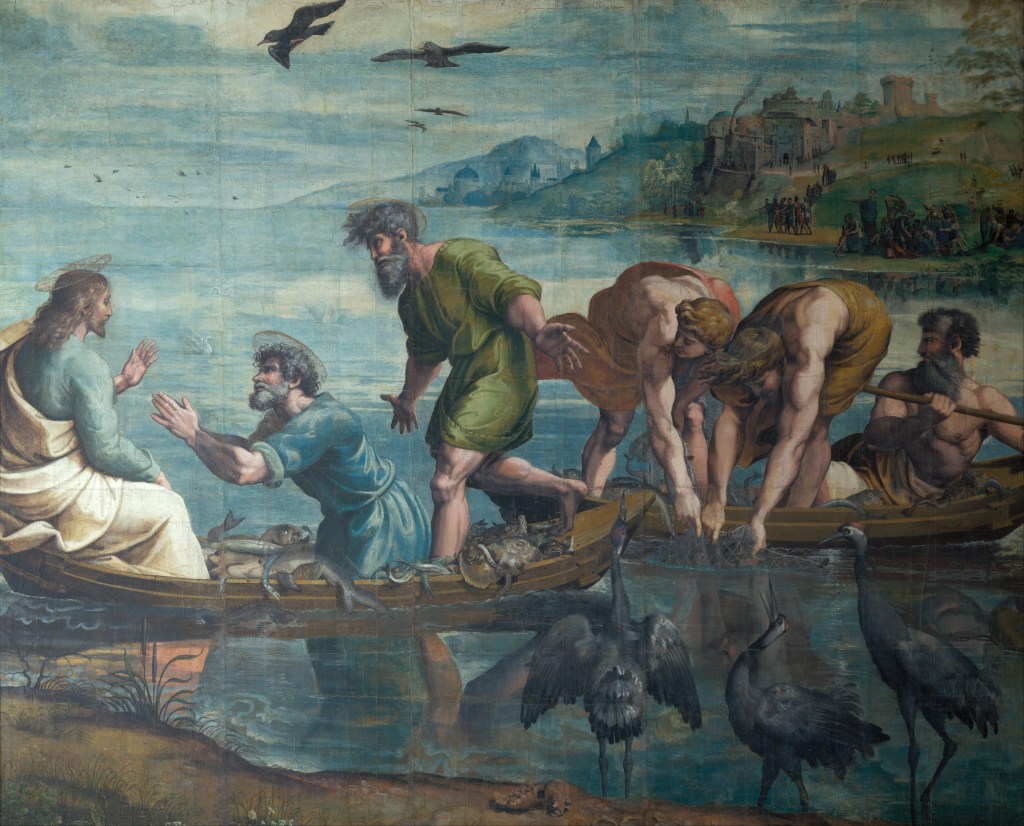
Raphael was not only a painter but also an architect, draftsman, and designer. He contributed to the design of St. Peter’s Basilica after Bramante’s death, bringing clarity to its monumental plan. He designed tapestries for the Sistine Chapel, weaving biblical scenes into monumental decorative cycles.
He was also an organizer: his studio, one of the largest of the Renaissance, trained scores of assistants and disseminated his style throughout Europe. Raphael was not only an individual genius but the center of a network — a prototype of the modern artist as entrepreneur and brand.
The Ideal of Harmony
What distinguishes Raphael is not virtuosity alone but harmony. His compositions are orchestrated like music, balancing symmetry with dynamism, clarity with movement. His figures embody grace without sentimentality, dignity without stiffness. Where Michelangelo embodied heroic struggle, Raphael embodied equilibrium.
This quality made him the model for centuries of academic painting. From the Carracci to Ingres, generations looked to Raphael as the supreme exemplar of beauty and proportion. If later modernists dismissed him as too perfect, too serene, it is only because his influence was once so overwhelming.
Legacy and Reassessment
Raphael’s early death at 37 froze his reputation in idealized form. He became, in Vasari’s words, the artist who “possessed all the rarest qualities of the spirit.” For centuries, Raphael was the standard of artistic perfection, taught in academies as the painter to emulate.
In the modern era, his clarity came to be undervalued. Romantic critics preferred Michelangelo’s intensity or Leonardo’s mystery. To a 20th-century eye trained on Picasso or Pollock, Raphael’s serenity could appear too polished. Yet recent scholarship has rediscovered the radicalism of his vision: how his clarity was itself an intellectual experiment, how his balance was achieved through daring synthesis of influences, how his Madonnas offered a revolutionary tenderness.
Today, to stand before the School of Athens or the Sistine Madonna is to see not cold perfection but humane brilliance — art that dignifies both knowledge and feeling.
Essential Works
- The Marriage of the Virgin (1504, Brera, Milan) — Early masterpiece of perspective and narrative clarity.
- Madonna of the Meadow (1506, Kunsthistorisches Museum, Vienna) — Intimate exploration of maternal affection.
- Stanze di Raffaello (1508–1524, Vatican) — Fresco cycle embodying Renaissance humanism.
- School of Athens (1511, Vatican) — Philosophy as visual harmony.
- Sistine Madonna (1512–13, Dresden) — One of the most reproduced sacred images in history.
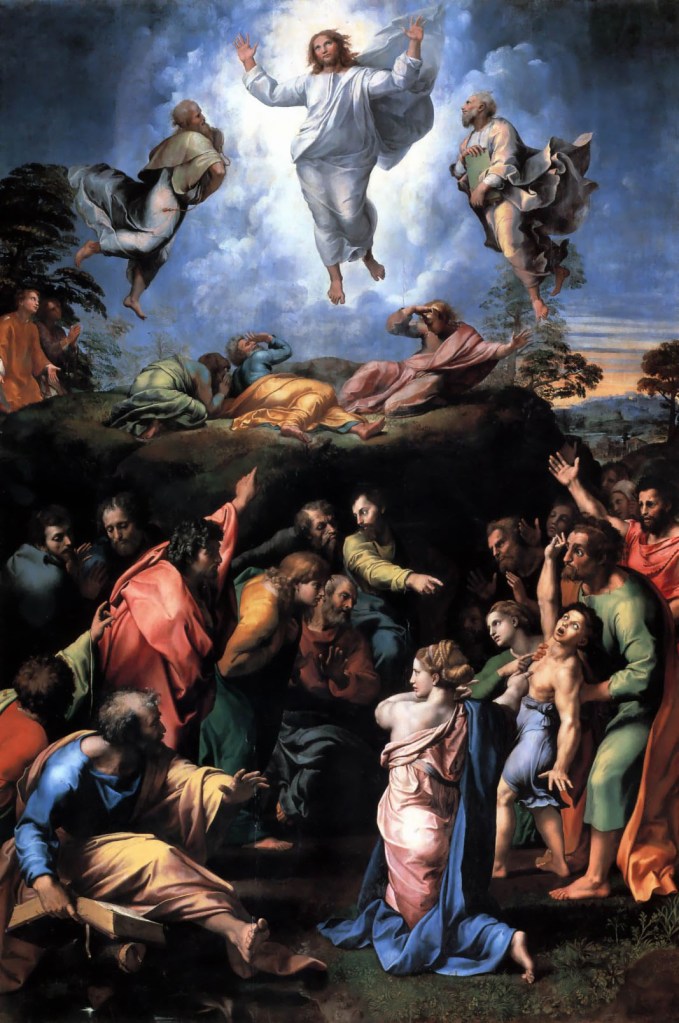
- Transfiguration (1516–20, Vatican Museums) — Raphael’s final work, completed posthumously, balancing drama and divinity.
Raphael Today
In our fractured, image-saturated world, Raphael’s serenity may feel foreign. Yet his art offers something vital: a vision of harmony, of the possibility that beauty and intellect, sacred and human, can coexist. His clarity is not simplicity but synthesis — the balance of contradictions into luminous form.
Raphael was, in his time, the painter of perfection. In ours, he reminds us that clarity itself can be radical, that beauty can be a form of knowledge, and that harmony remains one of art’s most enduring ideals.

Leave a Reply