
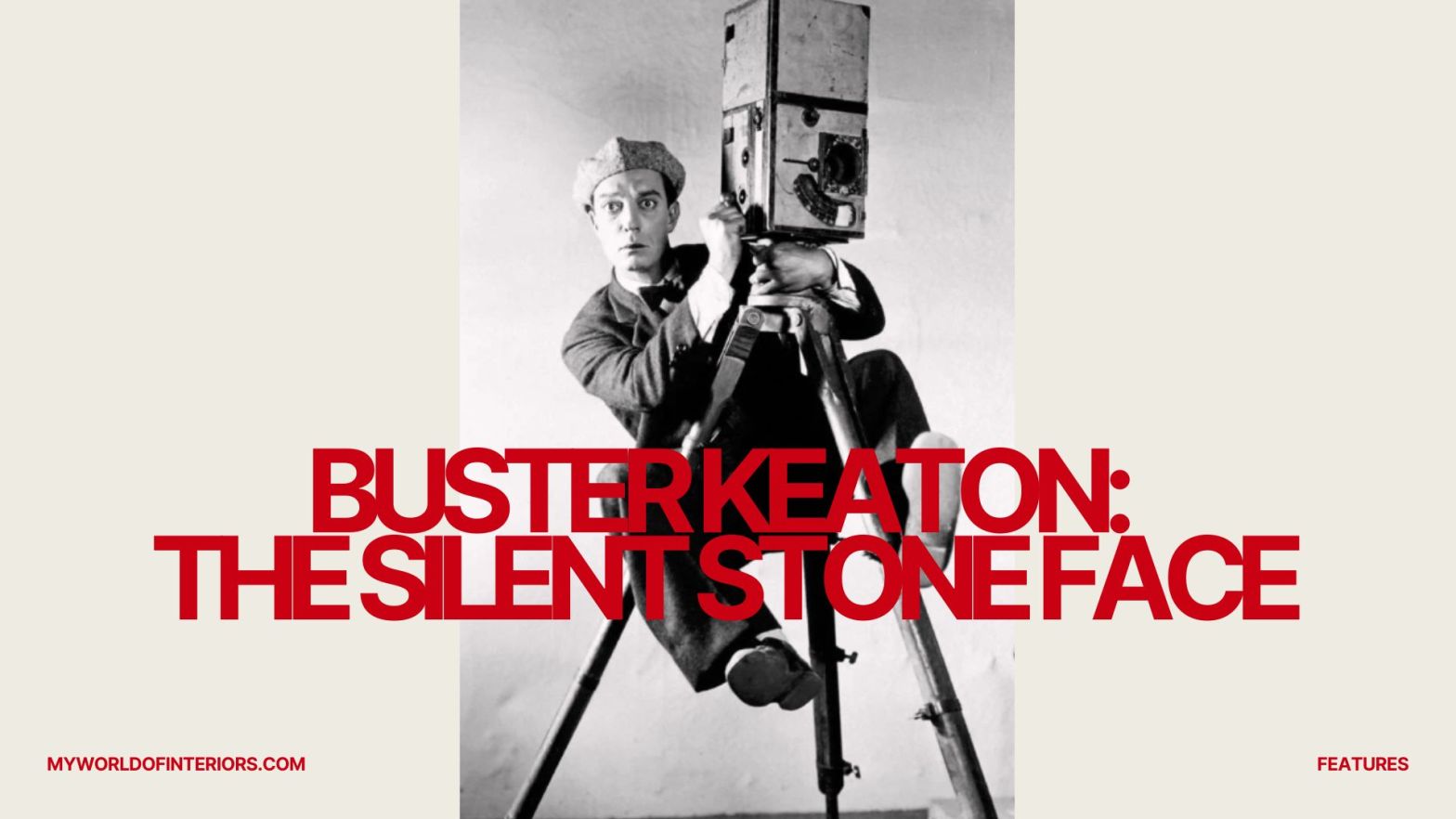
In the pantheon of cinema’s pioneers, Buster Keaton occupies a place both singular and paradoxical. He was called “The Great Stone Face,” a comic genius who rarely smiled on screen. His films, made in the silent era of the 1920s, were symphonies of precision: breathtaking stunts, elaborate set pieces, narratives that balanced absurdity with inevitability. And yet, beneath the comedy’s clockwork, Keaton conveyed something more profound — a stoic resilience in the face of chaos, an existential deadpan that still feels startlingly modern.
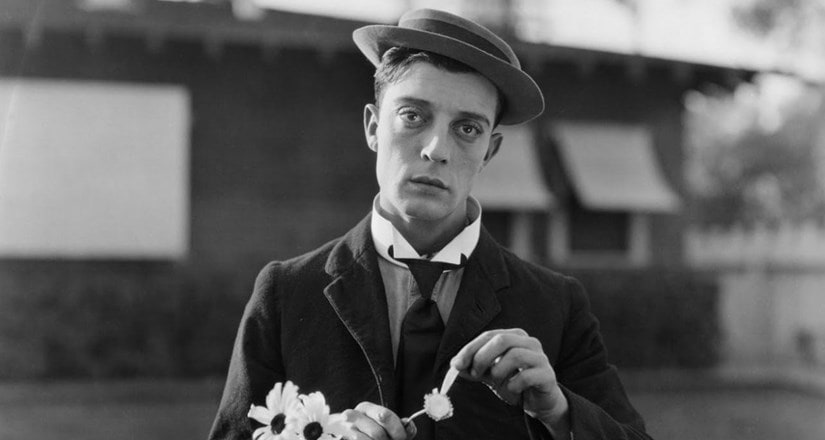
Where Charlie Chaplin embodied sentiment, the Tramp clutching at romance and justice, Keaton offered something different: a man dwarfed by machines, storms, houses, and fate itself, moving through calamity with unshakable calm. In an era when cinema was still inventing itself, he revealed what it could be: not just laughter but poetry, not just slapstick but philosophy.
From Vaudeville to the Camera
Joseph Frank Keaton was born in 1895 into a vaudeville family. Legend has it that his stage name “Buster” came from Harry Houdini, who saw the toddler take a fall down a flight of stairs and declared, “That was a real buster!” From then on, falling became his art.
In the family act, young Buster was hurled, tumbled, and tossed across the stage by his parents, developing a remarkable physical resilience. More importantly, he cultivated his deadpan. Where other child performers mugged and smiled, Keaton remained expressionless — a face that amplified every pratfall’s absurdity.
By 1917, he entered film, working alongside Fatty Arbuckle, and quickly discovered the new medium’s possibilities. Unlike vaudeville’s ephemerality, film allowed precision: rehearsed gags, timed stunts, a choreography with the camera itself. Within a few years, Keaton had established his own studio and creative independence.
The Architecture of Comedy
Keaton’s films of the 1920s — short comedies followed by feature-length masterpieces — remain among the greatest achievements of silent cinema. His genius lay not only in physical daring but in cinematic construction.
- Stunts as Storytelling: Keaton’s feats were real, performed without doubles or trick photography. In Steamboat Bill, Jr. (1928), he stands immovable as a two-ton house façade crashes around him, the window frame narrowly fitting his body. It is not simply spectacle but metaphor: the small man surviving the absurd weight of the world.
- Machines and Modernity: Films like The General (1926) and Sherlock Jr. (1924) placed Keaton against — and within — machines. Trains, projectors, automobiles became characters themselves, magnifying both comedy and modern alienation. Keaton’s heroes did not conquer machines; they synchronized with them, his timing as precise as the gears of an engine.
- Deadpan as Philosophy: Unlike Chaplin’s sentimental appeal, Keaton’s stoicism suggested an existential outlook. Disaster was inevitable; survival depended not on emotion but on persistence. His unchanging face became a mask of endurance, transforming slapstick into metaphysics.
Masterpieces of the Silent Era
Keaton’s string of features in the 1920s rival any decade in cinema history:
- Sherlock Jr. (1924): A projectionist dreams himself into the movie screen, a dazzling meta-cinematic fantasy decades ahead of its time.
- The Navigator (1924): Two rich innocents adrift on a deserted ocean liner, battling absurd circumstances with inventive gags.
- Seven Chances (1925): Pursued by hundreds of would-be brides, Keaton turns a romantic farce into a surreal chase comedy.
- The General (1926): Often considered his masterpiece — a Civil War epic in which Keaton’s engineer pursues both a stolen locomotive and his beloved, blending historical spectacle with breathtaking stunts.
- Steamboat Bill, Jr. (1928): Famous for its house façade stunt, but equally a meditation on filial duty and individual perseverance.
Each film was simultaneously populist entertainment and avant-garde experiment — narratives propelled by gags that were also architectural, balletic, and surreal.
Decline and Rediscovery
The arrival of sound cinema, and Keaton’s ill-fated contract with MGM in 1928, ended his creative freedom. Stripped of control, forced into formulaic projects, and struggling with alcoholism, Keaton’s career faltered. By the 1930s, he was a marginal figure, remembered more as Chaplin’s less sentimental rival than as a genius in his own right.
Yet the mid-20th century brought rediscovery. French critics of Cahiers du Cinéma and filmmakers of the Nouvelle Vague hailed Keaton as a visionary, a master of cinematic form. His films, restored and reappraised, revealed their modernist brilliance: Keaton as not just a clown but an auteur. By the time of his death in 1966, he was celebrated once more, honored by film societies and embraced by a new generation of cinephiles.
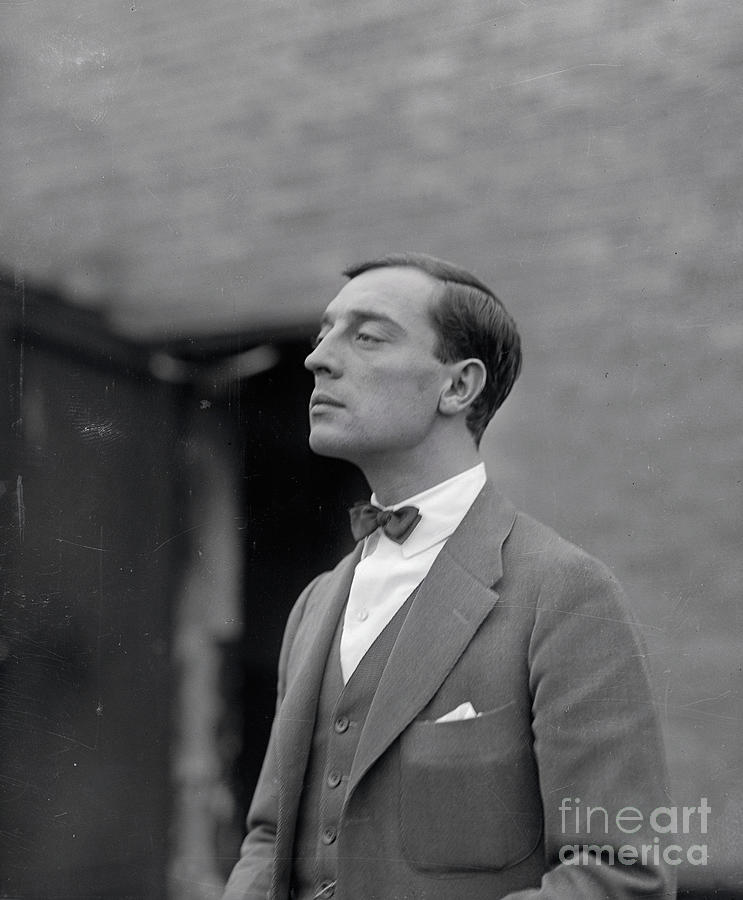
Keaton’s Legacy
Today, Buster Keaton’s influence is everywhere. Directors from Orson Welles to Martin Scorsese, Jacques Tati to Wes Anderson, have drawn from his blend of precision and absurdity. Jackie Chan explicitly cited Keaton as an inspiration for his own death-defying stunts. The language of modern physical comedy — and the very notion of cinema as an art of movement and rhythm — remains indebted to him.
But Keaton’s legacy extends beyond craft. In his stoic face, audiences glimpse something deeply human: the resilience to endure absurdity, the grace to survive collapse. He is the philosopher of slapstick, the poet of catastrophe.
The Stone Face, Eternal
In the flicker of a silent screen, Buster Keaton still runs, leaps, crashes, and rises again, his face impassive, his body impossibly agile. Nearly a century on, his films remain astonishing not only for their technical daring but for their emotional resonance.
Keaton reminds us that comedy is not the opposite of seriousness, but its twin: a way of facing the world’s chaos without flinching. In his stone face, there is stoicism; in his falls, there is grace.
Cinema has grown louder, faster, more digital — but few films feel as alive as Keaton’s silent epics. He was, and remains, a modern: precise, dreamlike, eternal.
Discover more from My World of Interiors
Subscribe to get the latest posts sent to your email.

