
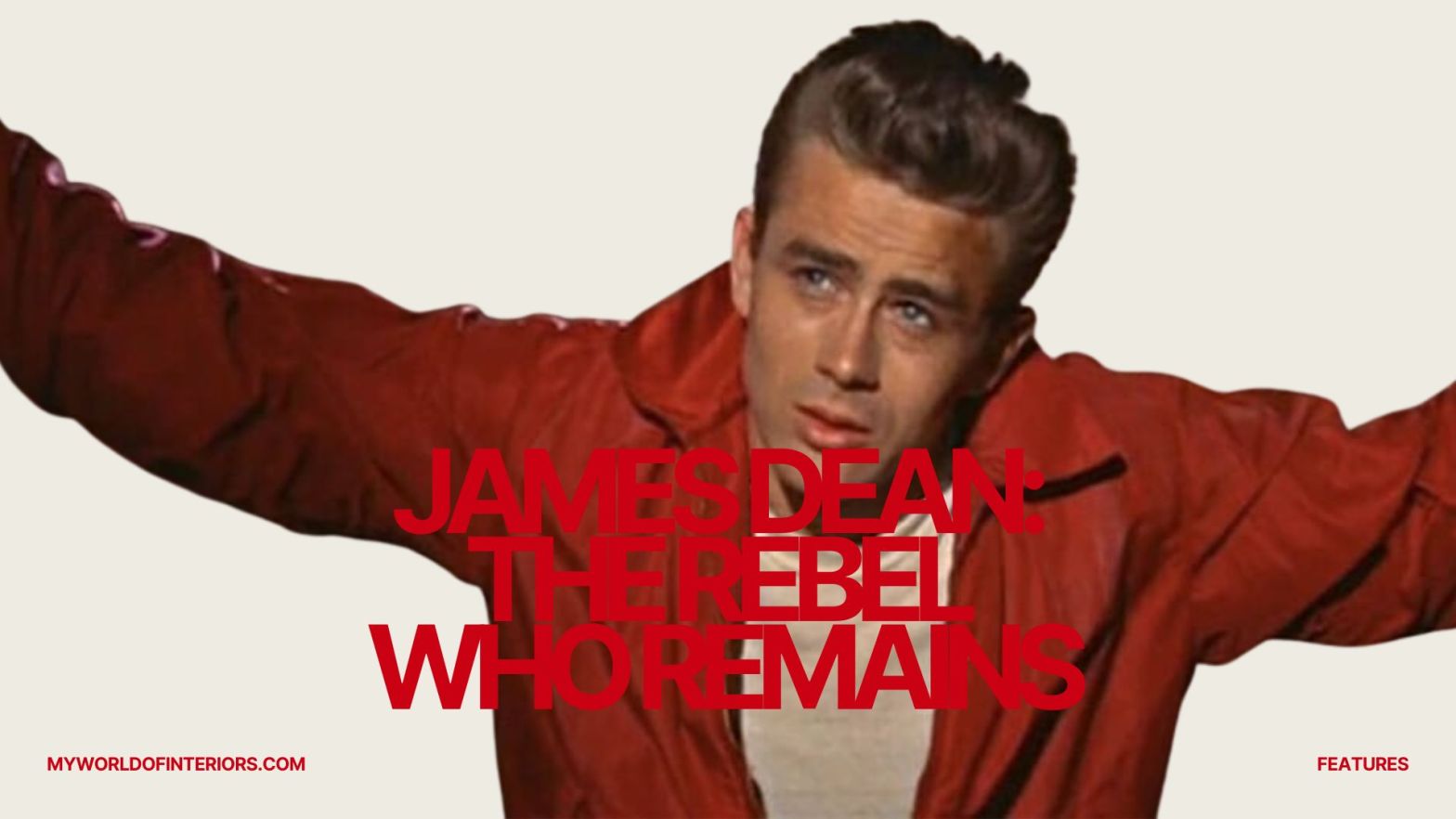
Few figures in 20th-century culture occupy the same space as James Dean: a young man whose career lasted scarcely three films, yet whose image endures as shorthand for rebellion, beauty, and the tragedy of lost potential. He lived only twenty-four years, died in a Porsche Spyder on a California highway in 1955, and yet nearly seventy years later, Dean’s presence feels undiminished. He is less a memory than a myth, a figure preserved in celluloid and collective imagination, forever young, forever restless.
From Fairmount to Fame
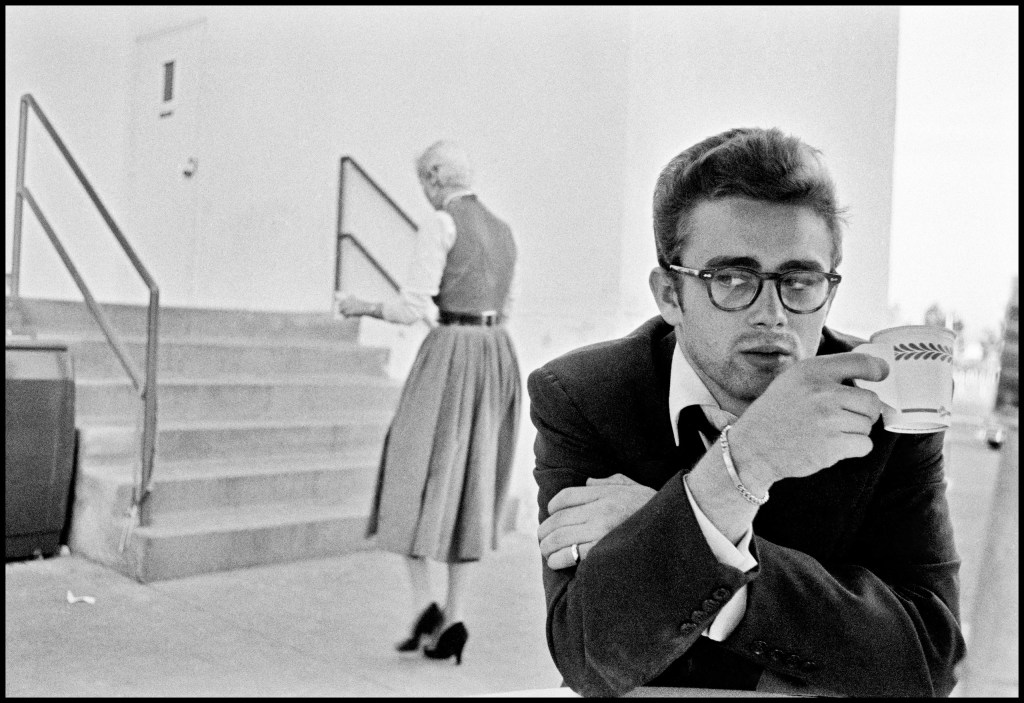
James Byron Dean was born in Marion, Indiana in 1931 and raised in the small town of Fairmount after his mother’s death. His Midwestern upbringing was marked by isolation and a hunger for expression. He studied drama at UCLA, where his raw intensity caught the attention of teachers and casting agents. By the early 1950s, he was appearing in live television dramas—those crucibles of early American method acting—before securing a place at the Actors Studio under Lee Strasberg.
In New York, Dean immersed himself in the psychological realism of method acting, becoming a peer to Marlon Brando, Julie Harris, and Montgomery Clift. The technique suited him: it gave structure to his volatility, and intensity to his vulnerability.
Three Films, A Lifetime of Myth
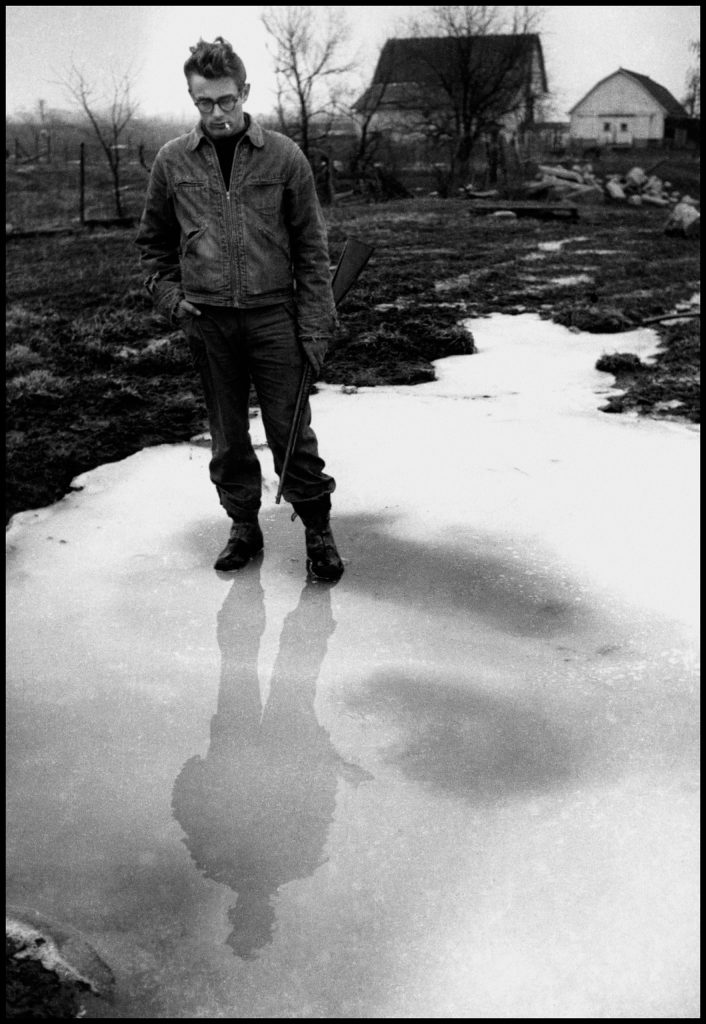
Dean’s film career spanned barely sixteen months, yet each role expanded his legend.
- East of Eden (1955), directed by Elia Kazan, was his breakthrough. Playing Cal Trask, the troubled son yearning for his father’s approval, Dean brought an aching sensitivity that audiences had not seen before in American cinema. His performance earned him the first posthumous Academy Award nomination in history.
- Rebel Without a Cause (1955) crystallized his image. As Jim Stark—the sensitive outsider battling alienation, parental misunderstanding, and the chaos of youth—Dean embodied a new archetype: the adolescent as existential rebel. The film defined an entire generation’s anxieties in an age of suburban growth and nuclear threat.
- Giant (1956), released after his death, offered a glimpse of his range. As Jett Rink, the poor ranch hand who rises to become a Texas oil baron, Dean was less a youth in revolt than a brooding symbol of ambition and alienation in adulthood. His performance won him a second posthumous Oscar nomination, sealing his legacy.
That three roles could generate such an enduring myth is unprecedented. Together, they mapped a cycle of modern American masculinity: the wounded son, the misunderstood rebel, the outsider-turned-tycoon.
The Accident and the Aftermath
On September 30, 1955, Dean crashed his Porsche 550 Spyder—nicknamed “Little Bastard”—en route to a race in Salinas, California. His death was instant, his myth instantaneous. The nation grieved as if it had lost a peerless voice, though in truth it had lost a promise. In death, he became a canvas for projection: of youth cut short, of rebellion never resolved, of beauty fossilized in time.
The cultural echoes were immediate. Elvis Presley modeled aspects of his persona on Dean. Teenagers across America wore red jackets and brooded on street corners. Writers from Norman Mailer to Joyce Carol Oates traced in him the contours of a new American archetype: the beautiful loser, the existential rebel.
Beyond the Poster
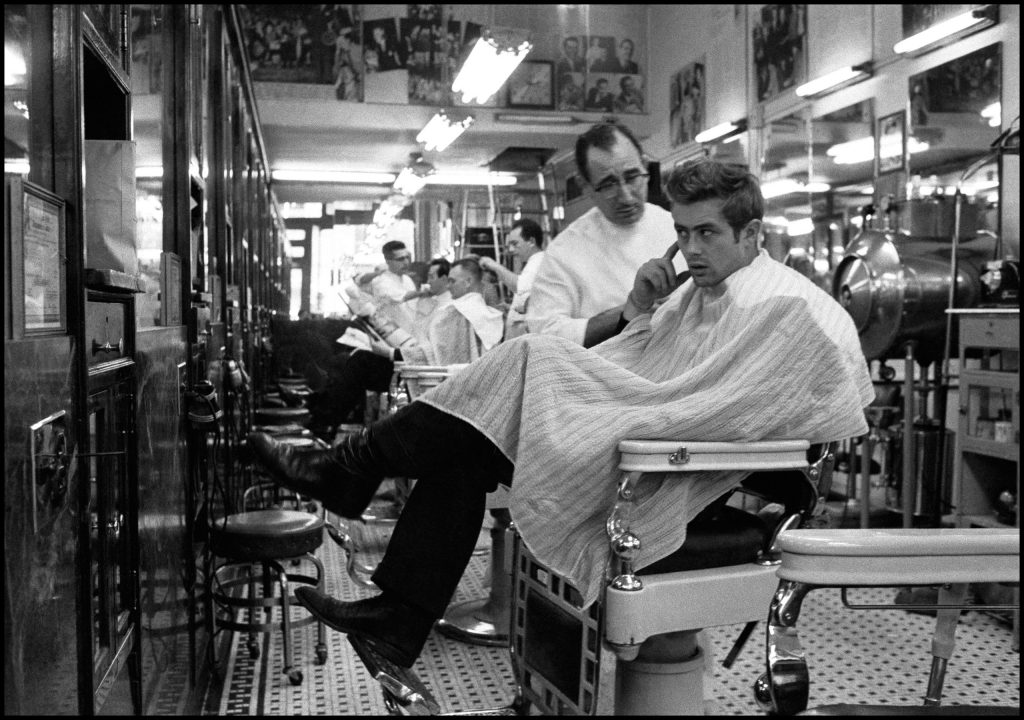
Though his legend is often distilled into a single image—white T-shirt, cigarette dangling, brooding gaze—Dean was more complex than iconography suggests. Friends and colleagues remembered him as mercurial, funny, sensitive, difficult, and experimental. He painted, played bongos, quoted poetry, and cultivated an eclectic curiosity. He was not just a rebel but a restless seeker, uncomfortable with definitions, unwilling to conform.
His bisexuality, only partially acknowledged in his lifetime, further complicates the mythology. In a culture that demanded fixed roles—macho star, devoted husband—Dean’s fluidity was quietly radical. He embodied a masculinity that was tender and tormented, sensual and solitary.
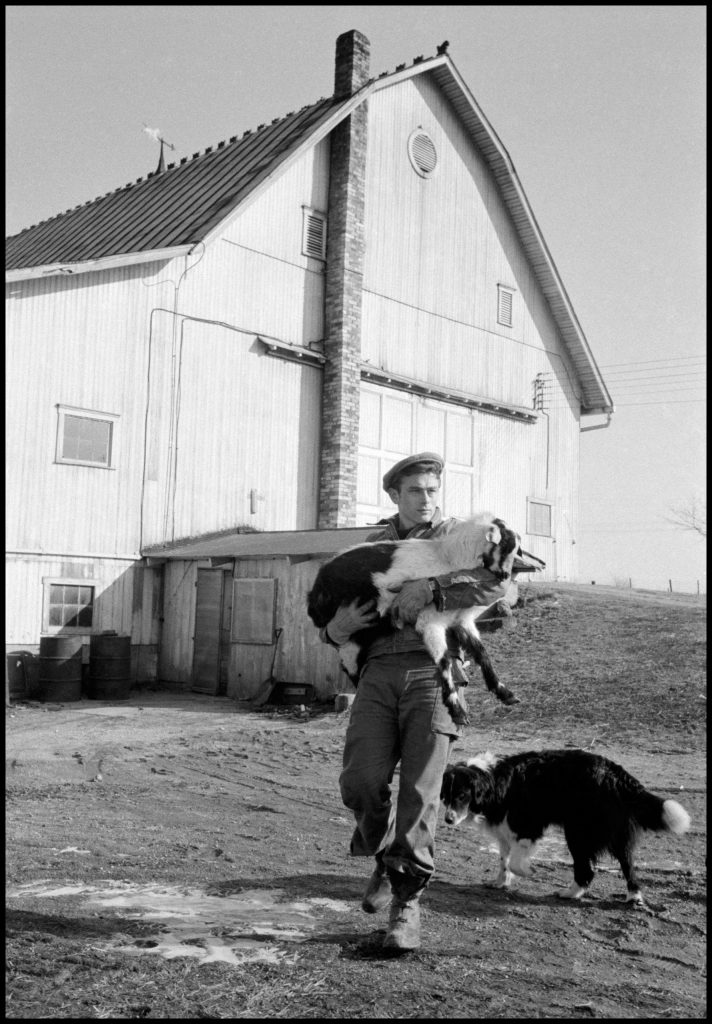
The Legacy of James Dean
More than a half-century on, Dean’s influence remains palpable. Every young actor who strives for authenticity, every photograph of moody youth in leather jackets, every narrative of misunderstood adolescence owes a debt to his short-lived career.
But his true legacy lies in how he expanded the possibilities of American masculinity on screen. Before Dean, male stars were often cast as paragons of strength or charm. After Dean, they could be vulnerable, fractured, searching. In that vulnerability lay both danger and beauty.
He remains frozen in time, his legend impervious to age. Perhaps that is the price of his immortality: never to grow old, never to resolve, always to linger in that half-light between promise and tragedy.
Forever Young
James Dean is less a man than an idea: of youth as rebellion, of beauty as transience, of art as a wound that never quite heals. In his brief career, he gave cinema an eternal archetype. In his death, he gave the world a myth that refuses to fade.
To watch Dean today is not to indulge in nostalgia, but to recognize the enduring pulse of his performances: the restlessness, the pain, the search for belonging. He remains, in every frame, a rebel without conclusion.
Discover more from My World of Interiors
Subscribe to get the latest posts sent to your email.

