
The Venice Biennale opens on the 9th of May. How to go, how long to stay, and why the city is as much the point as the art
The Venice Biennale is the largest and oldest contemporary art exhibition in the world — 131 years old, held every two years in the city least suited and most suited to it simultaneously. Least suited because Venice is already almost too much: a city so dense with centuries of accumulated beauty that adding the full force of contemporary international art to it risks producing an experience that exceeds the capacity of any single nervous system to process. Most suited because Venice, which has been absorbing the art of the world since the Byzantine Empire was a going concern, absorbs it still with the equanimity of a place that has been the centre of things for so long that nothing, including FKA Twigs performing in a garden attached to the Holy See pavilion, constitutes a genuine surprise.
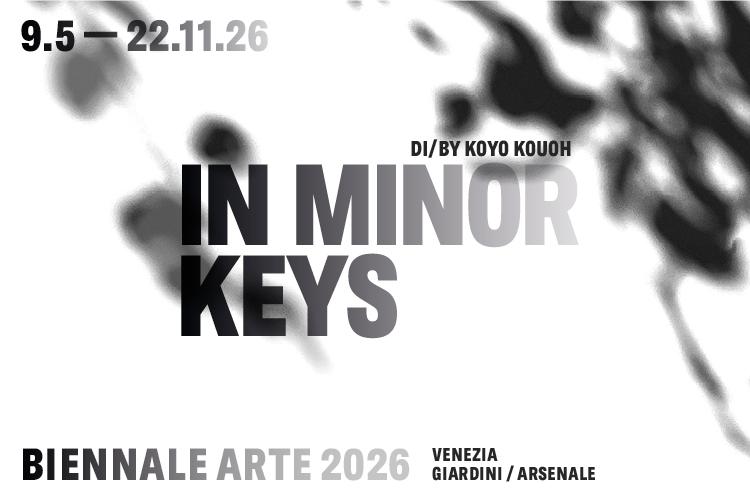
The 61st International Art Exhibition opens on May 9th and runs until November 22nd. The theme is In Minor Keys — a curatorial concept developed by Koyo Kouoh, the Cameroonian curator and executive director of the Zeitz Museum of Contemporary Art Africa in Cape Town, who was appointed to lead the exhibition in 2024 and who died unexpectedly on May 10th, 2025, ten days before she was due to present her vision to the world. The Biennale, with the full support of her family, is proceeding with her plans intact — realised by a team of five advisors whom Kouoh herself had appointed and who spent the final months of her life working with her in Dakar at the RAW Material Company, the cultural centre she had founded. The curatorial text she sent to the Biennale president in April 2025 reads, in part, as an instruction to slow down: to “shift to a slower gear and tune in to the frequencies of the minor keys. Because, though often lost in the anxious cacophony of the present chaos raging through the world, the music continues.”
This is the context in which the 2026 Biennale arrives: a posthumous exhibition, realised by the people who knew the curator’s intentions most intimately, with a theme about listening rather than announcing — about the small and persistent frequencies rather than the grand gesture. As a framework for a Venice summer, it is the right one.
The art, which is the subject of a separate piece, is not the subject of this one. The subject of this piece is the logistical and experiential intelligence of the Biennale as a travel proposition: when to go, how long to stay, where to sleep, how to eat, and how to structure the days so that the experience is expansive rather than exhausting.
The shape of the Biennale
The Biennale has three distinct components, and understanding their geography before you arrive makes the navigation significantly easier.
The Giardini — the public gardens at the eastern end of the city — contains the permanent national pavilions: the thirty-odd purpose-built structures that have housed the exhibitions of their respective countries since the Biennale’s earliest years. The buildings themselves are worth attention independent of what is inside them — the Finnish pavilion by Alvar Aalto, the British pavilion that has the quality of a very serious greenhouse, the Venezuelan pavilion by Carlo Scarpa. The Giardini is about a twenty-minute walk from the Rialto, slightly more from San Marco, and easily reachable by vaporetto from anywhere on the Grand Canal.
The Arsenale — the vast former shipyard of the Venetian Republic, where the galleys that maintained the most powerful naval fleet in the medieval Mediterranean were built at the rate of one per day — houses the central exhibition and additional national pavilions in its rope factories and assembly halls. The Arsenale is one of the most extraordinary industrial spaces in Europe, and the experience of moving through it — the scale, the light falling through high windows onto medieval brickwork — is as significant as whatever is being shown inside. It is adjacent to the Giardini and can be done on the same day, though attempting both in a single session is the most reliable route to the specific fatigue that the Biennale produces and that is distinct from ordinary tiredness.
The collateral exhibitions are the third component — independent shows staged in palazzos, churches, warehouses, and gardens throughout the city by institutions, foundations, and national bodies that do not have official pavilions. These are open to anyone, spread across every sestiere, and collectively constitute a parallel Biennale that is often less crowded and sometimes more interesting than the official programme. The Holy See pavilion this year — a sound-based exhibition in two venues, one of them a garden of the Discalced Carmelites in Cannaregio, featuring work involving FKA Twigs and Brian Eno, curated by Hans Ulrich Obrist and Ben Vickers — is technically a collateral event and will be one of the most visited spaces in Venice this summer.
When to go
The Biennale is open from May 9th to November 22nd, and the timing of your visit matters considerably more than most cultural guides suggest.
The opening weeks — May 9th to early June — are the art world’s season: the collectors, the critics, the gallerists, the people who have been going to Venice for the Biennale for decades and who constitute a visible and occasionally overwhelming presence in the restaurants and the vaporetti and the campo bars from the preview days onward. The city is at its most electrically alive in this period; it is also at its most crowded with a specific kind of person whose presence you may or may not find stimulating after the first two days.
Late September and October are the optimal months. The crowds of summer are gone. The art world has largely departed after its May pilgrimage. The Venetians have returned to something approaching the city’s normal rhythm. The autumn light on the lagoon — the specific quality of Venetian October that Turner and Canaletto spent careers attempting to document — is the finest light the city produces all year. The acqua alta season is beginning, which is an atmospheric inconvenience rather than a serious one for anyone who has brought the right footwear. And the Biennale, now six months in, has found its pace — the queues at the major pavilions have thinned, the less visited spaces have become more legible, and the entire exhibition can be approached at a pace that the opening-week frenzy makes impossible.
June through August is the least recommended period — the city’s tourist volume is at its annual peak, the Biennale adds its own influx to the general pressure, and the heat in the Arsenale, which is not air-conditioned, is a genuine physical challenge in the afternoons of a hot August.
How long to stay
The minimum viable Biennale visit is three nights, which allows two full days — one for the Giardini and Arsenale, one for the collateral exhibitions and the city itself. This is the minimum, not the optimum. The optimum is four or five nights, which gives you the freedom to approach the exhibitions across multiple sessions rather than in the sustained push that two days requires, and to spend time in Venice itself — the bacari, the Rialto market, the neighbourhoods — in a way that is not residually organised around the art.
The mistake that first-time Biennale visitors consistently make is to treat the visit as exclusively an art expedition and to under-allocate time for the city. Venice in May or October, with the specific quality of light and the specific atmosphere of each season, is as much the point as the Biennale, and the two are best experienced as parts of a single whole rather than as competing claims on the itinerary.
A suggested structure for four nights: Day one, arrive and recover — the evening passeggiata in whichever neighbourhood you are staying, a bacaro, an early dinner, sleep. Day two, the Giardini — arrive at opening, take it slowly, lunch at one of the Giardini’s own café spaces, return to the hotel by four. Day three, the Arsenale — the same unhurried approach, the same early afternoon return, the evening free for wherever the city takes you. Day four, collateral exhibitions and the city — the Holy See garden in Cannaregio, whatever other collateral shows have emerged as the most discussed, and then Yanaka-style neighbourhood walking with no particular destination. Day five, whatever was missed, and the flight home.
Where to stay
The Biennale concentrates its activity in the eastern part of Venice — the Castello sestiere, where the Giardini and the Arsenale both sit. Staying in Castello is the most logistically convenient option and also, for the visitor who wants to experience the Biennale in the context of a living neighbourhood rather than a tourist district, the most interesting. Castello is the largest sestiere in Venice, the most residential, the least touristed in its further reaches, and the place where the daily life of the city is most legible.
The Metropole Hotel — a short walk from the Arsenale, in a 16th-century building on the Riva degli Schiavoni — is one of the most characterful hotels in Venice: a private collection of antiques accumulated over decades by the Beggiato family filling every room and corridor, a Michelin-starred restaurant (Met), and a position on the waterfront between San Marco and the Giardini that makes both reachable on foot. The hotel fills fast during the Biennale; book early.
For something smaller and more intimate, the Palazzo Soderini in Castello — a recently restored 15th-century palazzo with nine rooms, a garden, and the specific quality of a building that has been brought back to life with intelligence rather than investment — is the address for the visitor who wants to be in the neighbourhood of the Biennale while living at the scale of the city rather than the hotel.
If the preference is to stay outside the art world’s immediate orbit — to have the Biennale as a destination rather than a neighbourhood — Dorsoduro and the Zattere waterfront, across the Grand Canal, offer the finest views in Venice and a twenty-minute walk or a single vaporetto stop to the Giardini.
How to eat around it
The Biennale produces a specific hunger — the kind that comes from several hours of intense sensory engagement in spaces that do not permit eating — and the response to it is one of the more pleasurable logistical problems Venice creates. The full guide to eating in Venice is the subject of an earlier issue of this column. For the Biennale visitor specifically:
The Giardini café, inside the exhibition grounds, is adequate for the necessary pause between pavilions — coffee and a tramezzino, eaten standing, before the next hour of looking. Do not treat it as lunch.
Lunch itself: All’Arco in San Polo, a fifteen-minute walk from the Arsenale across the city, is worth the detour — the best cicchetti in Venice, assembled fresh each morning from the Rialto market, eaten standing at the counter with an ombra of whatever is open. This is the correct midday reset for a day of art: brief, specific, involving enough to require attention, over in twenty minutes.
Dinner: the Biennale season fills the serious Venice restaurants, and the restaurants know it. Reservations at Osteria alle Testiere and Antiche Carampane — the two addresses this column most consistently recommends — should be made weeks ahead for the May opening period and at least a week ahead for September and October. If both are full, Al Covo in Castello — family-run, closed Tuesday and Wednesday, the most relaxed of the serious Venice seafood restaurants — is within walking distance of the Giardini and takes reservations by email.
http://www.osterialletestiere.it | http://www.antichecarampane.com | http://www.ristorantealcovo.com
The Biennale pass
The standard ticket covers both the Giardini and the Arsenale for a single day. The three-day pass is considerably better value and allows the unhurried approach that the exhibitions reward. A single combined ticket covering all days of the stay — available at the main entrances and online — is worth investigating for visits of four or more days.
The collateral exhibitions are, with some exceptions, free of charge. The Holy See pavilion and a small number of others require pre-booking; check the Biennale’s official website for current access information as the opening approaches.
Student and under-26 tickets are available at significant reduction. Press credentials, for those who hold them, provide access to the preview days — May 6th to 8th — when the crowds are art-world rather than general-public and the best photographs of empty pavilions are possible.
The practical notes
Wear comfortable shoes. The Biennale involves more walking than any single-day visitor typically anticipates — the Giardini is larger than it looks on a map, the Arsenale is vast, the collateral exhibitions are spread across a city that is itself navigated entirely on foot. The marble floors of the Arsenale’s rope factory are beautiful and unforgiving over six hours.
Arrive at opening. The Giardini opens at eleven; the serious visitor arrives at eleven. The queue for the most discussed national pavilions — this year, early reports suggest, the Holy See and the German pavilion among them — builds quickly and does not diminish until late afternoon.
Leave the afternoons unscheduled. The specific fatigue of the Biennale — different from museum fatigue in being both visual and intellectual — typically arrives in the early afternoon, and attempting to push through it produces diminishing returns. The correct response is to stop, find a campo with chairs, and sit with a spritz for an hour. The city will still be there when the eyes have recovered.
Take the vaporetto Line 1 at least once. The slow vaporetto down the Grand Canal is, at twenty minutes, one of the finest journeys available in Venice and one of the best ways to decompress between an afternoon of art and an evening of eating. Take it from the Arsenale stop to the Rialto, slowly, watching the palazzi pass.
Getting there. Fly to Marco Polo Airport (VCE), twelve kilometres from the city. The Alilaguna water bus to San Marco takes seventy-five minutes and is the correct way to arrive — it places you on the lagoon before you have unpacked, and the approach to Venice across the water, with the city assembling itself on the horizon, is the only appropriate introduction to it. The taxi boat is faster and more expensive and misses the point entirely.
Discover more from My World of Interiors
Subscribe to get the latest posts sent to your email.

