
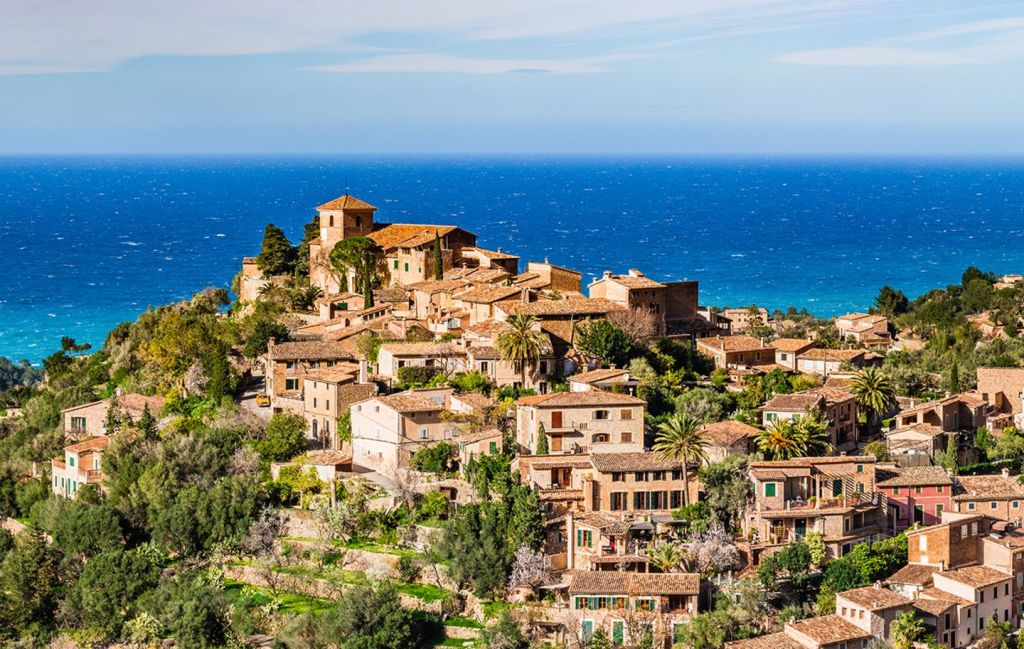
On the steep, pine-scented slopes of Mallorca’s Tramuntana mountains lies the village of Deià—a place that has long drawn artists, musicians, and wanderers in search of inspiration. Among its most storied residents was Robert Graves, the English poet, novelist, and classicist, who made a house here in 1929 and turned it into one of the Mediterranean’s great literary sanctuaries. Today, Ca n’Alluny, as the villa is called, is preserved as a museum, allowing visitors to glimpse the life of a writer who chose Mallorca not simply as an escape but as a wellspring of creativity.
A Life Between Wars and Islands
Graves had already lived a full life before arriving in Deià. A survivor of the First World War and a member of the modernist generation alongside Siegfried Sassoon and T.E. Lawrence, he had published poetry, memoir (Goodbye to All That), and critical works. But England offered little peace. With his partner, American poet Laura Riding, he sought exile from literary London and chose Mallorca, at the time a quiet, little-known island.
The villa they purchased, Ca n’Alluny—literally “the far house”—sat above olive terraces, with views to the sea. It became both retreat and crucible: a place where Graves wrote, entertained, and built the rhythms of a life anchored in Mediterranean light.
The House: Ca n’Alluny
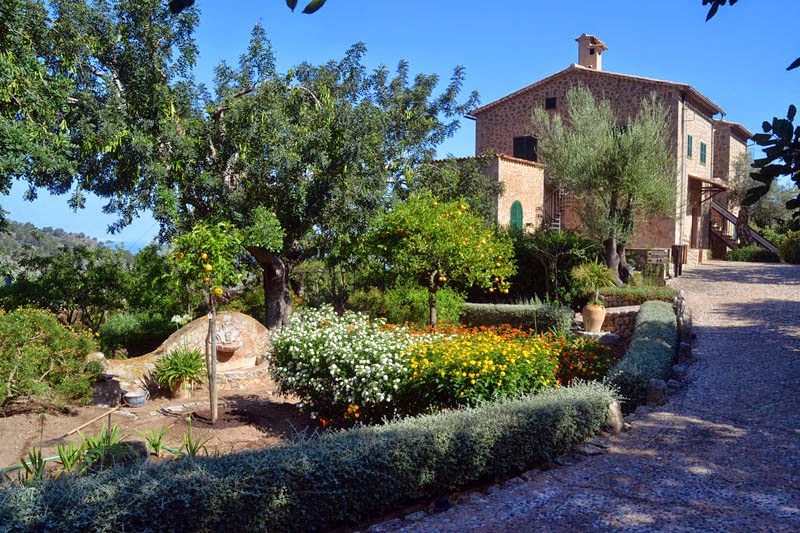
The villa itself reflects traditional Mallorcan architecture: thick stone walls to keep out summer heat, green-shuttered windows, shaded courtyards, and terraced gardens. Graves adapted it modestly, emphasizing simplicity rather than grandeur. Inside, one finds the essentials of a writer’s world: a study with books lining the walls, manuscripts on the desk, and the daily order that allowed him to produce an extraordinary body of work.
The atmosphere is austere but charged. To stand in the study is to feel the echo of sentences that would travel far beyond Mallorca: the I, Claudius novels (1934), still among the most acclaimed historical fictions of the 20th century, or his groundbreaking study The White Goddess (1948), a meditation on myth, muse, and poetic inspiration.
A Village of Artists
Deià was a remote fishing village when Graves arrived. Over the decades, his presence attracted a wave of creatives who turned the village into an enclave of art and music. Anaïs Nin, Gabriel García Márquez, and Ava Gardner visited. In the 1970s, musicians like Mike Oldfield and Kevin Ayers made Deià their bohemian haven, cementing its reputation as a creative refuge.
Graves himself lived in the villa until his death in 1985. He is buried in the village cemetery, a simple gravestone overlooking the mountains.
Visiting the Villa Today
Today, Ca n’Alluny is a museum managed by the Robert Graves Foundation. Visitors can wander the house and gardens, which remain largely as they were during Graves’s life. The study, with its typewriter and orderly desk, feels untouched, while photographs, letters, and first editions trace his career.
The gardens, with citrus and olive trees, still frame the vistas that so captivated him. The Mediterranean glimmers in the distance, unchanged, reminding visitors why Graves insisted that here, on this island, he had found “paradise.”
Visitor info: http://www.fundacionrobertgraves.org
Where Else to Go in Deià
Belmond La Residencia
The village’s most famous hotel, once the haunt of artists and musicians. Today it offers suites in stone manor houses, a celebrated spa, and terraces overlooking the Tramuntana.
http://www.belmond.com/hotels/europe/mallorca/la-residencia
Es Racó d’es Teix
A Michelin-starred restaurant in a hillside stone house, serving Mallorcan flavors with modern finesse. Chef Josef Sauerschell blends local ingredients with European technique.
http://www.esracodesteix.es
Ca’s Patró March
Perched above Cala Deià, this seafood tavern is famous for its grilled fish and Mediterranean views. Rustic, lively, and unforgettable at sunset.
http://www.caspatromarch.com
Cala Deià
A small pebbled cove flanked by cliffs and olive groves. Swim in crystalline waters, then linger at the seaside chiringuitos for lunch.
Deià Archaeological Museum & Research Centre
Founded by archaeologist William Waldren, this museum showcases the island’s prehistoric past and the creative layering of Deià’s community.
http://www.deiamuseum.org
The Legacy of a Poet in Place
What makes Ca n’Alluny remarkable is less its architecture than its atmosphere. It is a house infused with the discipline of a writer who believed in myth and muse but also in the daily labor of the desk. In Mallorca, Graves found both inspiration and order: a setting where the ancient and the modern intertwined.
For travelers, a visit offers more than a glimpse of one man’s life. It is an encounter with the way place shapes art, how an island village could become the crucible for literature that continues to resonate. Graves’s villa stands as a reminder that sometimes exile is not flight but discovery—a home chosen not to escape the world, but to better see it.
Discover more from My World of Interiors
Subscribe to get the latest posts sent to your email.

