
There are few places in Rome where history, art, and nature fuse with such elegance as the Villa Borghese and its surrounding park. More than a green lung in the heart of the city, this is a cultivated landscape — a place where cardinals once entertained, where artists found inspiration, and where today, Romans and travelers alike stroll through sculpted avenues and sun-splashed terraces with the same languid grace as they might a grand salon. It is one of my all time favourite museums and gardens.
A Cardinal’s Vision
At the beginning of the 17th century, Cardinal Scipione Borghese, nephew of Pope Paul V, commissioned the villa as his suburban retreat. The Cardinal was not merely a man of the cloth but an aesthete and collector whose eye helped shape one of the most dazzling art collections in Europe. His country palace, designed by Flaminio Ponzio and later refined by Giovanni Vasanzio, was conceived as a stage for spectacle: a gallery where antiquities, Baroque canvases, and the early genius of Caravaggio and Bernini could be admired in a setting as theatrical as the works themselves.
The Villa Today
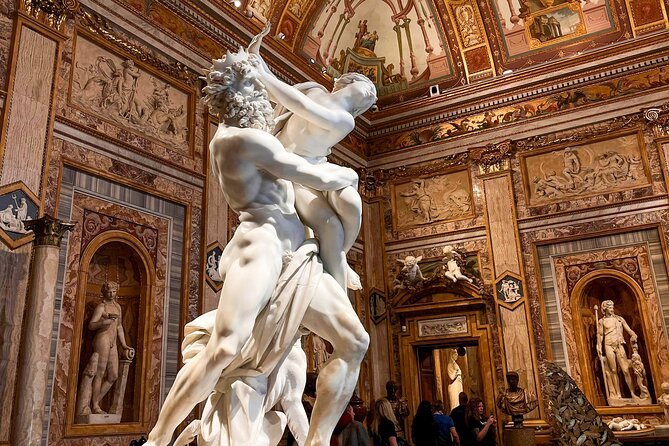
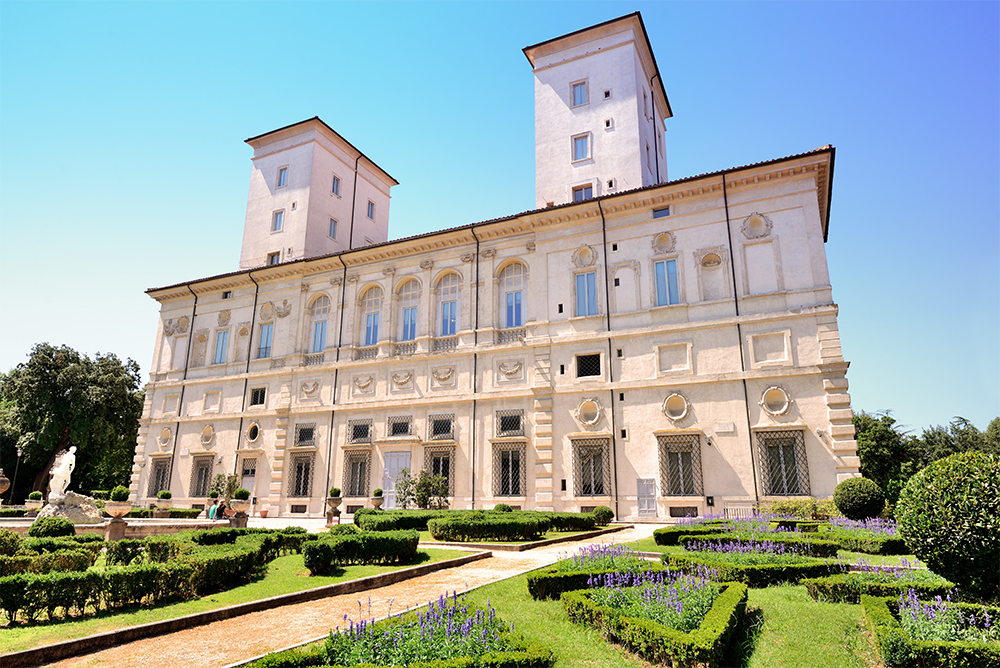
Today, the Galleria Borghese remains the crown jewel of the complex. Step into its frescoed rooms and you are greeted by Bernini’s marble figures — Daphne in mid-transformation, Apollo straining after her, every sinew alive with motion. Caravaggio’s chiaroscuro canvases flicker with violent light and shadow, while Raphael’s serene Madonnas restore balance. The villa itself is a marvel of proportion: a white, almost ethereal façade that seems to hover above the gardens, at once palatial and intimate.

The Gardens as a Living Tapestry
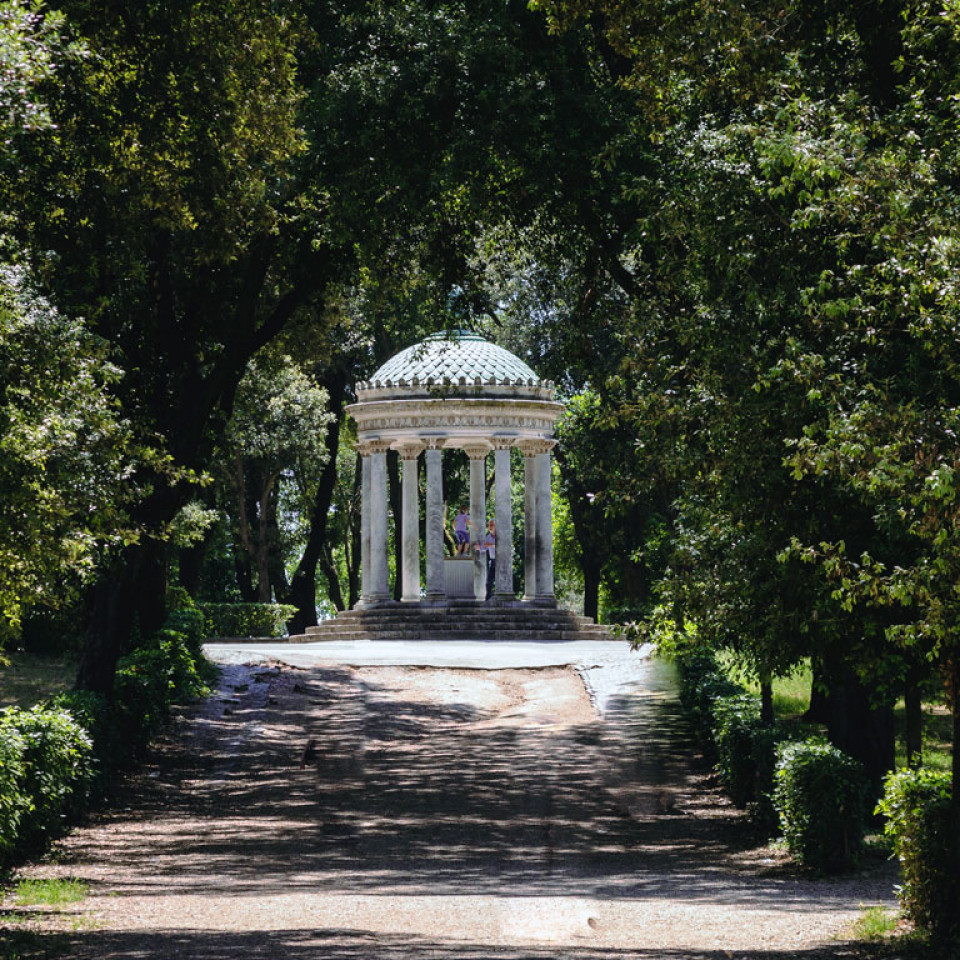
Beyond the villa stretches the Borghese Gardens, an expanse of manicured formality and romantic wilderness. Covering nearly 200 acres, the park is Rome’s answer to London’s Hyde Park or Paris’s Tuileries, though imbued with Italian flair. Cypress avenues give way to fountains and follies, an 18th-century Temple of Aesculapius shimmering on the waters of its lake. There are secret groves, a zoo once beloved by Roman children, and views from the Pincio Terrace that sweep down to Piazza del Popolo — the city unfurling in terracotta, travertine, and domes.
A Social Ritual
The Borghese Gardens are not just a landscape but a Roman ritual. Families gather for picnics on Sundays, lovers promenade arm-in-arm, while cyclists and joggers weave through the shade of umbrella pines. For centuries, the gardens have been a stage for leisure, their design blurring the line between art and life. To walk here is to enter a continuum of cultivated pleasure — one where aristocratic pageantry and democratic recreation coexist effortlessly.
If You Go
- Location: Piazzale Scipione Borghese, 5, Rome
- Galleria Borghese Hours: Tuesday–Sunday, 9 am – 7 pm (last admission at 5 pm). Closed Mondays.
- Tickets: Advance booking required; €15 general admission (reduced prices available).
- Insider Tip: Reserve a morning slot at the Galleria, then emerge into the park for a leisurely passeggiata toward the Pincio Terrace at sunset. Few experiences capture the Roman sense of dolce vita so perfectly.
- For a fascinating book on Villa Borghese CLICK HERE
- For the 2025 HANDBOOK and GUIDE CLICK HERE
- For the TRAVEL GUIDE CLICK HERE
 My World of Interiors
One thought on “Villa Borghese: Rome’s Most Cultivated Escape”