

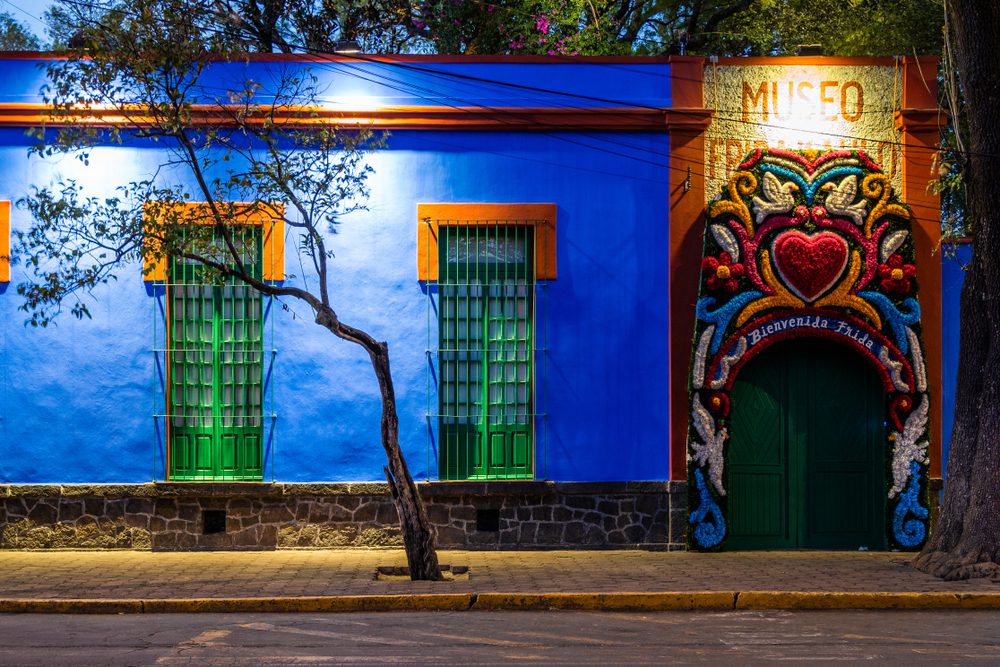
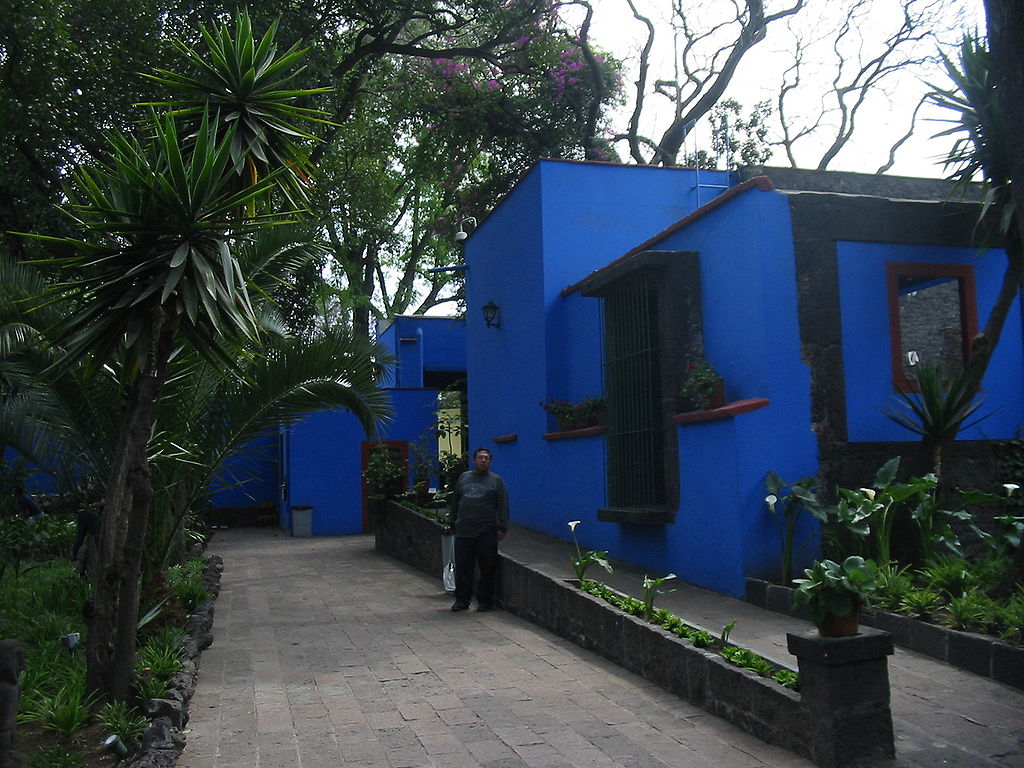
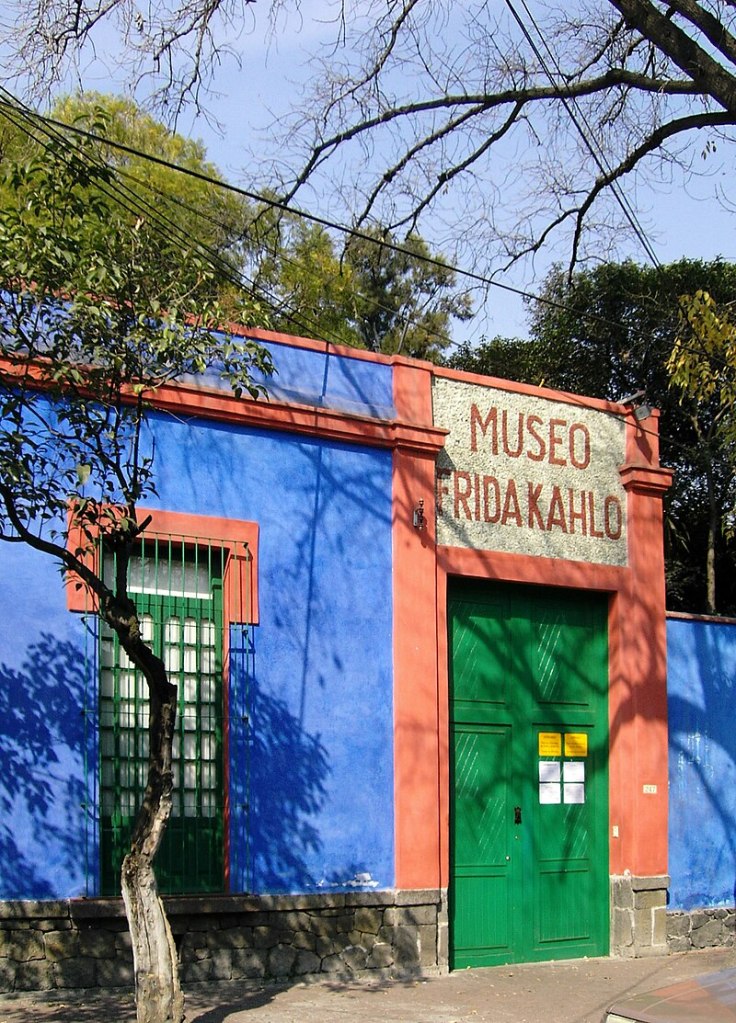
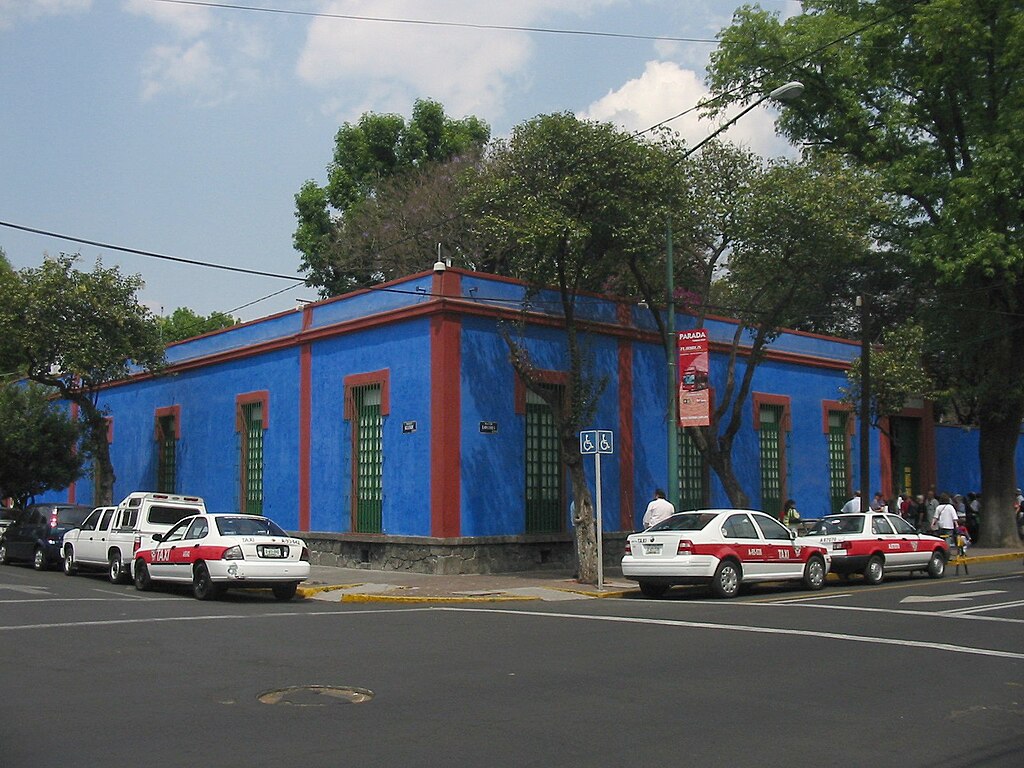
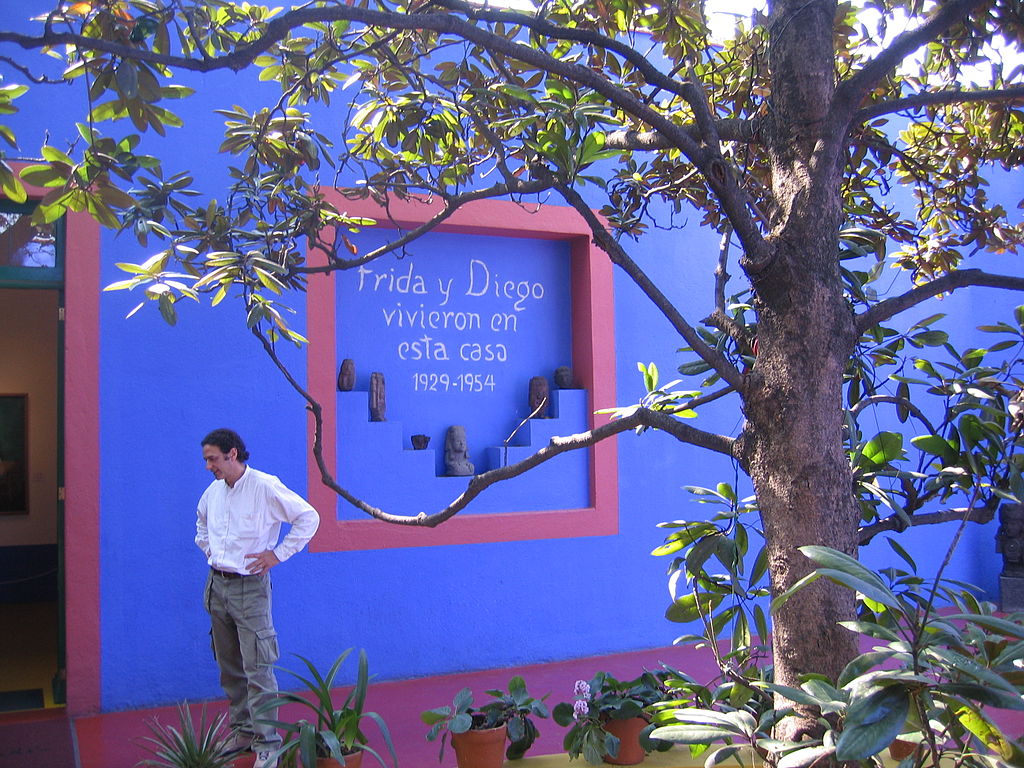
This is one of those museums that feel intimate, and lived-in, of course because Frida Kahlo did live here before it became the Frida Kahlo Museum in Mexico City. Known affectionately as La Casa Azul for its cobalt-blue walls, the house where Frida was born, lived, and died is more than a shrine to an artist: it is a home saturated with memory, politics, and creativity.
Our Amazon store companion piece
History
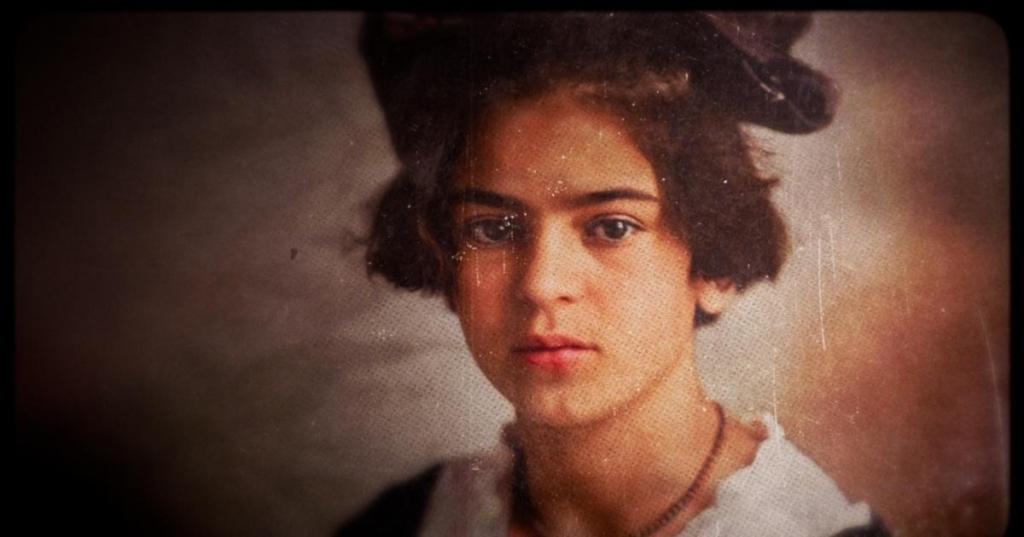
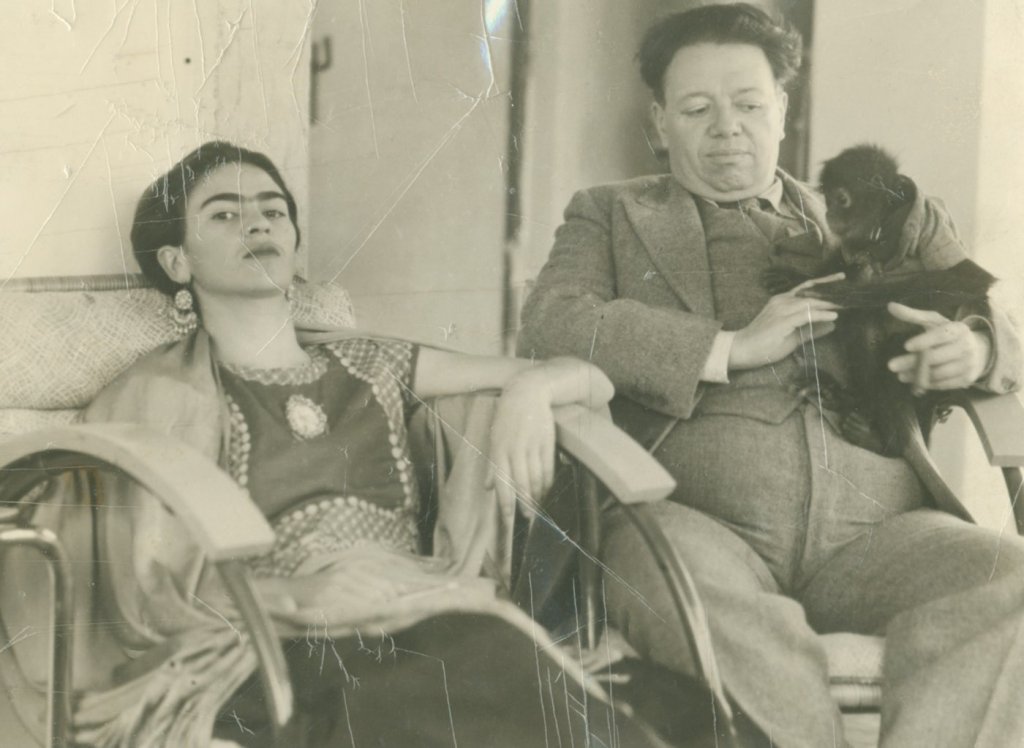
Frida Kahlo (1907–1954) was born in this house in the quiet Coyoacán district, then a semi-rural village south of the capital. After a near-fatal bus accident at the age of 18, Kahlo began painting while convalescing here, supported by her family. The house became not only her personal refuge but also the scene of her tumultuous marriage with muralist Diego Rivera.
In the 1930s and 40s, La Casa Azul welcomed an extraordinary constellation of visitors: Leon Trotsky (who briefly lived nearby in exile), André Breton, Tina Modotti, Edward Weston, and countless Mexican intellectuals. After Frida’s death in 1954, Rivera ensured the house would become a museum to preserve her legacy. It opened to the public in 1958.
Architecture & Interiors
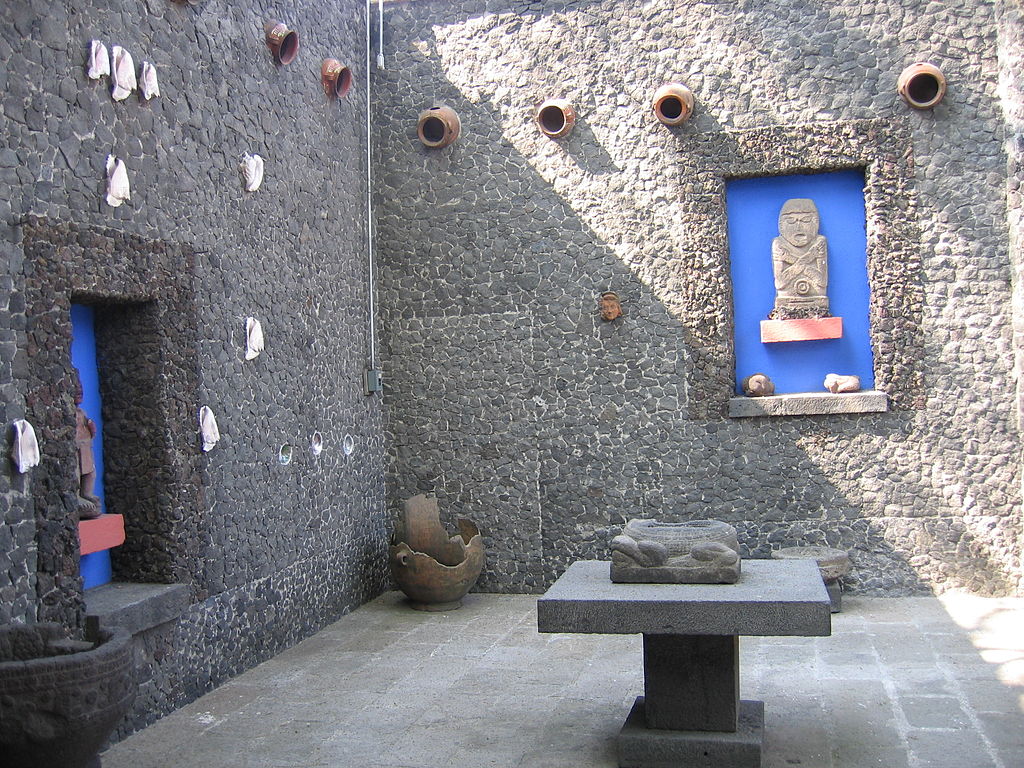
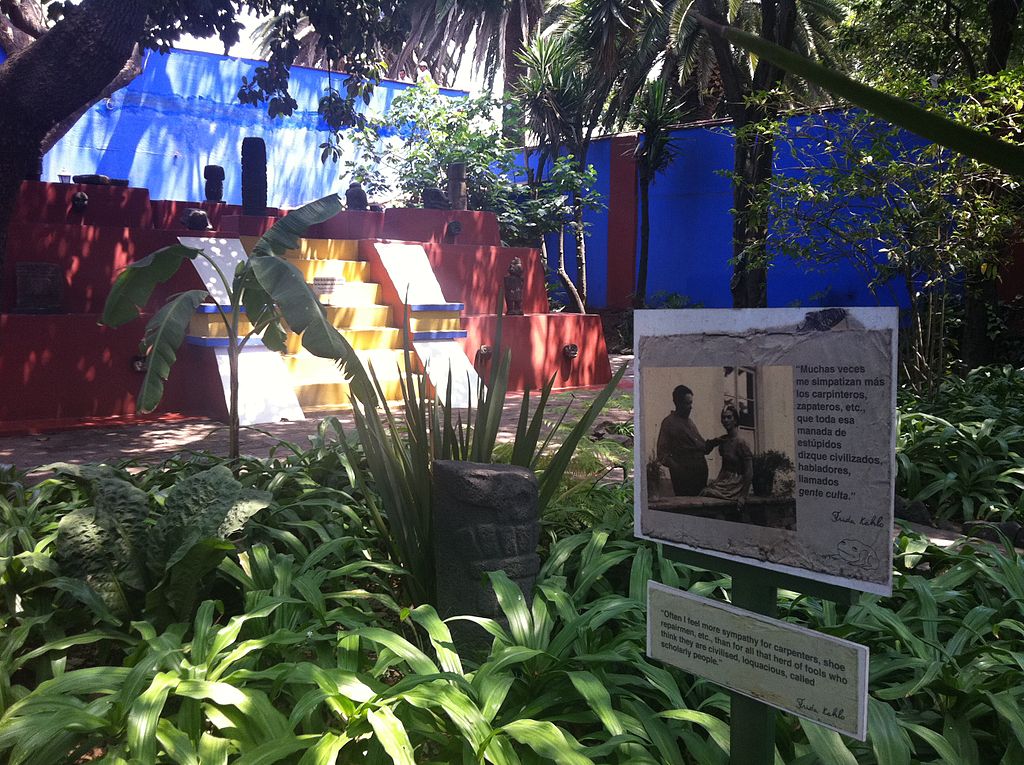
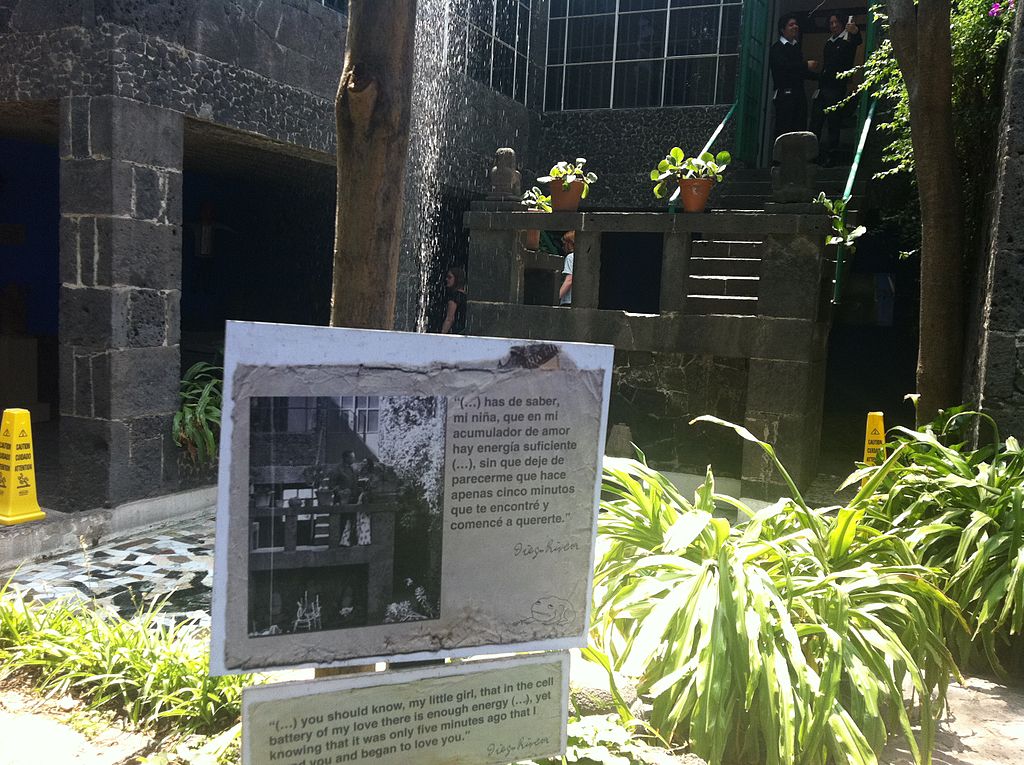
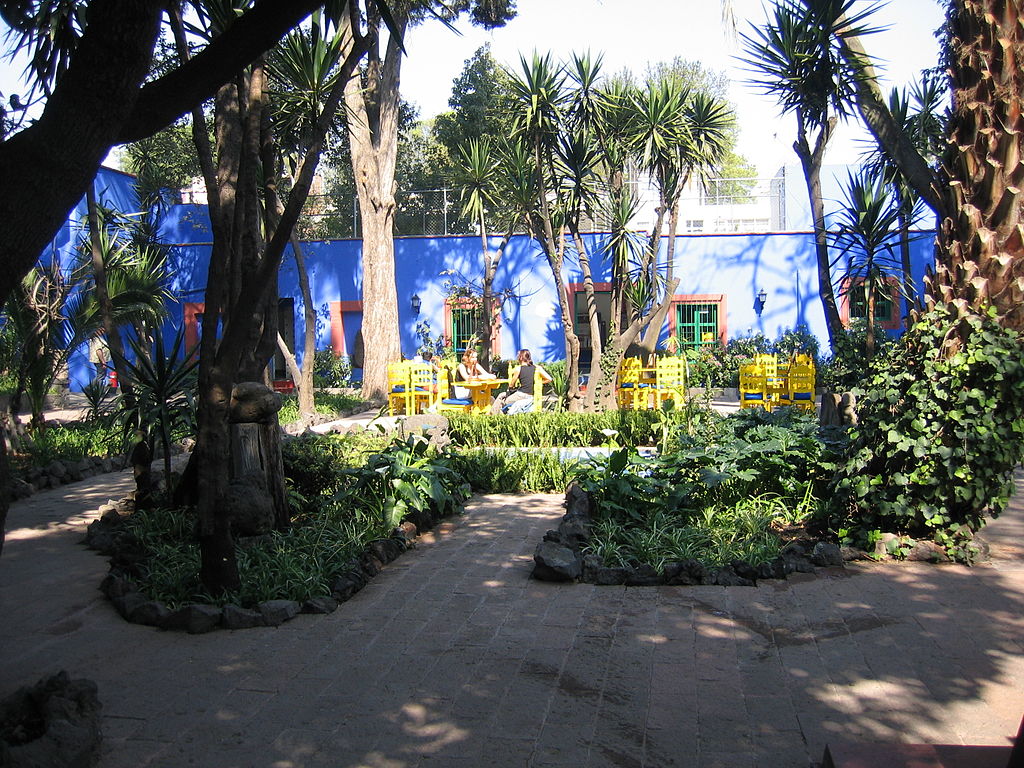
The building itself is a hybrid of traditional Mexican domestic architecture and modernist adaptations. Its bright blue walls enclose courtyards shaded by trees and filled with pre-Columbian sculptures, volcanic stone, and lush vegetation. Inside, rooms are arranged much as Kahlo left them:
- The Studio — light-filled, with easel, paints, brushes, and her wheelchair facing an unfinished canvas.
- The Kitchen — yellow tiles, clay pots, and bright folk ceramics arranged in playful patterns.
- The Bedroom — where mirrors were affixed above her bed so she could paint self-portraits while bedridden.
What distinguishes the museum is not grandeur but intimacy: visitors move through a house that still breathes with the daily rhythms of its former inhabitants. Rivera’s pre-Hispanic artifacts line shelves; folk art and textiles mix with functional furniture; her dresses and corsets reveal both suffering and defiance.
The Collection
La Casa Azul is as much about Kahlo’s life as her art. The collection includes:
- Paintings: self-portraits, still lifes, and personal works.
- Drawings & letters: correspondence with Trotsky, Breton, and others.
- Personal objects: Tehuana dresses, plaster corsets, medicines, jewelry.
- Diego Rivera’s artifacts: hundreds of pre-Columbian sculptures and ceramics.
- Photographs: by Nickolas Muray, Manuel Álvarez Bravo, and others, showing Kahlo’s commanding presence.
A 2004 reopening of sealed bathrooms and storerooms revealed more than 300 previously hidden objects—clothes, prosthetics, and personal items—which are now displayed on rotation.
Visiting Today
The museum is one of Mexico City’s most visited sites, and advance booking is essential. Crowds are inevitable, but the experience retains its intimacy thanks to the house’s scale.
- Plan your visit early in the day to avoid peak congestion.
- Allow 1–2 hours for the house, garden, and temporary exhibitions.
- Combine with the nearby Museo Diego Rivera Anahuacalli, Rivera’s volcanic-stone fortress housing his vast collection of pre-Columbian art.
Info – Frida Kahlo Museum
| What | Details |
|---|---|
| Name | Museo Frida Kahlo (La Casa Azul) |
| Address | Londres 247, Del Carmen, Coyoacán, 04100 Ciudad de México, Mexico |
| Opening Hours | Tuesday–Sunday, 10:00 AM–6:00 PM (closed Mondays). Extended hours Saturday until 7:00 PM. |
| Tickets | Approx. $250 MXN (foreign adults); reduced rates for Mexican citizens, students, seniors. Online reservation strongly recommended. |
| Website | museofridakahlo.org.mx |
| Nearby | Museo Diego Rivera Anahuacalli, Coyoacán Market, Trotsky House Museum |
Books:
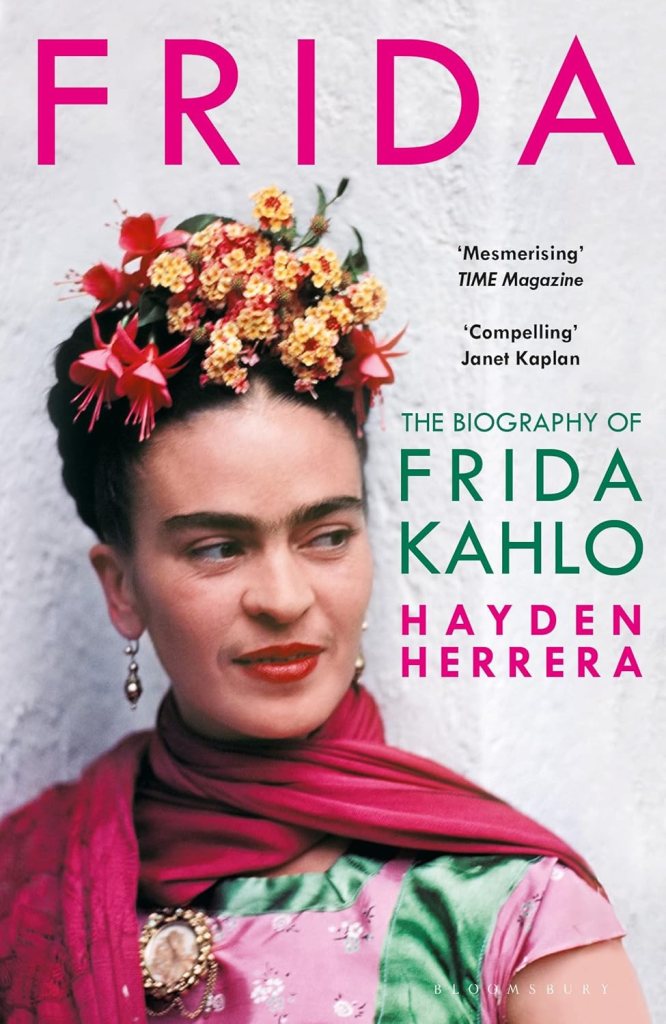
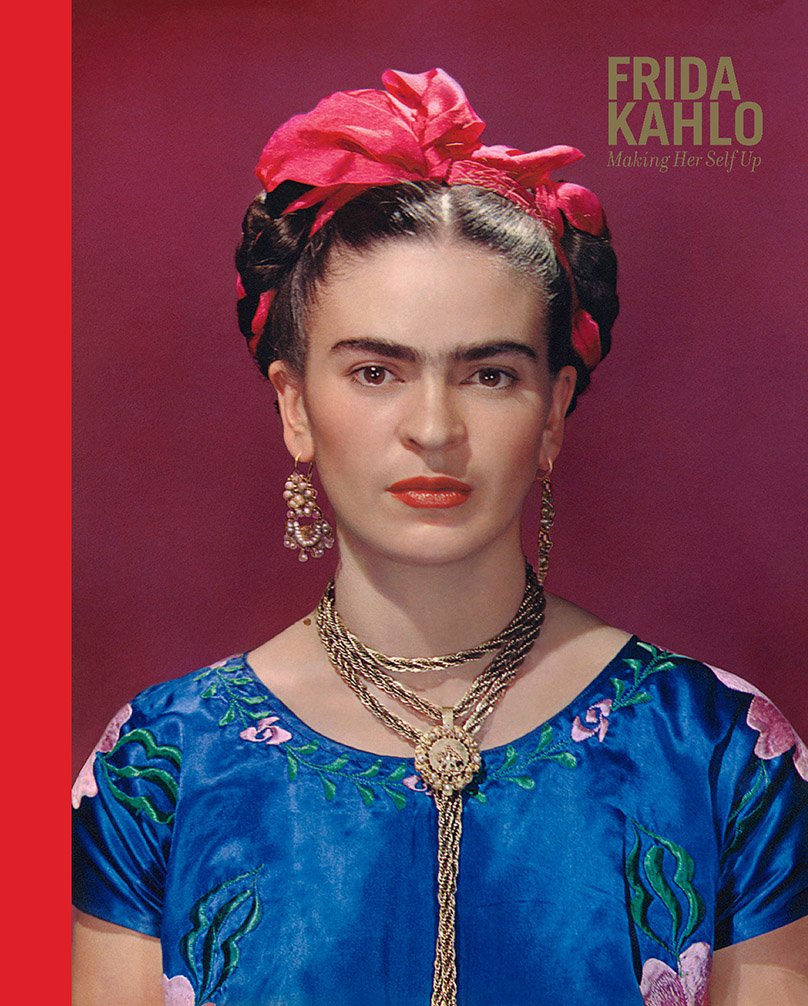
Frida: The Biography of Frida Kahlo Paperback – 28 Jun. 2018
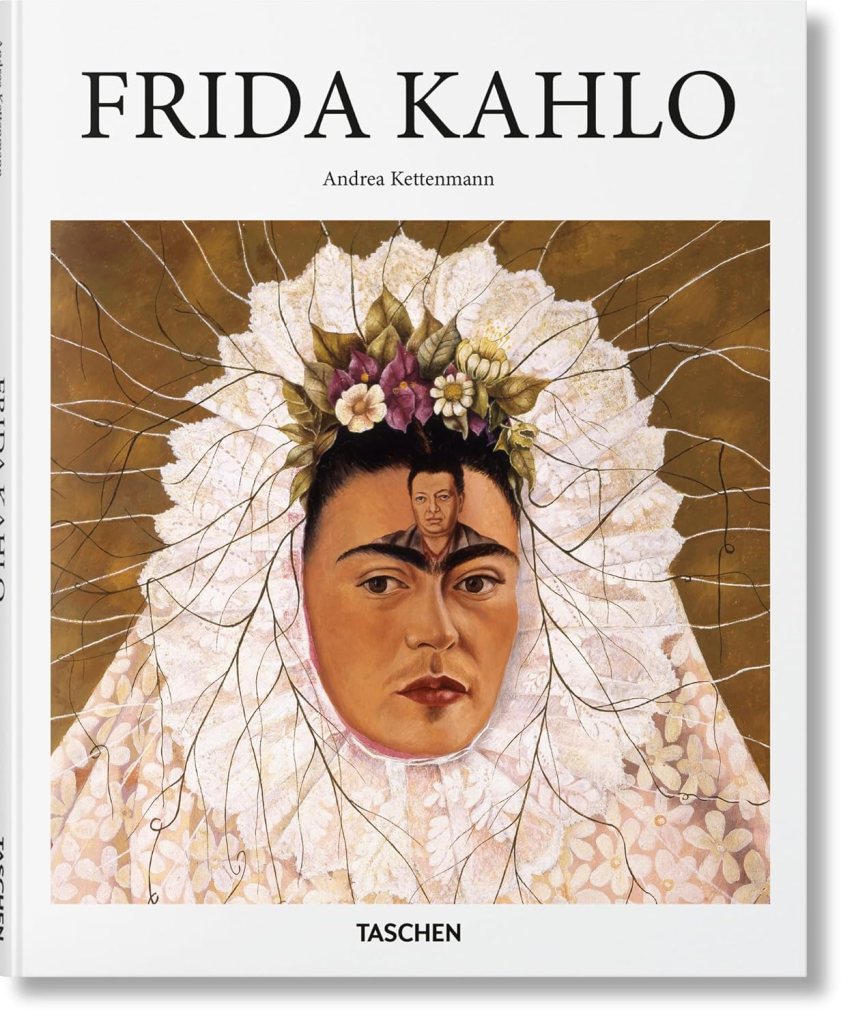
Frida Kahlo: 1907-1954: Pain and Passion (Basic Art) Hardcover – Illustrated, 15 July 2015
TL;DR
Unlike large institutions, the Frida Kahlo Museum resists abstraction. It doesn’t present Kahlo as an untouchable icon; it shows her as a woman, lover, patient, thinker, artist. The colors, the objects, even the air in the garden retain a trace of her presence. For lovers of art, interiors, and design, it offers not just works to admire but a way of seeing life itself as an act of creation.

 My World of Interiors