

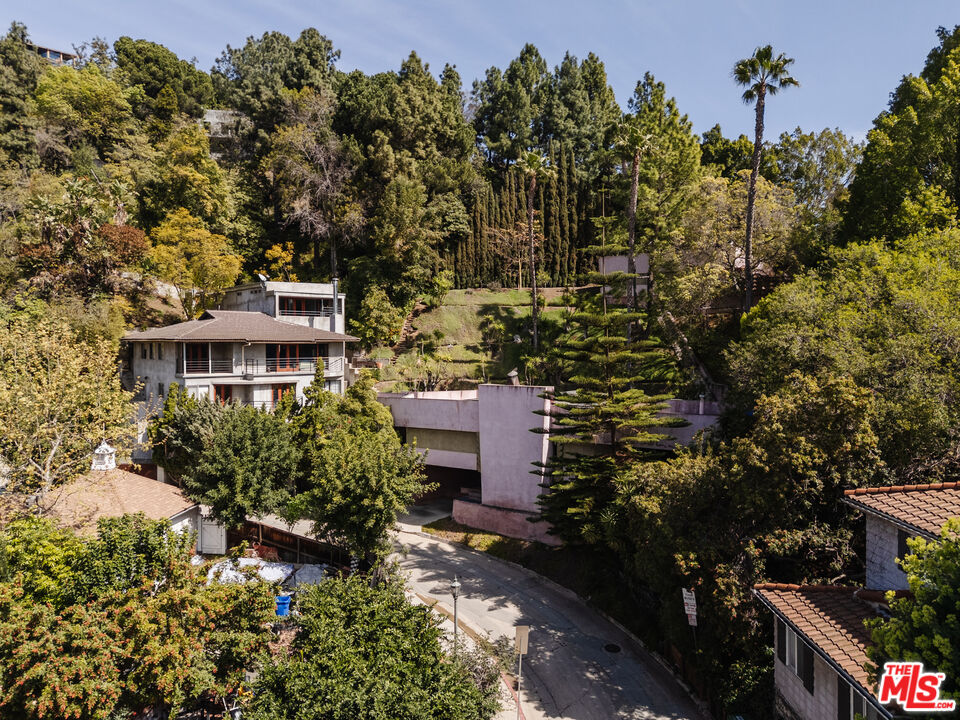
David Lynch’s longtime Hollywood Hills estate—newly listed for sale—reads like a maker’s campus more than a single home. Across five contiguous parcels, it fuses a pink-hued mid-century residence by Lloyd Wright with a concrete-forward studio house that doubled as a film set, plus a third residence adapted for post-production, screening, and editing. The result is a self-contained world where domestic life, production infrastructure, and architectural pedigree actively co-produce one another.
David Lynch in our Amazon store
Site, Scale, and Program
- Parcels / acreage: Five adjoining lots totaling ~2.3–2.5 acres (variance reflects how outlets round figures).
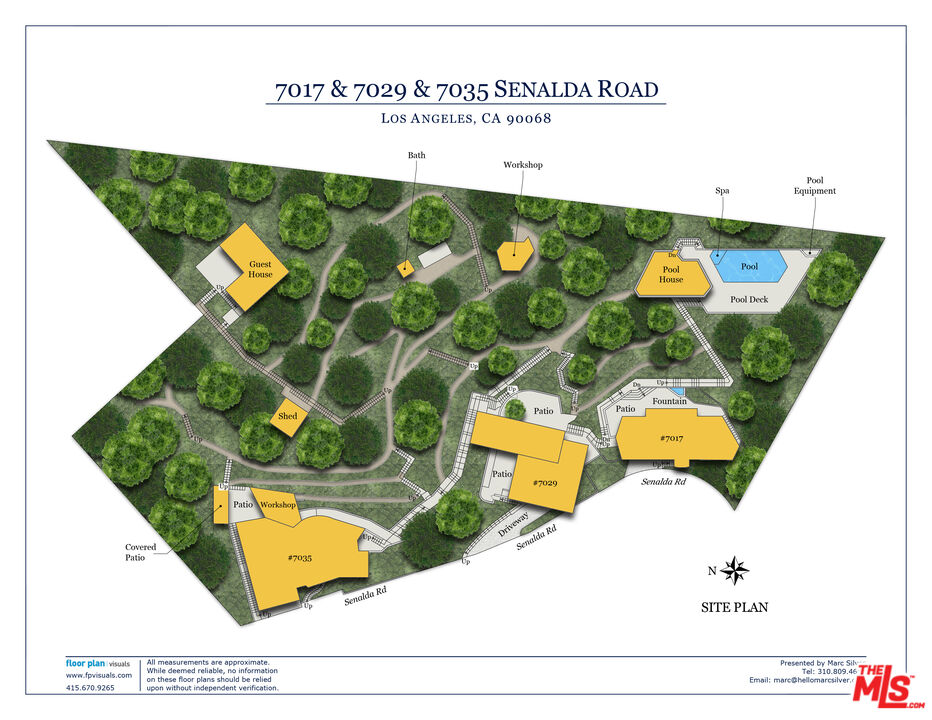
- Built area / count: About 11,000 sq ft distributed among seven structures, including three principal residences, multiple accessory buildings, workshops, and a pool complex.
- Bedrooms / baths: 10 bedrooms / 11 baths across the compound.
- Core address: 7017 Senalda Road, with related addresses 7029 (production company) and 7035 (studio/filming house).
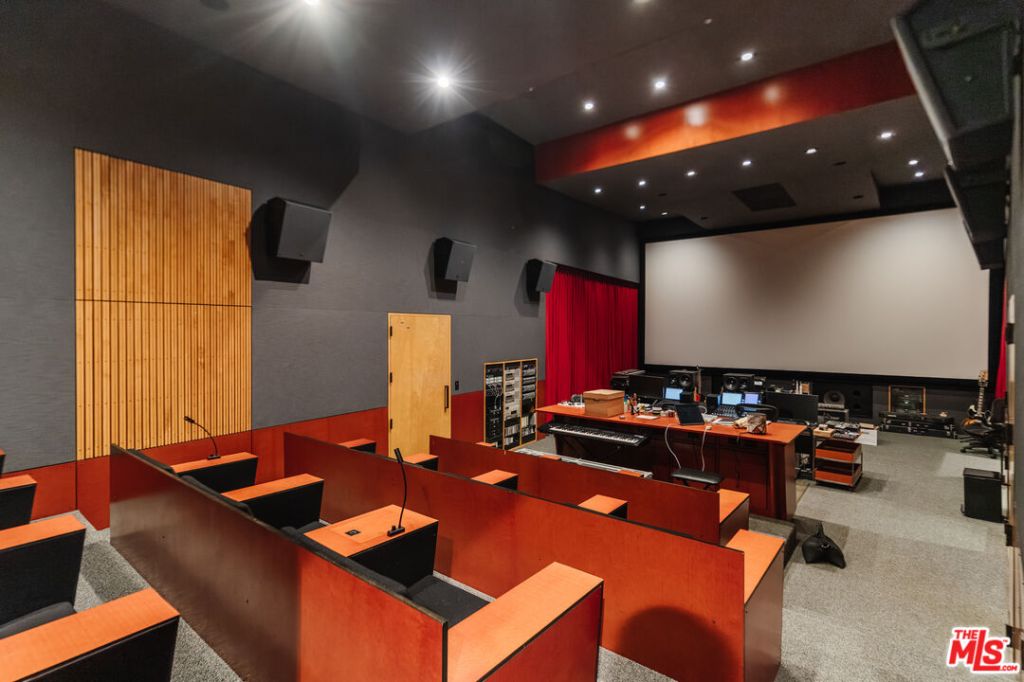
Lynch began assembling the enclave in the late 1980s and 1990s: first the Lloyd Wright house (1987), then a two-story Brutalist residence two doors down (1989), and the in-between house (1995), which he adapted into a studio with a library, screening room, and professional editing suite. This chronology matters because it explains the campus logic: living, filming, editing, and fabricating as adjacent but distinct programs.


Architectural Pedigree: A Three-Generation Wright Conversation
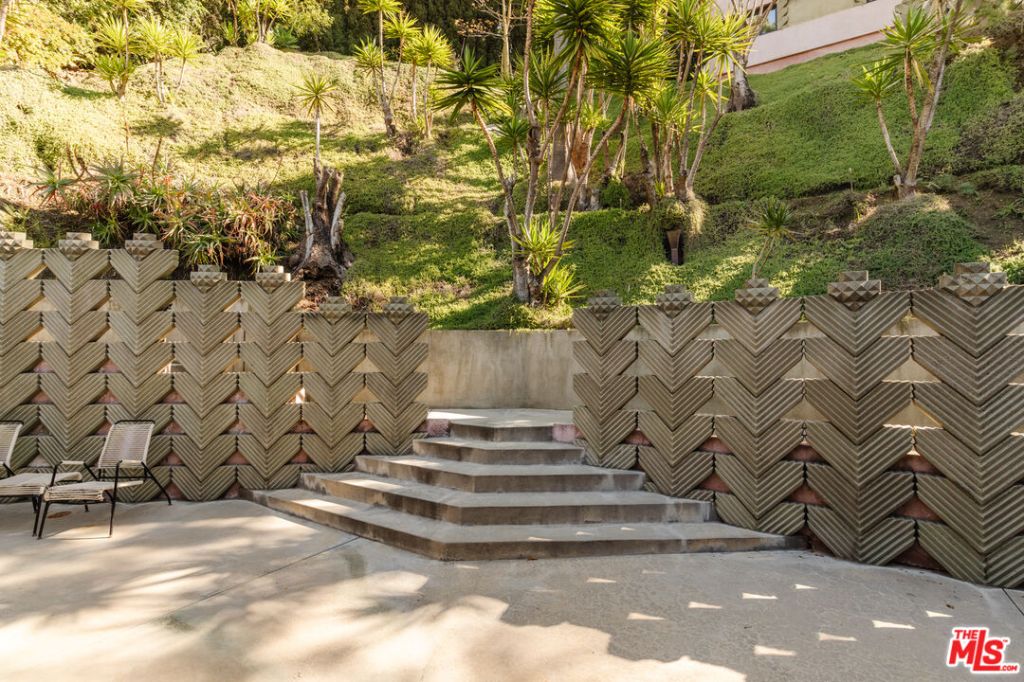
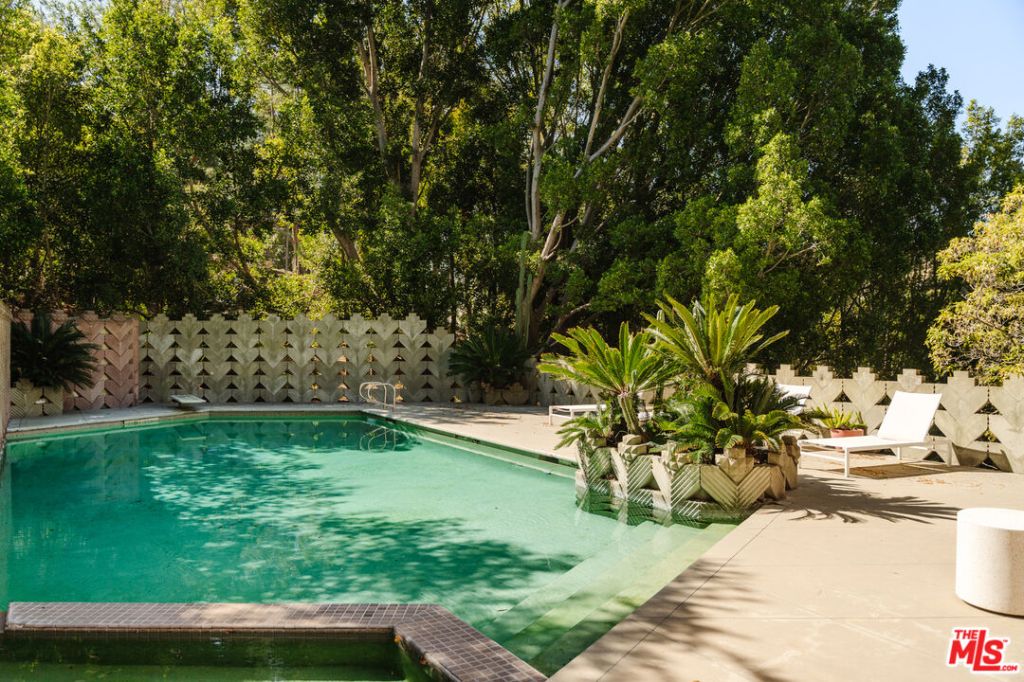
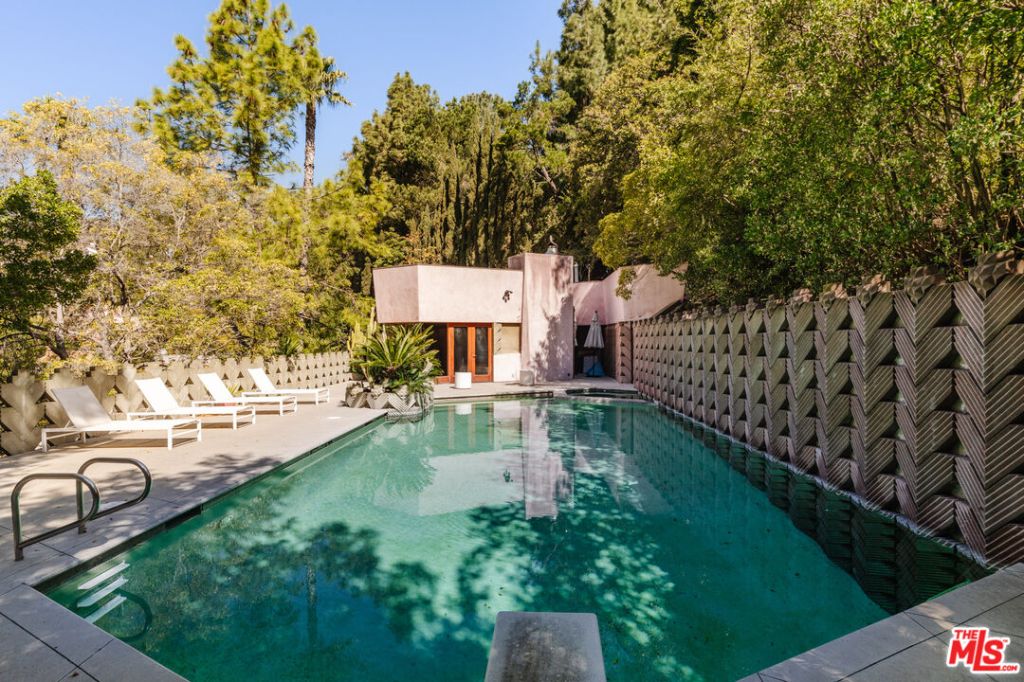
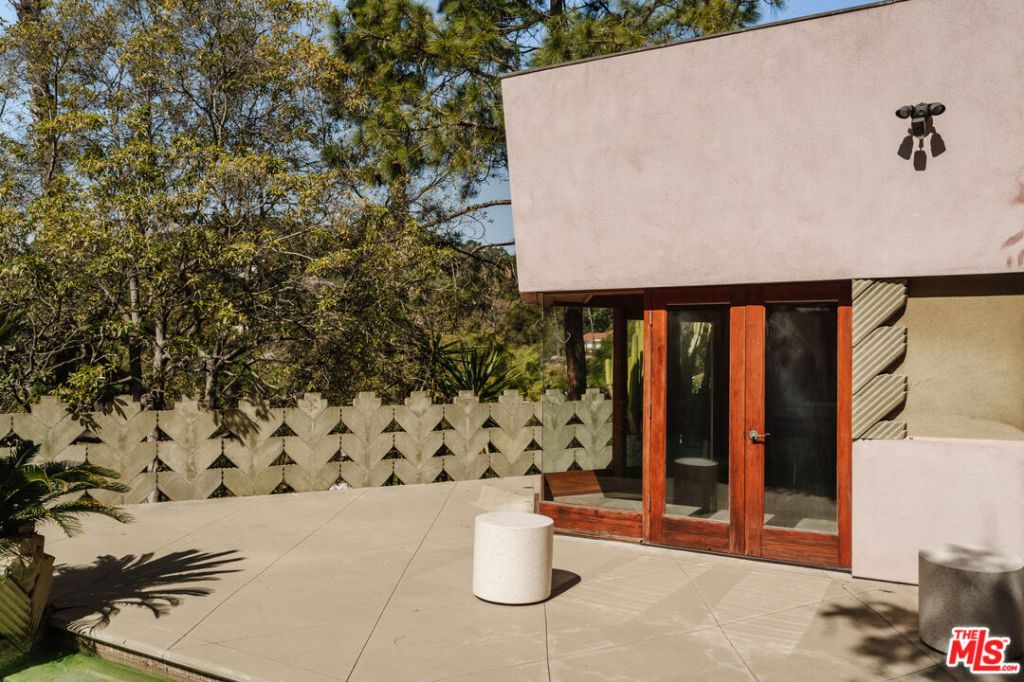
At the heart of the compound stands the Beverly Johnson House (1963) by Lloyd Wright (Frank Lloyd Wright’s son). Its long horizontals, pink-toned stucco, deep eaves, and patterned concrete block articulate Los Angeles hillside modernism’s fusion of geometry and terrain. The house is recognized by HistoricPlacesLA as an exemplar of Mid-Century Modern/Organic residential design. In 1991, Lynch extended the lineage by commissioning Eric Lloyd Wright (Lloyd’s son) to design the pool and pool house—rarely do you see two Wright generations inscribe a single residential site.


Material language and light
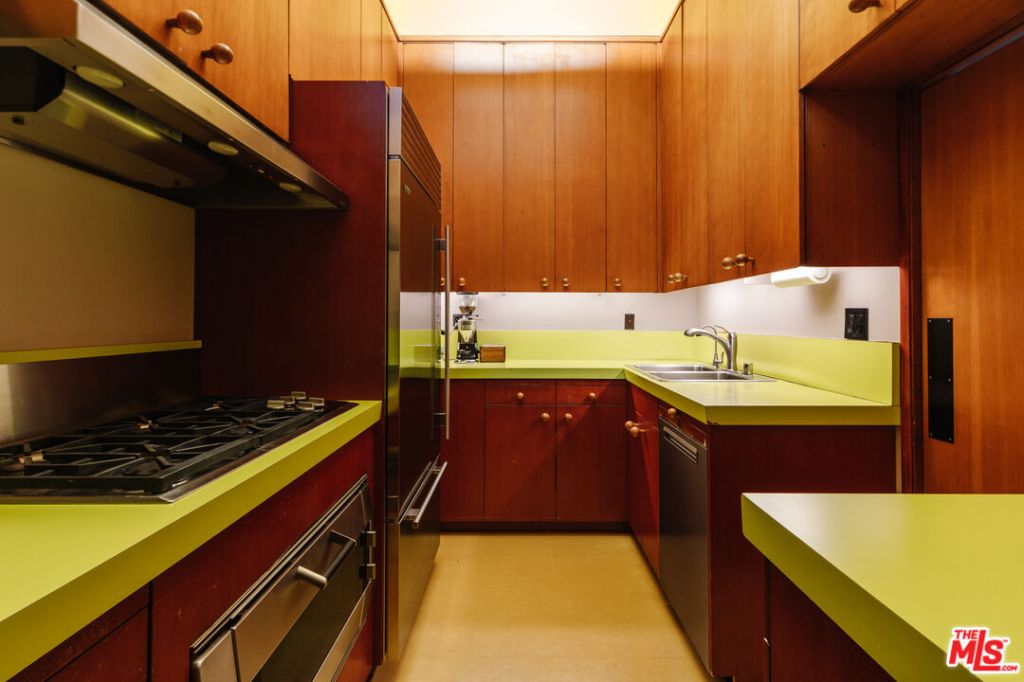
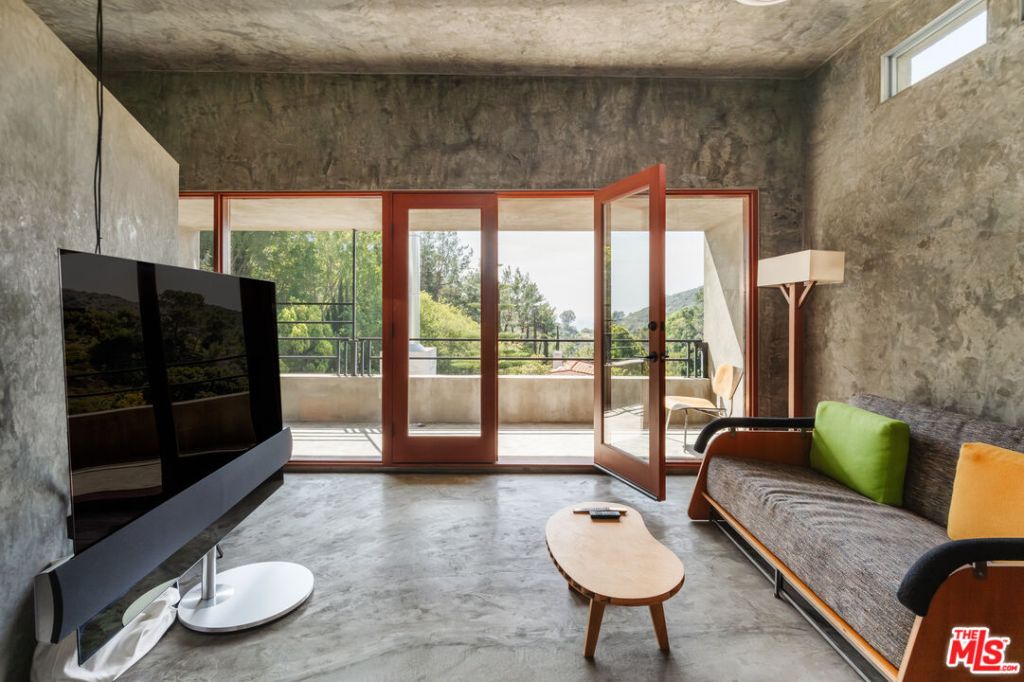
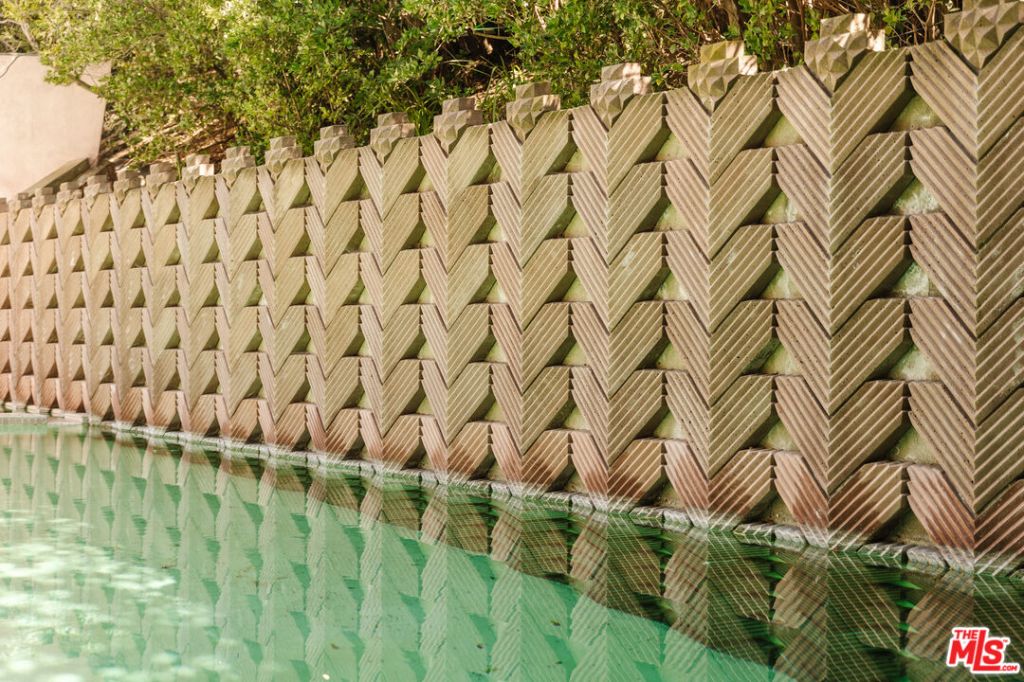
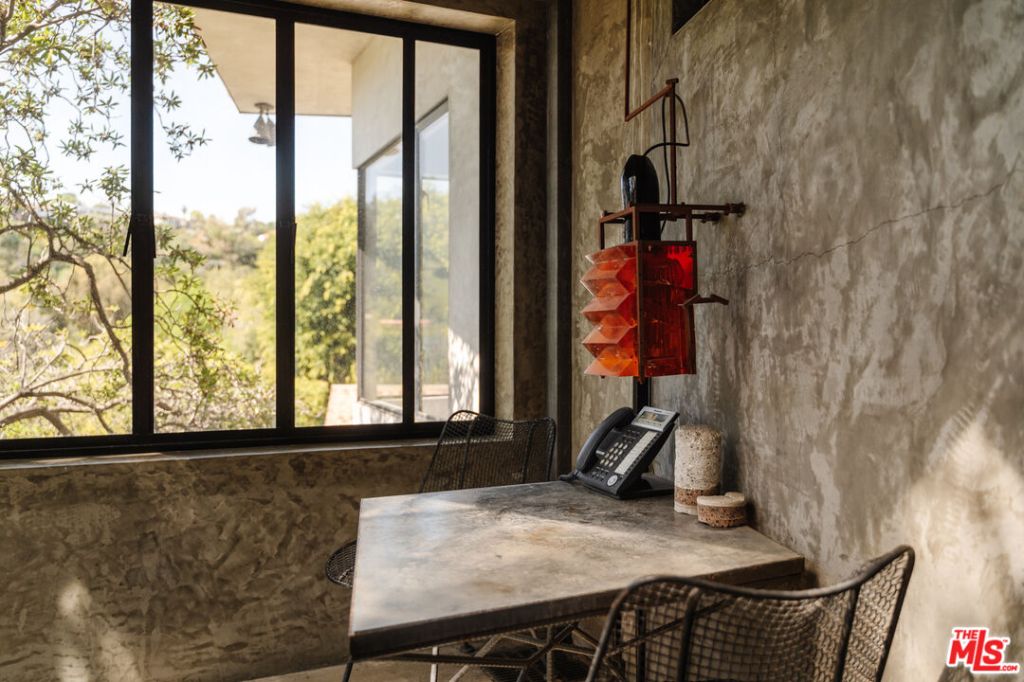
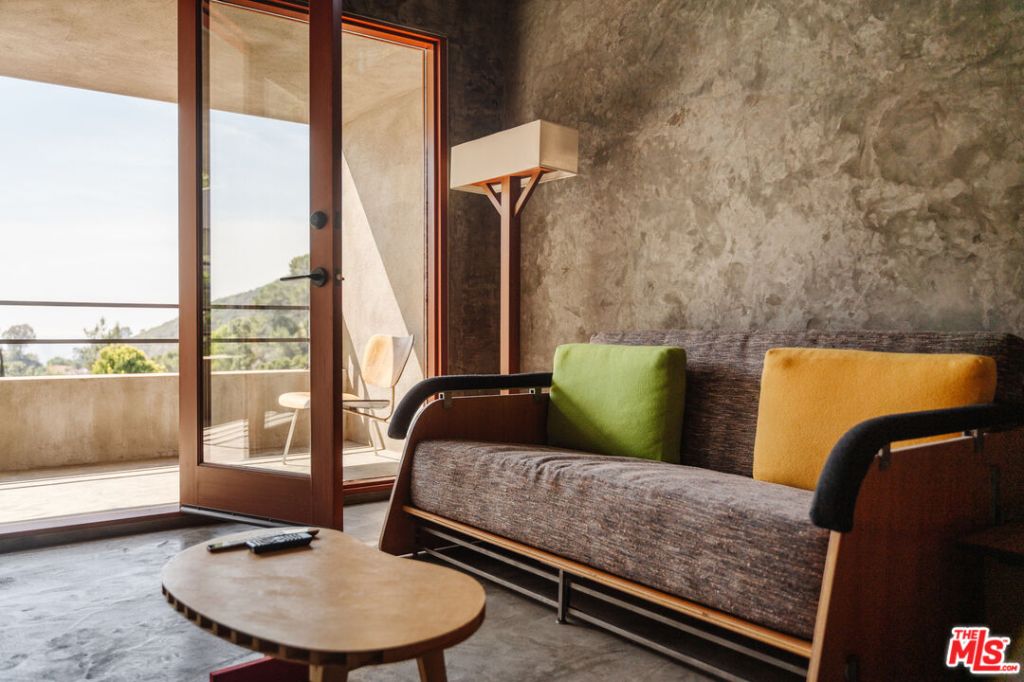
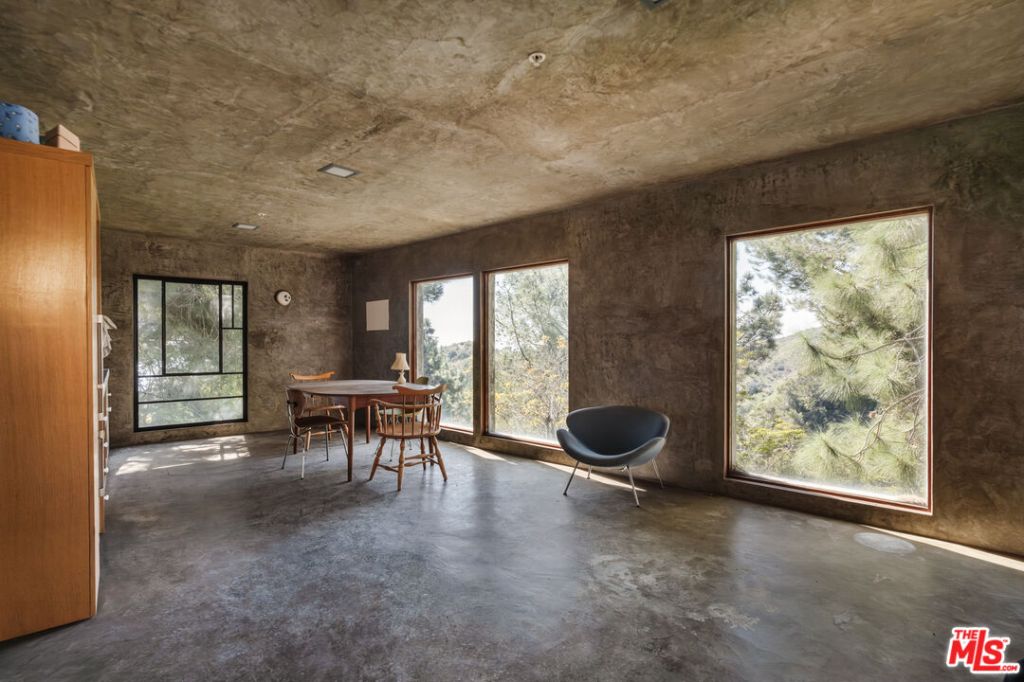
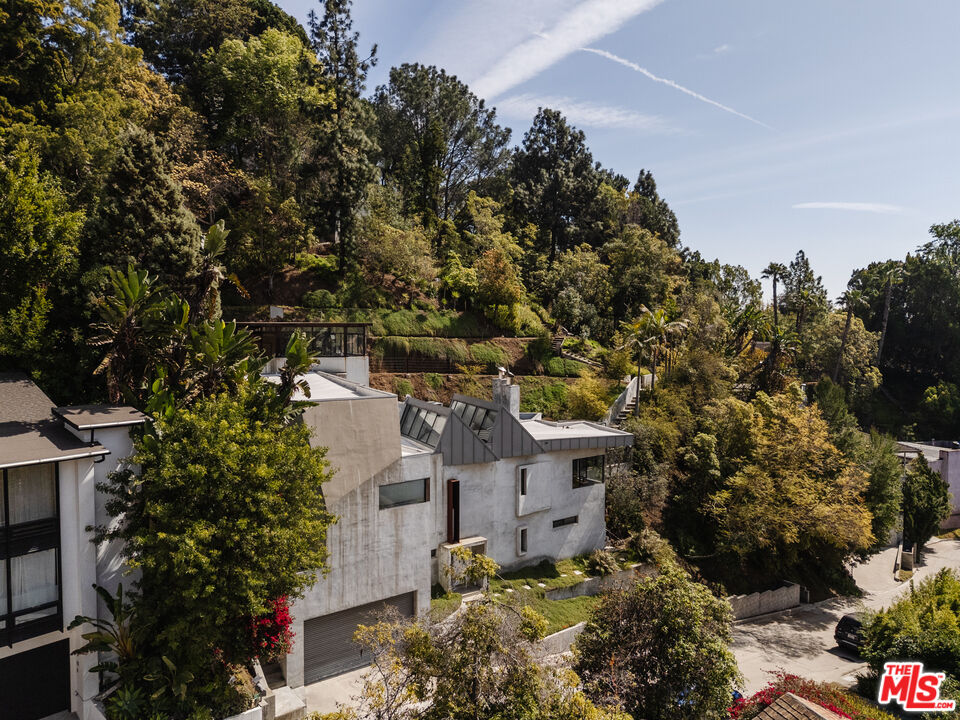
Listing and editorial photography show cement chevrons catching raked sun on the façade; inside, velvety gray plaster, natural wood, and simple metalwork lend a workshop sobriety offset by expressive notes—including a lime-green countertop kitchen with round wooden knobs. These are not decorator flourishes so much as environmental controls for a filmmaker keenly attuned to tone, surface, and the way light reads on camera.
The Brutalist Studio House: Set, Shelter, and Post-Production
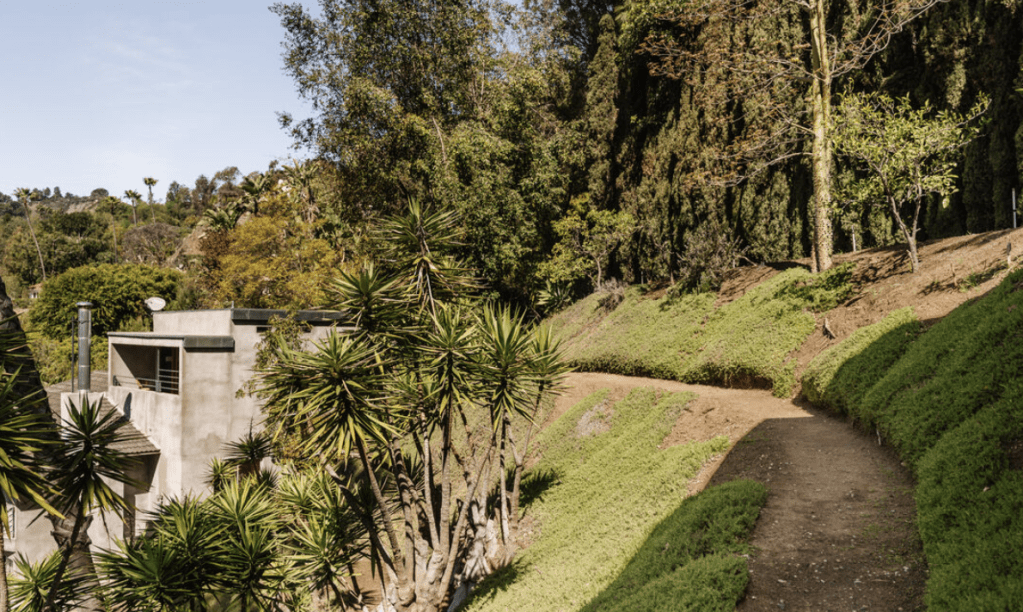
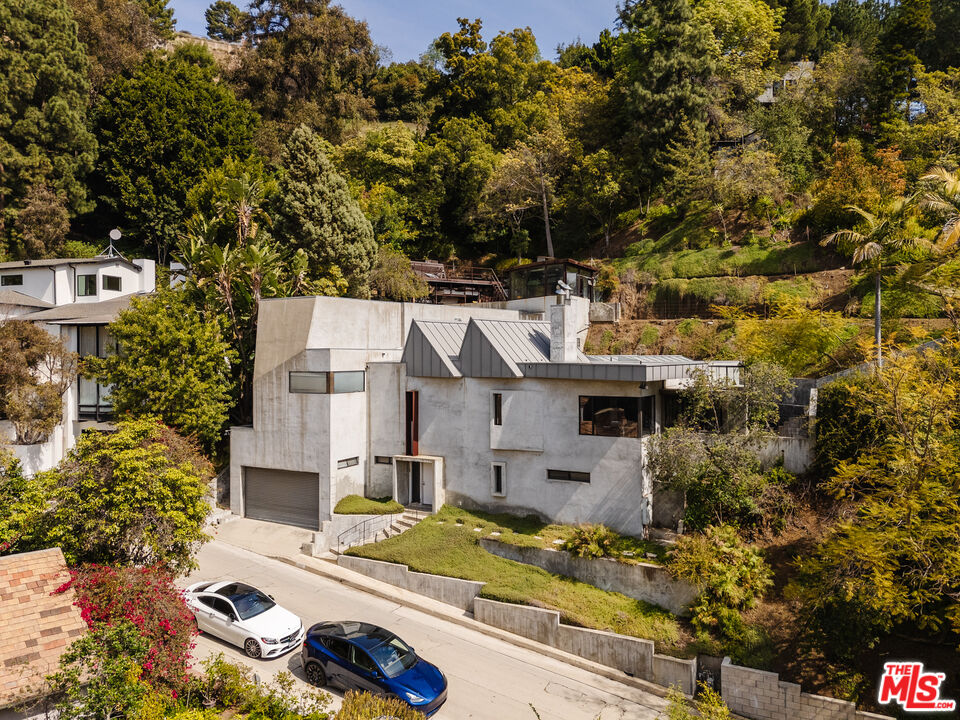
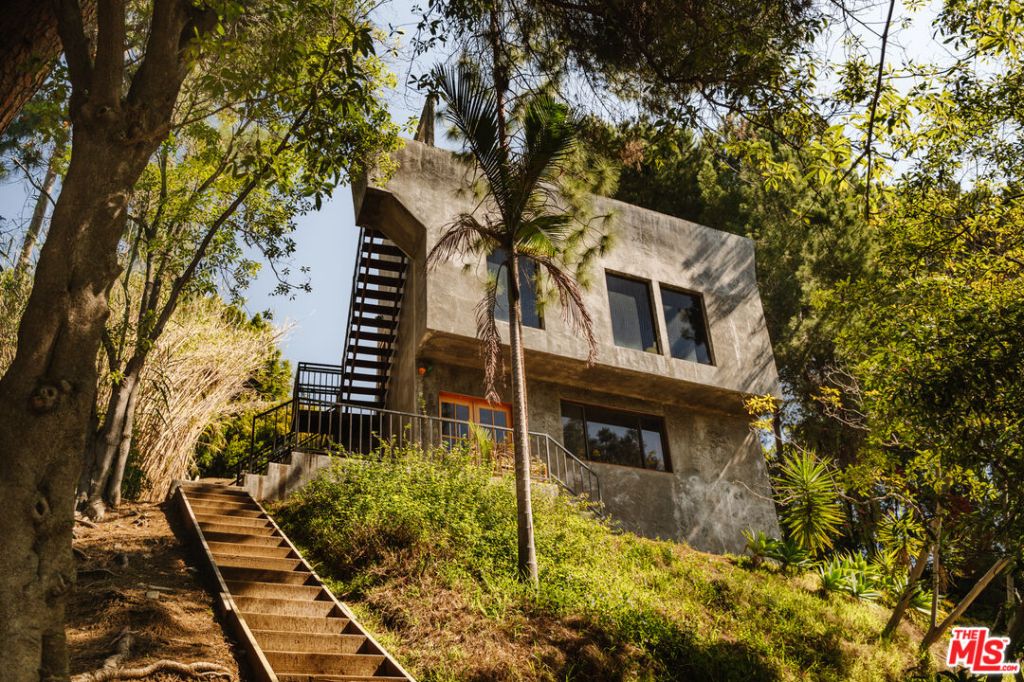
A nearby, hard-edged, concrete-led residence—purchased in 1989 and later altered with thin, slot-like windows—served as both filming location and production infrastructure. Onscreen it became the Madison house in Lost Highway (1997); offscreen, its controlled apertures, acoustical separations, and circulation supported daily studio practice. This is a textbook example of domestic space re-engineered as a post-production lab (screening room + editing suite), collapsing the distance between site and cinema.

Addresses and Roles (Within the Compound)
- 7017 Senalda Rd (Beverly Johnson House): Primary Lloyd Wright residence; the architectural anchor.
- 7029 Senalda Rd: Asymmetrical Productions headquarters—the formal address for Lynch’s production company.
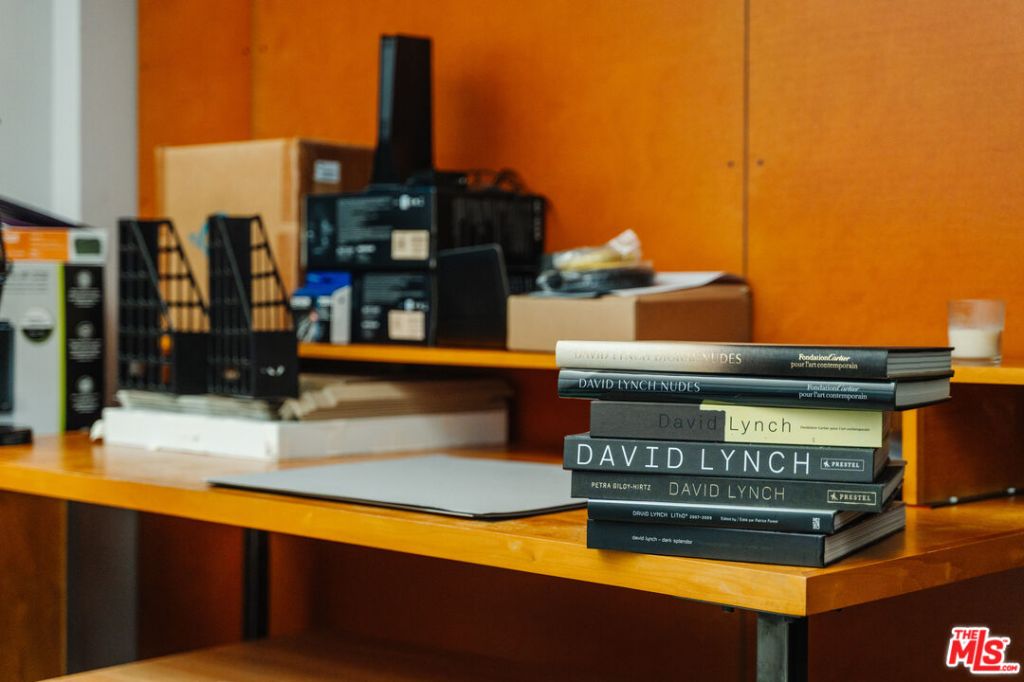
- 7035 Senalda Rd: The “Madison” house from Lost Highway; also Lynch’s studio with library, screening room, and editing suite.
Workshops, Outbuildings, and the Architecture of Process
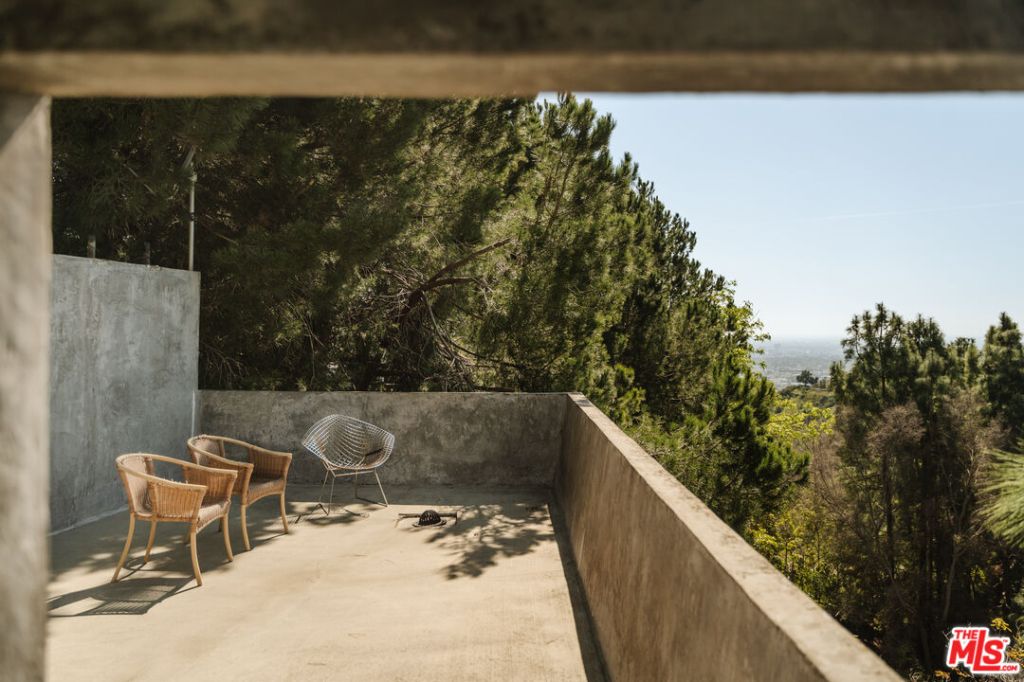
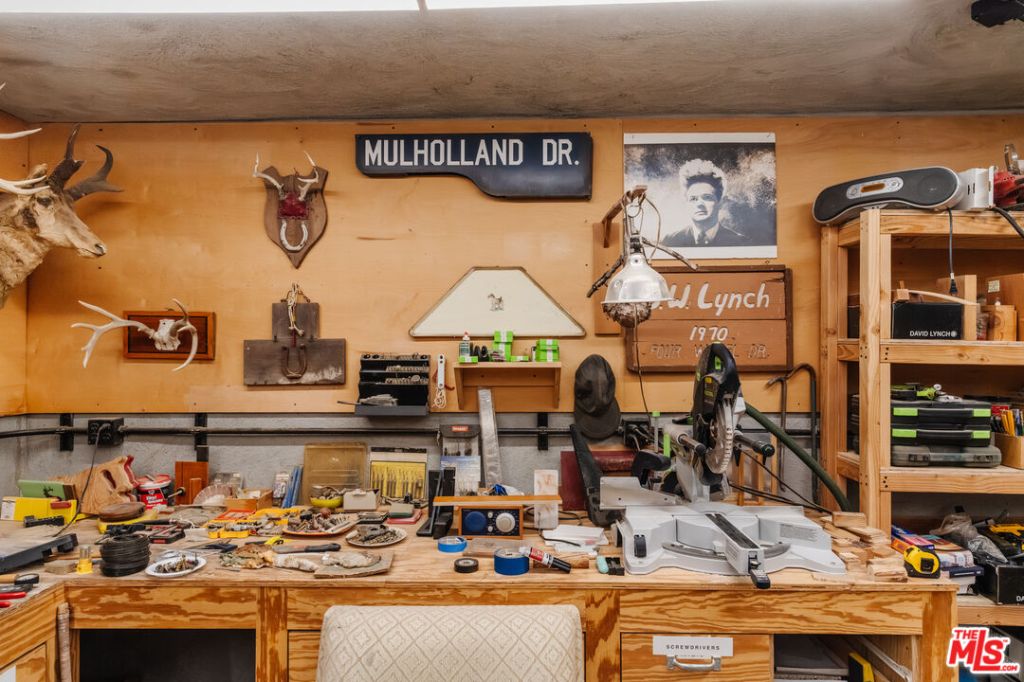
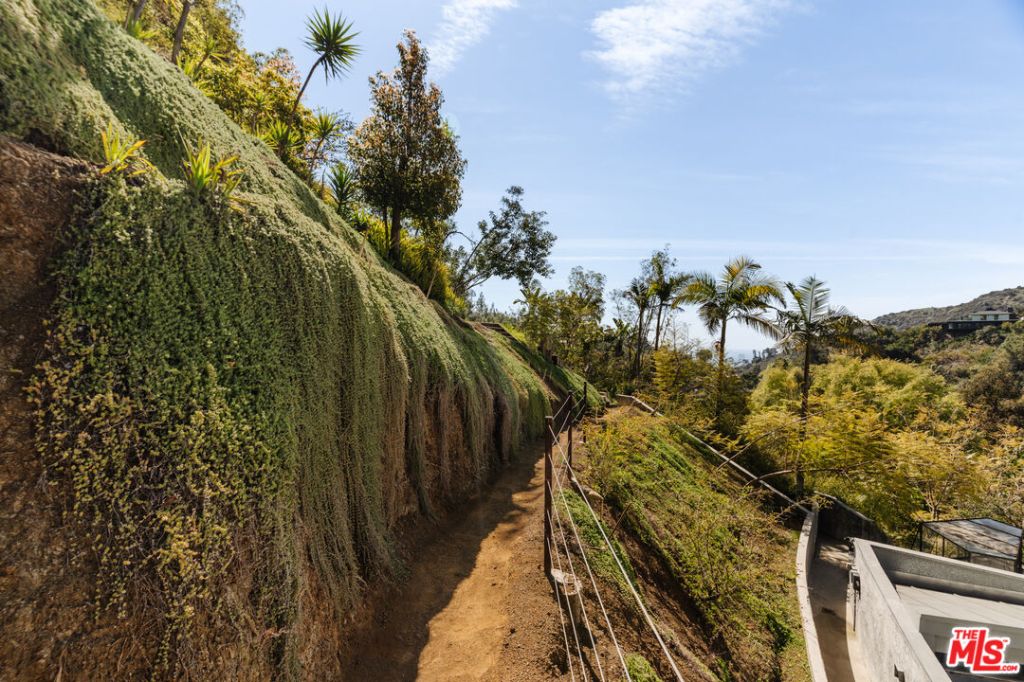
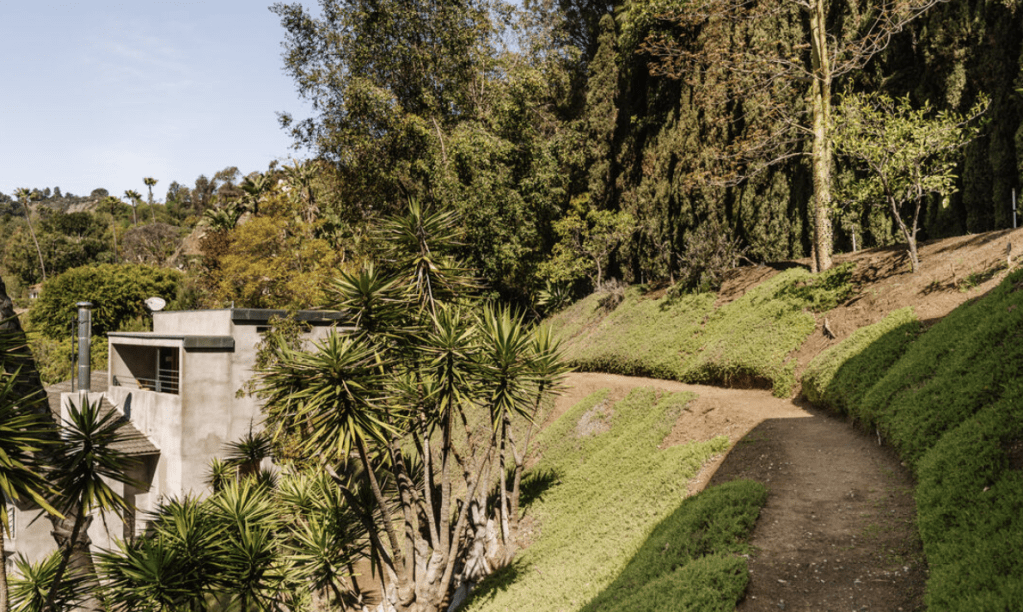
Beyond the three principal residences, the campus includes workshops and smaller residential structures—a two-story guest house and a one-bedroom retreat—finished in Lynch’s favored smooth grey plaster. Terraces, planted walkways, and courts stitch these buildings into a coherent topography that balances seclusion with inter-visibility between working and living zones. The ensemble demonstrates process-driven residential planning: the sites and shells are sized and surfaced for carpentry, metalwork, painting, and sound, not merely for habitation.

Cinematic Imprint and Cultural Value
Few Los Angeles properties exhibit such a tight feedback loop between architecture and film. The 7035 Senalda house is both a designed environment and a location with documented screen presence; the studio infrastructure supported major projects and ongoing post-production work. For cultural historians, the compound archives a late-20th-century live-work model specific to LA’s creative economy, where the house is a site of production rather than a passive backdrop.
Interiors: Typologies, Sightlines, and Thresholds
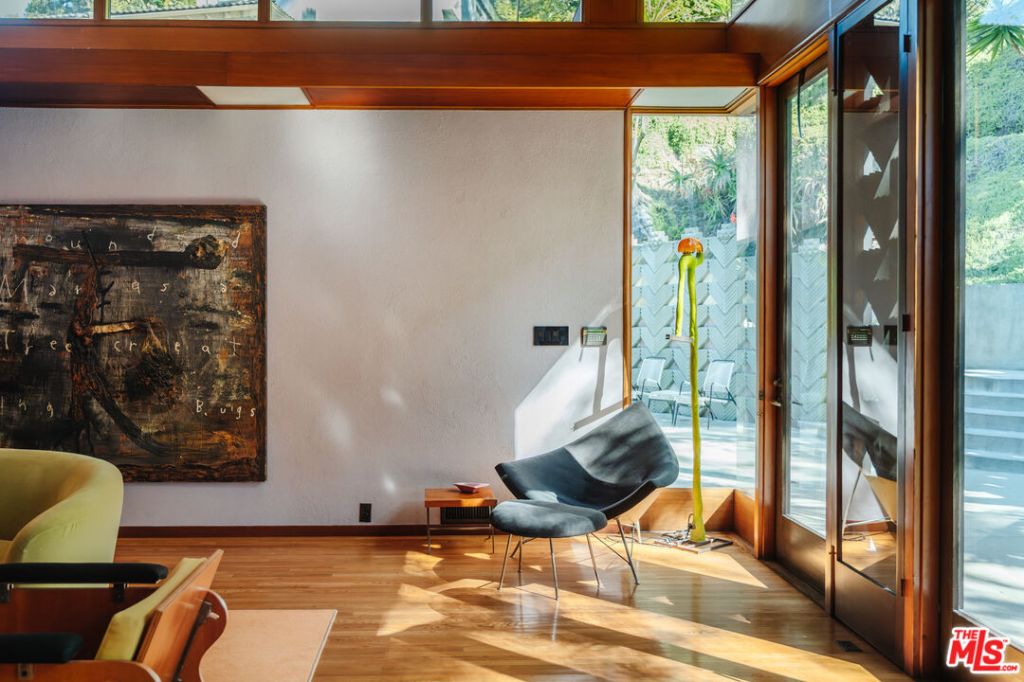
- Threshold choreography: Wrightian compression at entries followed by release into light-saturated living areas and long ribbon glazing—an indoor/outdoor sensibility adapted to steep terrain.
- Surface palette: Plaster, stucco, wood, and concrete block provide continuous neutrals for both daily life and camera work; metal details (some crafted by Lynch) punctuate this calm.
- Color as event: The cheerful kitchen (greens against wood) is not an anomaly but a calibrated tonal accent inside a largely monochromatic material field.
Urban/Topographic Context
Senalda Road sits just off Mulholland Drive, beneath the Hollywood Bowl Overlook, which partly explains the property’s cinematic sightlines and the campus’s ability to remain secluded yet proximate to studios and post facilities. In spatial terms, the site’s hillside terraces are as programmatic as the buildings, staging circulation between living, editing, and making.
Provenance and Chronology
- 1963: Lloyd Wright completes the Beverly Johnson House (7017 Senalda).
- 1987: Lynch purchases the 2,000-sq-ft Lloyd Wright house; later reflects that living in it “affects [his] whole life.”
- 1989: Acquisition of the two-story Brutalist residence two doors down (later used/altered for Lost Highway).
- 1991: Eric Lloyd Wright designs the pool and pool house, carrying forward the site’s Wright lineage and echoing the concrete chevron motif.
- 1995: Purchase of the in-between house (future studio + screening + editing).
- 2025 (January): Lynch dies at 78; estate brought to market in September 2025 at $15M.
Preservation Lens
- Wright lineage integrity. Maintain the Beverly Johnson House’s elevation rhythms, block patterns, and interior proportions; preserve the Eric Lloyd Wright pool ensemble as a distinct but dialogic layer.
- Programmatic heritage. Protect the editing suite and screening room as functional heritage—not just rooms but use-cases that encode the property’s cultural value.
- Surface authenticity. Retain plaster/wood/metal palette and the chevron motif where present; these are critical to the site’s phenomenology (light + texture) and to its documented identity.
Key Facts
- Asking price: $15,000,000
- Composition: Five parcels; ~2.3–2.5 acres; ~11,000 sq ft across seven structures
- Beds/baths: 10 / 11
- Architects: Lloyd Wright (1963 Beverly Johnson House); Eric Lloyd Wright (1991 pool + pool house)
- Addresses within compound: 7017 (primary), 7029 (Asymmetrical Productions), 7035 (Lost Highway studio/house)
- Notable features: Screening room, private editing suite, workshops, guest houses, extensive terraces.
TL;DR
The property offers an unusually legible diagram of architecture as practice. The Lloyd Wright core establishes lineage and architectural order; the Brutalist house internalizes set-like atmospherics; the studio residence embeds post-production into domestic space. Together, they describe a 40-year experiment in live-work typology that is historically specific to Los Angeles yet singular in its authorial coherence. For collectors, architects, and cinephiles, it’s a rare, intact ecosystem in which built form, material palette, and creative process are inseparable.
Listing: 7017 Senalda Road, Los Angeles, CA 90068 — The Agency theagencyre.com
 My World of Interiors
One thought on “David Lynch’s Hollywood Hills Compound: Architecture, Interiors, Creative Life, and Night Blooming Jasmine”