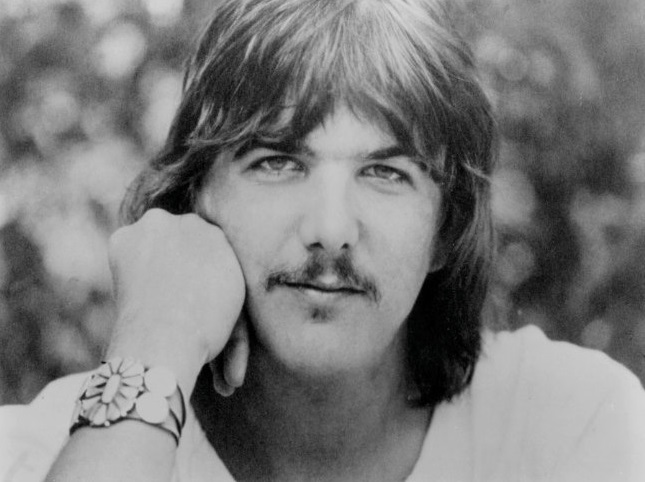
Gram Parsons had a vision so clear and so premature that the music world spent the decade after his death catching up to it, and has spent the five decades since trying to fully reckon with what he did in the four years he was actually making records. He called it Cosmic American Music — a phrase that sounds like the invention of someone who had taken too many drugs, which Parsons had, but which turns out to be the most accurate description available of what he was attempting: a music that held country and rock and soul and gospel in a single embrace, that refused the genre boundaries the industry had built to keep them separate, that insisted the white Southern church and the Black Southern field and the California highway and the Grand Ole Opry were all expressions of the same American longing and deserved to be heard in the same song. He was twenty-six when he died of a drug overdose in a motel room in the California desert, and the vision was unfinished, and the unfinished quality is part of what makes it so haunting. We are still living inside the world he was trying to describe.
The golden boy from Waycross
Cecil Ingram Connor III was born in Winter Haven, Florida, in 1946, into a family whose story reads like the dark underside of the American dream — money and beauty and talent and damage running in adjacent channels, the privilege and the catastrophe too close together to separate. His father, Coon Dog Connor, was a decorated World War II veteran who had returned from the war with a drinking problem that deepened through the 1950s into something more consuming. On Christmas Day 1958, when Gram was twelve, Coon Dog shot himself in his office. The family covered it up, announcing a heart attack. Gram was not told the truth for years.
His mother Avis remarried — a New Orleans businessman named Robert Parsons whose name Gram eventually took — and moved the family to Waycross, Georgia, where Gram grew up in the specific atmosphere of the Deep South: the heat, the church, the country music on the radio, the racial geography of a segregated society that kept its cultural traditions in separate containers while the music leaked through every wall. He was playing guitar and singing in local bands by his mid-teens, a natural performer with an ear of extraordinary sensitivity and a voice that already had, at fifteen, the quality it would have at twenty-five: a high, slightly fragile country tenor that carried within it an emotional transparency most singers spend their whole careers trying to achieve and never do. What he felt, you heard. There was no distance between the emotion and the sound.
His mother drank herself to death on the day of Gram’s high school graduation in 1965 — she died in the morning, he attended the ceremony in the afternoon. He had, by eighteen, lost both parents to the specific American afflictions of despair and alcohol. He enrolled at Harvard that autumn, lasted one semester, left to make music. The decision was not impulsive. It was the decision of someone who had understood, very early, that the music was the only form large enough to hold what had happened to him, and that the form had to be built rather than found.
The International Submarine Band and the country argument
The music that Gram Parsons found around him in the mid-1960s was not the music he needed. He was living in New York and then Los Angeles, in the world of folk and rock and the emerging counterculture, among people who were deeply suspicious of country music — the suspicion cultural, political, class-inflected, the suspicion of people who associated country music with the white Southern conservatism they were in various ways rebelling against. Dylan had pointed the way toward roots music, and The Band were about to demonstrate what roots music could do in the right hands, but the general trajectory of the rock world in 1966 and 1967 was toward the psychedelic and the futuristic rather than the country and the past.
Parsons disagreed, fundamentally and without apology. Country music was not the music of the enemy. It was the music of people in pain — poor white Southerners, the people his family had come from, the people whose suffering was as real and as deserving of artistic attention as anyone else’s suffering. It was also formally extraordinary: the Merle Haggard records and the George Jones records and the Buck Owens records that Parsons loved and studied had a directness of emotional expression and a precision of lyrical economy that the rock world, for all its ambition, rarely matched. The steel guitar, the fiddle, the specific vocal traditions of the Grand Ole Opry — these were not primitive forms to be transcended but sophisticated ones to be learned and extended.
He formed the International Submarine Band and made Safe at Home, released in 1968, which is the first fully country album made by an artist coming from the rock world — not country-influenced rock, not rock with country elements, but the actual thing: pedal steel guitar, Nashville session musicians, the conventions and the vocabulary of the genre fully inhabited rather than borrowed. It was ignored almost completely. The country audience didn’t know who Gram Parsons was. The rock audience didn’t know what to do with an album that sounded like it had been made for their parents.
The Byrds and the scandal of Sweetheart
The Byrds were, in 1968, one of the most critically admired bands in American rock music — the inventors of the twelve-string electric guitar sound that had defined the mid-1960s, the band that had turned Dylan’s folk songs into pop hits, the band most associated with the California counterculture’s musical expression. Parsons joined them in early 1968, at the invitation of Roger McGuinn, ostensibly as a pianist and secondary singer. Within weeks he had effectively taken over the band’s musical direction, persuading them to abandon the psychedelic direction of their previous album and make a country record instead.
The result was Sweetheart of the Rodeo, released in August 1968, and the scandal it provoked in both directions — the rock critics who found it a baffling retreat from relevance, the Nashville establishment who found it presumptuous and inauthentic — tells you everything about the cultural walls that Parsons was trying to knock down and how firmly those walls were held in place.
The album is not simply a collection of country songs. It is an argument. It opens with “You Ain’t Goin’ Nowhere” and closes with “Nothing Was Delivered” — two Dylan compositions from the Basement Tapes sessions — and in between it moves through Merle Haggard and Woody Guthrie and traditional material and two Parsons originals, the whole thing held together by the pedal steel guitar of Lloyd Green and the conviction, audible in every track, that this music and the music the Byrds had previously been making were expressions of the same impulse rather than opposites to be kept apart.
Parsons left the Byrds before the album’s release — a combination of internal tensions, his refusal to tour South Africa in protest against apartheid, and the general impossibility of containing his vision within someone else’s band. He had made his statement. The Byrds would continue without him, absorbing what he had given them and moving on. Parsons would continue without them, moving toward the project that would define his short career.
The Flying Burrito Brothers and Cosmic American Music
The Flying Burrito Brothers — formed by Parsons and fellow Byrd Chris Hillman in late 1968, filled out with pedal steel guitarist Sneaky Pete Kleinow and various other collaborators — were the vehicle through which the Cosmic American Music vision was most fully realised. Their debut album, The Gilded Palace of Sin (1969), is the central document of Parsons’s achievement, and it is worth the full attention it requires.
The title is a Southern phrase for a honky-tonk, a place where sinners gather and drink and dance and fall apart, and the album is set in that space — the moral and physical territory of the country song, where love goes wrong and men drink to forget and God is invoked and ignored in equal measure. But the setting is occupied by people who have come from somewhere else — from California, from the counterculture, from the rock world — and the collision between the setting and the occupants produces something that is neither authentic country nor rock in disguise but a third thing, a music that has genuinely absorbed two traditions and made something that neither tradition could produce alone.
“Sin City” opens the album and is the definitive statement of the Parsons aesthetic: a song about Los Angeles as a fallen place, the rock and roll industry as a form of corruption, the relationship between the pursuit of pleasure and the approach of judgement. The melody is pure country — the pedal steel drawing long, mournful lines above the chord changes — and the lyric is the lyric of someone who has been inside the machine and found it wanting, who looks at the world he inhabits with the undeceived clarity of someone raised in the church of the guilty South. “On the day the lord returns, there’s gonna be hell to pay,” Parsons and Hillman sing together, and the line is not ironic. The irony would be easier. The line means what it says.
“Hot Burrito #1” — subtitled “I’m Your Toy” — is the album’s emotional peak and one of the most nakedly moving performances in the country rock canon. Parsons sings about a love that has been abandoned, and he sings it with a vulnerability that has no parallel in the rock music of the period — a complete absence of the defences that male rock singers of the era maintained, the refusal to be cool, the willingness to simply be in the feeling without managing it. The steel guitar weeps behind him. The voice is barely holding together. There is no distance between the person and the sound.
This quality — the absolute emotional transparency, the refusal of ironic distance, the willingness to be fully present in the most exposed and painful feelings — is the quality that all of Parsons’s best music shares and that most directly distinguishes it from the rock music around it. The rock world of 1969 was, in various ways, cool. Parsons was not cool. He felt things too directly, expressed them too completely, made himself too available to the emotion to maintain the detachment that coolness requires. This was understood at the time as a limitation. It is, in retrospect, the central achievement.
Emmylou Harris and the voice that completed the vision
In 1972, down to his last artistic resources and his last personal ones — the Flying Burrito Brothers had dissolved, a solo album had come and gone with minimal impact, the drug use that had been present throughout his career had become something more consuming and more structurally damaging — Parsons encountered Emmylou Harris. She was twenty-four, a folk singer of considerable talent but limited direction, performing in a Washington D.C. club when Parsons heard her and understood immediately that her voice was the voice the music had been waiting for.
The two solo albums they made together — GP (1973) and Grievous Angel (1974) — are the fullest realisation of the Cosmic American Music vision, and they owe as much to Harris as to Parsons. Her voice, a pure and luminous soprano of perfect intonation and complete emotional intelligence, did something to Parsons’s singing that none of his previous collaborations had done: it steadied it. The duets on these records have a quality of completion, of two voices finding the third thing that neither could produce alone, that is one of the rarer experiences available in recorded music. On “Hearts on Fire” and “Love Hurts” and “$1000 Wedding” — a song about a wedding that doesn’t happen, the bride having died, the guests eating the food and drinking the wine without her — the two voices create a harmony that is not simply pleasing but emotionally complex, that holds tenderness and grief and the specific quality of love that knows it is temporary and loves anyway.
Harris has spoken, in the decades since, about the experience of making music with Parsons with a consistency and a specificity that confirms what the recordings suggest: that this was a genuine artistic partnership, that she was learning something essential about how to inhabit a song rather than simply sing it, that Parsons was teaching her — by example, by the sheer force of his own example — that the emotional truth of a song was not a quality to be expressed through technique but a place to be entered and inhabited for the duration of the performance. You went inside the song. You lived there for three minutes. You came out the other side changed.
She has lived by that principle ever since. Emmylou Harris’s career — one of the most sustained and serious in American popular music, a body of work spanning five decades and moving through country, folk, bluegrass, rock and orchestral song with the consistency and the integrity of someone who learned early what music was for — is Gram Parsons’s most complete legacy. He gave her the vision. She had the discipline and the longevity to carry it forward.
Joshua Tree and the end
On the 19th of September 1973, Gram Parsons died in Room 8 of the Joshua Tree Inn in the California desert, of a morphine overdose complicated by alcohol. He was twenty-six. The night before his death he had been out in the desert with friends, looking at the Joshua trees in the darkness, the landscape he had loved since first encountering it — the specific, strange, lunar beauty of the Mojave, the Joshua trees like figures from a dream, the sky enormous and indifferent overhead.
What followed his death was one of the stranger stories in rock mythology. His road manager Phil Kaufman, honouring what he claimed was a pact with Parsons that neither would allow the other to receive a conventional funeral, intercepted the body at Los Angeles International Airport before it could be flown to Louisiana for burial, drove it out to Joshua Tree in a borrowed hearse, and attempted to cremate it in the desert. The body burned partially. The remainder was eventually buried in Louisiana as his family had intended.
The story has been told so many times that it has acquired the quality of legend — which is to say, it has been used to mean various things that it doesn’t necessarily mean, has been enrolled in the mythology of Parsons as the ultimate rock and roll death, the final gesture of someone who lived outside the boundaries and died there too. The truth is more ambiguous and more sad. A young man died in a motel room from drugs that had been escalating toward this for years. His friend tried to honour an agreement made in the half-serious spirit that such agreements are usually made. The desert burned imperfectly, as the desert does.
Grievous Angel was released four months after his death. It received respectful reviews and sold modestly. The title track — “Return of the Grievous Angel,” written with Thomas Brown — describes a journey across America, from the truck stops and the cities to “the home of the brave” and “the real true life,” and it has the quality of all the best Parsons recordings: the feeling of someone trying to locate something essential in the American landscape, moving through it, listening to it, not yet sure what he is looking for but certain it is there.
He never found it, or didn’t find it in time. The vision outran the life. This is the cluster’s second variation on the theme: where The Band found the wound and named it in music that would endure, Parsons found the music that could hold the wound and didn’t live long enough to fully realise what he had found. The unfinished quality is not a failure. It is the condition of a vision that arrives before the world is ready for it.
What he started and could not finish
The country rock movement that Parsons is credited with starting — the Eagles, Linda Ronstadt, Jackson Browne, the entire California country-rock industry of the 1970s — is both his legacy and his betrayal. The Eagles took the surface: the steel guitar, the country harmonies, the California landscapes, the formal vocabulary. They removed the content: the emotional exposure, the theological weight, the refusal of cool, the willingness to inhabit the deepest and most uncomfortable feelings without managing them for the audience’s comfort. What remained was agreeable, technically accomplished, and fundamentally dishonest — country rock as lifestyle rather than as truth-telling, the form without the urgency that gave the form its reason to exist.
The artists who inherited the real vision — who understood that Cosmic American Music was not a genre but an ethical stance, a commitment to emotional honesty and formal seriousness and the refusal to keep the traditions in their separate containers — are a different list. Emmylou Harris, as argued above, is the primary heir. Gillian Welch, who makes records of such stripped and serious beauty that they sound as if they were made in another century, carries the vision in her bones. Ryan Adams, at his most committed and least self-indulgent, reaches toward it. The Jayhawks reached it on their best records. Whiskeytown reached it occasionally. Jason Isbell reaches it regularly, with a lyrical precision and an emotional directness that Parsons would have recognised immediately.
The common thread in all of them is the refusal of the detachment that the music industry prefers — the willingness to be fully in the feeling, to let the song cost something, to treat the country tradition as the living thing it is rather than the historical artefact that commercially safer artists prefer. This is what Parsons demonstrated was possible. This is what he gave the people who came after him: not a sound, but a standard. The standard of complete honesty. The standard of the voice that holds nothing back.
“Love Hurts,” the Felice and Boudleaux Bryant song that Parsons and Harris recorded for Grievous Angel, has been recorded by dozens of artists. The Parsons and Harris version is the definitive one, not because of technical superiority but because of emotional completeness: two voices that have decided to be entirely in the truth of the lyric for its duration, that have accepted the cost of saying it without qualification. Love hurts. Love scars. Love wounds and marks. The lyric is not subtle. The performance is not subtle. It is just true, in the way that the best country music has always been true — directly, without apology, without the ironic distance that would make it easier to hear and less necessary to hear.
That truth — direct, unguarded, costly, rooted in the specific soil of American sorrow and American faith — is what Gram Parsons gave to popular music. The gift was not completed. It was not taken up quickly enough by people who understood what it was. But it is there, in the recordings, available to anyone willing to go looking.
The desert is still out there. The trees are still strange and beautiful in the dark. The sky is still enormous and the music is still trying to be as large as the sky.
Sources and further reading
Primary works
The International Submarine Band. Safe at Home. LHI Records, 1968. The first statement; rougher than what followed but essential for understanding the starting point.
The Byrds. Sweetheart of the Rodeo. Columbia, 1968. The scandal and the argument; Parsons’s contributions were partially obscured by a contractual dispute but his presence is audible throughout.
The Flying Burrito Brothers. The Gilded Palace of Sin. A&M Records, 1969. The central document; “Sin City,” “Hot Burrito #1,” and “Hot Burrito #2” are the essential tracks.
The Flying Burrito Brothers. Burrito Deluxe. A&M Records, 1970. The less celebrated second album; contains the original version of “Wild Horses,” written with Keith Richards.
Parsons, Gram. GP. Reprise, 1973. The first solo album with Emmylou Harris; “She,” “That’s All It Took,” and “The New Soft Shoe” are particularly strong.
Parsons, Gram. Grievous Angel. Reprise, 1974. The posthumous masterpiece; “$1000 Wedding,” “Return of the Grievous Angel,” and “Love Hurts” are essential.
Biographical and critical writing
Meyer, David N. Twenty Thousand Roads: The Ballad of Gram Parsons and His Cosmic American Music. Villard, 2007. The most thorough and most carefully researched biography; Meyer spent years tracing the primary sources and the result is the definitive account of Parsons’s life and musical development.
Fong-Torres, Ben. Hickory Wind: The Life and Times of Gram Parsons. Pocket Books, 1991. An earlier biography, less comprehensive than Meyer’s but valuable for the closeness of Fong-Torres’s access to people who knew Parsons directly.
Griffin, Sid. Gram Parsons: A Music Biography. Sierra Books, 1985. The first serious critical account of the music; Griffin is a musician as well as a writer and his analysis of the recordings is more technically engaged than the later biographical studies.
On the broader context
Cantwell, Robert. Bluegrass Breakdown: The Making of the Old Southern Sound. University of Illinois Press, 1984. The most rigorous account of the country and bluegrass traditions that Parsons was drawing on; essential background for understanding what “Cosmic American Music” actually meant in formal terms.
Hoskyns, Barney. Hotel California: The True-Life Adventures of Crosby, Stills, Nash, Young, Mitchell, Taylor, Browne, Ronstadt, Geffen, the Eagles, and Their Many Friends. Wiley, 2006. Places Parsons in the Los Angeles music scene context; useful for understanding both the world he was working within and the ways in which his vision was subsequently diluted by the country-rock mainstream.
On Emmylou Harris
Harris, Emmylou. Interviews in No Depression magazine, various dates. Harris has given a series of extended interviews to the Americana music journal that constitute the most substantial account of what she learned from Parsons and how it shaped her subsequent career. The 1995 and 2000 interviews are particularly illuminating.

