
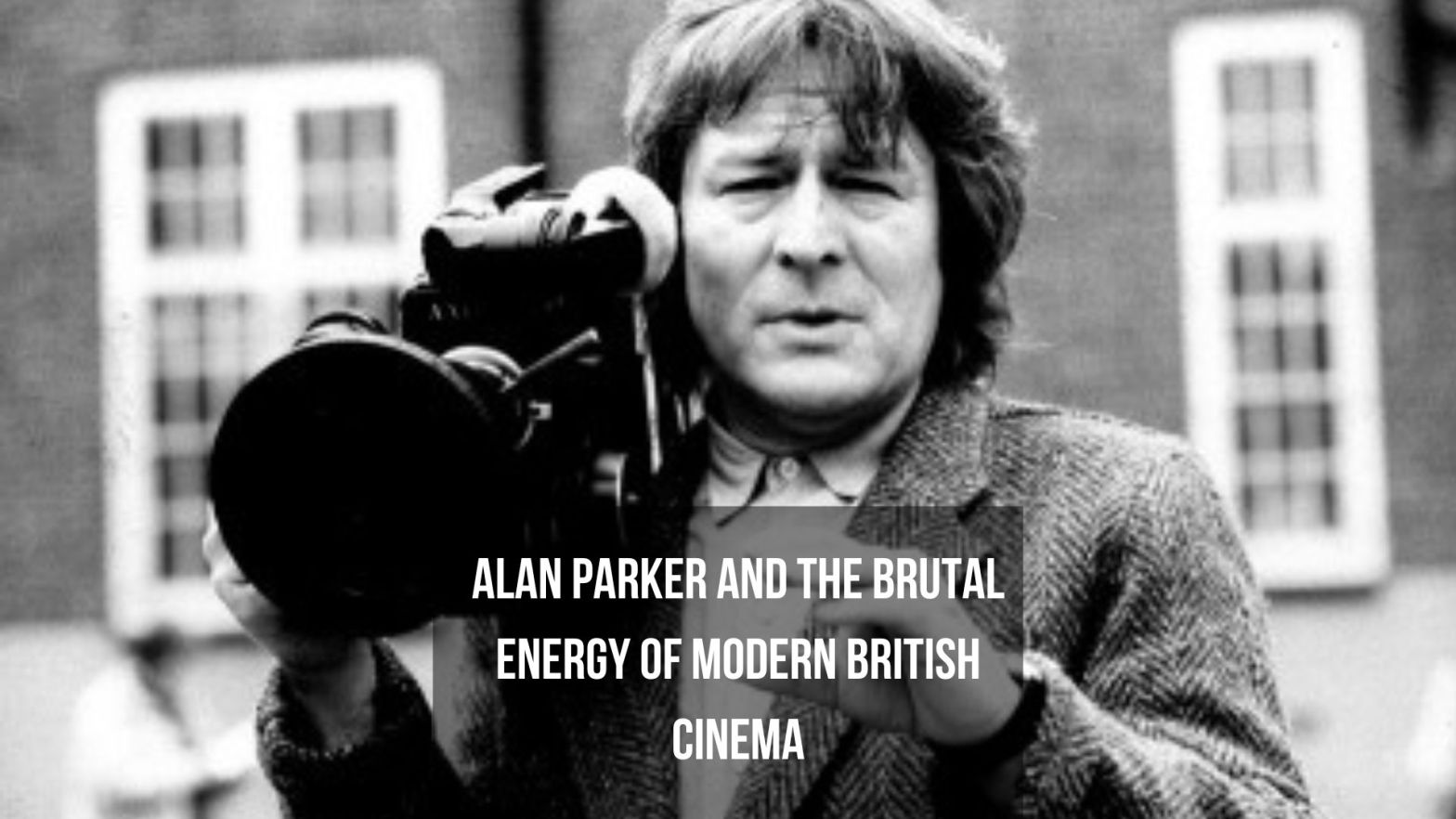
Alan Parker belongs to that increasingly rare category of British director whose work was at once popular, ambitious and unmistakably personal. He was not a miniaturist, nor a specialist, nor a filmmaker content to remain within one tonal register. He moved restlessly between genres and scales: from the stylised bravado of Bugsy Malone to the harrowing velocity of Midnight Express, from the raw musical electricity of Fame and The Commitments to the gothic unease of Angel Heart and the historical moral theatre of Mississippi Burning. What made him distinctive was not simply versatility, though he had that in abundance. It was the particular intensity he brought to everything he touched.
Parker’s films rarely drift. They advance. They seize. They insist. Even when they are uneven, they are uneven in public, with force and appetite and complete indifference to tasteful restraint. He was not a filmmaker of delicacy. He was a filmmaker of impact. He belonged to a generation of British directors who understood cinema as a popular art form in the grandest sense: visual, emotional, immediate, meant to hit the nerves before it settled into the intellect.
That sensibility may owe something to his beginnings in advertising, where compression, image-making and instant legibility are everything. But unlike many directors who emerged from that world, Parker did not reduce cinema to surface. He used surface as propulsion. He understood that vividness need not be shallow. In his films, style is rarely ornamental. It is a delivery system for pressure.
This is one reason he often seemed slightly out of step with critical fashion. British criticism has long had an uneasy relationship with directors who are unapologetically broad, energetic or audience-facing. There is, in certain corners of intellectual culture, a reflexive suspicion of force, as though serious art must always arrive quietly, with its collar turned up against vulgarity. Parker had little interest in that sort of refinement. He was too muscular, too direct, too willing to risk excess. His cinema often prefers the emphatic to the suggestive, the charged image to the understated gesture. That can make him easy to caricature, but it is also the source of his power.
He is best understood, perhaps, as a director of extremity. Not extremity in the narrow sense of violence or sensationalism, though those certainly appear in his work, but extremity of emotional temperature. Parker liked worlds under strain. He liked institutions at breaking point, ambition turning feral, innocence colliding with systems of punishment, power or fame. Midnight Express remains the clearest example. Whatever one thinks now of its politics or distortions, it is impossible to deny the film’s force, its feverish sense of entrapment and degradation. Parker did not present ordeal as an abstract theme. He made it tactile.
The same is true, in a different register, of Fame. Here again Parker was drawn to pressure: youth under discipline, talent under scrutiny, desire colliding with institution. The film’s brilliance lies in its refusal to treat aspiration sentimentally. This is not a politely uplifting story about gifted young people finding themselves through art. It is a film about hunger, humiliation, erotic charge, performance and the cost of wanting to be seen. Parker understood that spectacle is inseparable from anxiety. To perform is to expose oneself to judgement. That tension gives Fame its enduring modernity.
And then there is Bugsy Malone, which in some ways may be the key to Parker’s imagination. On paper, it is absurd: a gangster musical performed by children. In execution, it is exhilarating, because it reveals Parker’s instinct for tonal danger. He was drawn to ideas that should not quite work, and then made them work through conviction. Bugsy Malone is playful, but it is not slight. It shows, very early, Parker’s gift for stylisation with stakes, for turning artifice into emotional reality.
This willingness to move between registers is central to his legacy. Parker was not interested in auteurism as monotony. He did not make the same film over and over in order to reassure critics of his consistency. He ranged across forms: musical, thriller, social drama, literary adaptation, political drama, psychological horror. That range has sometimes made him harder to package neatly than directors with a more instantly recognisable signature. But range, in Parker’s case, was not evidence of superficiality. It was evidence of appetite. He was drawn not to one genre but to the possibilities of cinema itself.
There was also something deeply working-class in Parker’s temperament, not merely biographically but aesthetically. One feels it in his hostility to pretension and in his instinctive attraction to struggle, institutions and underdogs. Even when his films are set in glamorous or theatrical worlds, they are interested less in polish than in what polish costs. The Commitments, one of his most loved later films, is exemplary here. Parker approached the story of working-class Dubliners forming a soul band not as quaint uplift but as collective desire: noisy, hopeful, funny, precarious. He understood that aspiration is rarely graceful while it is happening. It is messy, comic, desperate and full of vanity. That is what makes it human.
That insistence on truth within heightened form is one of the paradoxes of Parker’s cinema. However flamboyant the style, he wanted a social pulse underneath it. He was too streetwise to believe in pure polish. Even Evita, perhaps the film most vulnerable to accusations of spectacle for spectacle’s sake, is driven by Parker’s fascination with charisma as a public technology, with fame as something manufactured through image, class mobility and mass emotion. He was always interested in how performance enters political and social life, how institutions script people, how desire is staged.
If Parker’s reputation has sometimes fluctuated, that may be because he resists the gentler narratives through which British culture prefers to remember its artists. He was not cosy. He was not modest in his aims. He did not traffic in tasteful smallness. He made films that wanted to reach large audiences without surrendering urgency or scale. There is something almost old-fashioned about that now, and rather admirable. He believed that seriousness and popularity need not be enemies.
That conviction matters. Too often British cinema has been forced into a false choice between the respectable and the vivid, between worthy realism and disreputable spectacle. Parker refused that division. His films are proof that visual force can coexist with moral seriousness, that entertainment need not exclude tension, intelligence or danger. He understood that mainstream cinema could still bear emotional and political weight.
So what is Alan Parker’s legacy? Not perfection. His films are too unruly for that, and too varied. Nor is it simply versatility, though that word is inevitably attached to him. His real legacy lies in the fact that he brought scale, appetite and emotional pressure into British filmmaking at moments when the culture could easily have settled for caution. He reminded audiences that cinema could be elegant without being bloodless, popular without being stupid, stylised without losing its nerve.
He also represents a version of British filmmaking that feels rarer now: outward-looking, unembarrassed by narrative, visually forceful, committed to the idea that mainstream cinema can still be urgent. Parker did not whisper. He projected. He made films that wanted to be felt in the body as well as admired from the head.
That, finally, is why he lasts. Not because every film is flawless, but because the best of them carry an unmistakable charge: of ambition, of conviction, of a director who understood cinema as an art of pressure, momentum and public feeling. Parker’s work reminds us that intensity has its own intelligence. He knew how to take a story, however improbable, and drive it forward until it became not merely watchable but unavoidable.
In a culture that often mistakes understatement for depth, Alan Parker stands as a useful corrective. He was a maximalist of meaning. He believed in energy, in drama, in scale, in the power of cinema to overwhelm as well as illuminate. British film is larger, louder and more alive for having had him.
Discover more from My World of Interiors
Subscribe to get the latest posts sent to your email.

