
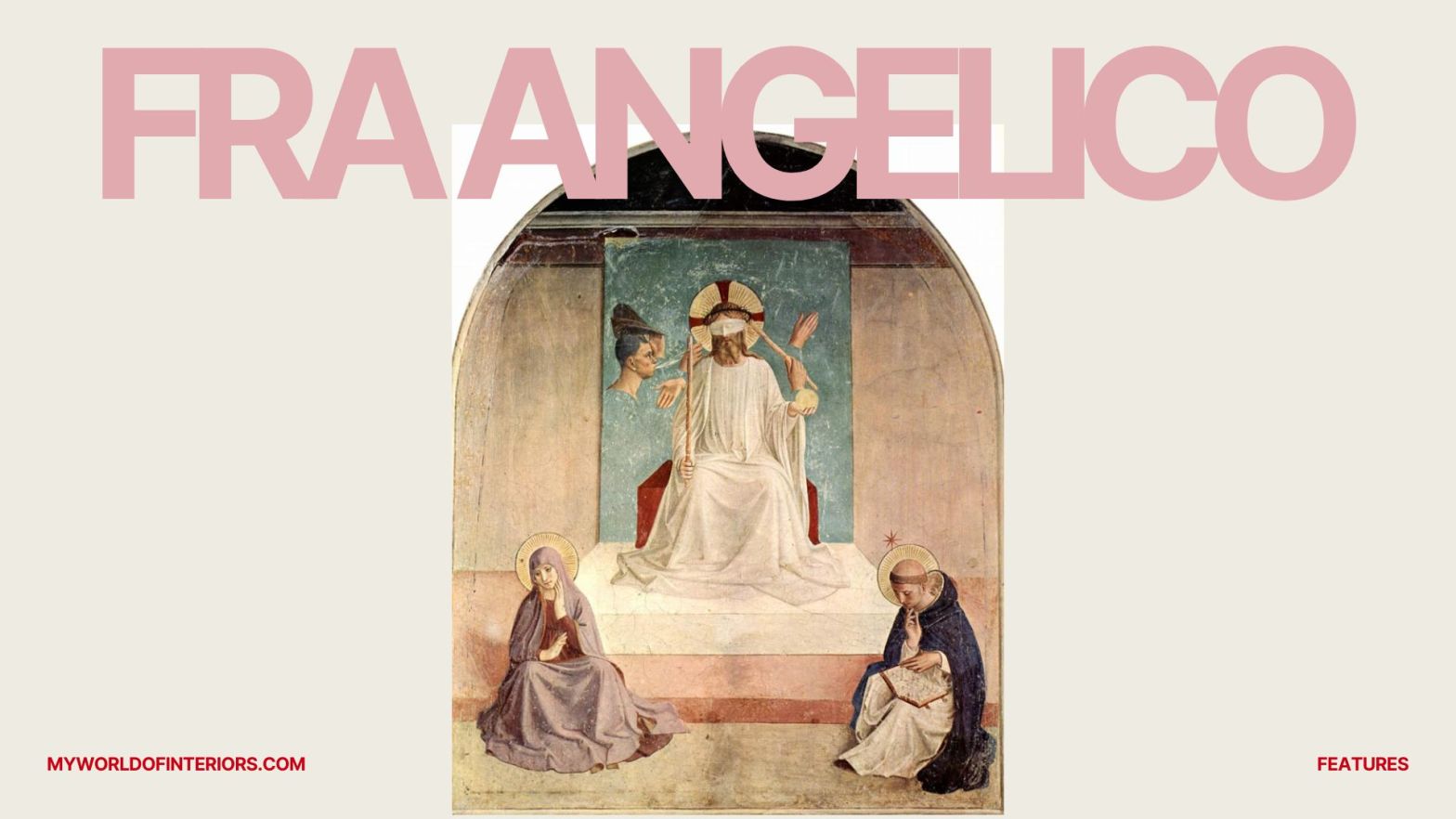
In the vast history of Western art, few figures embody the seamless marriage of devotion and innovation as fully as Fra Angelico. Born Guido di Pietro around 1395 near Florence, he entered the Dominican Order at Fiesole and became known simply as Fra Angelico — the Angelic Brother. His works, suffused with luminous color and transcendent calm, were not only acts of artistic mastery but also of spiritual meditation. For centuries, they have been admired as much for their piety as for their beauty.
Yet Fra Angelico was not merely a “painter-monk.” He stood at a critical moment in the Renaissance, bridging the Gothic tradition of the 14th century and the humanist naturalism that would come to dominate the 15th. His art offers a window into a world where theology, politics, and aesthetics intertwined.
A Monk and an Artist
Fra Angelico joined the Dominican convent at Fiesole around 1418. As a friar, he was expected to live in humility and obedience, but his talent as an illuminator and painter quickly set him apart. For him, painting was a form of prayer. Giorgio Vasari, in his Lives of the Artists (1550), wrote that Fra Angelico would never take up a brush without first praying, and that his works reflected the purity of his faith.
This sense of devotion remains palpable in his frescoes and panels. They are not simply illustrations of scripture; they are meditations on divine mystery. Figures are poised in gestures of reverence; light seems less a natural phenomenon than an emanation of grace.
Style and Innovation
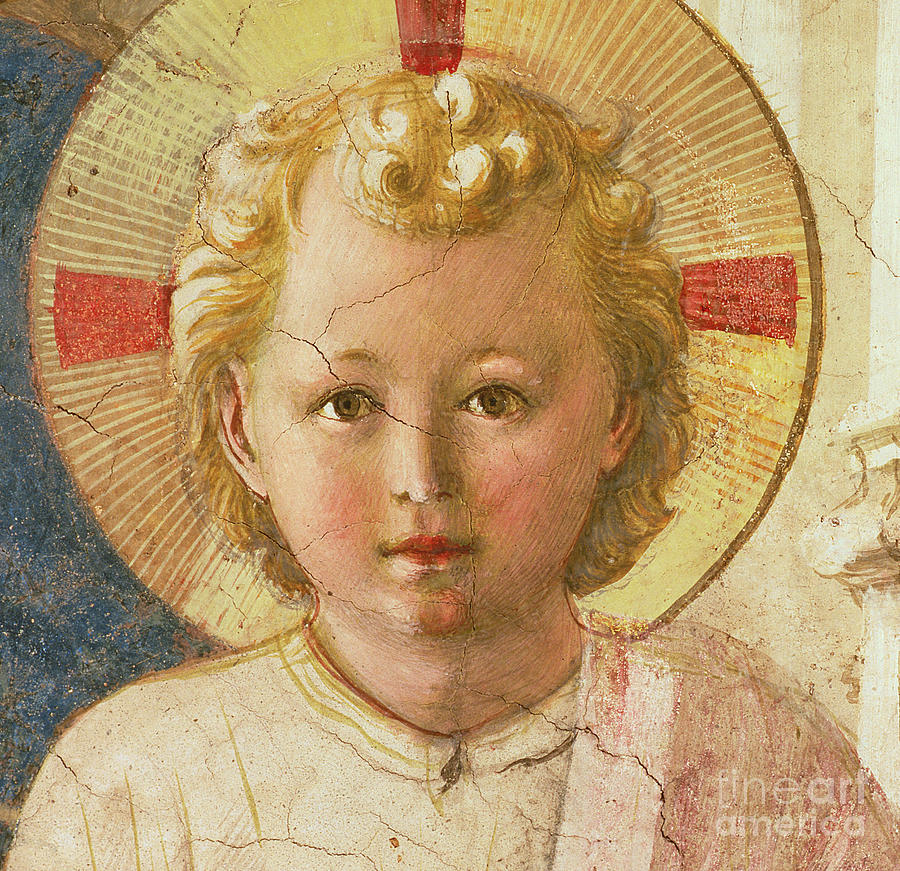
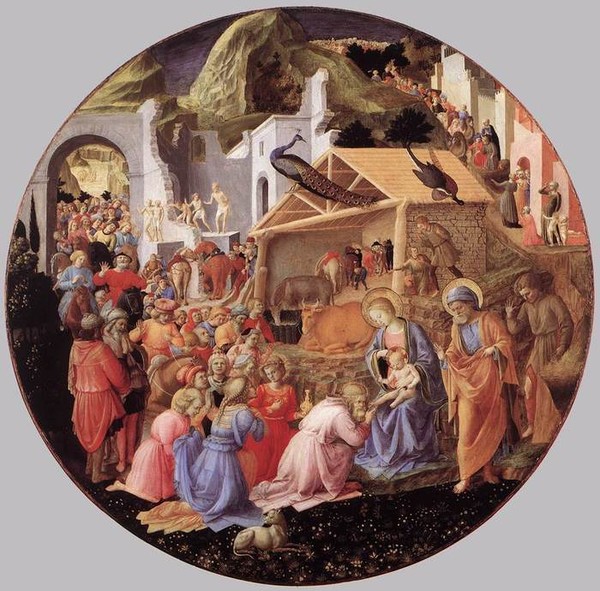
Fra Angelico’s art is marked by clarity, serenity, and radiant color. He inherited elements of the International Gothic style — elegant figures, gold backgrounds, ornamental detail — but transformed them through the emerging Renaissance concern for perspective and naturalism.
- Use of Light: Unlike the dramatic chiaroscuro of later painters, Angelico’s light is even, suffused, a metaphor for divine illumination.
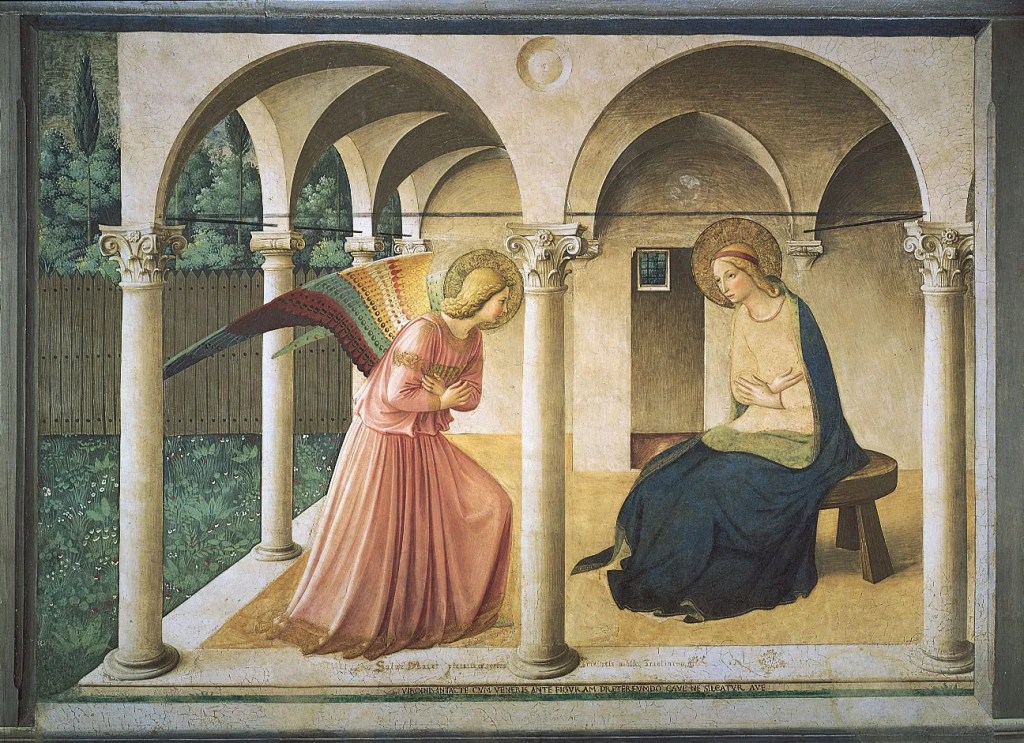
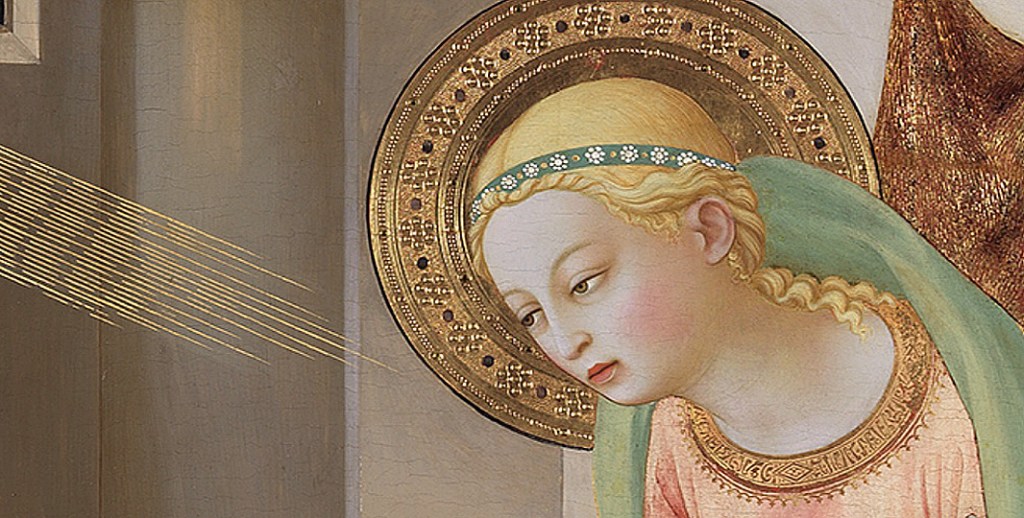
- Human Emotion: His figures are contemplative rather than theatrical. In his Annunciations, the Virgin Mary’s humility and the angel’s reverence embody idealized emotional states.
- Perspective: Fra Angelico adopted linear perspective early, but always subordinated it to spiritual clarity. His spaces are simple, legible, places for meditation rather than architectural bravura.
The San Marco Frescoes
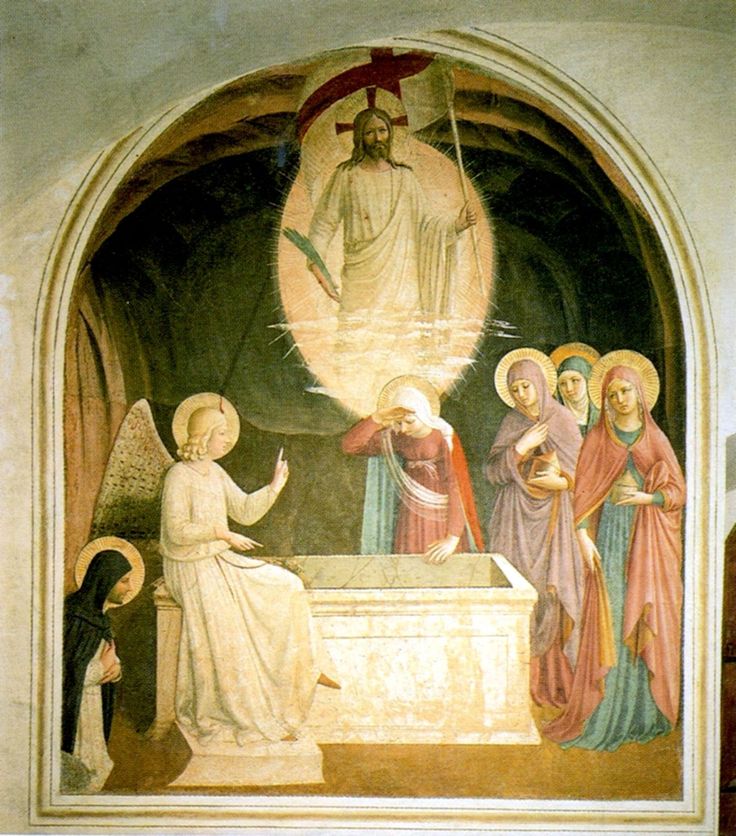
Perhaps his most enduring achievement lies in the frescoes he painted for the Dominican convent of San Marco in Florence (1438–45). Commissioned by Cosimo de’ Medici, the project included more than 50 frescoes in cells, corridors, and chapels.
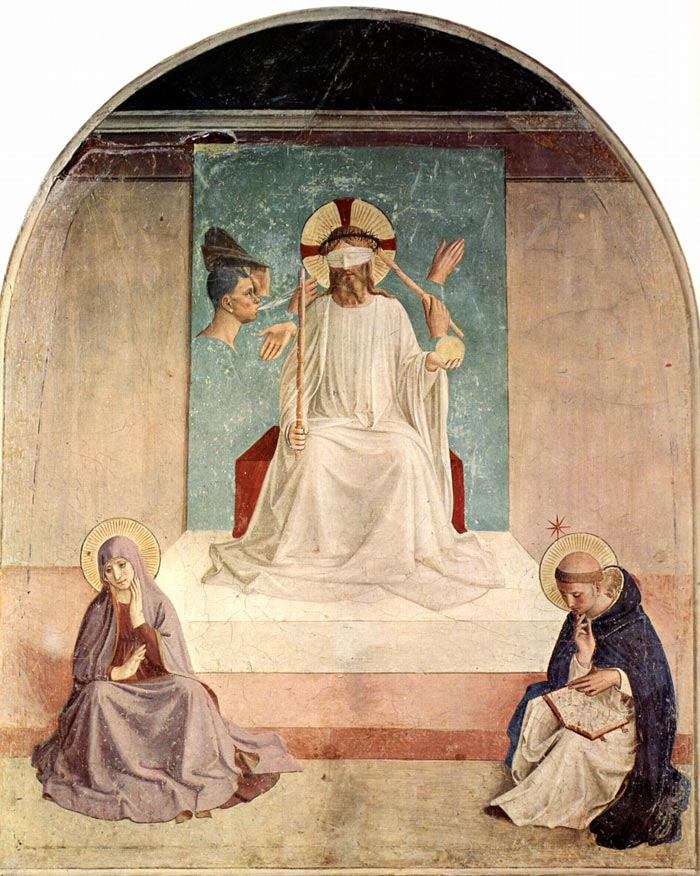
Unlike grand public altarpieces, these works were meant for private devotion. In each friar’s cell, Fra Angelico painted scenes such as the Crucifixion, Transfiguration, and Annunciation. The compositions are austere, stripped of extraneous detail, designed to focus the monk’s prayer on Christ’s sacrifice or Mary’s obedience.
The Annunciation at the top of the north corridor has become emblematic: Gabriel and Mary meet in a loggia bathed in pale light, their gestures mirroring one another in mutual reverence. Silence emanates from the painted wall — a theology of stillness rendered in color.
Major Altarpieces
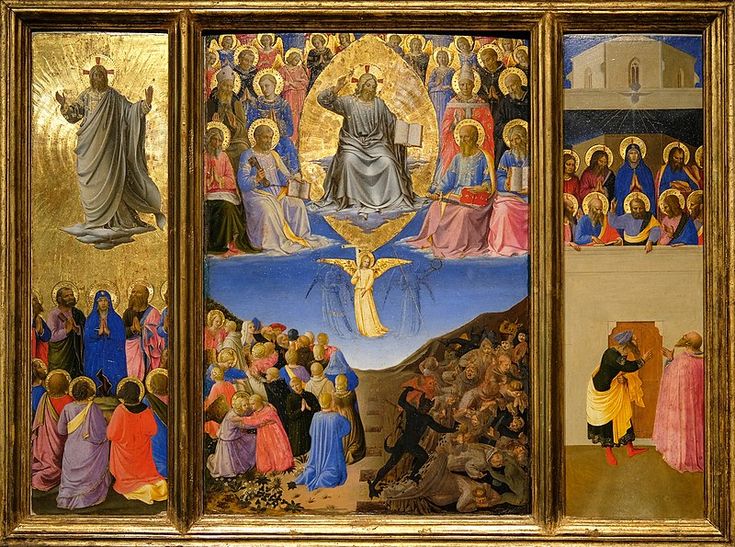
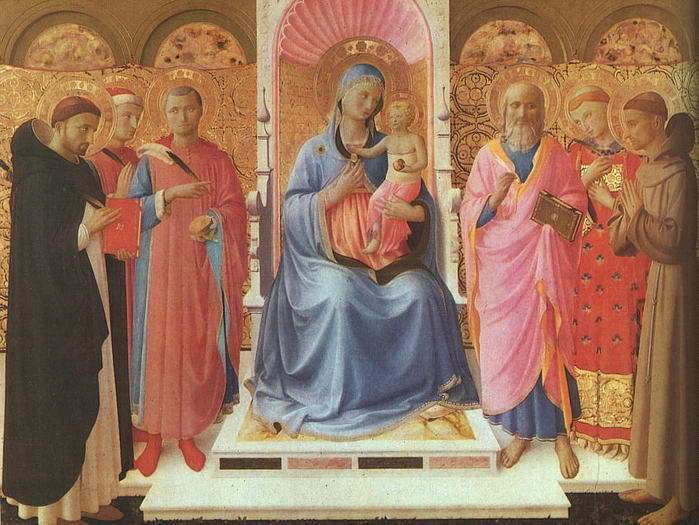
Fra Angelico was also a master of the altarpiece, where he combined Gothic splendor with Renaissance clarity. His Cortona Altarpiece (c. 1437) dazzles with gold yet grounds the Madonna in a believable space. The San Marco Altarpiece (c. 1440) employs the new Renaissance format of the sacra conversazione, placing saints and angels together in one coherent space around the Virgin and Child.
Particularly striking is the Coronation of the Virgin (c. 1434–35, Uffizi), where angels, saints, and choirs spiral upward in an explosion of color. It is at once celestial spectacle and carefully structured composition.
Rome and Recognition
Fra Angelico’s reputation extended beyond Florence. In 1445, Pope Eugenius IV summoned him to Rome to decorate the Chapel of the Holy Sacrament in St. Peter’s (later destroyed). Under Pope Nicholas V, he painted the frescoes of the Niccoline Chapel in the Vatican, illustrating the lives of St. Stephen and St. Lawrence. These works reveal both his narrative skill and his sensitivity to papal politics, portraying charity, martyrdom, and ecclesiastical authority with dignity and restraint.
The Moral Vision
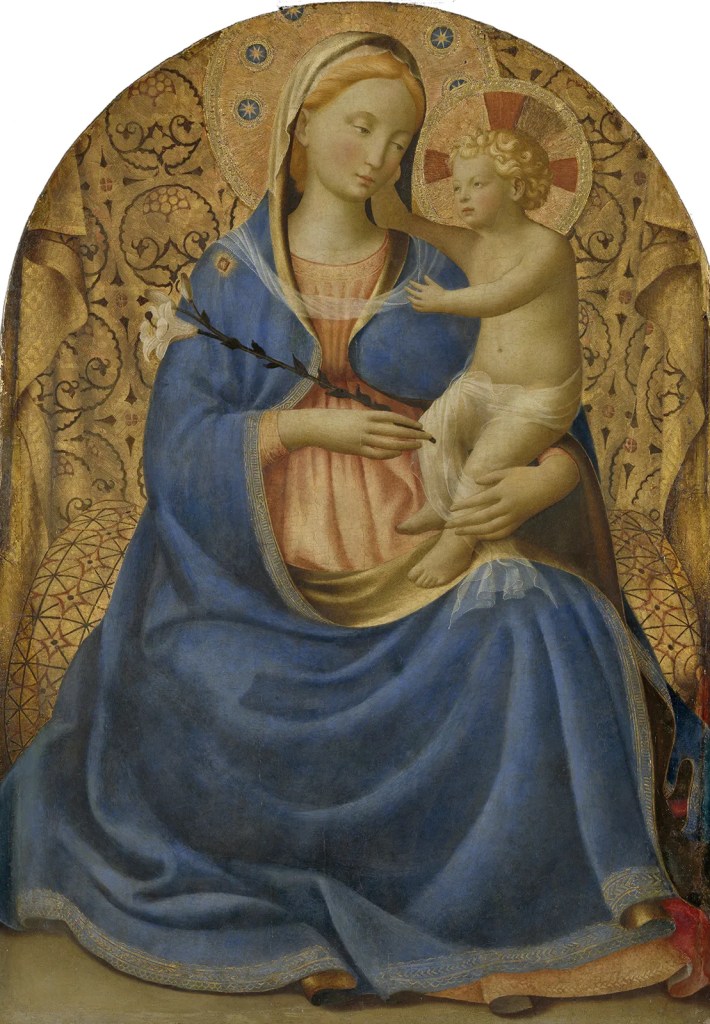
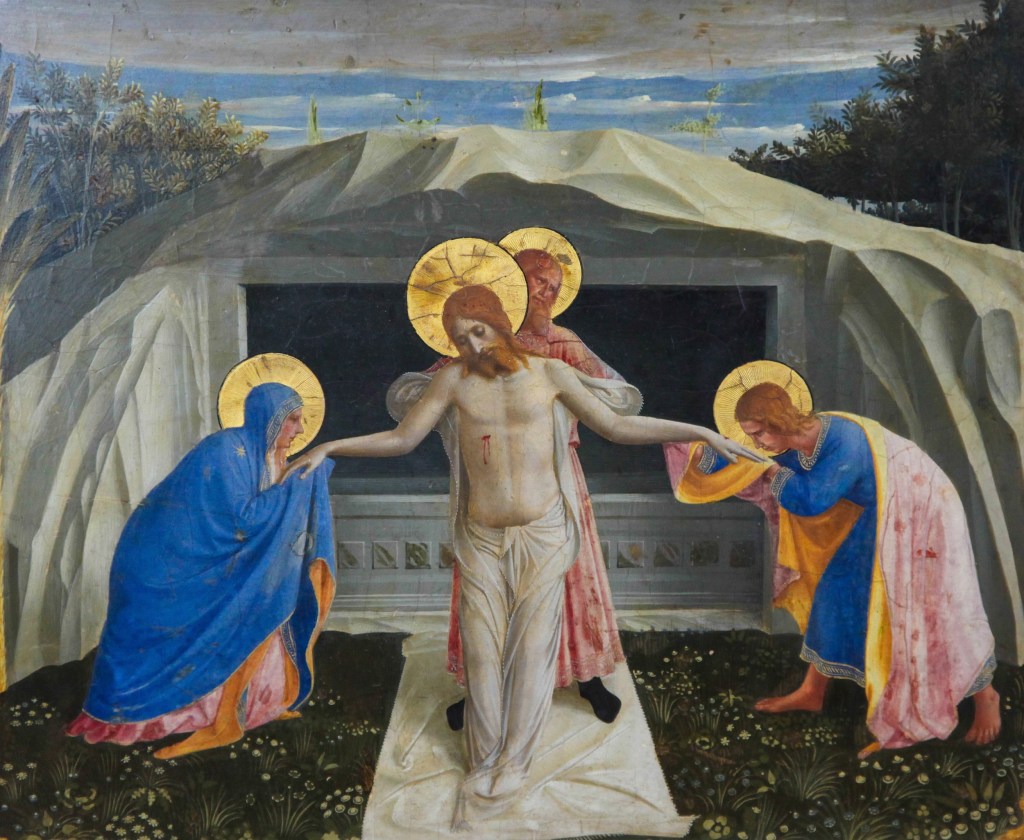
Fra Angelico’s moral code, expressed in paint, was one of humility, charity, and divine order. He avoided grotesque violence or excessive drama, focusing instead on the quiet heroism of saints and the luminous presence of the divine. His art affirms that beauty and goodness are intertwined, that to look at a painted angel or a Madonna was to glimpse the eternal.
For contemporaries, this was not decorative art but a form of theology. For modern viewers, it is precisely the simplicity and serenity that resonate — an antidote to noise, speed, and cynicism.
Legacy
Fra Angelico died in Rome in 1455 and was buried in Santa Maria sopra Minerva, where his tombstone still proclaims him “not by human art, but by the gift of God.” His influence can be traced in later Florentine painters such as Benozzo Gozzoli and Fra Bartolomeo, but his legacy is less stylistic than spiritual.
In 1982, Pope John Paul II beatified him, recognizing the holiness that his art had long embodied. Today, in the Uffizi, the Vatican, or the quiet corridors of San Marco, his works continue to invite viewers into contemplation.
Fra Angelico’s genius lay not only in technical innovation but in the moral clarity of his vision. He painted not just for the eye but for the soul — and in doing so, he gave the Renaissance some of its purest expressions of grace.
Where to See Fra Angelico Today
Florence, Italy
- Museo di San Marco — The heart of Fra Angelico’s achievement: over 50 frescoes in friars’ cells, corridors, and chapels.
🌐 museumsinflorence.com - Uffizi Gallery — Holds masterpieces like The Coronation of the Virgin and altarpieces that demonstrate his shift from Gothic to Renaissance.
🌐 uffizi.it - Museo Nazionale di San Matteo, Pisa — Houses panels and reliquaries, giving a sense of his early devotional works.
🌐 museonazionaledisanmatteo.cultura.gov.it
Rome, Italy
- Vatican Museums (Niccoline Chapel) — Fra Angelico’s fresco cycle on St. Stephen and St. Lawrence, luminous storytelling in the heart of papal Rome.
🌐 m.museivaticani.va - Santa Maria sopra Minerva — Fra Angelico’s burial site, a Dominican church just steps from the Pantheon.
🌐 santamariasopraminerva.it
London, UK
- National Gallery — Holds The San Domenico Altarpiece and several smaller works, showing Fra Angelico’s mastery in panel painting.
🌐 nationalgallery.org.uk
New York, USA
- The Metropolitan Museum of Art — Houses fragments and panels that reveal his devotional range, including pieces from disassembled altarpieces.
🌐 metmuseum.org
 My World of Interiors