
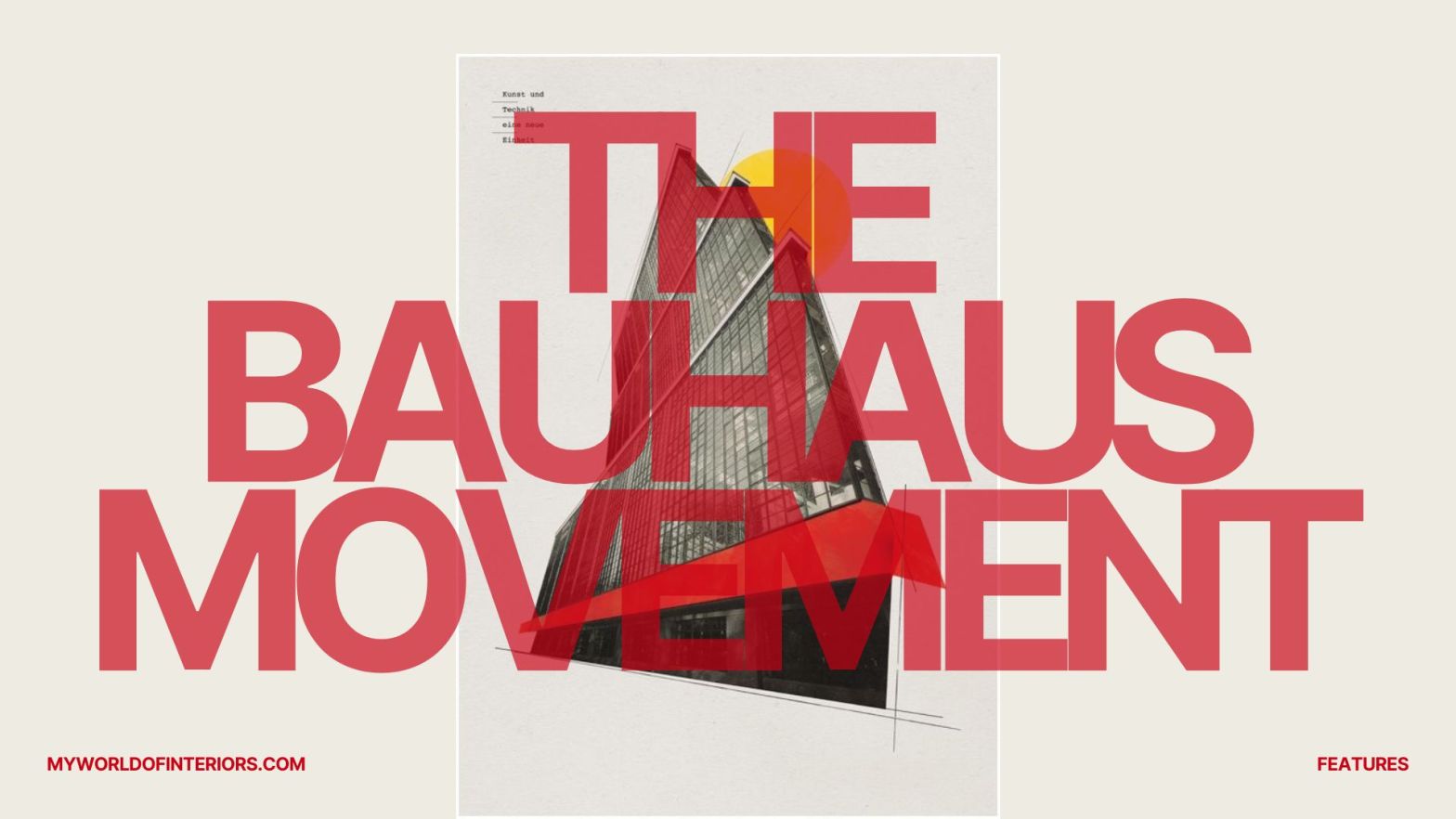
No movement in modern design carries quite the resonance of the Bauhaus. More than a school, it was a revolution in how we think about art, architecture, craft, and everyday life. Founded in 1919 in Weimar, Germany, by architect Walter Gropius, the Bauhaus lasted only fourteen years before the Nazis closed it in 1933. Yet in that brief span, it redefined the relationship between form and function, collapsing barriers between fine art and applied craft, and shaping the modern world in ways we still inhabit.
The Birth of a Vision
The post–World War I moment was a crucible of radical ideas. Gropius envisioned a school where artists, designers, and craftsmen would work together to build a new world. His 1919 manifesto proclaimed the unification of all creative arts in the service of architecture — a “cathedral of the future.”
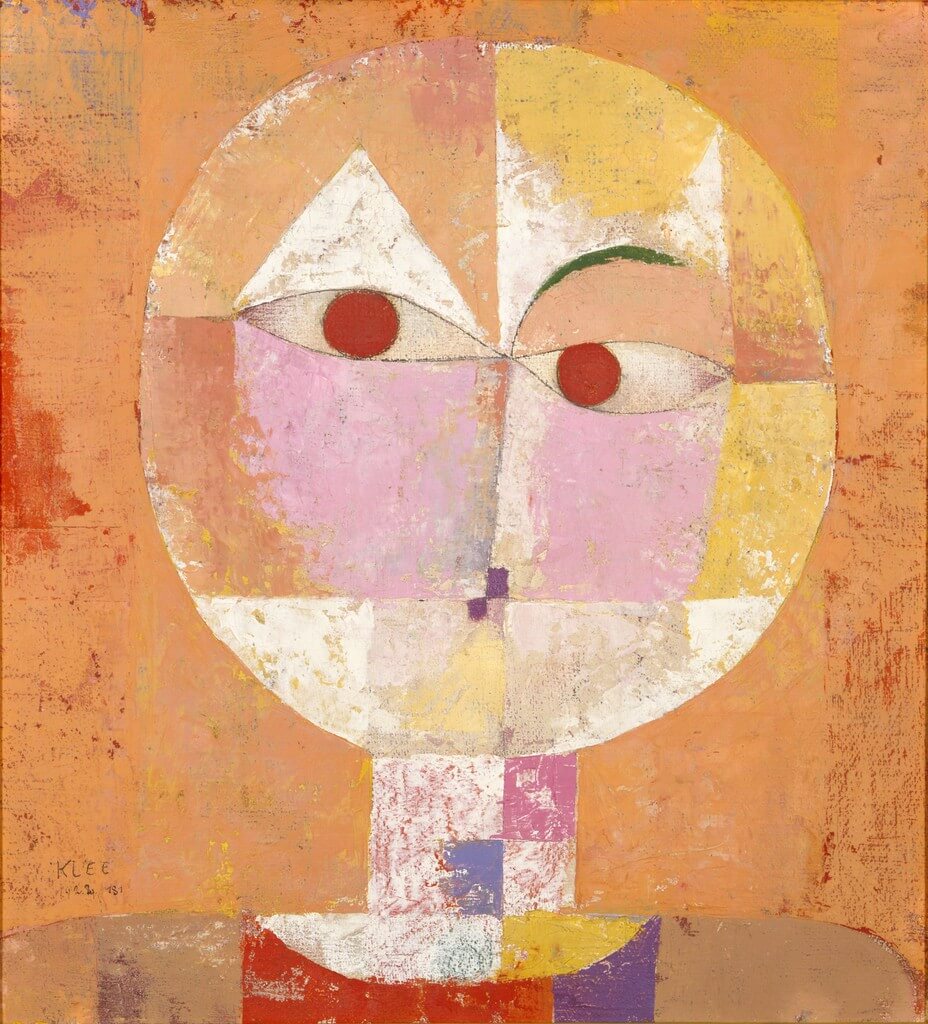
At the Bauhaus, painters like Paul Klee and Wassily Kandinsky taught alongside designers like Marcel Breuer and László Moholy-Nagy. Students learned not only drawing and painting but also carpentry, metalwork, weaving, and stage design. The goal was holistic: to integrate art with daily life, to bring beauty and utility into every object and building.
A New Aesthetic
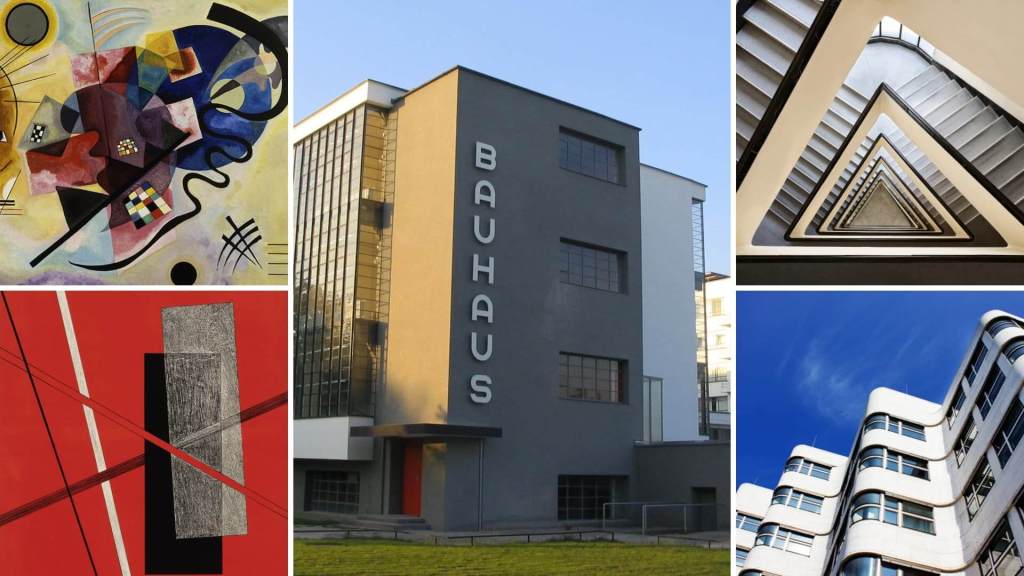
The Bauhaus aesthetic was stripped of ornament, focused on geometry, clarity, and function. Chairs were bent from tubular steel, lamps distilled to pure geometry, buildings reduced to planes of glass and concrete. Yet it was never only about austerity. Color, play, and experimentation thrived in the workshops — from Anni Albers’s vibrant textiles to Oskar Schlemmer’s theatrical costumes.
The guiding principle was simple but radical: form follows function. A teapot, a typeface, a building could be both beautiful and useful, their design informed by clarity and economy rather than decoration.
From Weimar to Dessau to Berlin
The school began in Weimar, moved to Dessau in 1925, and finally to Berlin in 1932. Each phase reflected shifting tensions between progressive ideals and political realities. The Dessau campus, designed by Gropius, remains the Bauhaus’s most iconic architectural statement: glass curtain walls, modular studios, and communal workshops, a physical embodiment of its ethos.
The rise of National Socialism forced the Bauhaus to close in 1933, branded as “degenerate” and “un-German.” Yet its ideas did not vanish. Teachers and students scattered across the globe, carrying Bauhaus principles to London, Tel Aviv, Chicago, and beyond.
Bauhaus in Exile
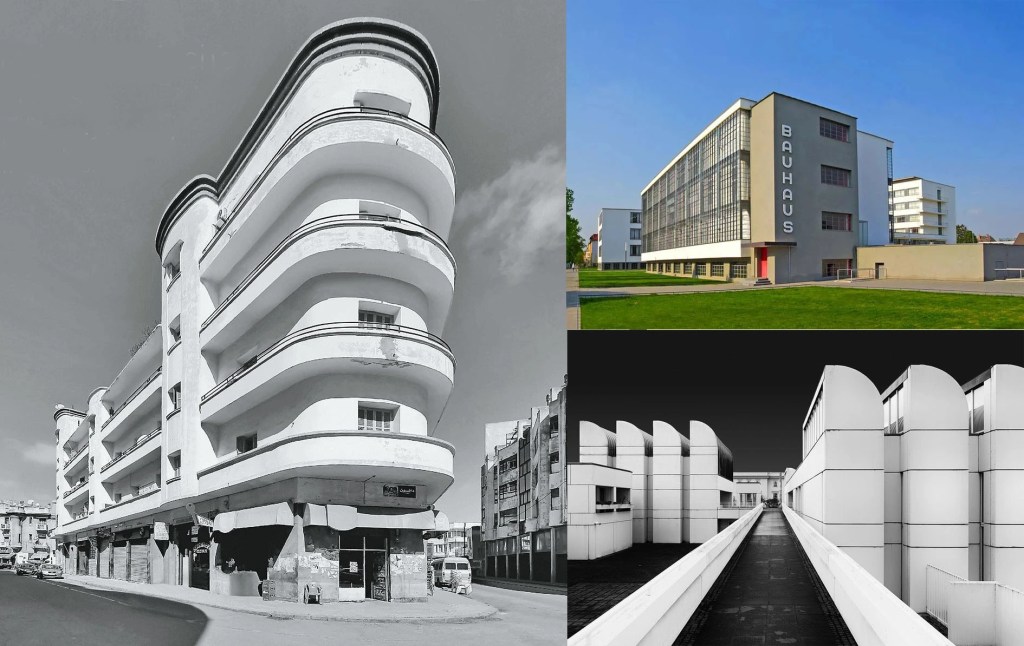
In the United States, Bauhaus figures such as Ludwig Mies van der Rohe and László Moholy-Nagy became central to modern architecture and design. Moholy-Nagy founded the New Bauhaus in Chicago, while Mies designed some of America’s most celebrated modern buildings. In Tel Aviv, émigré architects created the “White City,” a UNESCO-listed ensemble of Bauhaus-inspired housing blocks.
From typography to furniture, photography to stage design, the Bauhaus legacy infiltrated every corner of modern life. Its clean lines and rational forms came to define international modernism — from IKEA flat-packs to Apple’s minimalist aesthetics.
Bauhaus Today
The Bauhaus may have been short-lived, but its reach is enduring. Its centenary in 2019 was celebrated worldwide, with new museums, exhibitions, and publications. Visitors today can walk through Bauhaus buildings, tour workshops, and experience the legacy first-hand.

Key Bauhaus Sites and Institutions
- Bauhaus Dessau Foundation (Dessau, Germany) — The most iconic Bauhaus campus, designed by Gropius. Restored and open to visitors.
🌐 bauhaus-dessau.de - Bauhaus Archive / Museum of Design (Berlin, Germany) — The world’s largest Bauhaus collection, including furniture, prints, and architectural models.
🌐 bauhaus.de - Bauhaus Museum Weimar (Weimar, Germany) — A new museum housing works from the school’s founding years.
🌐 bauhausmuseumweimar.de - The New Bauhaus / Institute of Design (Chicago, USA) — Founded in 1937 by Moholy-Nagy, carrying Bauhaus pedagogy into American design education.
🌐 id.iit.edu - White City (Tel Aviv, Israel) — Over 4,000 Bauhaus-style buildings by émigré architects, now a UNESCO World Heritage Site.
🌐 whc.unesco.org/en/list/1096
The Enduring Ideal
The Bauhaus was never only about style. It was a philosophy: that good design could democratize beauty, that everyday objects deserved as much care as fine art, that the future could be built with reason and imagination in tandem.
A century later, we live in a world it helped imagine: a world of clean lines, modular forms, and design that blends into life itself. The Bauhaus dreamed of nothing less than a new way of living. And, in many ways, it succeeded.
 My World of Interiors