
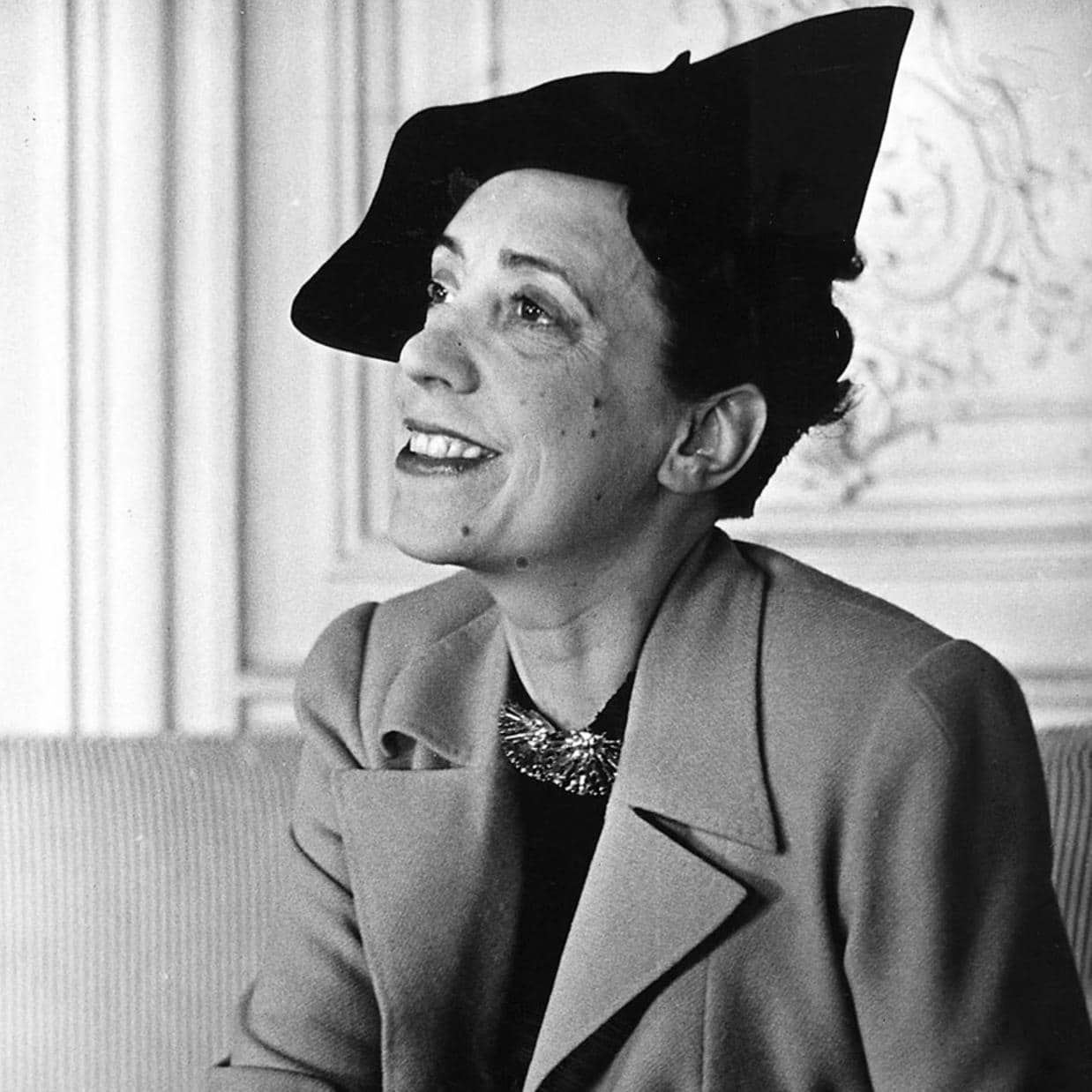
In the history of twentieth-century fashion, few figures embody the dialogue between art and clothing as vividly as Elsa Schiaparelli (1890–1973). A Roman aristocrat turned Parisian visionary, she transformed couture into Surrealist theatre, collaborating with artists like Salvador Dalí, Jean Cocteau, and Man Ray. To wear Schiaparelli was not simply to be dressed — it was to inhabit art itself.
A Roman Beginning
Born into an intellectual Italian family — her father was a scholar, her uncle an astronomer, her cousin a noted Egyptologist — Schiaparelli grew up amid books and ideas rather than silks. After a brief, unconventional marriage to a theosophist, she moved to Paris in the 1920s, just as the avant-garde was reshaping the city.
Shocking Pink and Surrealist Play
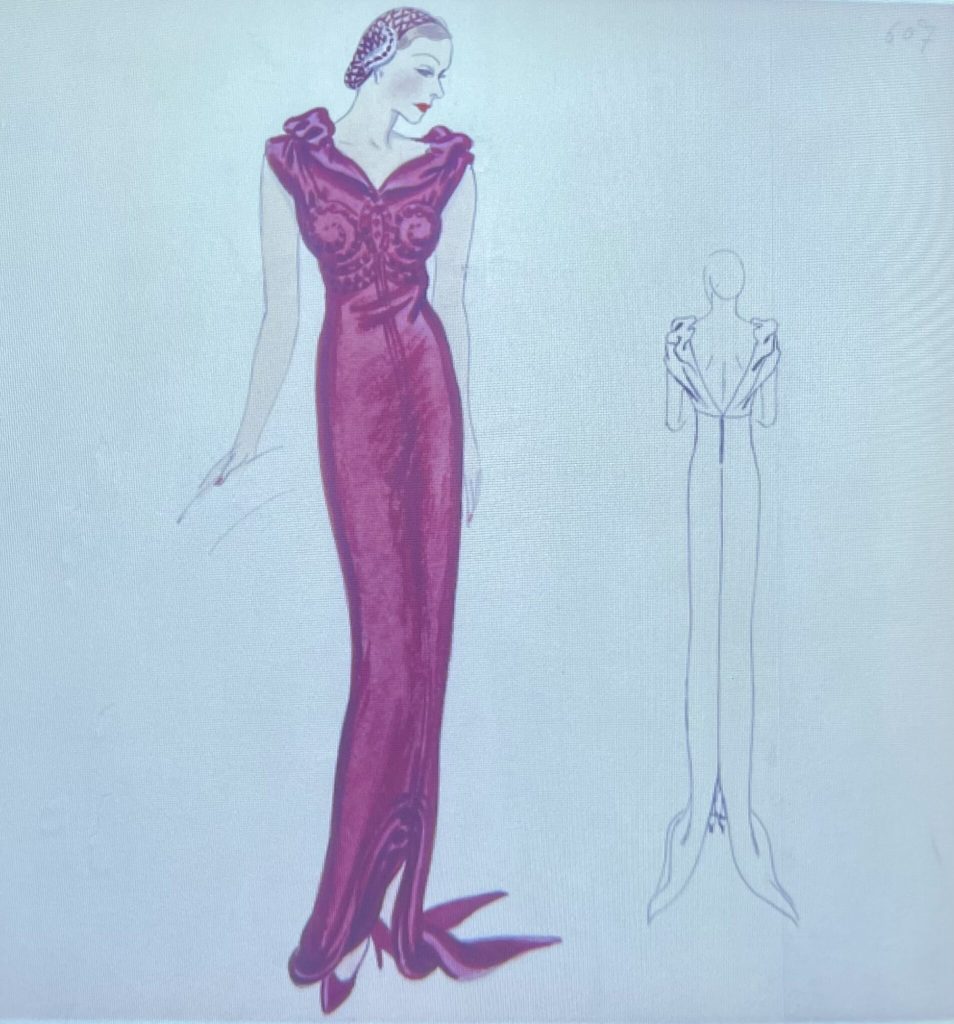
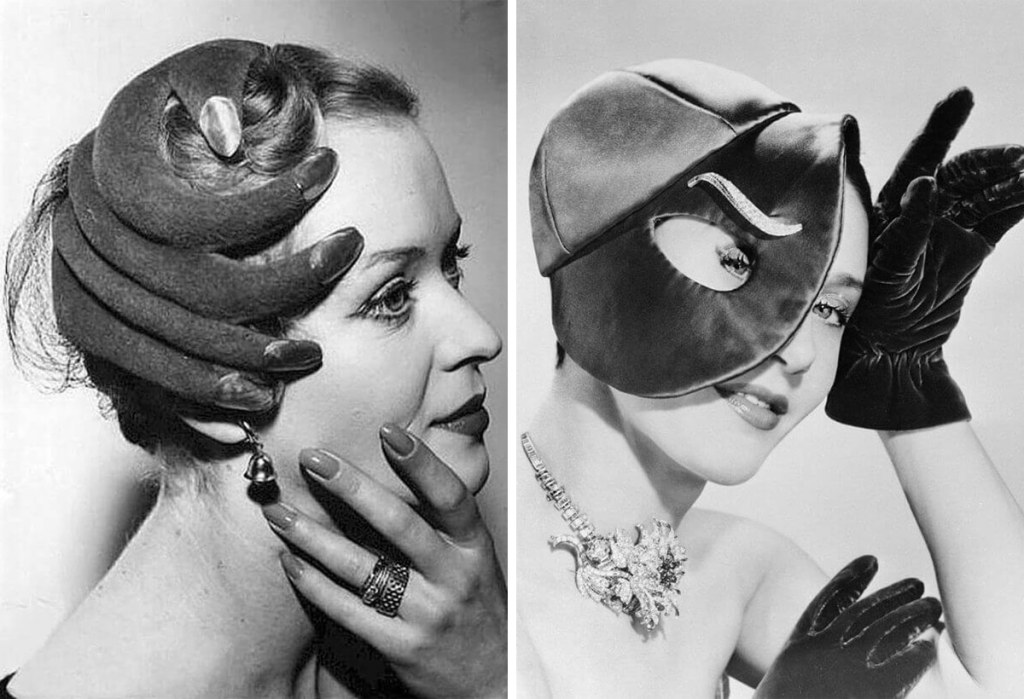
Her earliest designs were sweaters with trompe-l’oeil motifs — knitted bows that fooled the eye. By the 1930s, her maison on Place Vendôme had become a laboratory of Surrealist invention. She launched her signature “shocking pink” — a hue so intense it became synonymous with her name — and created garments that blurred fashion and dream: a shoe-shaped hat designed with Dalí, a skeleton dress with quilted ribs, gloves with red lacquer nails.
Schiaparelli saw clothing as a canvas for wit and provocation. Where Coco Chanel defined chic as understatement, Schiaparelli revelled in excess, colour, and fantasy. Their rivalry — Chanel’s minimalist black versus Schiap’s shocking pink — was itself a clash of ideologies.
Fashion Meets Art
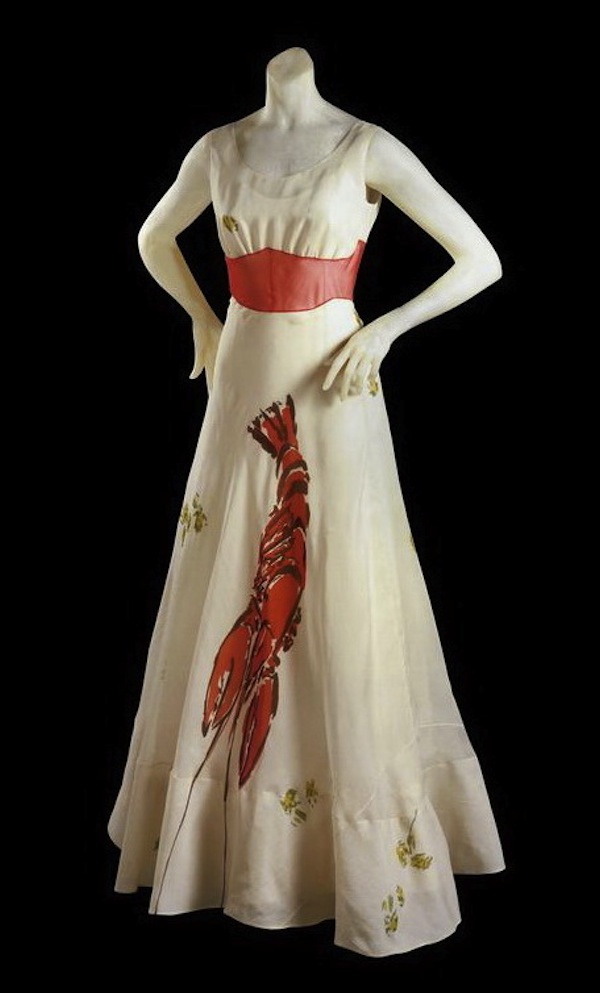
What made Schiaparelli unique was her embrace of collaboration. With Dalí, she produced the Lobster Dress (1937), later immortalised by Wallis Simpson. With Cocteau, she embroidered profiles and hands onto evening coats. With Man Ray, she played with the surreal possibilities of photography. These works blurred the line between gallery and wardrobe, making her one of the first designers to insist that fashion was art.
War and Silence
The outbreak of World War II forced Schiaparelli to close her house in 1939. After the war, she attempted a revival, but by then Christian Dior’s New Look dominated the landscape. Schiaparelli, once the daring futurist, seemed suddenly out of step. In 1954 she closed her couture house, the same year Chanel reopened hers.
Rediscovery and Legacy
Schiaparelli’s work might have faded into history were it not for its profound influence on later designers. Yves Saint Laurent’s witty prints, Jean Paul Gaultier’s theatricality, and Alexander McQueen’s surreal runway shows all carry echoes of her audacity. In 2012, the Metropolitan Museum of Art staged Schiaparelli and Prada: Impossible Conversations, reviving her reputation as Chanel’s true rival in shaping modern fashion. Today, Maison Schiaparelli under Daniel Roseberry continues her legacy, sending sculptural, surreal gowns down the couture runway in Paris.
The Surrealist Spirit
What Schiaparelli understood was that fashion could be playful, unsettling, and profound all at once. She turned dresses into conversations, accessories into jokes, colour into manifesto. In her hands, couture was not a uniform of elegance but a dream performed on the body.
Lifestyle Notes
Museums & Exhibitions
- Musée des Arts Décoratifs, Paris – Holds major Schiaparelli archives and exhibitions.
- The Met Costume Institute, New York – Home of Schiaparelli and Prada: Impossible Conversations (2012).
- Victoria and Albert Museum, London – Collections of Schiaparelli garments and sketches.
Legacy & House Today
- Maison Schiaparelli – Revived couture house under Daniel Roseberry, continuing her Surrealist legacy.
- Christie’s Auctions – Vintage Schiaparelli couture frequently appears in sales.
Reading
- Judith Thurman, Secrets of the Flesh – A critical biography situating Schiaparelli within Surrealism.
- Dilys Blum, Shocking! The Art and Fashion of Elsa Schiaparelli – Definitive exhibition catalogue.
TL;DR
Elsa Schiaparelli was more than a couturière — she was a Surrealist provocateur. Through shocking pink, lobster dresses, and collaborations with Dalí and Cocteau, she redefined fashion as art. Overshadowed for decades by Chanel, she now stands revealed as one of modernity’s most daring designers: playful, shocking, and visionary.
 My World of Interiors