
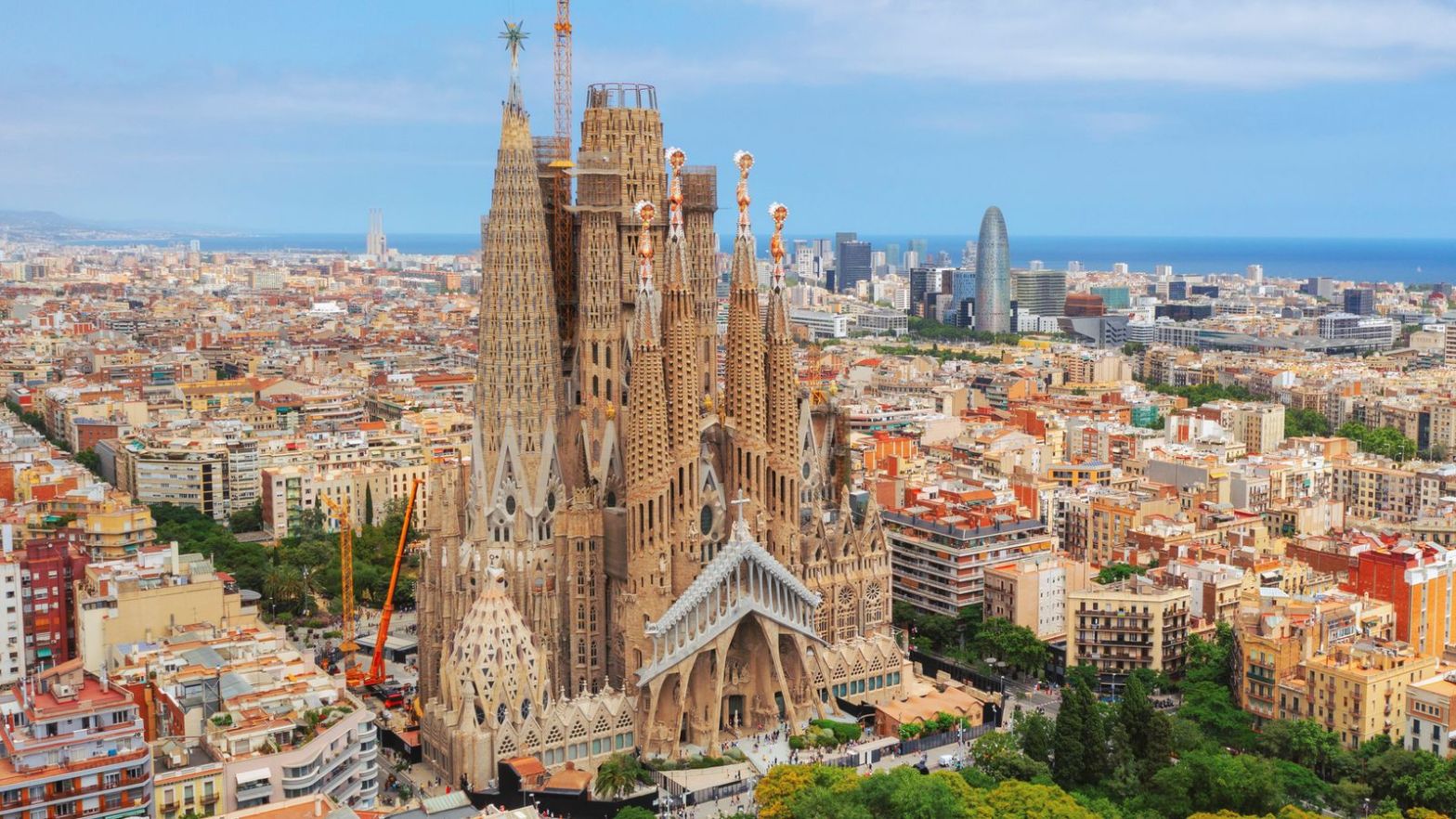
From the curves of Casa Batlló to the soaring spires of the Sagrada Família, Antoni Gaudí transformed Barcelona into a living laboratory of form, faith, and fantasy. His legacy is more than architecture: it is the very identity of a city, where Modernisme blooms like stone made fluid.
A Visionary in Context
Born in 1852 in Reus, Gaudí came of age in a Catalonia brimming with industrial wealth and cultural ambition. Modernisme — the Catalan answer to Art Nouveau — sought to fuse tradition with innovation, craftsmanship with modern materials. Yet Gaudí pushed the movement far beyond ornament. For him, architecture was not static structure but living organism: façades rippling like waves, staircases spiraling like seashells, rooftops breathing like dragon scales.
The Language of Nature
Gaudí believed the natural world held the key to architectural truth. He borrowed the parabolic arch from Gothic cathedrals but softened it into organic flow. Columns echoed tree trunks; mosaics shimmered like reptilian skin. He once said, “Nothing is art if it does not come from nature.” Walking through his buildings feels less like admiring a construction than entering a forest, a grotto, a coral reef made of stone.
Icons of a City
- Casa Vicens (1883–85): Gaudí’s first major commission, a kaleidoscope of Moorish tiles, ironwork, and exotic detail, already signposting his rejection of convention.
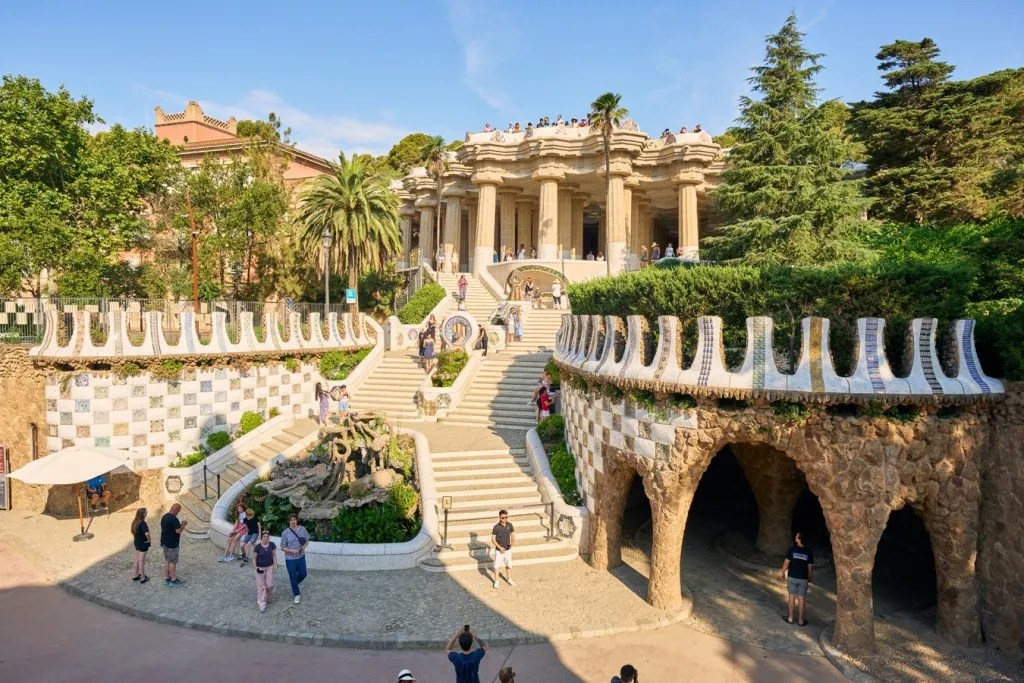
- Park Güell (1900–14): Conceived as a utopian garden city, now one of Barcelona’s most beloved landmarks. Its serpentine benches, tiled in trencadís mosaics, overlook the city in a riot of color and form.
- Casa Batlló (1904–06): A masterclass in transformation, turning a staid 19th-century townhouse into a hallucinatory vision of undulating balconies, skeletal columns, and a roof that shimmers like a dragon’s back.
- La Pedrera (Casa Milà, 1906–12): A fortress of undulating stone, crowned with chimneys that look like medieval warriors, blurring sculpture and structure.
- Sagrada Família (1882–): His unfinished masterpiece, a basilica where Gothic verticality collides with surreal biomorphism. Still under construction more than a century later, it remains Barcelona’s beating heart.
Faith and Modernity
Though Gaudí is often remembered for his eccentric forms, his architecture was deeply spiritual. A devout Catholic, he sought to fuse religious symbolism with natural geometry, creating a theology of design. The Sagrada Família, with its Nativity and Passion façades, remains one of the most ambitious acts of faith in stone — a structure at once medieval in its devotion and radically modern in its execution.
Why It Matters Now
Barcelona without Gaudí would be unthinkable. His works draw millions, reshaping the city’s economy, skyline, and global image. Yet their significance is not only touristic. Gaudí anticipated sustainable design long before the term existed: ventilation systems, use of local materials, integration of architecture with landscape. He married craftsmanship with futurism, embedding Catalan identity into universal form.
A Living Legacy
To wander Barcelona today is to inhabit Gaudí’s imagination. The city hums with his rhythm: tiled benches curve against the sun, wrought-iron gates twist like vines, basilica towers rise like prayers in stone. His vision makes Barcelona not just a destination, but a dreamscape — a place where architecture insists that beauty, faith, and nature belong together.
Gaudí’s Barcelona: Key Dates
- 1852 – Antoni Gaudí is born in Reus, Catalonia.
- 1883 – Takes over the Sagrada Família project.
- 1900–14 – Designs Park Güell for Eusebi Güell.
- 1904–06 – Remodels Casa Batlló on Passeig de Gràcia.
- 1906–12 – Constructs Casa Milà (La Pedrera).
- 1926 – Dies after being struck by a tram; buried at Sagrada Família.
- 1984 – Several Gaudí works designated UNESCO World Heritage Sites.
- 2026 – Anticipated completion of the Sagrada Família, on the centenary of his death.
Where to See Gaudí
- Casa Vicens – Gaudí’s first major work, blending Moorish and Orientalist influences with Modernisme exuberance.
Visit: http://www.casavicens.org - Park Güell – A fantastical garden city filled with mosaics, terraces, and fairytale architecture.
Visit: http://www.parkguell.barcelona - Casa Batlló – The “House of Bones,” a remodel that transformed an ordinary townhouse into one of the most recognizable façades in Barcelona.
Visit: http://www.casabatllo.es - La Pedrera (Casa Milà) – Undulating stone walls and surreal rooftop chimneys make this one of Gaudí’s boldest and most forward-looking works.
Visit: http://www.lapedrera.com - Basílica de la Sagrada Família – The unfinished basilica that remains Gaudí’s masterpiece, blending Gothic tradition with visionary organic forms.
Visit: http://www.sagradafamilia.org
Closing Reflection
Gaudí’s Barcelona is not just a chapter in architectural history; it is a reminder of how imagination can shape identity. His buildings are more than monuments — they are metaphors, teaching us that the boundary between art and life, structure and spirit, is porous. A century after his death, Gaudí’s city continues to breathe with the wonder of possibility — a place where stone itself seems alive.
 My World of Interiors