Tag: The Human Condition
-
The Human Condition According to Gogol
By Bergotte There is a moment in Nikolai Gogol’s story The Nose when a government official named Kovalyov discovers that his nose has left his face, dressed itself in a uniform of higher rank than his own, and is travelling around St Petersburg attending church services and paying social calls. Kovalyov’s attempts to recover his…
-
The Human Condition According to Pushkin
By Bergotte To understand Russian literature is, in the end, to understand Pushkin — which is to say that it cannot be fully done from the outside. Alexander Sergeyevich Pushkin is the writer whom every Russian author who followed him claimed as a father, a standard, and an impossibility: the source from which a whole…
-
The Human Condition According to Tolstoy
By Bergotte Leo Tolstoy is the writer who makes other great writers feel provincial. Not because his books are the longest, though two of them are among the longest ever written, and not because his range is the widest, though it extends from the ballrooms of Moscow to the battlefields of Austerlitz to the peasant…
-
The Human Condition According to Chekhov
By Bergotte After Homer’s wars, Ovid’s metamorphoses, Dante’s cosmology, Shakespeare’s kingdoms, and Dostoevsky’s metaphysical detonations, Anton Chekhov arrives with a doctor’s bag and a short story about a man who cannot sleep. The reduction in scale is not a diminishment. It is an argument. What Chekhov understood — and what makes him the most quietly…
-
The Human Condition According to Dostoevsky
By Bergotte The series has been moving, in its way, toward this. Homer gave us mortality without consolation. Ovid gave us transformation without stability. Dante gave us love as the architecture of the universe. Shakespeare gave us the self as performance, unmoored from any fixed ground. What Dostoevsky gives us is the consequence of all…
-
The Human Condition According to Shakespeare
By Bergotte The series has moved, so far, through poets who held clear philosophical positions: Homer’s unflinching mortality, Ovid’s philosophy of change, Dante’s architecture of love. William Shakespeare holds no clear philosophical position. He holds all of them. He is the writer who most completely refused the consolation of a settled view, who gave the…
-
The Human Condition According to Dante
By Bergotte No work of literature begins more universally than the Divine Comedy. Not with a king or a war or a cosmogony, but with a man — any man, every man — who has lost his way in the middle of his life. Dante Alighieri wrote the greatest poem of the Middle Ages and…
-
The Human Condition According to Ovid
By Bergotte If Homer is the poet of what we lose, Ovid is the poet of what we become. Writing at the height of Roman civilisation and dying at its edge — exiled, cold, forgotten on the shore of the Black Sea — Publius Ovidius Naso produced a body of work that is dazzling, troubling,…
-
The Human Condition According to Homer
By Bergotte There is a moment in the twenty-fourth book of the Iliad that has no real parallel in world literature. Priam, the aged king of Troy, has crossed enemy lines in the dark, slipped past the Greek sentinels, and entered the tent of Achilles — the man who killed his son, who dragged that…
-
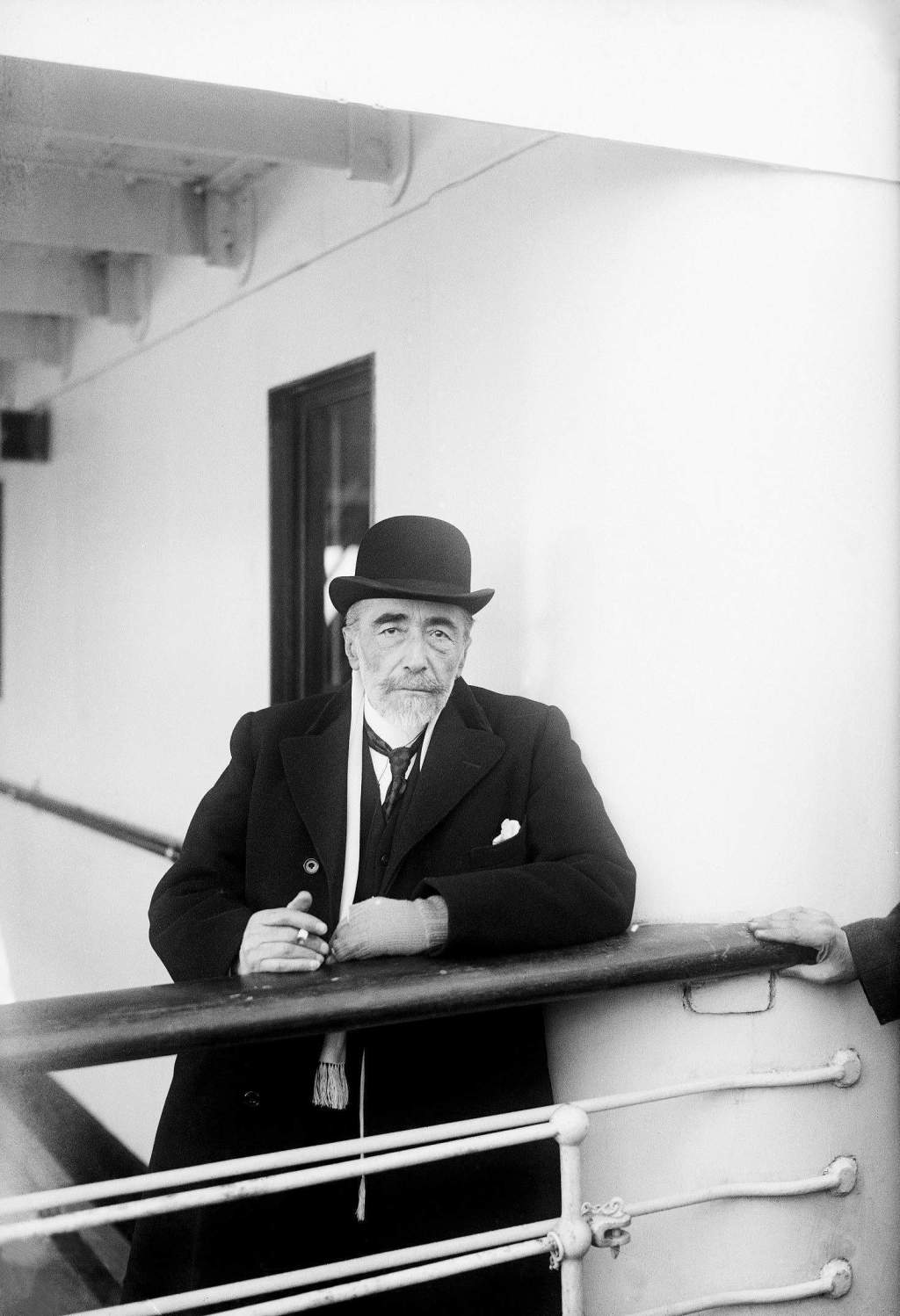
The Human Condition According to Joseph Conrad
By Bergotte Joseph Conrad wrote about the darkness at the centre of things — not as a metaphor, not as a philosophical proposition to be argued and defended, but as a lived reality that his own extraordinary life had given him direct and repeated access to. He was a Polish nobleman who became a British…
