

The Passenger is a weekly dispatch on travel — places, hotels, restaurants, the strange logistics of being elsewhere. It is written by Bergotte.
New Orleans in October, when the heat finally breaks and the most singular city in America remembers what it is
Sometime in October — the exact date varies by year, but the Crescent City knows it when it arrives — the first cool front comes off the Gulf and the temperature drops ten degrees overnight and the whole city exhales. It is not merely a meteorological event. It is, for New Orleans, something closer to a civic resurrection. The subtropical heat that has been pressing down since May, the kind of heat that makes effort feel theoretical, lifts. People emerge onto their porches. The live oak trees along the boulevards do what they do in the autumn light, which is to look more beautiful than they have any reason to be. The restaurants fill up. The second lines start rolling through the streets again on Sunday afternoons. And the city, which has spent the summer in a state of heavy, fragrant dormancy, shakes itself off and begins.
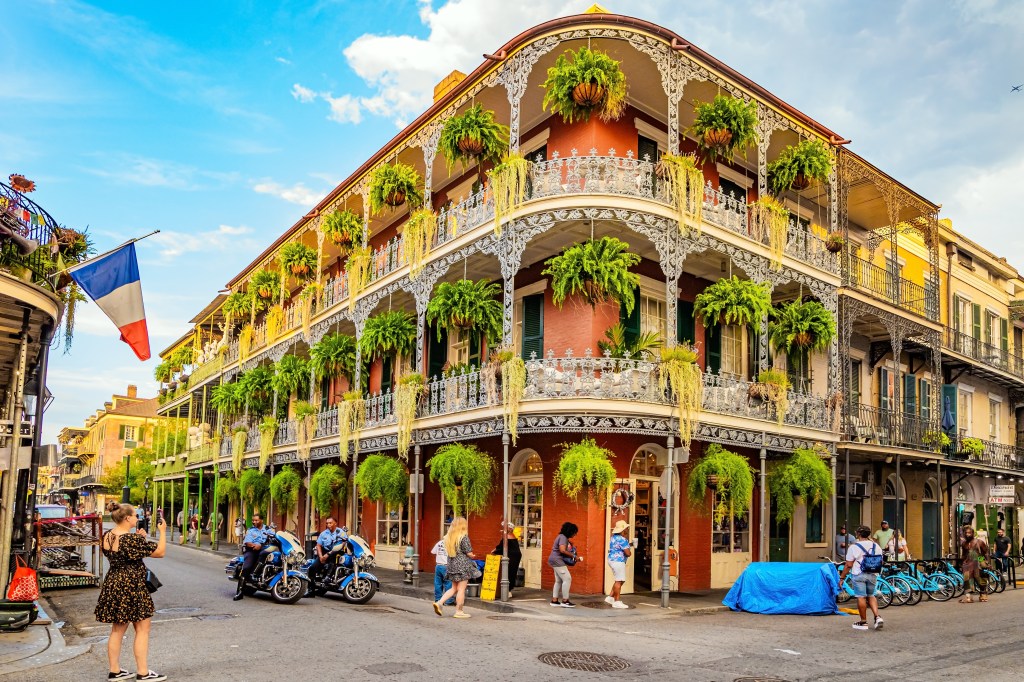
New Orleans is the most singular city in America in the way that the most singular things usually are: by being genuinely unlike anything else. It is not a southern city in the sense that Atlanta is southern. It is not an American city in the sense that Chicago is American. It grew from French and Spanish colonial roots, absorbed the largest free Black population in the antebellum South, absorbed the music and cooking and cosmology of West Africa, absorbed the Caribbean and the Creole tradition and the German and Irish immigrants of the 19th century, and out of all of this produced something that is not reducible to any of its components. The food is a form of cultural memory. The music is a form of spiritual practice. The architecture — the French Quarter’s wrought-iron balconies, the Garden District’s antebellum mansions, the shotgun houses of the Tremé and the Marigny painted in colours that would be impossible anywhere else — is a built argument for a particular way of inhabiting time.
October is when all of this is most accessible. The tourists of Mardi Gras and Jazz Fest — the city’s two great seasonal invasions — are absent. The festival calendar is not empty but human-scaled. The neighbourhoods that most travel writing doesn’t reach — the Marigny, the Bywater, the Tremé — are operating at their own rhythm rather than someone else’s. And the weather, for the first time since April, invites the kind of unhurried walking through which New Orleans is best understood.
The city in neighbourhoods
New Orleans is navigated by neighbourhood rather than by monument, and the serious visitor learns quickly that the French Quarter — beautiful, historic, and permanently given over to the demands of tourism — is the least representative part of the city, despite being the most photographed. Think of the Quarter as the overture: necessary, worth attending to, not the whole performance.
The French Quarter itself repays attention precisely when the tourists thin. In October, the streets of the lower Quarter — Chartres, Decatur, Royal — recover something of their original quality in the early mornings and the late evenings. The architecture is extraordinary: the Spanish colonial buildings with their interior courtyards, the cast-iron galleries that drip with ferns and bougainvillea, the specific compressed beauty of a city that was rebuilt after fire in the 1790s and has not been substantially altered since. Jackson Square at first light, with the St. Louis Cathedral rising behind it and the river visible beyond, is one of those urban compositions that earns the overuse of the word perfect.
Faubourg Marigny, immediately downriver from the Quarter, is where New Orleans becomes a city rather than a spectacle. A neighbourhood of Creole cottages and shotgun houses, painted in the saturated colours of the subtropics, inhabited by artists and musicians and the general population of people who want to live in New Orleans rather than visit it. At its heart is Frenchmen Street, three blocks of live music venues that constitute the most concentrated and authentic music scene in American urban life: on any given night, a dozen different bands on a dozen different stages, the music spilling into the street, the crowd a genuine mix of locals and visitors rather than the tourist-only composition of Bourbon Street. The Spotted Cat, the Snug Harbor, d.b.a., the Jazz Vipers rattling the windows of the Apple Barrel: this is where the music lives when it is not performing for anyone’s benefit but its own.
The Tremé, just north of the Quarter across St. Claude Avenue, is the oldest African American neighbourhood in the United States and the birthplace of jazz — not jazz as a museum concept but jazz as a living practice rooted in the specific cultural synthesis of New Orleans. The second line parades that roll through these streets on Sunday afternoons — brass bands leading processions of dancers through the neighbourhood, the music changing as you follow it, the city briefly organised around pure sound and movement — are one of the most extraordinary public events in the world and they are not marketed. You find them, or you don’t.
The Garden District, uptown on the other side of Canal Street, is a different New Orleans entirely: the antebellum mansions of the American merchant class, built along oak-lined streets in a Greek Revival grandeur that is simultaneously beautiful and historically uncomfortable, which is precisely the correct response to it. Commander’s Palace sits here, and the Garden District is the correct neighbourhood for understanding how the city absorbed the American commercial culture of the 19th century without quite becoming it.
Where to stay: Hotel Peter and Paul
http://www.ash.world/hotels/peter-and-paul
The hotel occupies a complex of 19th-century buildings in the Marigny — a former church, a former school, a former rectory, and a former convent — that have been converted with a meticulousness and an aesthetic intelligence that makes them feel inhabited rather than preserved. The church itself is now the lobby and bar, its original pine floors and painted ceilings and arched windows intact, filled now with the low light and the specific atmosphere of a sacred space that has been persuaded to become something secular without losing its character. The rooms in the various former buildings each have their own quality: the schoolhouse rooms, the convent suites, the rectory spaces that open onto the courtyard where, in 2026, a new pool has arrived — tiled in a Byzantine mosaic of the hotel’s signature alligator, surrounded by cabanas, entirely in keeping with the building’s idiosyncratic grandeur.
The hotel is a few minutes’ walk from Frenchmen Street and the music venues of the Marigny, which is the correct distance — close enough to walk to, far enough to sleep when you need to. The Marigny is the neighbourhood that most travel writing about New Orleans chronically underserves, and Hotel Peter and Paul is the correct base from which to correct that omission.
Hotel Peter and Paul — 2317 Burgundy Street, Faubourg Marigny, New Orleans, LA 70117.
For the mid-range option with the same neighbourhood logic, The Frenchmen Hotel — a converted 19th-century mansion directly on Frenchmen Street — puts you inside the music rather than near it, which is a different proposition and suits a different kind of traveller.
http://www.thefrenchmenhotel.com
Where to eat
New Orleans is, by the consensus of serious food people, one of the three or four greatest food cities in America — and unlike the others, its food culture is entirely local. There is no New Orleans cuisine that exists anywhere else in the same form. It grew from the intersection of French technique, West African ingredients and methods, Spanish influence, Choctaw and Chickasaw foodways, Caribbean flavour profiles, and the specific abundance of the Gulf of Mexico, and the result is a table that is richer, more complex, and more deeply rooted in place than almost any other regional cooking in the country.
In February 2026, the Michelin Guide expanded to Louisiana — a long-overdue recognition that the city’s food deserved the framework the Guide provides. The starred restaurants are worth knowing, but the deeper truth about eating in New Orleans is that the best meals are often not in the starred establishments but in the neighbourhood institutions that have been doing the same things for decades and see no reason to change.
Dooky Chase’s Restaurant in the Tremé is the most important restaurant in New Orleans and one of the most important in America. Founded in 1941 by Emily Chase and her husband Dooky Chase Sr., it became under the direction of their daughter-in-law Leah Chase — the Queen of Creole Cuisine — a gathering place for the lawyers, artists, and civil rights leaders of Black New Orleans, a place where Martin Luther King Jr. ate, where Thurgood Marshall ate, where James Baldwin ate. Leah Chase died in 2019 at the age of 96, having run her kitchen until nearly the end. The restaurant she built — the gumbo z’herbes, the fried chicken, the shrimp Clemenceau, the walls hung with the African American art collection she assembled across sixty years — is a place of genuine historical weight. Eat here with the seriousness it deserves.
http://www.dookychaserestaurant.com
For the most exciting contemporary cooking in the city: Compère Lapin, in the Warehouse District, is the restaurant of chef Nina Compton — St. Lucia-born, James Beard Award-winning, a culinary intelligence that brings Caribbean flavour and classical French and Italian technique to bear on the ingredients of Louisiana in ways that produce dishes entirely unlike anything predating them. The curried goat with sweet potato gnocchi. The crispy snapper collars with fermented chillies. The conch croquettes. It is the most original restaurant in a city that is full of original restaurants, and it has been since it opened in 2015.
For the canonical New Orleans lunch — the white tablecloth institution, the turtle soup, the jazz brunch, the whole performance of a city that takes the midday meal with profound seriousness — Commander’s Palace in the Garden District has been doing this since 1893 and does it still. The Saturday and Sunday jazz brunches, with their live music and their 25-cent martinis and their Bananas Foster prepared tableside, are one of those experiences that should be resisted on principle and surrendered to in practice. Book ahead.
http://www.commanderspalace.com
And for the street food education that New Orleans makes mandatory: Parkway Bakery & Tavern in Mid-City is the address for the po’boy — the city’s sandwich, built on French bread from the local bakeries that produce a loaf unlike anything baked anywhere else, filled with roast beef, fried shrimp, oysters, or the surf and turf combination that is the most ambitious version of the form. A po’boy from Parkway, eaten at the counter or on the steps outside, is one of the more direct encounters with what New Orleans food actually is at its foundation.
http://www.parkwaybakeryandtavern.com
What’s on in October
October is New Orleans’ best cultural month, dense with events that are either free or cheap and almost entirely genuine — the city’s festivals in October are not built for visitors but attended by them, which is a meaningful distinction.
The Crescent City Blues & BBQ Festival returns to Lafayette Square in mid-October — three days of blues and R&B on outdoor stages, free admission, organised by the New Orleans Jazz & Heritage Foundation that also runs Jazz Fest. The musicians are largely from southern Louisiana and Mississippi: the specific regional tradition of blues that runs from the Mississippi Delta through the Gulf Coast and into the streets of New Orleans. Free, outdoor, the kind of event that a city with this relationship to its own music can produce without apparent effort.
http://www.jazzandheritage.org
The New Orleans Film Festival runs in the final weeks of October — a curated programme of international and American independent cinema that has been operating since 1989 and reflects the city’s specific literary and creative culture. The venues are the neighbourhood cinemas of Uptown and the Marigny rather than multiplexes, and the atmosphere is that of a city taking its own cultural life seriously rather than presenting it for external consumption.
http://www.neworleansfilmsociety.org
On the Saturday before Halloween — October 25th this year — the Krewe of BOO! parade rolls through the Marigny and into the lower French Quarter: a free, public Halloween parade in the New Orleans tradition of the krewe parade, with floats and throws and the specific collective joy of a city that regards costuming as a civic virtue. Halloween in New Orleans is Mardi Gras’s October cousin, and the French Quarter and Marigny on the weekend before the 31st have the kind of atmosphere that makes you understand why people choose to live somewhere rather than merely visit it.
The Tremé Fall Fest, also in October, is the neighbourhood’s own celebration — local brass bands, second lines, the food and culture of the oldest Black neighbourhood in America, in the streets where jazz was born. It is one of those events where the correct response to being a visitor is to arrive and follow rather than to plan.
The music, properly understood
New Orleans invented jazz. This sentence has been said so many times that it has ceased to mean anything, which is an argument for saying it differently. New Orleans created the conditions — the specific cultural mixture of African rhythmic tradition, French and Spanish musical inheritance, the instruments left behind by free men of colour who had been trained in European classical music, the social function of the second line parade, the specific permission of a city that has always been more interested in the quality of its pleasures than in the opinions of the rest of the country — in which jazz became possible. It is the only city in the world that has ever done this. Every other great music city — Nashville, Chicago, Memphis, Detroit, New York — has produced something extraordinary, but none of them produced something that did not exist before them. New Orleans is different.
The correct way to experience this is not the Preservation Hall, which is a museum of the tradition, nor the Bourbon Street clubs, which are performances of it. It is Frenchmen Street on a Tuesday at midnight, when the Spotted Cat is full and the music is doing what the music does when no one is watching it for the purposes of tourism. It is the Tremé brass bands in the streets on a Sunday afternoon. It is the specific sound of a city that has never stopped playing.
The essentials
Stay
Hotel Peter and Paul — 2317 Burgundy Street, Faubourg Marigny, New Orleans, LA 70117. Converted church, school and convent; new pool; the correct Marigny address.
http://www.ash.world/hotels/peter-and-paul
The Frenchmen Hotel — 417 Frenchmen Street, Faubourg Marigny, New Orleans, LA 70116. Mid-range; directly on Frenchmen Street; live music at your door.
http://www.thefrenchmenhotel.com
Eat
Dooky Chase’s Restaurant — 2301 Orleans Avenue, Tremé, New Orleans, LA 70119. The most important restaurant in the city. Lunch and dinner.
http://www.dookychaserestaurant.com
Compère Lapin — 535 Tchoupitoulas Street, Warehouse District, New Orleans, LA 70130. Nina Compton; James Beard; Caribbean-Creole. Book ahead.
http://www.comperelapin.com
Commander’s Palace — 1403 Washington Avenue, Garden District, New Orleans, LA 70130. The white tablecloth institution. Jazz brunch Saturday and Sunday.
http://www.commanderspalace.com
Parkway Bakery & Tavern — 538 Hagan Avenue, Mid-City, New Orleans, LA 70119. The definitive po’boy. No reservations.
http://www.parkwaybakeryandtavern.com
Hear
Frenchmen Street — Faubourg Marigny. Any night. Follow the sound. The Spotted Cat, Snug Harbor, d.b.a.
Second line parades — Tremé, Sunday afternoons. Check local listings: http://www.wwoz.org
October events
Crescent City Blues & BBQ Festival — Lafayette Square, mid-October. Free admission.
http://www.jazzandheritage.org
New Orleans Film Festival — late October, neighbourhood cinemas citywide.
http://www.neworleansfilmsociety.org
Krewe of BOO! Halloween parade — Saturday 25 October 2026. Free. Marigny into the French Quarter.
Tremé Fall Fest — October, Tremé neighbourhood. Follow local listings.
Do not miss
Jackson Square, French Quarter — first light, before the crowds.
The Backstreet Cultural Museum — 1116 Henriette Delille Street, Tremé. The definitive account of second line, Mardi Gras Indians, and New Orleans Black cultural tradition. http://www.backstreetmuseum.org
WWOZ 90.7 FM — New Orleans’ community radio station. The city’s musical conscience. Stream at http://www.wwoz.org
Fly into
Louis Armstrong New Orleans International Airport (MSY) — 15 miles west of the city centre. Taxi or rideshare to the Marigny takes approximately 25 minutes.
The Passenger publishes every Friday.
— Bergotte
Discover more from My World of Interiors
Subscribe to get the latest posts sent to your email.

