
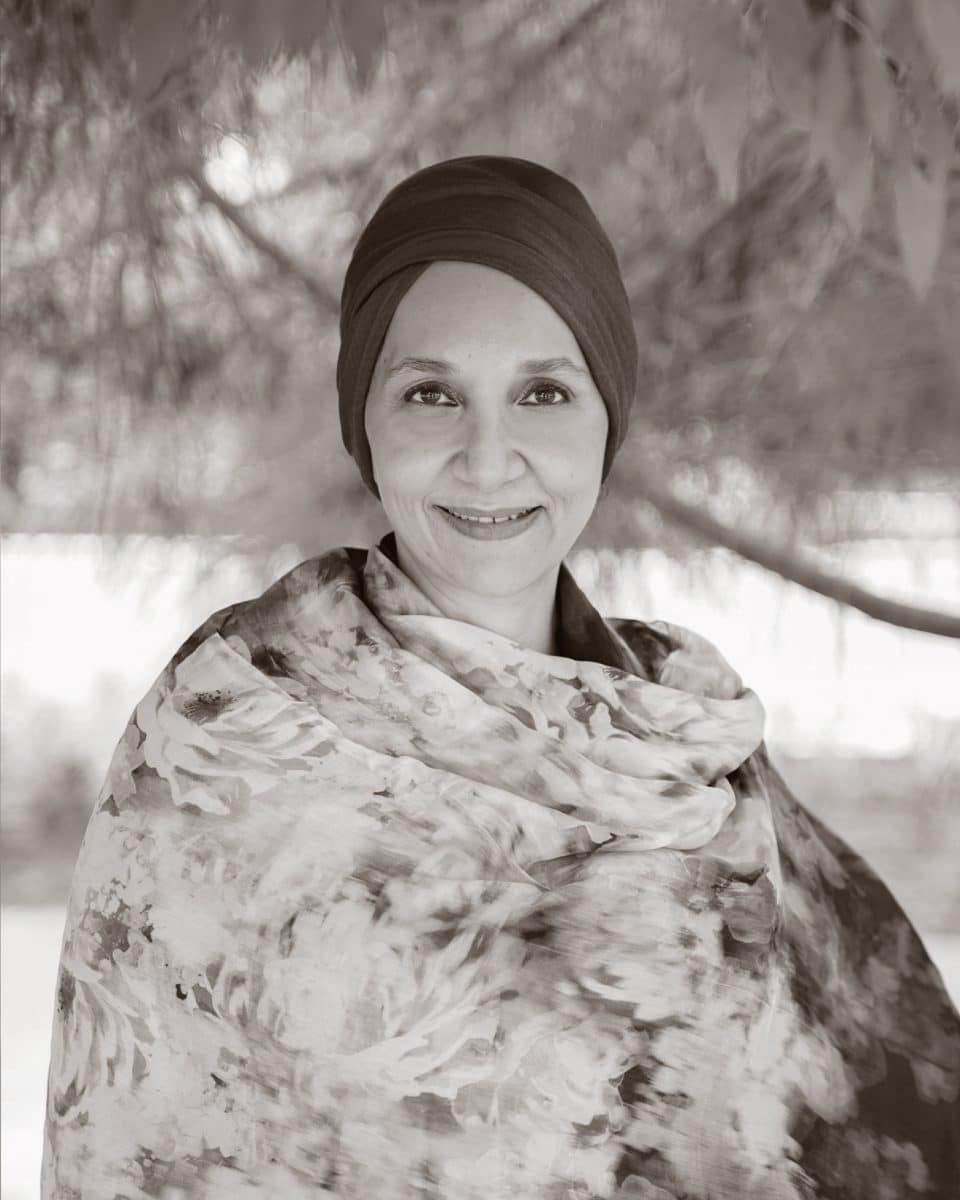
The world’s largest displacement crisis has scattered Sudanese artists across three continents — and, from Cairo to Nairobi to Aberdeen, they have kept working
Sudan rarely leads a news cycle, which is itself part of the story. Since war broke out between the Sudanese Armed Forces and the paramilitary Rapid Support Forces on 15 April 2023, the country has produced the largest displacement crisis on earth — more than ten million people forced from their homes, famine conditions confirmed in multiple regions, and a capital, Khartoum, fought over so thoroughly that its museums, galleries and archives were looted alongside its banks and ministries. And yet, almost in spite of the world’s inattention, the past three years have produced a PEN Pinter Prize, a Caine Prize legacy stretching back decades, a Venice-premiered documentary, and one of the more remarkable stories in contemporary art of a national canon being rebuilt, deliberately and in public, from exile.
This dispatch follows that culture across the cities where it is currently being made — Khartoum itself, still contested and half-emptied; Cairo and Nairobi, now home to hundreds of thousands of displaced Sudanese including a disproportionate number of the country’s working artists; and a longer-established diaspora in Britain, the Gulf and North America. It is, more than any place covered in this series so far, a culture whose primary current address is exile.
Cinema: finishing the film the war interrupted
Sudanese cinema’s clearest recent triumph carries the war inside its own production history. Khartoum, a documentary blending the work of four emerging Sudanese filmmakers, was conceived before the war as a cinematic portrait of the capital; when fighting broke out in April 2023, its directors — including Ibrahim Snoopy Ibrahim and Rawia Alhag — were scattered, along with their footage, and eventually regrouped in Nairobi to finish the film they had started in a city that, by the time they completed it, no longer looked anything like the one they had set out to film. The project’s arc — interrupted, displaced, finished anyway — has become something close to a template for Sudanese filmmaking of the past three years.
A second landmark documentary, Sudan, Remember Us, directed by French-Tunisian filmmaker Hind Meddeb, chronicles the defiance of young Sudanese activists in Khartoum during the 2018–19 revolution that toppled dictator Omar al-Bashir, and the military crackdown that followed. It premiered at the Venice International Film Festival in 2024, arriving as a document of a hope that, by the time audiences watched it, had already curdled into the current war — a whiplash the film’s own reception has had to absorb, screening as recent history and current tragedy simultaneously.
That the Sudanese film industry can produce work of this calibre at all owes something to how thoroughly its creative infrastructure has relocated. Directors, editors and cinematographers now work out of Nairobi and Cairo studios, financed through a patchwork of European co-production funds, festival grants and diaspora crowdfunding — a pattern that echoes, though under harsher conditions, the institutional workarounds already familiar from Lebanese and Palestinian filmmaking covered earlier in this series.
Visual art and heritage: a canon rebuilt from exile, a museum stripped bare
No discipline carries Sudan’s modern cultural prestige more visibly than painting, and none has been more violently disrupted by the war.
Sudan’s signature contribution to twentieth-century African art is the Khartoum School, a modernist movement founded in the mid-1950s by artists — Ibrahim El-Salahi, Ahmed Shibrain, Osman Waqialla, Kamala Ibrahim Ishaq among them — who had studied in London and returned home determined to fuse Arabic calligraphy, Islamic motifs and African sculptural forms into a genuinely new visual language, one deliberately built to answer neither Western modernism nor tribal tradition alone but something distinctly Sudanese. El-Salahi, still the school’s best-known figure, was imprisoned by the Sudanese government in the 1970s on suspicion of anti-government activity and went into self-imposed exile in Britain, where a major 2013 Tate Modern retrospective introduced his work to an international audience decades after it was made — a delay that has become a recurring pattern in how Sudanese modernism reaches the wider world.
The 2018–19 revolution briefly reversed that pattern of delay and exile. With Bashir’s thirty-year Islamist government gone, dozens of new galleries opened in Khartoum within months, and street artists who had painted protest murals across the capital during the sit-ins found themselves, briefly, working in the open rather than in hiding. That opening lasted barely four years. When war broke out in April 2023, curator Rahiem Shadad, who ran Khartoum’s Downtown Gallery, fled first to Cairo and then to Nairobi, where he founded The Rest, a residency programme that evacuated artists from Sudan’s conflict zones and gave them studio space, stipends and psychological support while they resumed working; its first cohort of twenty-one participants included painters, photographers, musicians, a fashion designer and a novelist. The residency closed in December 2024 amid a funding shortfall, but not before helping incubate a body of diaspora work — including Waleed Mohammed’s reworkings of archival Sudanese studio portraits — that has since travelled to group shows in Cologne, Lisbon, Madrid and Doha under the banner Disturbance in the Nile and its sequel projects.
Perhaps the most quietly radical response to the war has been archival rather than painterly. In February 2025, a collective led by artist Reem Aljeally launched the Sudan Art Archive, a project to digitally preserve Sudanese visual art produced since 1975, built specifically on the premise that the Sudanese state can no longer be trusted to safeguard the nation’s own cultural memory. One contributing artist, Yasmin Abdullah, now displaced to Muscat, has described losing more than forty of her own works with not even a single surviving photograph — a loss that reshaped, in her words, how she now thinks about documentation itself. The Sudan Art Archive is explicit that it is not simply digitising for storage’s sake; its organisers describe it as an instrument of resistance, an attempt to let Sudanese artists control the narrative of their own canon rather than cede it, again, to institutions elsewhere.
That mistrust of institutional safekeeping has been borne out catastrophically at the Sudan National Museum in Khartoum, which before the war held the world’s most comprehensive collection of Nubian antiquities — more than 150,000 objects spanning the Stone Age through the Kushite, Christian and Islamic periods, including mummies dating to roughly 2500 BCE. RSF forces occupied the museum from June 2023 until the Sudanese army retook Khartoum in March 2025; when curators finally regained access, more than sixty percent of the museum’s holdings had been looted, according to Ghalia Jar Al-Nabi, director of Sudan’s General Authority for Antiquities and Museums, with looters reportedly prioritising gold and jewellery from the ancient kingdoms of Napata and Meroe. Satellite imagery had shown trucks loaded with artefacts leaving the museum as early as 2024; stolen pieces later surfaced for sale on eBay for as little as a few dollars. Regional museums fared no better — the Nyala and Al-Geneina museums in Darfur were looted and destroyed, and the Sultan Ali Dinar Museum in El Fasher burned in a January 2025 bombardment. In December 2024, Sudanese heritage professionals established Blue Shield Sudan, the country’s first nationally coordinated wartime cultural-protection body, whose volunteers have used mobile phones and shared cloud drives to geotag looted storerooms and photograph shattered display cases in real time, racing to document destruction as it happens rather than after the fact.
Literature: a war that changed what “Sudanese fiction” reaches English readers
Sudanese literature’s most prominent living figure, Leila Aboulela, was awarded the 2025 PEN Pinter Prize by English PEN, capping a career that began in Aberdeen, Scotland, where she moved in her twenties and started writing out of what she has described as homesickness rather than ambition. Her 2023 novel River Spirit, set during the nineteenth-century Mahdist War, arrived in bookshops less than a month before the current war began — a coincidence of timing that has given the book, in her own account, an unplanned second life as a lens for understanding the present crisis through the last one. Remarkably, an Arabic translation of River Spirit was published in 2024 by Dar Al Musawarat, a Khartoum-based publishing house that kept working through the war; Aboulela has noted that the same publisher’s bookshop has since reopened as the city has slowly come back to life, one of the small, deliberate acts of normalcy Sudanese cultural institutions have staged in the war’s aftermath.
Sudan’s literary prominence on the international stage is not new — Sudanese writers have won the Caine Prize for African Writing four times since its founding, including Aboulela herself in 2000 and Bushra al-Fadil in 2017 — but the war has reshaped which stories reach English-language readers and why. A recent survey of Sudanese fiction in translation notes that South Sudanese writer Stella Gaitano’s Edo’s Souls, translated from Arabic, became the first South Sudanese novel to win the English PEN Translates Award in 2020, its surreal, unsparing prose tracing loss and moral compromise across the decades that led to South Sudan’s 2011 secession — a reminder that “Sudanese literature,” like Sudanese culture more broadly, properly includes a literary tradition on both sides of a border drawn only fifteen years ago. Poet Safia Elhillo, writing from the diaspora, has continued to build a body of work — most recently Girls That Never Die — that reworks the epic poetic form to address the constraints placed on Muslim girlhood, drawing on Sudanese oral and historical tradition even while writing primarily for American audiences. Aboulela herself has pointed to something that may be the war’s most quietly remarkable literary fact: several Sudanese writers chose to remain in the country specifically to protect their personal libraries, are keeping memoirs of life during the war, and are, in her words, providing what will eventually be an essential primary record of what daily life under siege actually looked like — testimony being written, deliberately, for a readership that does not yet exist.
Music: wedding singers as an act of resistance
If any single image captures Sudanese culture’s stance toward this war, it may be a wedding hall in northern Cairo, drums and flutes playing, fireworks going off overhead — for some of the guests, the same sharp bangs that once meant shelling. In diaspora communities across Egypt, wedding singers who lost their livelihoods when public celebration in Sudan effectively ended have rebuilt careers performing for displaced compatriots, treating the deliberate staging of joy — however momentary, however haunted — as a form of resistance in its own right. According to the African Centre for Justice and Peace Studies, more than fifty-five Sudanese artists were killed in the first eighteen months of the war; musicians who survived and fled have described struggling simply to find inspiration in exile, even as performing has become, for many, one of the only economically viable ways to keep working at all.
Egypt has become the primary hub of that displaced music scene, home to well over a million Sudanese since the war began, with Cairo’s relatively cheap studio and rental costs making it easier for musicians to record than it had become, even before the war, in an increasingly expensive Khartoum. Institutions have followed the musicians into exile and, in at least one case, back out again: Sudan’s Musicians’ Union reopened in Khartoum in March 2025 after the Sudanese army recaptured the capital from the RSF, a development that displaced performers in Cairo have described less as a practical development than as an emotional one — proof that the possibility of eventual return has not entirely closed. Heritage preservation has taken a more literal, physical form as well: scholar and instrument collector Dafallah Al-Haj lost his entire archive of nearly two hundred original Sudanese instruments, along with dozens he had built himself, when his research centre burned in the war’s first weeks; from Cairo, he has spent the time since teaching, performing with a reconstituted version of his folkloric ensemble, and — eight months into his exile — quietly beginning the work of rebuilding what was lost, instrument by instrument.
The pattern underneath
Set against the other conflicts surveyed in this series, Sudan’s cultural response has a specific, recognisable shape: an entire creative infrastructure — galleries, film crews, publishing houses, musicians’ unions — picked up and relocated wholesale, primarily to Cairo and Nairobi, in a process closer to the wartime evacuation of an institution than to the slower, more diffuse diaspora-building that has shaped Palestinian or Lebanese culture over decades. Where Lebanon’s cultural institutions have learned, across repeated disasters, to rebuild in place, and where Palestinian cultural production has built a genuinely rooted, multi-generational diaspora over seventy-plus years, Sudan’s displacement is still acute, recent and largely improvised — residencies opening and then closing for lack of funds within a single calendar year, archives built by volunteers with borrowed cloud storage rather than institutional backing, a national museum’s collection tracked, after the fact, through eBay listings.
What has not been improvised is the underlying instinct. Confronted with a state unable, and in the RSF’s case actively unwilling, to protect Sudan’s cultural memory, Sudanese artists, curators and archivists have simply assumed that responsibility themselves — not as a metaphor, but as a literal division of labour, with named individuals in named cities cataloguing named losses, one photograph, one recovered instrument, one reopened bookshop at a time. It is a culture that has had shockingly little international attention paid to it relative to the scale of what has happened, a disparity more than one Sudanese cultural worker quoted above has noted explicitly and without much bitterness, simply as a fact to be worked around rather than waited out. The work, in the meantime, has not stopped.
Sources
Cinema
- Sudanese music in Cairo: Finding joy in the face of war — Qantara.de
- Exile and Hope: Sudanese creatives and the question of home — The Markaz Review
- Sudan: Artists in exile — The Continent
Visual art and heritage
- Khartoum School — Tate
- Visual arts of Sudan — Wikipedia
- Navigating Displacement: Mapping Exile and Memory Along Artistic Routes — NO NIIN Magazine
- Sudan Art Archive Aims to Reclaim a Canon from Afar — Contemporary And
- Over Half of the Sudan National Museum’s Holdings Looted Within Two Years — Artforum
- Looting and Destruction of Sudan National Museum — Cultural Property News
- In the Crosshairs: Rescuing Sudan’s Cultural Heritage Amid Crisis — International Institute for Conservation
Literature
- Leila Aboulela — Wikipedia
- Reflections on Gaza, Sudan, and Islam with Leila Aboulela — The New Arab
- Six novels that tell Sudan’s story across generations — The National
Music
- New paths for Sudanese artists in Cairo’s evolving music scene — The New Arab
- Sudanese music in Cairo: Finding joy in the face of war — Qantara.de
Discover more from My World of Interiors
Subscribe to get the latest posts sent to your email.

