
A country that keeps rebuilding its culture before it finishes rebuilding anything else
There is a version of Beirut that exists mostly in retrospect — golden light, café terraces, a cosmopolitan capital briefly nicknamed the Switzerland of the Middle East. That version keeps reappearing in the culture discussed below, not as nostalgia exactly, but as a kind of load-bearing myth: something artists, designers and musicians build against, argue with, and occasionally try to resurrect in miniature. The actual Lebanon of 2026 is harder won. It is a country still repairing a capital gutted by the August 2020 port explosion, still absorbing a currency collapse that erased most of a middle class’s savings, still recovering from the 2024 war between Israel and Hezbollah, and now living through the aftershocks of the wider regional escalation that began in February 2026, when American and Israeli strikes on Iran rippled outward into Lebanese, Syrian, Iraqi and Jordanian territory.
And yet — this is the part that keeps surprising people who only follow Lebanon through its crises — the culture has not stopped. If anything, it has become unusually productive precisely because so much of it now has to be rebuilt from the studio up: galleries reconstructing their own walls, a national museum still assembling a collection from palace attics, a generation of directors and designers who have simply never known a version of their country that wasn’t mid-collapse. This is the second dispatch in an ongoing series reading contemporary culture city by city, country by country. Lebanon offers a different case study from where we started: not a culture negotiating with a single, centralized censor, but one negotiating with entropy itself — sectarian gridlock, financial ruin, repeated bombardment — and finding, in the negotiation, an unusually wide range of forms: film, art, literature, fashion, music and architecture that all, in their different ways, keep circling back to the same question of what gets rebuilt, and how, and for whom.
Cinema: the Oscar entry and the disaster documentary
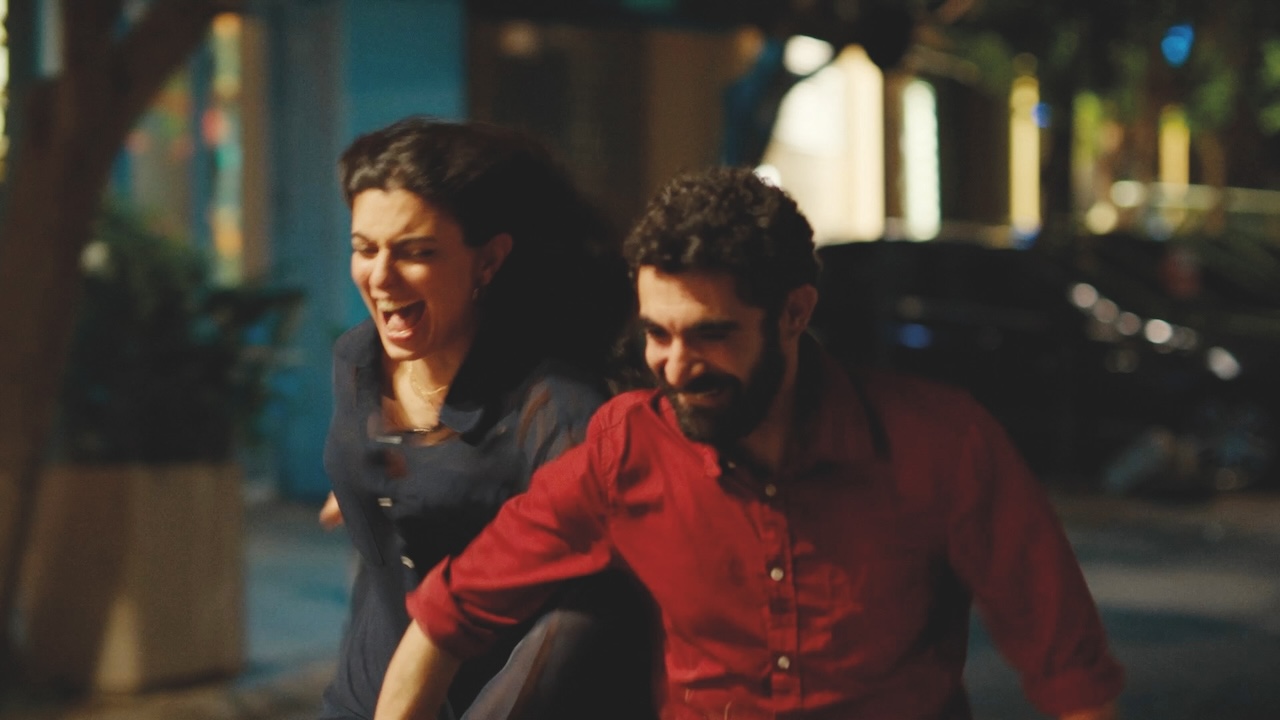
Lebanese cinema’s biggest recent moment arrived, fittingly, as a love story staged against the country’s entire modern history. Cyril Aris’s A Sad and Beautiful World, Lebanon’s candidate for the 2026 Oscars, follows two childhood sweethearts whose on-and-off relationship tracks the country’s decades of tumult; it premiered in Venice’s Giornate degli Autori sidebar, won the festival’s audience-voted prize, and has since toured the Marrakech and Red Sea festivals. Its co-lead, Mounia Akl, is herself representative of a wider shift in Lebanese filmmaking — she is best known internationally as the director of Costa Brava, Lebanon, and has increasingly moved between directing and acting, treatment and performance, in a film industry too small and too underfunded to let its most talented people specialize.
That underfunding is the industry’s defining condition, and also, oddly, its creative engine. Fondation Liban Cinéma, the country’s main development body for emerging filmmakers, runs its funding and residency programs almost entirely through partnerships with foreign institutions — a two-month residency at Paris’s Cité des Arts now in its tenth consecutive year, a three-month Berlin residency with Medienboard Berlin-Brandenburg now in its seventh, and a joint AI-in-film project developed with Film London. Two of the resulting features, Stage of Flesh and Doula, are Lebanese-UK co-productions that premiered at the London Short Film Festival — a small but telling sign that Lebanese cinema’s institutional home has partly relocated abroad, even as its subject matter stays fixed on Beirut.
Domestically, the Beirut Film Society has spent the past few years building an infrastructure that didn’t previously exist: its Beirut Shorts festival became the first Oscar-qualifying festival in Lebanon and one of only a handful in the Arab world, meaning a short film that wins in one of its three competition categories now earns automatic consideration at the Academy Awards — a genuinely significant piece of soft-power infrastructure for a national cinema that has historically had to fight for international visibility one festival submission at a time. The Society’s own funding program, now in its second edition, exists explicitly to support emerging Lebanese voices whose films might otherwise never get made.
Documentary has become the form best suited to metabolizing the country’s compressed, repetitive trauma. A recent feature screened at BAM’s Contemporary Arab Cinema series — described by programmers as a love letter to Beirut — assembles seventy years of Lebanese audiovisual memory: film, television, home movies and photography, woven into a single portrait of a collective psyche the curators characterize as defined by joy and loss in roughly equal measure. It’s a structure — the compilation-as-elegy — that keeps recurring in Lebanese documentary, because it solves a specific problem: how do you tell a coherent national story when the nation’s own archive has been repeatedly bombed, burned or simply lost to bank collapse and blackout. The answer, again and again, is to let the fragments themselves be the form.
Fiction filmmakers have taken a more oblique route into the same material. At this year’s Berlinale, French-Lebanese director Danielle Arbid opened the Panorama programme with a film set in present-day, crisis-hit Beirut, in which a Palestinian-rooted widow falls for a young undocumented Sudanese man — a love story that uses the city’s economic collapse as backdrop rather than subject, and in doing so manages to say more about who currently has standing to simply exist in Beirut than a more directly polemical film might.
Visual art: a museum finally arrives, a gallery keeps closing
No discipline in Lebanon carries the port explosion’s scar tissue more visibly than the visual arts, because so much of the country’s gallery infrastructure sat, quite literally, within blast radius of the port itself.
Frieze’s account of the scene’s slow recovery captures both the damage and the rebuilding with unusual precision: the Sursock Museum, Lebanon’s only museum dedicated to modern and contemporary art, was shuttered for years of repairs and reopened only in May, with director Karina El Helou describing the reopening explicitly as a message of hope for a diaspora of Lebanese artists scattered by the blast, and pledging to build the museum into a platform with international reach for exactly those emigrated artists. About 500 metres from the port itself, Galerie Tanit lost five people in the explosion and was reduced to a concrete shell; its founder, Naila Ketteneh-Kunigk, has described how the gallery’s programming had to start with group shows because individual artists weren’t emotionally ready to carry a solo exhibition alone. Artist Abed Al Kadiri painted a memorial mural across the gallery’s ruined walls days after the blast, sold the pieces for relief funds, and left Lebanon shortly after — his final act of creation in the country before departure became, in effect, the emblem of an entire generation’s exit.
That departure is the scene’s other defining fact: so many of Lebanon’s most significant contemporary artists — Marwa Arsanios, Zad Moultaka, Rania Stephan, Rayyane Tabet — now work at least partly abroad, showing at the same Beirut galleries that survived the blast while building international careers that no longer depend on Lebanon’s collapsing domestic infrastructure. It has taken a genuine act of institutional will to counter that centrifugal pull. The Beirut Museum of Art, a project first launched in 2015, delayed by Lebanon’s 2019 uprising and then by the port blast itself, has spent recent years assembling a 2,000-piece national collection that was, by the museum’s own account, partly rescued from decaying storage in old palace bedrooms — canvases by pioneering Lebanese modernists like Elie Kannan recovered with fire damage, restoration teams working in N95 masks before that became a global fashion. Co-director Taline Boladian has framed the project in stark terms: preserving a national identity that risks evaporating amid ongoing crisis. The museum, designed by Amale Andraos and Dan Wood of WORKac around a porous, balcony-wrapped façade the architects describe as echoing Mediterranean vernacular housing, is slated to finally open its doors this year.
The scene’s fragility has not, however, become a thing of the past. In March, Marfa’ Projects — the port-district gallery run by Joumana Asseily — abruptly closed as Israeli strikes hit Beirut’s southern suburbs and evacuation warnings spread across the city; at the time, the gallery had been showing a Rania Stephan exhibition built around ideas of time and endings, using science-fiction imagery that gallerist Joumana Asseily noted had taken on an unexpectedly literal resonance as the surrounding violence intensified. It’s a small but exact illustration of how contemporary Lebanese art keeps having to hold two temporal registers at once: the show about endings, and the actual, ongoing, non-metaphorical possibility of the gallery itself ending.
Literature: a diaspora too large to have a single center
Lebanese literature has been a diaspora literature for so long that the diaspora arguably outweighs the homeland as a site of literary production — a situation the field has more or less made peace with, and increasingly treats as a source of formal richness rather than a deficit.
A recent essay in New England Review gathering contemporary Lebanese writers captures this directly: Beiruti poet Zeina Hashem Beck now composes hybrid poems that move between English and Arabic within the same lines, while novelist Hilal Chouman’s recently published fifth novel is set between Berlin and Beirut, threading gay Beiruti life together with medical emergency and the long aftermath of war. The essay’s author, an American academic who taught at the American University of Beirut during the 2019 uprising and the port blast alike, notes that her Beirut friends are now scattered across London, Oslo, Milwaukee, Berlin, Berkeley and Dubai — a diaspora so distributed that “the Lebanese literary scene” increasingly describes a network of correspondence rather than a physical place.
That network keeps producing work translated for English-language audiences at a striking rate. Among the titles arriving in English translation this year is Iman Humaydan Yunis’s Songs for Darkness, translated by Michelle Hartman, which follows four generations of Lebanese women and uses their accumulated losses and endurance to stand in for the collective pain of a nation shaped by war, patriarchy and displacement. The novel’s structure — generational, cyclical, oriented around inherited grief rather than a single dramatic arc — is itself a common device in Lebanese fiction, a way of representing a conflict, the fifteen-year civil war, for which the country has still never produced anything resembling an official, agreed-upon account.
That absence of an official narrative is, according to several of the writers working through it, close to the genre’s actual subject matter. Novelist Thérèse Soukar Chehade, whose novel We Walked On is set in the war’s early years, has described the writing process explicitly as an act of reconstruction: with no official account of the war available, she spent a year sifting through conflicting oral histories, trying to weave a cohesive narrative out of a conflict Lebanon’s political class has never allowed to be settled, in part because doing so would require assigning responsibility that same class still shares.
Older and mid-career figures continue to anchor the field even as they, too, mostly write from outside the country. Hoda Barakat, based in Paris, has built a body of work depicting the psychological wounds of war across five novels and won the International Prize for Arabic Fiction in 2019; Rabih Alameddine, writing largely in the United States, remains the diaspora’s most internationally visible novelist; Elias Khoury, until his death, and the poet-painter Etel Adnan before hers, both functioned as something like the field’s senior conscience, returning again and again to the unfinished business of the civil war in work that refused the comfort of resolution. Together they form less a literary movement than a shared obsession, passed generation to generation: the sense that Lebanon’s defining story has never actually been told all the way through, and that every new Lebanese novel is, in some sense, another attempt at the same unfinished sentence.
Fashion: couture as national infrastructure
If there is one discipline in which Lebanon’s global cultural standing has never been in serious doubt, it is fashion — and this year’s Paris Haute Couture Week confirmed why, with three Lebanese houses shaping the season’s emotional register almost single-handedly.
Zuhair Murad’s Spring/Summer 2026 collection, titled Chiaroscuro, was explicitly conceived as a journey from darkness into light — forty-five looks moving through conical corsetry and majestic hip volume toward increasingly diaphanous pastels, a collection its own house described as an act of quiet resistance and renewal. It is hard, watching a Beirut-trained designer stage exactly that narrative arc in Paris this particular year, not to read the metaphor as at least partly autobiographical. Georges Hobeika’s parallel collection, built around the idea of love as both spiritual and creative force and reportedly conceived in just two and a half weeks, pushed his atelier toward architectural, almost structural silhouettes — a description that keeps recurring in coverage of Lebanese couture, whose designers, not coincidentally, often trained alongside architecture students at the same handful of Beirut art schools. Elie Saab, the most internationally recognized of the three, turned toward 1970s jet-set glamour and Marrakech bohemia for his own SS26 couture.
Saab’s own history with crisis is, by now, well documented: after the 2020 port blast, he responded not with silence but with an entire tribute collection, Beyrouth, Source Eternelle, telling one interviewer at the time that he wanted people to talk about Beirut in a positive way, and to remember that the city was not only the disaster the world had just watched unfold on video. That instinct — to answer catastrophe with craftsmanship rather than retreat — has become something close to an informal creed among Lebanon’s fashion establishment, most of whom, including Saab, trained or began their careers during the civil war itself and have simply never operated any other way.
Beneath that couture establishment, a younger and more explicitly political generation of designers has been building an alternative fashion economy organized around sustainability and craft preservation rather than red-carpet spectacle. Roni Helou, working from Beirut since 2017, builds collections from repurposed materials aimed at a generation the brand describes as unafraid to challenge the status quo; Salim Azzam has built his label around reviving embroidery traditions among women in the Chouf region, turning heritage craft into both an aesthetic language and a direct income source for women outside Beirut’s fashion economy entirely; jewellery designer Alexandra Hakim works in an explicitly zero-waste practice, turning discarded matchsticks and market tomato stems into sculptural pieces. None of these younger houses have anything like Saab’s or Murad’s international visibility, but together they represent a genuine ideological counter-current inside Lebanese fashion — one arguing, in effect, that the industry’s real inheritance from the war generation isn’t glamour at all, but resourcefulness.
Music: after the band that defined a generation
No single cultural fact looms larger over contemporary Lebanese music than the absence of a band that stopped making music years ago. Mashrou’ Leila — formed in 2008 by architecture students jamming at the American University of Beirut, and disbanded in 2022 after years of harassment and hate campaigns tied to frontman Hamed Sinno’s outspokenness on LGBTQ rights — remains the reference point against which almost every subsequent Lebanese band gets measured, in something like the way Mashrou’ Leila itself once measured against the previous generation’s Fairuz and the Rahbani brothers, whose own habit of splicing together tango, French pop and Arabic melody the band explicitly inherited and modernized.
That inheritance runs both directions. An oral history of Beirut’s underground scene compiled by ethnomusicologist Thomas Burkhalter situates Mashrou’ Leila within a much wider, less internationally visible ecosystem: Zeid Hamdan’s minimalist electronic projects Soap Kills and Shift Z, the post-punk band Scrambled Eggs, the female MC Malikah rapping against regional stereotypes, the Palestinian-refugee-camp hip-hop collective Katibe 5, and a startlingly large trove of 1970s Beirut psych-rock — reportedly more than two hundred bands active during the very years the civil war was supposedly making music-making impossible. The throughline Burkhalter identifies, and which still holds, is a scene defined less by genre than by a shared refusal of propaganda, traditionalism and commercialism alike — three forces that, in Lebanon, often turn out to be closely related.
The port explosion tested that ecosystem more directly than anything since the civil war itself. Many of the underground clubs in the Karantina district, near the port, were destroyed outright in the blast; venues like Ballroom Blitz responded by opening their spaces to displaced musicians for rehearsal and production, functioning less as commercial venues than as informal community infrastructure at a moment when the state itself was providing none. That pattern — nightlife venues quietly absorbing the state’s failures — has become close to structural in Lebanon: with no government funding or coherent cultural policy for music, the underground scene survives almost entirely on the collective energy of the communities sustaining it, which is also, not incidentally, why so much of Lebanese alternative music keeps returning obsessively to themes of communal survival against institutional collapse. It’s a scene built, quite literally, in the absence of the state rather than alongside it.
Architecture: what to do with a wound
Architecture is where Lebanon’s cultural moment becomes most explicitly a set of unresolved arguments, because so much of the country’s most consequential recent architectural work is not a building at all, but an ongoing dispute about what to build on the site of a catastrophe.
At the center of that dispute sit the Beirut port’s grain silos — half-collapsed since the 2020 blast, and the subject of a genuinely bitter planning fight ever since. Analysis from the Beirut Urban Lab lays out competing reconstruction proposals from French and World Bank–backed planning teams, whose core disagreement is essentially moral as much as technical: whether to preserve the blast site as a “sanctuarized,” publicly accessible memorial space, as public opinion has repeatedly demanded, or to prioritize the port’s return to full commercial function, relocating the ruined silos to make way for cargo operations — an option that, per the analysts’ own reading, would render any memorial space largely inaccessible, enclosed by grain and container terminals rather than open to the public it’s nominally meant to honor. The Beirut Urban Lab’s own position, stated bluntly, is that emergency conditions should not be allowed to justify a reconstruction that repeats the same planning failures — weak public oversight, private interests overriding public good — that Lebanon has defaulted to since the end of the civil war.
Some resolution, of a sort, appears to be emerging on the ground regardless of how the formal planning fight concludes. One recent account of Beirut’s ongoing recovery describes the immediate blast site transformed into a public memorial park, its centerpiece the preserved, partially ruined silo structure — informally dubbed “the Whispering Silos” — surrounded by Mediterranean gardens and now serving, per the description, as the city’s largest green public space, a gathering point for joggers and families rather than the site of active mourning it was for years after 2020. Whether that represents a genuine civic resolution or simply time doing the work formal planning failed to do is, characteristically for Lebanon, still an open argument.
Beyond the port, UNESCO’s ongoing restoration efforts have expanded to cover the Mar Mikhael train station and Beirut’s Grand Theatre, alongside support for cultural industries further afield in Tyre and Baalbek — an acknowledgment that the blast’s damage to Beirut’s “community of cultural professionals,” as UNESCO’s own language puts it, extended well beyond any single building’s walls. Meanwhile, a newer and more optimistic strand of Lebanese architectural practice has taken shape around adaptive reuse: hospitality-driven projects — coffee shops, informal social hubs functioning as what architects increasingly call “third places” — that deliberately avoid subdividing damaged interiors, instead leaving original masonry and timber framing exposed and intact, letting a building’s own scarred history remain, quite literally, load-bearing.
And Lebanese architecture’s most visible current export operates almost entirely outside Lebanon itself. Lina Ghotmeh, who trained in Beirut before building an international practice, has in recent years redesigned the British Museum’s Western Range in London, designed AlUla’s Contemporary Art Museum in Saudi Arabia, built the Serpentine Pavilion, and designed Beirut’s own Stone Garden housing project — a body of work that consistently returns, wherever she builds, to what she has described as a dialogue between memory and contemporary life. It is a fittingly Lebanese architectural preoccupation, translated into a genuinely global career: the conviction that a building’s history is not something to erase before construction begins, but the very material you build with.
That same February 2026 escalation that reshaped Iran’s cultural landscape reached Lebanese territory too — part of a wider regional pattern of infrastructural damage that has, by several accounts, now touched Lebanon, Syria, Iraq and Jordan directly, on top of the near-total destruction already inflicted on Gaza. For a country whose architects have spent five years arguing, block by block, over how to rebuild from a single 2020 catastrophe, the prospect of doing all of it again, at a larger and more diffuse scale, is not an abstraction. It is simply what Lebanese architecture, at this point, has learned to expect.
The pattern underneath
Set these six disciplines beside each other and a distinctly Lebanese logic starts to emerge — different from Iran’s, though not unrelated to it. Where Iranian culture right now is largely organized around evading a state that actively polices expression, Lebanese culture is organized around compensating for a state that barely functions at all. There is no equivalent, in Lebanon, of Iran’s Ministry of Culture and Islamic Guidance quietly disqualifying manuscripts; there is, instead, a near-total absence of public arts funding, a currency that no longer reliably prices anything, and a political class that has, by its own citizens’ repeated accounts, treated reconstruction after both the port blast and the ongoing regional conflict as an afterthought. Into that vacuum, Lebanese cultural institutions — galleries, fashion houses, film funds, underground venues — have simply built the infrastructure themselves, disaster after disaster, often in direct partnership with foreign institutions because domestic ones aren’t there to partner with.
What results is a culture unusually comfortable holding grief and glamour in the same sentence, sometimes literally: a couture collection titled Chiaroscuro, staged in Paris the same season a Beirut gallery closes its doors mid-exhibition because of evacuation warnings; a national art museum finally opening its doors this year with a collection partly rescued, canvas by fire-damaged canvas, from decaying palace storage; a memorial park built directly on top of a mass-casualty blast site, now mostly known as a good place to go jogging. None of this reads as denial, exactly — Lebanese artists are, if anything, unusually direct about naming what happened to them. It reads more like a hard-won fluency in simultaneity: the ability to keep building, designing, filming and composing at full intensity while the ground underneath keeps shifting, because waiting for stable ground has simply never been an option available to this generation of Lebanese artists, and shows no sign of becoming one soon.
Sources
Cinema
- ‘A Sad And Beautiful World’ Trailer: Lebanon’s Oscar Entry — Deadline
- Arab films at Berlinale 2026 showcase life in notorious Syrian prison and crisis-hit Beirut — The National
- Beirut Film Society
- Fondation Liban Cinéma
- Contemporary Arab Cinema — BAM
Visual art
- On the Reblooming of Beirut’s Art Scene — Frieze
- The Long-Awaited Beirut Museum of Art Unveils its Grand Vision — ARTnews
- Beirut Gallery Closes as Israeli Strikes Hit Lebanon — Culture.org
Literature
- Polyglot and Multinational: Lebanese Writers in Beirut and Beyond — New England Review
- Forthcoming 2026: Arabic Literature in Translation — ArabLit
- On Writing We Walked On — Women Writers, Women’s Books
Fashion
- The Lebanese designers who defined Paris Fashion Week — The Beiruter
- Inside Elie Saab’s fashion empire ahead of his Riyadh showcase — Arab News
- 5 Lebanese Fashion & Jewellery Brands You Need To Know About — Grazia
Music
- Mashrou’ Leila — Wikipedia
- Golden Beirut: New Sounds from Lebanon — norient.com
- The Politics of Music: The underground music scene of Lebanon — Medium
Architecture
- Recovering the Port-City — Beirut Urban Lab
- Beirut’s Comeback Story in 2026 — World & Living
- Architecture from Lebanon — ArchDaily
Discover more from My World of Interiors
Subscribe to get the latest posts sent to your email.

