Essay · Music & Culture
The Sound He Built and the Silence It Left
Phil Spector invented one of the most ravishing sonic experiences in the history of recorded music and then, across the following decades, dismantled every reason to enjoy it cleanly. The Wall of Sound remains. So does everything else.
By Bergotte · Los Angeles · Music & Culture
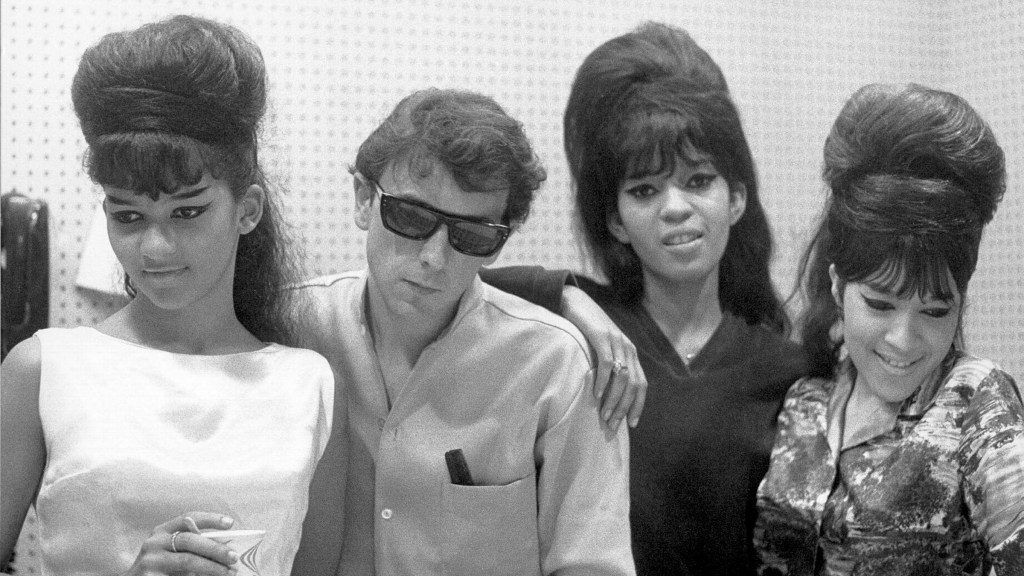
There is a moment, approximately four seconds into the Ronettes’ recording of “Be My Baby,” released in August 1963, that stops time. The drums arrive first — a single, declarative boom-boom-crack that is among the most recognised openings in the history of popular music — and then the strings, and then the voices, and then everything at once, cascading and layered and somehow both enormous and intimate, a sound so fully realised that it seems to have always existed and to have been merely waiting for the technology to make it audible. Ronnie Spector’s voice rides the top of this architecture with the ease of someone who trusts completely the surface beneath her, which she had every reason to, because the surface had been built, with obsessive and unprecedented care, by the man who would eventually lock her in his house and confiscate her shoes to prevent her from leaving. The record is, simultaneously, one of the most beautiful things ever committed to tape and a monument to a pathology. These facts coexist without resolution, and anyone who tells you otherwise has not been listening carefully enough to either the music or the history.
Harvey Phillip Spector was born in the Bronx in 1939, the son of a Jewish ironworker whose suicide, when Phil was nine years old, cast a shadow that appears, in retrospect, across everything the son subsequently made and did and became. The family moved to Los Angeles, to Fairfax, the Jewish neighbourhood of mid-century LA, and the boy grew up small, bespectacled, ferociously intelligent, and in possession of an ear — a capacity for hearing what recorded sound could be — that was without precedent among his contemporaries and has had few successors. He taught himself guitar. He formed a group, the Teddy Bears, at seventeen. He produced and co-wrote their first single, “To Know Him Is to Love Him,” whose title he took from the inscription on his father’s gravestone. It went to number one in 1958. He was nineteen.
Gold Star Studios and the Architecture of Immensity
The Wall of Sound was not a single technique but an accumulated practice, developed across hundreds of sessions at Gold Star Studios on Santa Monica Boulevard between approximately 1961 and 1966, and it was the product of a set of ideas about recorded music that were, at the time, either radical or lunatic depending on who you asked. The conventional approach to pop production in the early 1960s was to record each instrument cleanly and separately, preserving clarity and definition, ensuring that each element of the arrangement could be heard distinctly. Spector’s approach was the opposite: to pile musicians into a relatively small room — sometimes three or four guitarists playing the same part, two or three bassists, multiple keyboards, a full percussion section — and record them all simultaneously through a single echo chamber, creating a sound so dense and reverberant that the individual instruments became indistinguishable, absorbed into a collective mass of music that felt less like a recording than like a physical presence.
The sessions at Gold Star were, by all accounts, extraordinary events. Spector would arrive with arrangements written in obsessive detail and then spend hours — sometimes an entire day — on a single instrumental passage, adjusting, layering, listening through the control room glass with a concentration that the musicians found both inspiring and exhausting. He was not interested in efficiency. He was interested in the sound, and the sound was a thing he heard in his head with complete clarity and could not stop working until the tape matched the internal image.
The musicians he used were the cream of the Los Angeles session world — the group that would later become known as the Wrecking Crew, players of extraordinary technical skill who could execute complex arrangements quickly and reliably and who had, by the time they encountered Spector, worked with everyone of consequence in the Los Angeles music industry. What they had not encountered before was a producer who wanted them to play not as individuals demonstrating their virtuosity but as components of a larger sonic organism, subsuming their individual voices into a collective sound that was greater than any of its parts. Some of them found it frustrating. All of them found it unlike anything else they had done. The results, on tape, were unlike anything that had existed before.
“I was looking for a sound, a sound so strong that if the material was mediocre, the sound would carry it.”Phil Spector, interviewed by Tom Wolfe, 1965
The claim, characteristically, was both accurate and self-serving. The material was rarely mediocre — Spector had a gift for identifying and shaping songs that were, in their melodic and emotional architecture, perfectly suited to the treatment he intended to give them — but the sound was indeed capable of carrying a great deal. It was, in the language Tom Wolfe reached for in his famous 1965 Esquire profile, a Wagnerian ambition applied to the three-minute pop single: the desire to create, within the span of a song, an experience so total and so immersive that the listener was not merely entertained but transported, held inside the music the way one is held inside a cathedral, surrounded on all sides by something larger than oneself.
The Ronettes, the Crystals, and the Question of the Voice
The Wall of Sound needed voices that could inhabit it without being swallowed by it, and Spector’s greatest achievement as a producer of singers was his understanding of which voices those were. The Crystals — Da Doo Ron Ron, Then He Kissed Me — provided the first great demonstrations of the method, their voices riding the instrumental swell with a brightness that cut through the density without diminishing it. But it was Ronnie Bennett, who became Ronnie Spector upon her marriage to Phil in 1968, whose voice was the fullest realisation of what the Wall of Sound made possible.
Ronnie Spector’s voice is one of the great instruments of twentieth-century popular music: raw, yearning, possessed of a vibrato that functions like a emotional magnifier, turning the already heightened feeling of the songs into something close to overwhelming. On “Be My Baby,” on “Baby I Love You,” on “Walking in the Rain” — the three singles that represent the apex of Spector’s production and of her performance — the relationship between voice and arrangement is symbiotic in the deepest sense: each makes the other more fully itself. The Wall of Sound without Ronnie Spector’s voice is magnificent architecture without a person inside it. Her voice without the Wall is extraordinary but unframed. Together they produced something that neither could have produced alone, and the tragedy of what followed — the marriage, the imprisonment, the years of documented abuse — casts a retrospective shadow over the records that is not decorable and not ignorable and that Ronnie Spector herself, in her 1990 memoir and in subsequent interviews, chose to address with a directness and a lack of self-pity that puts the question squarely where it belongs: not in the music, but in the man.
The Beatles, Ike and Tina, and the Long Unravelling
By 1966, the Wall of Sound was already yielding diminishing returns in the commercial sense — the British Invasion had changed the sonic landscape so fundamentally that the lush, orchestrated pop of the Philles Records era sounded, suddenly, like the recent past rather than the present — and Spector withdrew from active production with the abruptness of someone who understood that the moment had passed and had no interest in appearing to chase it. He re-emerged in 1969 to work with John Lennon and then with the Beatles on the Let It Be tapes, a commission that produced both some genuinely beautiful work and one of the more notorious controversies in rock history when Spector’s orchestrations for Paul McCartney’s “The Long and Winding Road” so enraged McCartney that he demanded his name be removed from the production. McCartney’s objections were not unreasonable — the string arrangements are lush to the point of suffocation — but they were also a collision between two totalising aesthetic visions, and totalising aesthetic visions do not generally accommodate each other gracefully.
His production of Ike and Tina Turner’s “River Deep — Mountain High” in 1966 — released at the height of his commercial powers and promptly ignored by American radio while becoming a significant hit in Britain — is, by the assessment of most serious listeners, the fullest single realisation of everything the Wall of Sound was capable of. The arrangement is colossal: layer upon layer of instrumentation building to a density that should, by any rational calculation, collapse under its own weight and instead achieves a kind of impossible airborne grandeur. Tina Turner’s vocal performance matches it without strain, which is itself an almost supernatural achievement. Brian Wilson, working on Pet Sounds at the time, heard it and reportedly wept.
The Ike and Tina Turner session is also, in the light of subsequent history, an uncomfortable document for reasons that have nothing to do with Spector — Ike Turner’s documented abuse of Tina Turner during those years being a fact that now attaches to everything produced in his presence. This doubling of shadow — Spector’s pathology overlapping with Turner’s — is not a coincidence that criticism can easily navigate. It is, rather, a reminder that the history of popular music in this era was produced in conditions of systematic violence against women that the music itself, in its emotional directness and its apparent celebration of desire and longing, did nothing to reveal and in some respects actively obscured.
The Guns, the Wig, and the Murder
The guns were always there. Multiple people who worked with Spector in the studio during the 1970s and 1980s recalled him producing firearms during sessions — brandishing them, in some accounts, to resolve creative disagreements, or simply because he could, because the firearm was a way of making visible the power dynamic that he preferred to operate within and that the professional relationship alone could not adequately enforce. Leonard Cohen, who recorded Death of a Ladies’ Man with Spector in 1977 and emerged from the experience describing it as genuinely frightening, recalled Spector placing a loaded crossbow against his neck during a session and later holding a pistol to his temple in what may or may not have been a joke. The Ramones, who recorded End of the Century with him in 1979, reported similar experiences. Nobody called the police. The records got made.
On the night of February 3rd, 2003, Lana Clarkson — an actress and club hostess whom Spector had met hours earlier — was shot through the mouth in the foyer of Spector’s mansion in Alhambra. Spector’s driver, waiting outside, heard the shot and then Spector emerging and saying, variously reported, “I think I killed somebody” or “I think I shot her.” Clarkson was thirty-nine years old. Spector was tried twice — the first trial ending in a hung jury — and convicted of second-degree murder in 2009. He was sentenced to nineteen years to life and died in prison in January 2021, of complications from COVID-19, at eighty-one.
“He was a very, very sick man, and he was a genius.”Ronnie Spector, on Phil Spector’s death, January 2021
What to Do With the Sound
The question of what to do with the work of a murderer is one that cultural criticism has been negotiating, with varying degrees of honesty and various degrees of resolution, across many subjects and many art forms, and it does not admit of a single answer. There are people who cannot listen to “Be My Baby” any longer, and their position is coherent. There are people who separate the record from the man with a completeness that others find troubling, and their position is also coherent. The position that this essay would suggest — not prescribe, suggest — is neither of these, but the harder one: to listen to the record fully, with full knowledge of everything that produced it and everything that followed it, and to hold the two things simultaneously without letting either cancel the other.
The Wall of Sound was built on a pathology — on a need for total control so consuming that it eventually required a gun to maintain it — and it was also built on a genuine, unprecedented, never-quite-replicated understanding of what recorded music could do to a listening body. These are not separate facts about a complex person. They are the same fact about the same obsession, expressed in different registers. The need to fill every available space with sound, to leave no silence that might threaten, to build a wall so thick and so complete that nothing could penetrate it from outside: this is not only a production technique. It is a portrait of a mind. The tragedy is that the mind, which could hear things no one else could hear, could not hear the single most important thing of all: the voice of another person, asking to be let out.
This essay draws on Mick Brown’s biography Tearing Down the Wall of Sound (2007), Ronnie Spector’s memoir Be My Baby (1990, with Vince Waldner), Tom Wolfe’s Esquire profile “The First Tycoon of Teen” (1965), and trial records from the People v. Spector proceedings (2007, 2009). Lana Clarkson was born on April 5, 1962, and died on February 3, 2003. Phil Spector died on January 16, 2021, at the California Health Care Facility, Stockton.

