
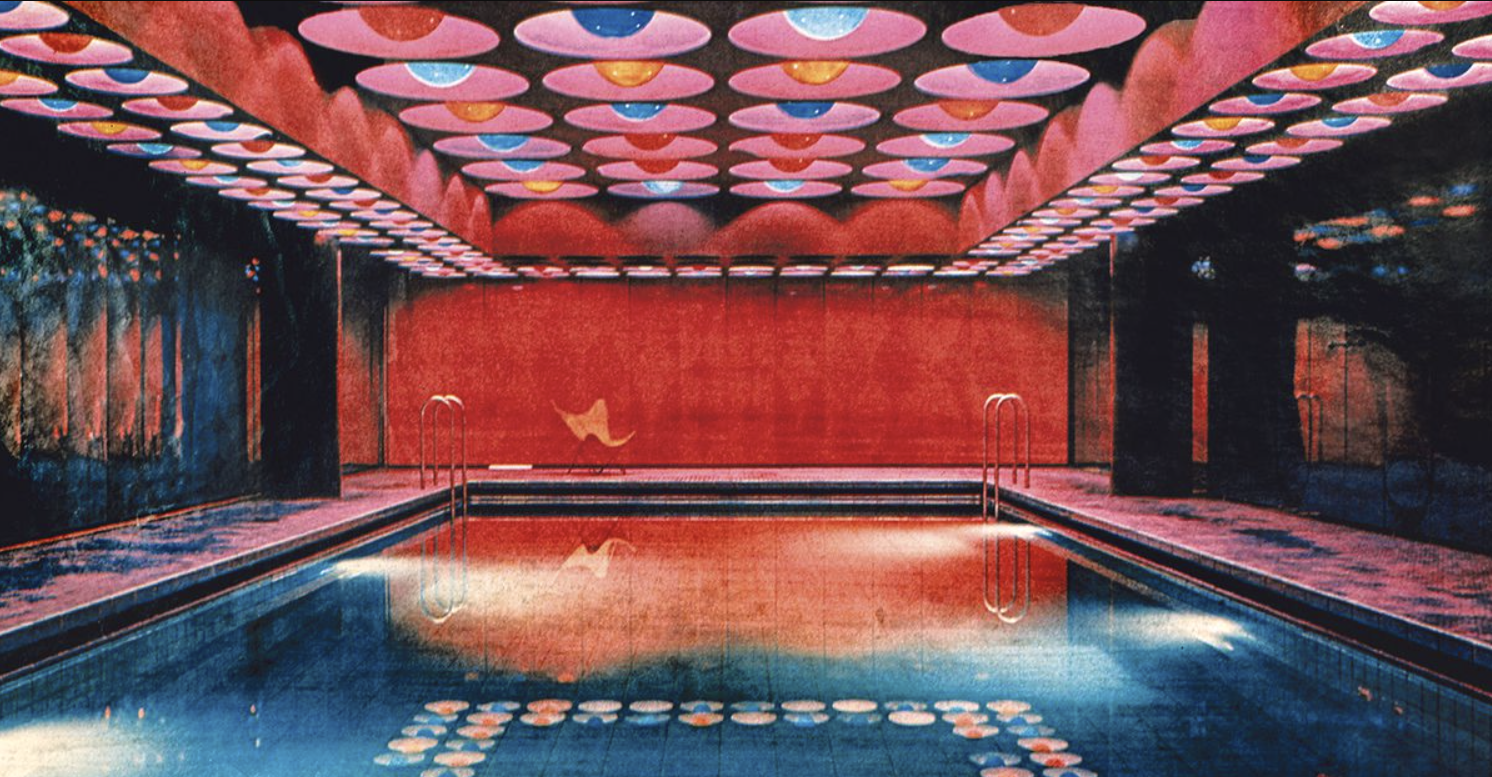
Few designers have altered the visual vocabulary of the 20th century as radically as Verner Panton. A Dane with a restless imagination, Panton defied the restrained minimalism of Scandinavian design by embracing vibrant color, plastic as a noble material, and interiors that felt more like hallucinations than homes. He was not simply a furniture maker but a total environment builder, reshaping how people experienced space itself. His legacy remains one of fearless experimentation—equal parts pop, psychedelia, and utopia.
From Denmark to the Avant-Garde
Verner Panton was born in 1926 in Gamtofte, Denmark, and trained at the Royal Danish Academy of Fine Arts in Copenhagen. Like many Scandinavian designers of his generation, he worked early on with wood and textiles, imbued with the ethos of craft and restraint. He even apprenticed briefly with Arne Jacobsen, contributing to projects such as the iconic Ant Chair.
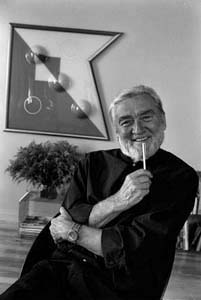
But Panton was never content to stay within the confines of “good taste.” Where Jacobsen and Hans Wegner valued purity and functionality, Panton was drawn to fantasy. He saw design not only as a solution to practical needs but as a catalyst for mood, behavior, and social interaction. His restless creativity set him apart from the polished teak and muted palettes of mid-century Denmark.
The Panton Chair: A Revolution in Plastic
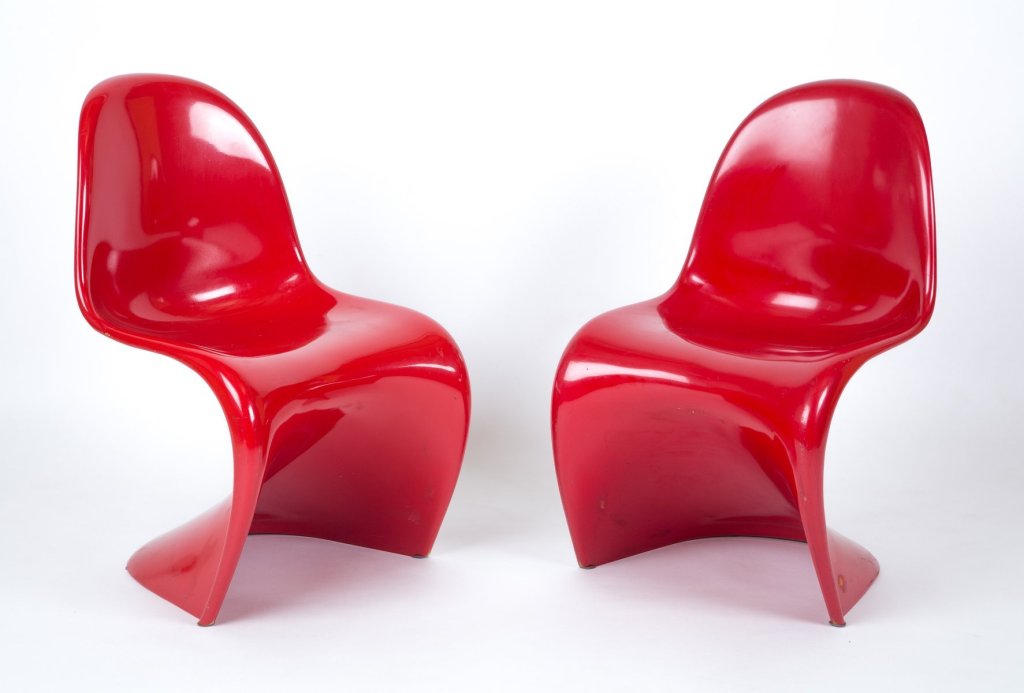
His most enduring creation is the Panton Chair (1960, mass-produced by Vitra from 1967), the first chair made entirely from a single piece of molded plastic. Its sweeping S-shape was both sculptural and ergonomic, stackable yet futuristic. At a time when plastic was still associated with disposability, Panton elevated it into an emblem of modern design.
The chair became a pop-cultural icon, appearing in fashion shoots, magazine covers, and museums worldwide. It remains one of the most recognized pieces of 20th-century furniture, a testament to his belief that industrial materials could be both beautiful and democratic.
Color as Philosophy
Where most of his peers emphasized natural woods and muted tones, Panton embraced color as a psychological force. “One sits more comfortably on a color one likes,” he famously said. His palettes—fiery oranges, saturated blues, acid greens, velvety purples—were designed to provoke emotion, excitement, even euphoria.
His textiles, often produced in collaboration with companies like Mira-X, featured bold geometric patterns and optical effects that amplified his vision of immersive design. In Panton’s world, color was never secondary—it was the essence.
The Total Environment
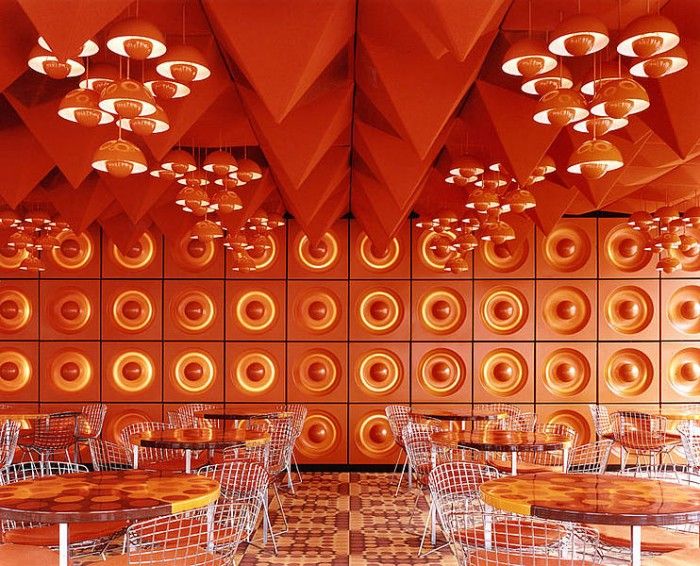
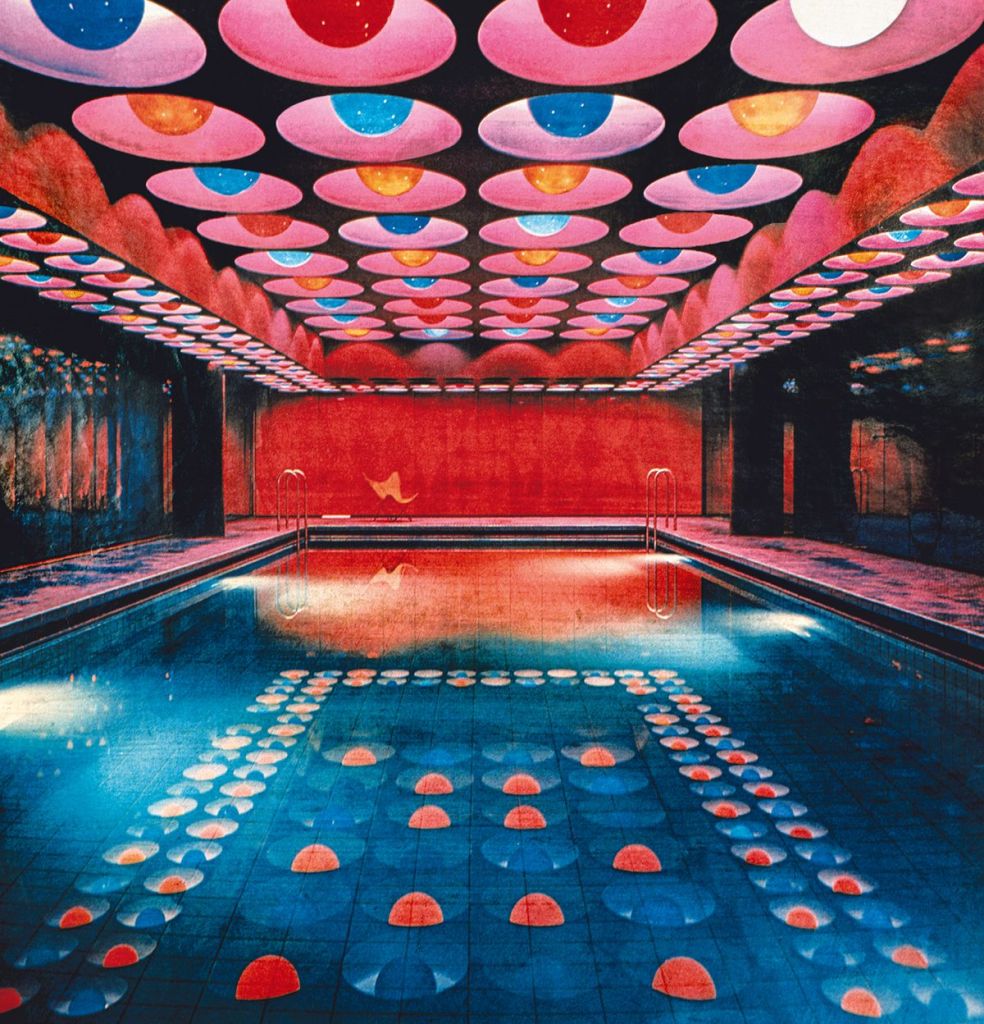
More than furniture, Panton sought to design total environments—spaces where floors, walls, ceilings, and furniture formed a continuous, unified experience. His interiors of the late 1960s and 1970s were immersive dreamscapes:
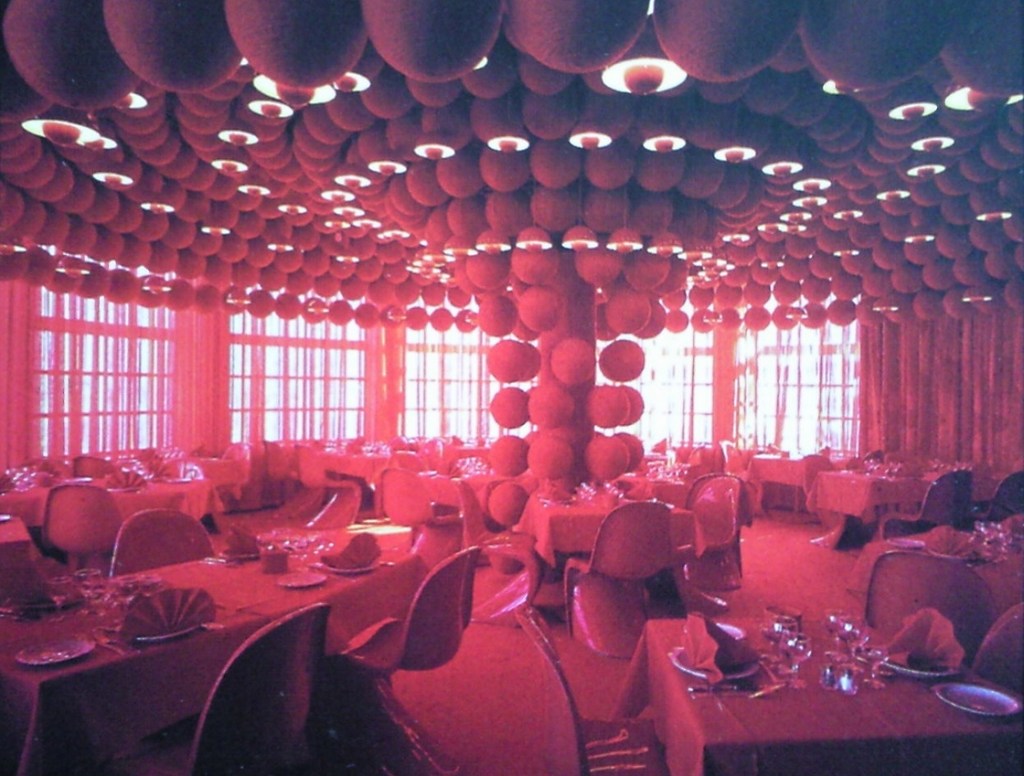
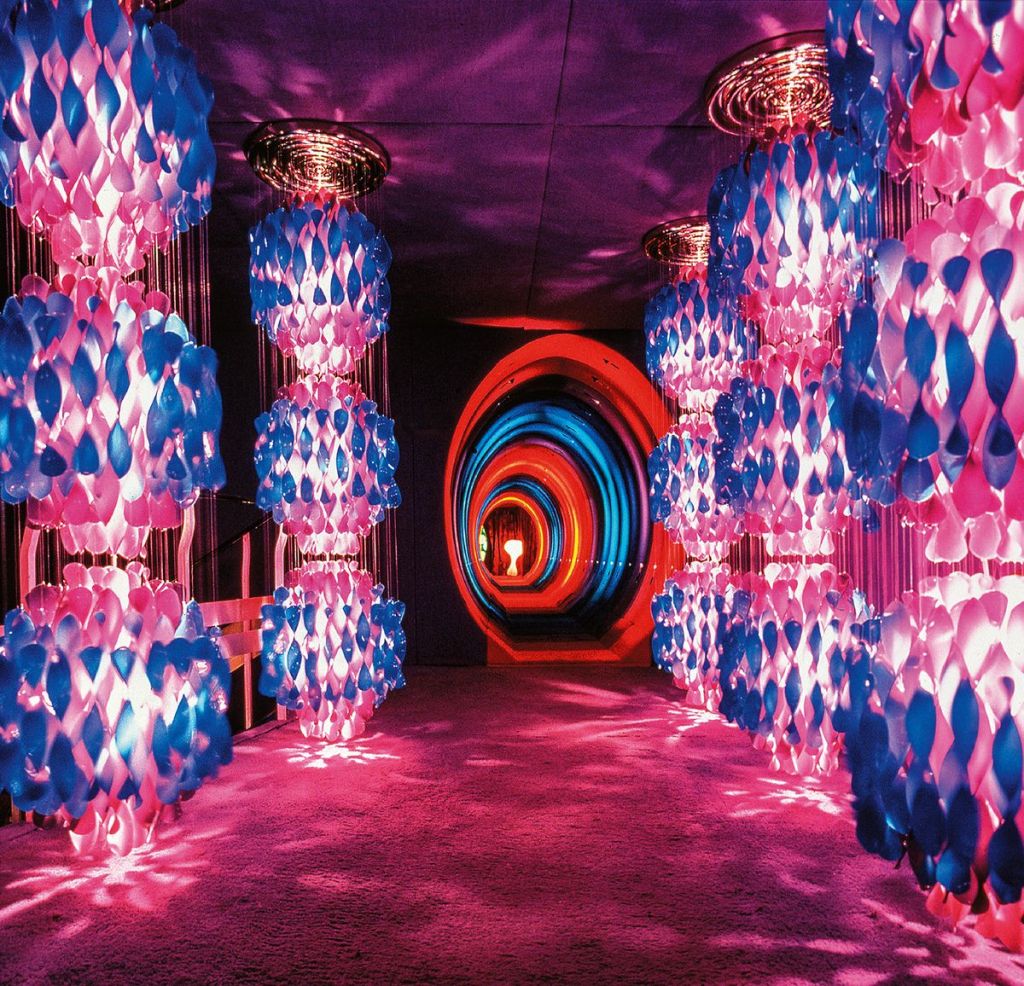
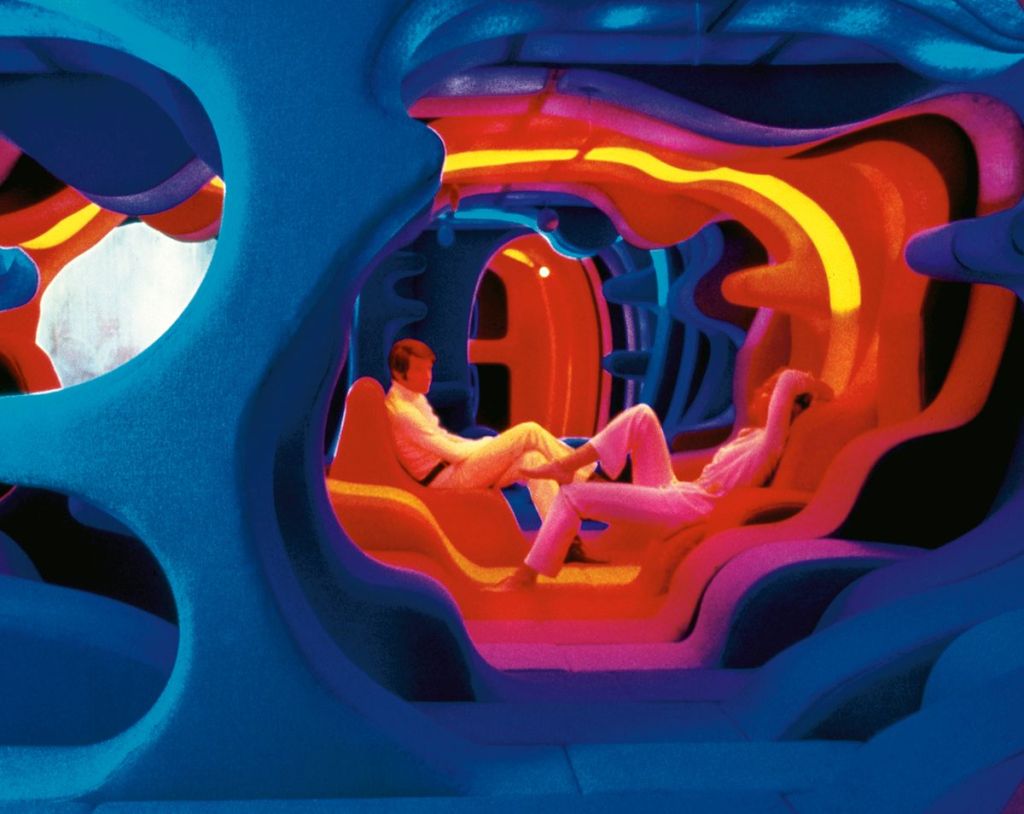
- The Visiona II installation (1970, Cologne) transformed a boat interior into a psychedelic fantasy of upholstered caves, glowing orbs, and undulating seating. It was less a room than an alternate universe, embodying his utopian vision of design as escape.
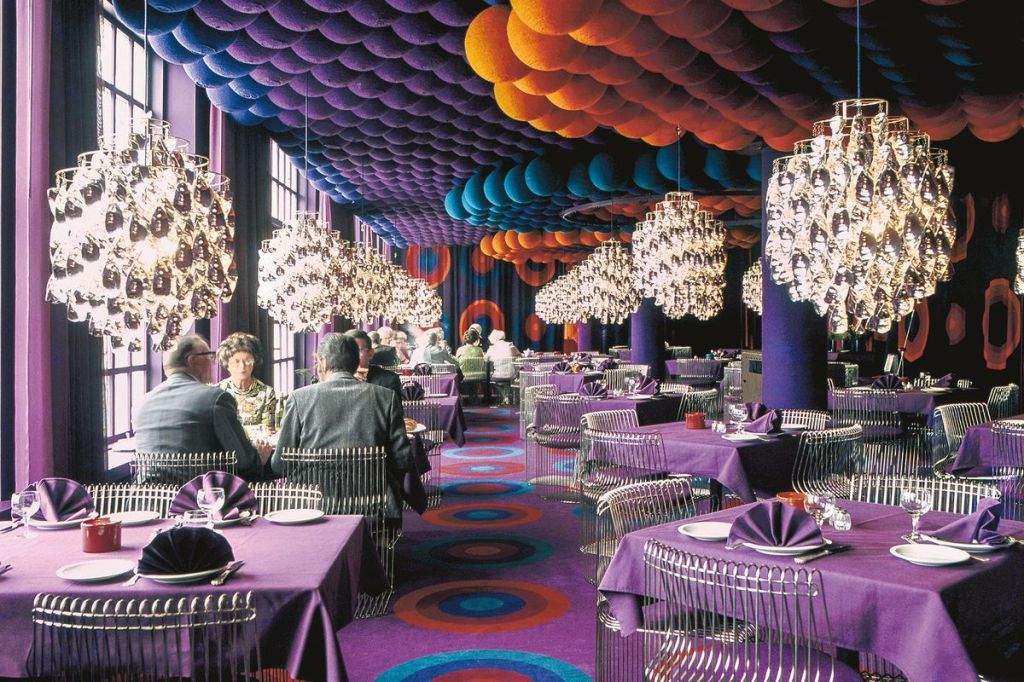
- The Spiegel Publishing House canteen (1969, Hamburg) featured futuristic lighting, modular seating, and flowing forms that turned a workplace cafeteria into an almost cinematic set.
These projects blurred the line between art, design, and architecture, and remain some of the most radical interior environments ever conceived.
Utopian Futurism and Critique
Panton’s work was often misunderstood. To critics, his environments seemed indulgent, even frivolous, compared to the restrained functionalism of Danish modernism. Yet his vision anticipated trends that later became mainstream: open-plan spaces, modular furniture, immersive experiential design, and the playful use of plastics.
By the 1980s, when postmodernism embraced bold color and eclectic forms, Panton was rediscovered as a pioneer. His fearless approach to material and mood now seems prophetic in a design culture that values experience as much as form.
Legacy and Influence
Verner Panton died in 1998, but his influence is everywhere: in contemporary interiors that prize atmosphere, in fashion shoots that borrow his color palettes, in the enduring ubiquity of the Panton Chair. Vitra continues to produce his furniture, and his textile designs remain in demand.
More importantly, Panton liberated design from solemnity. He proved that seriousness and play are not opposites, that design could be both rigorous and psychedelic. His work embodied optimism—that the spaces we inhabit could inspire joy, experimentation, and new ways of living.
Today, as immersive art installations and experiential design dominate cultural conversations, Panton feels not like a relic of the 1960s but a prophet. He imagined a future of color and form that remains as radical, as seductive, and as unsettling as ever.
Suggested Icons of Panton Design
- Panton Chair (1960/1967, Vitra) – The world’s first single-piece molded plastic chair.
http://www.vitra.com - Flowerpot Lamp (1968, &Tradition) – A playful, rounded pendant that became a design classic.
http://www.andtradition.com - Visiona II (1970) – Immersive interior installation; photographs remain legendary.
- Spiegel Publishing House Canteen (1969, Hamburg) – Radical office interior blending geometry and color.
- Mira-X Textiles – Psychedelic patterns and bold colorways that defined an era.
Discover more from My World of Interiors
Subscribe to get the latest posts sent to your email.

