
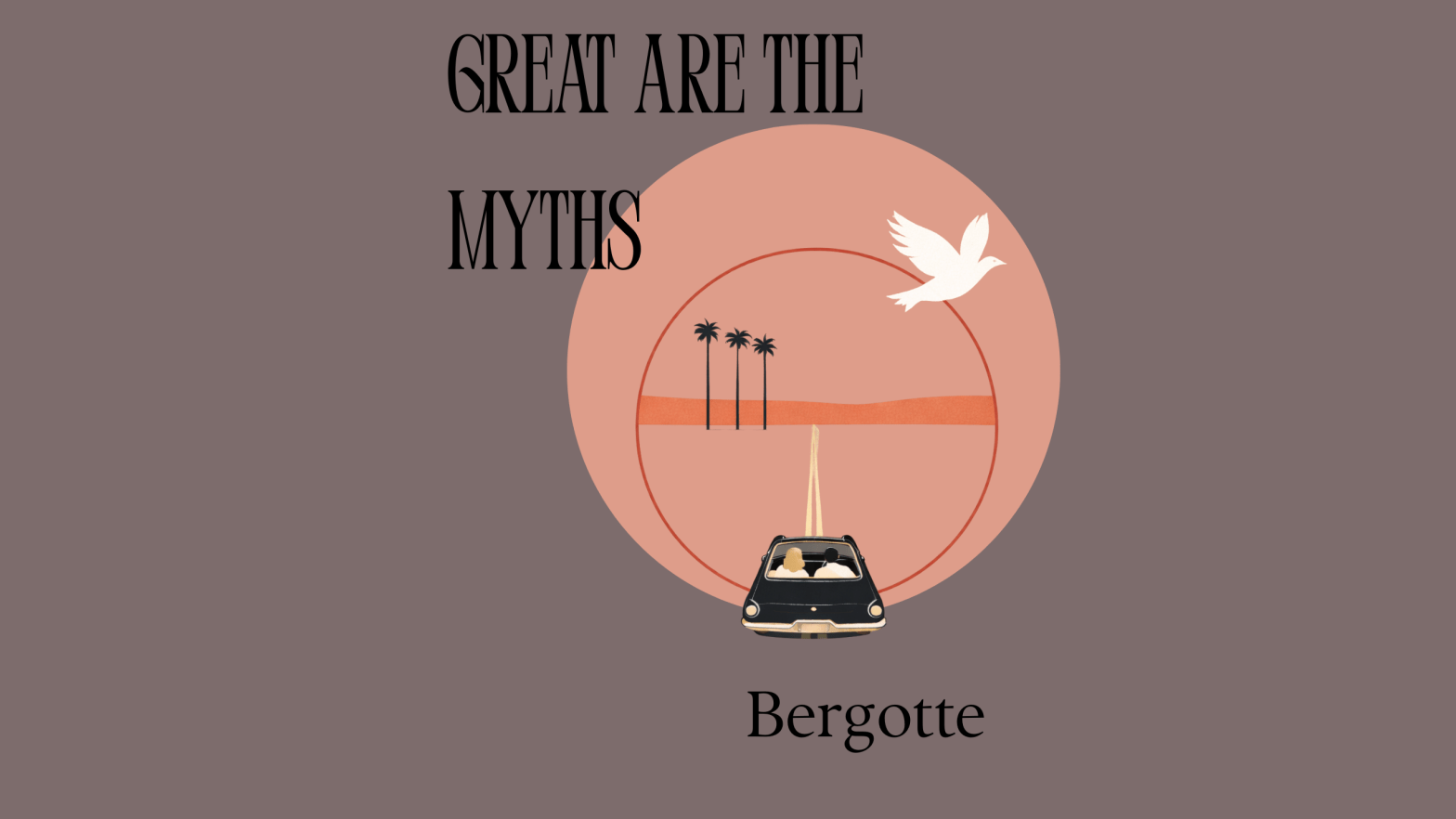
There is a moment near the beginning of this novel that contains, in miniature, everything the novel will spend three hundred pages unfolding.
The boy has come to visit Birdie’s house for the first time. He is thirteen, working-class, new to Memphis, not entirely sure why he has been invited. The house is enormous — the long drive, the tall trees, the garden that goes further than the eye can follow — and Birdie, who has seen him clock all of this, who understands exactly what he is feeling and why, responds by making a complete and total fool of herself. She shouts. She bows. She announces her home as Avalon, as Shangri-La, in a voice too loud for any indoor space. She is mortifying. She is also doing something so precise and so generous that it takes your breath away when you realise it: she is making herself the strange one, the excessive one, the one who doesn’t fit, so that he can be comfortable. She is using her own embarrassment as a gift. She is thirteen years old and she already knows how to love like this.
That instinct — to make yourself smaller so the other person can be larger, to offer your own ridiculousness as shelter — is not just a character trait. It is the moral and spiritual logic of the entire novel. Great Are the Myths is a book about love as witness, love as the sustained and selfless act of seeing another person truly, across every distance and transformation and loss that time can bring. It is about what becomes possible when one soul holds another soul steady in its gaze — not the famous version, not the useful version, not the version the world has decided upon, but the real one, the interior one, the one that existed before the world got hold of it.
This is a rare subject for a novel to take seriously. Love as witness is quieter than love as possession, less dramatic than love as passion, less narratable than love as loss. It doesn’t generate the usual plot machinery. It resists the climax and the rupture and the clean ending. But it is, the novel insists with every page, the deepest and most consequential form of love there is. And it is, in the end, the only one that truly lasts.
The Soul That Arrives
Birdie arrives in Memphis in November 1948 as if she has been placed there. Her grandfather — that almost mythological figure, benevolent and far-seeing, who appears in the novel like a figure from a fairy tale whose function is to put the right person in the right place — has arranged everything. The house, the nanny, the school. And on her first day at that school, she meets the boy.
The novel presents this as coincidence, and it also presents it as anything but. The prologue is titled Predestination. The epigraph is Whitman: our journey is entirely imaginary. That is its strength. It is imaginary to the point of being real. The title of the novel itself is drawn from Whitman’s great democratic poem: Great are the myths — I too delight in them. Before a single chapter begins, the novel has told us what kind of story this is: one in which imagination and reality are not opposites, in which the journey is both invented and true, in which great myths are not falsehoods but the deepest available form of fact.
In this context, Birdie’s arrival is not coincidence. It is predestination in the specific sense the novel means: the soul finds what it needs. The boy is thirteen, newly arrived in Memphis from Tupelo, carrying something enormous and as yet unnamed — a musical gift, a quality of presence, a frequency the world doesn’t yet have a receiver for. He is also lonely in the specific way of the person who is ahead of their time: the loneliness of carrying something you cannot yet share because no one around you can hear it. He needs a witness. He needs someone who will see what he is before the world decides what to make of him. And Birdie appears.
She is, in the Jungian sense, his anima — the soul-dimension made external, the feminine principle that carries the imagination and the freedom and the mythological self. She is literally everything he is not yet able to be in public: free, excessive, uncontainable, dancing across lawns, flying in and out of boarding schools, insisting on her own full existence without apology. She shows him, by being it so completely, what it looks like to live at full amplitude. And he shows her — this girl who arrived in America running from English grief and English smallness — what it looks like to transform longing into art.
They are, from the first day, making each other possible.
The Proustian Ordinary
The novel’s most extraordinary technical achievement is the way it locates its deepest truths in the most ordinary details. This is the Proustian inheritance — not the long sentences or the formal architecture, but the understanding that memory is the medium of love, and that memory operates through the specific and the sensory rather than the general and the abstract.
Birdie does not love the idea of the boy. She loves the boy who asked for Pepsi-Cola because it was cheaper and went scarlet when she swapped it for Coca-Cola without comment. She loves the boy who came out of the bathroom wet all down his front and wouldn’t explain why. She loves the boy who ate Miss Mary’s sandwiches with his eyes going wide, who rode his bicycle home in the Memphis dark, who cried in a bathtub because fame was frightening and he didn’t know how to say so. She loves the specific, particular, unrepeatable human being — not the symbol he is becoming, not the icon America is constructing from his image, but the real boy, asking to be looked after.
This is the novel’s most radical gesture, and the most loving one. In the same years that this story takes place, America is turning the boy into Elvis — into a cultural force, a moral panic, a projection screen for everything the culture desires and fears simultaneously. The machine of fame is doing what it always does: it is replacing the person with the myth. And Birdie, quietly and persistently and without any apparent effort, refuses to participate. She keeps seeing him. She keeps remembering the Pepsi-Cola. She keeps the inventory of small true things that constitute a real human being rather than a symbol.
This is what Proust understood about memory that most novelists miss: remembering someone truly is an act of love. To hold the image of another person in your mind with fidelity and precision — to resist the fading and the simplification and the mythologising that time performs on everyone — is to perform the highest service one person can perform for another. You keep them real. You keep them themselves. You refuse to let them become only what the world has made of them.
Birdie does this for three hundred pages. She does it from Memphis to New York to Bryn Mawr to California to Paris, across marriages and careers and the accelerating movement of the mid-century world. She is, in this sense, the novel’s moral hero — not because she is saintly or uncomplicated, because she absolutely is not, she is vain and impulsive and occasionally cruel and always excessive — but because she never stops seeing him. Not once. Not even when she is engaged to someone else, not even when she is six months pregnant at a funeral and he doesn’t notice the bump because his mind is elsewhere, not even when the last phone call crackles and goes silent. She sees him. She keeps him real.
The Soul Bond
The novel’s deepest subject, beneath the myth and the music and the glittering surface of 1950s America, is what it calls — in the one moment it allows itself to name it directly — the soul bond.
Soul bonds are not romantic relationships, though they may include romance. They are not friendships, though they contain friendship. They are not family, though they generate the same quality of unconditional knowledge. They are something prior to all of these categories — a recognition at the level of the soul, a resonance between two interior lives that operates independently of circumstance and proximity and the ordinary logistics of human connection.
The novel’s proof of the soul bond is the boarding school. When Birdie leaves for Miss Porter’s, the bond doesn’t weaken — it changes register. They begin to inhabit each other’s minds across the distance. She drifts into his thoughts; he appears in hers. When she is at commencement years later, she lets herself “drift into his mind like a light, jolly fog” and sees him eating lunch on a studio lot in California and hears him sing to no one and watches the smile move across his face when he thinks of her. He says, to an empty room: “Go get ’em, little girl.” He is talking to her. He doesn’t know the difference between talking to her and talking to himself, because at that level of connection there is no difference.
This is not presented as supernatural. It is presented as the natural extension of a bond that was always operating below the level of the merely physical. They were soul-bonded from the first day. The boarding school just made it visible — proved that what existed between them didn’t require a room or a telephone or even the same city. It required only the continued willingness to be present to each other, and both of them, always, were.
The soul bond is also the novel’s answer to the question of what love actually is. Not the romantic love of mutual possession, which the novel shows repeatedly to be fragile and contingent — Birdie’s relationship with Topper is loving and real and adult, but it operates in a different register entirely, it is the love of two complementary people who make good sense together, which is its own kind of gift but not this. Not the parental love of Miss Mary, which is the love of the protector and the nurturer, steady and non-negotiable and crucial. Not the passionate love of adolescence, which burns so hot in this novel’s middle chapters and which is true but not sufficient.
The soul bond is something else. It is the love that says: I knew you before you knew yourself. I will know you after the world has finished deciding who you are. I will carry the true version of you, the interior version, the version that existed before the fame and the mythology and the noise — I will carry it carefully and permanently and I will not let it be replaced by a lesser image. I am your witness. I am the proof that you existed as a real person and not only as a symbol. I will not forget the Pepsi-Cola.
Movement and Freedom
Birdie is always moving. This is not incidental. It is her nature — the nature of the soul-figure, the anima, the Jungian feminine principle that the novel has made flesh.
She dances across lawns. She twirls down corridors looking up at the ceiling tiles as if they’re a sky she needs to reach. She flies between Memphis and Connecticut and New York and Massachusetts and California and Paris, between the South and the North and Europe and back again, between the boy’s world and her own, between the person she was in England and the person she is becoming in America. She is the novel’s emblem of freedom — not freedom as absence of constraint, which is a thin and brittle thing, but freedom as full presence, as the willingness to move toward whatever is most alive.
This movement is also the movement of the century. Great Are the Myths is set in the decade when America shifted permanently into a higher gear — when the car and the plane and the television changed the speed at which life moved, when the old hierarchies of place and class and race began, slowly and violently, to crack, when the music that the novel’s boy was making became the sound of a culture breaking out of one form and into another. Birdie’s restlessness is personal and it is also historical. She is moving with her time. She is, in her way, the novel’s most American character — more American than the American boy, because she chose America, she crossed an ocean to get there, she arrived with her arms open and her voice too loud and her heart entirely ready.
The great irony of the novel — and it is a loving irony, not a cruel one — is that the boy, the one who will become the symbol of American freedom, is in many ways less free than she is. Fame cages him. It removes him from the ordinary world, from the Fairgrounds and the ice cream and the driving around Memphis with the windows down. It replaces the boy with Elvis, the person with the icon, and the icon cannot move freely because icons belong to everyone and therefore to no one, least of all themselves. Birdie watches this happen with a kind of loving grief that never tips into bitterness. She doesn’t try to save him from it. She knows she can’t. She just keeps the true version of him alive — in her memory, in her love, in the child she will carry into the future.
Forgiveness and the Radical Act of Staying
The novel’s moral core is not dramatic. It does not announce itself. It accumulates, quietly, across hundreds of pages of ordinary life — of arguments and reconciliations, of summers apart and summers together, of the boy behaving badly and Birdie forgiving him, of Birdie behaving badly and the boy forgiving her, of Miss Mary telling hard truths that nobody wants to hear and both of them being better for it.
What the novel is teaching, in the only way teaching works in fiction — which is by showing rather than stating — is that love is not a feeling but a practice. It is the daily choice to stay connected, to keep seeing, to refuse the easier path of grievance and distance and protective numbness. It is the choice to forgive — not once, grandly, in a single dramatic gesture, but constantly, in the small repeated ways that genuine intimacy requires.
The boy is not easy to love. He is vain and manipulative and capable of casual cruelty and increasingly, as fame takes hold, of a kind of emotional greed that exhausts everyone around him. Birdie sees all of this clearly. The novel never asks us to pretend otherwise. But it shows us, again and again, the choice she makes in the face of it: to stay. Not out of weakness or dependency or failure of self-respect — she has more self-respect than almost anyone in the novel, it is one of her most endearing qualities — but out of a genuine understanding that the person is more than their worst behaviour, that the soul bond is more than the sum of the disappointments, that to abandon someone at the moment they are most lost is to fail them at the only moment that counts.
This is the novel’s humanism. It is not sentimental — it sees clearly, it names the flaws, it refuses the easy comfort of pretending that love makes people perfect. But it insists, with every page, that people are worth the effort of continued seeing. That nobody should be abandoned to their mythology. That the human being inside the icon deserves a witness who will not be dazzled by the light into forgetting the person.
Take nothing for granted. Stay connected. Forgive. Keep seeing. These are not complicated ideas. They are, in practice, the hardest things in the world. And the novel demonstrates their difficulty and their necessity with equal honesty and equal love.
Miss Mary and the Still Point
Every novel in motion needs a still point, and this one has Miss Mary.
She is not a secondary character. She is the novel’s moral compass, its conscience, its most reliable narrator of truth in a book full of myth and fantasy and romantic projection. She is also, quietly, its most radical figure — a single American woman in Memphis in the late 1940s and 1950s, whose position in the household is formally that of nanny and housekeeper but whose actual role is nothing less than the guardian of a soul. She raised Birdie. She kept the room ready for the boy even when Birdie was away at school. She told both of them the truth when they needed it, with the particular directness of someone who loves without agenda.
The scene in which she sits Birdie down after the disastrous fifteenth birthday party and delivers her verdict — precise, unflinching, and entirely loving — is one of the novel’s great set pieces. She doesn’t soften it. She doesn’t perform it. She simply says what is true and waits for Birdie to hear it. And Birdie does hear it, eventually, because Miss Mary has always been the voice she trusts most, the one whose love is not contingent on Birdie being perfect or even particularly good, but whose love is also not blind. Miss Mary sees Birdie as clearly as Birdie sees the boy. She keeps her honest.
The novel doesn’t make enough of a point of this. It doesn’t need to. Miss Mary’s presence on every page where she appears is its own argument. She is the proof that love as witness is not the exclusive property of the romantic or the mythological — that it operates in the daily and the domestic as fully as it operates in the grand and the legendary. She witnesses Birdie across the whole of her growing up with the same fidelity that Birdie witnesses the boy. The chain of loving witness runs through the novel at every level, from the mythological to the kitchen table.
She is, in the end, the novel’s true heroine. Its most completely realised human being. Its ground.
The Baby
The baby arrives on Thanksgiving. He is “perfectly late and perfectly perfect.” Birdie names him John George Lionel Montgomery — after Jack Kennedy, after Grandpa George — and calls him Little Jack, or JG, and is so completely in love with him that everything else fades into the background.
He is the boy’s child. The novel lets this rest as a private knowledge, never stated in the prose but present in the structure — in the timing, in the quiet decision not to tell the boy, in the sense that Birdie is carrying something forward that belongs to both of them and always will. He is also, as the novel has made clear, more than a baby: he is memory, myth, creativity, love, the soul bond made physical and permanent and future-facing. He is the proof that what Birdie and the boy shared was real — as real as anything gets, as real as a child, as real as a person who will grow up and inherit houses and carry within him, unknowingly, the frequencies of a man who sang in Memphis in the early morning dark before the world knew his name.
But he is also, simply, a baby. Small and warm and breathing. And Birdie holds him with the uncomplicated devotion of someone who has finally found the form that love takes when it is no longer reaching for something outside itself — when it is simply present, fully, to what is here.
This is the novel’s closing movement, and it is perfect. Not because it resolves everything — it doesn’t, the boy ships out, the world moves on, the distance between their lives is now permanent — but because it demonstrates the novel’s central truth one final time, in the most concrete possible form. Love doesn’t end. It changes form. It finds new vessels. It carries forward. The soul bond between Birdie and the boy doesn’t conclude with their last conversation in the California desert. It continues — in the child, in the memory, in the myth, in the ongoing act of witnessing that Birdie will perform for the rest of her life, keeping the true version of him alive in the way that only the people who loved us before we were famous can keep us alive.
I’ll never really leave you, she whispers in the desert. And she doesn’t.
What the Novel Knows
Great Are the Myths was not, its author has said, constructed so much as called forth — a soul calling, a felt truth that found its form. This is audible on every page, in the way that only genuine feeling is audible in fiction: not as sentiment, which is feeling that hasn’t been earned, but as emotional precision, the sense that the words are landing exactly where they needed to land because they came from somewhere true.
What the novel knows — what it carries in its bones, what it is trying to give the reader — is this: that the deepest human need is to be seen. Not admired, not desired, not mythologised. Seen. Held in another person’s gaze with accuracy and love and the willingness to keep looking even when the looking is hard, even when the person is lost in their own mythology, even when the distance between you is an ocean or a decade or a whole other life.
It knows that this seeing is an act of will, a daily practice, a form of courage. It knows that it requires forgiveness — not the grand forgiveness of the dramatic gesture but the small repeated forgiveness of staying present to someone who disappoints you, who fails you, who becomes temporarily someone you don’t recognise. It knows that the soul bond is real — as real as the body, as real as music, as real as memory — and that it operates by its own logic, outside the ordinary categories of relationship and time.
It knows that ordinary life, looked at with enough love, is already mythological. That the Coca-Cola and the Memphis heat and the wet clothes and the ice cream after the first day of school are not the small change of a larger story. They are the story. They are what love is made of. They are what memory preserves and what loss mourns and what witness keeps alive.
And it knows — this is its most generous and most radical knowledge — that love of this quality does not diminish the lover. Birdie does not disappear into the boy’s story. She has her own story, her own life, her own considerable myth. She goes to Bryn Mawr, she walks through the mid-century with her eyes wide open, she falls in love with Topper in a different register, she builds a life on her own terms, she graduates magna cum laude and makes jokes about it, she moves through the world with an excess of vitality that the world never quite knows what to do with. She is not diminished by loving him. She is enlarged by it. The soul bond gives her more of herself, not less.
This is the novel’s final and most important truth. Love as witness — love as the sustained, selfless, unclenching act of seeing another person truly — is not sacrifice. It is not the giving up of self. It is the fullest possible expression of self. It is what the self is for.
Birdie dances across the lawn saying she needs to fly. She flies. She always does.
And he — the boy who will become the myth, the artist who will change the sound of the century, the American who was also always just a working-class kid from Tupelo who ate Miss Mary’s sandwiches with his eyes going wide — he goes on singing. In her, and in the child, and in the music, and in the ongoing life of the myths that are great precisely because they carry inside them the truth of the ordinary human beings from whom they came.
Great are the myths. I too delight in them.
But this novel loves the people inside them more…

 My World of Interiors