
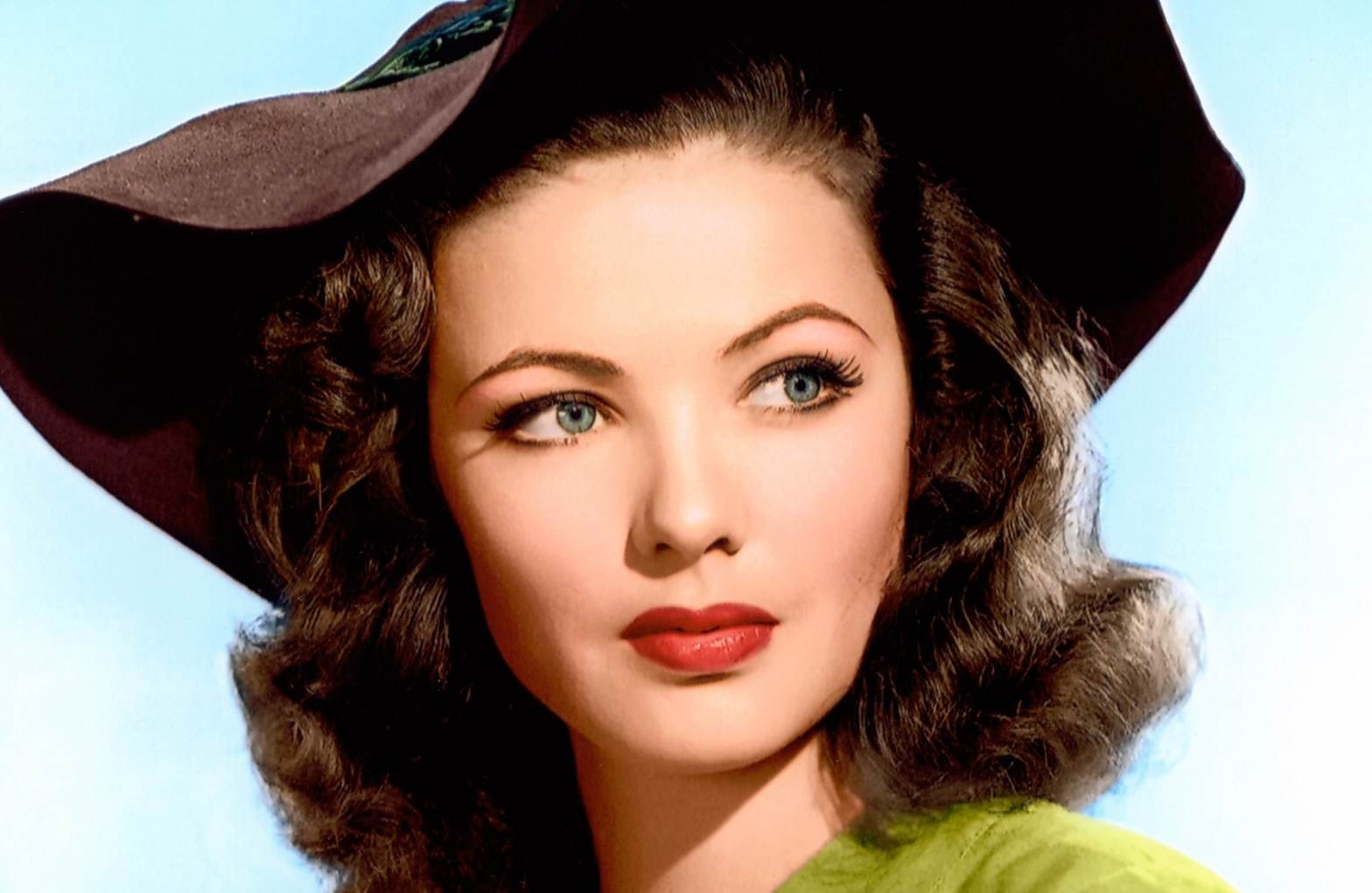
Gene Tierney had the kind of beauty that could silence a room. Tall, dark-haired, with cheekbones carved like marble and eyes the shade of a storm gathering over water, she seemed less like an actress than a vision conjured by a painter. Yet behind the immaculate surface of Hollywood’s most glamorous starlet of the 1940s lay a story of fragility, resilience, and quiet tragedy—a life that mirrored the contradictions of the Golden Age itself.
Born in Brooklyn in 1920 and raised in Connecticut, Tierney was not destined for obscurity. A finishing school education, a sojourn in Europe, and her father’s encouragement propelled her toward the stage. She made her Broadway debut in 1938, and by 1940 she was under contract at 20th Century Fox, where her magnetic screen presence quickly caught the attention of audiences and directors alike.
What made Tierney different was not just her beauty—though she was hailed as one of the most exquisite women of her era—but the way she infused that beauty with depth. She could be ethereal yet earthy, glamorous yet vulnerable. Hollywood, ever eager to sculpt personas, cast her as the unreachable goddess, but Tierney herself yearned for roles that revealed the complexity of women’s inner lives.
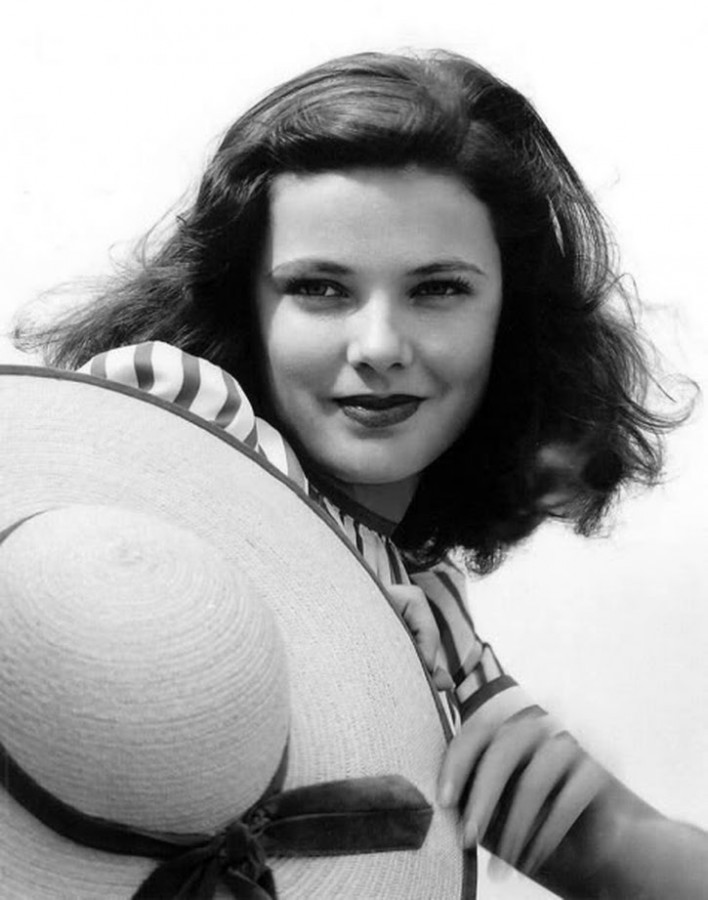
The Screen Goddess
Tierney’s breakthrough came with Laura (1944), Otto Preminger’s noir about a detective who falls in love with the portrait of a woman he believes is dead. As the titular Laura Hunt, Tierney became immortal: the ultimate object of desire, the mystery around which the film’s tension coiled. The camera lingered on her face, her presence filling the void between absence and reality. The role defined her career and cemented her as one of cinema’s most haunting figures.
In films like Leave Her to Heaven (1945), she proved her range. As Ellen Berent, Tierney played one of the screen’s most chillingly beautiful villains—a woman so consumed by jealousy that she allows her husband’s young brother to drown before her eyes. It earned her an Academy Award nomination and revealed a darker edge beneath her luminous surface. Hollywood rarely allowed its leading ladies to be both desirable and destructive, yet Tierney embodied both with chilling precision.
Other notable turns followed: the romantic fantasy The Ghost and Mrs. Muir (1947), where she fell in love with Rex Harrison’s spectral sea captain; Ernst Lubitsch’s elegant Heaven Can Wait (1943), which showcased her comic sophistication; and Joseph L. Mankiewicz’s Dragonwyck (1946), where her refinement played against Vincent Price’s brooding menace. Each performance deepened her mystique, building a career that was both varied and indelibly glamorous.

Shadows Behind the Glamour
Behind the camera, Tierney’s life was fraught with turbulence. In 1943, while pregnant with her first child, she contracted rubella at a Hollywood canteen event, resulting in her daughter Daria’s severe disabilities. The grief marked Tierney indelibly, casting a shadow over her personal life that no screen triumph could dispel.
Her marriage to fashion designer Oleg Cassini, though glamorous, was stormy and ultimately ended in divorce. Later relationships—with Prince Aly Khan, with John F. Kennedy before his presidency—added to her aura of being both desired and unattainable, but stability eluded her.
By the 1950s, Tierney struggled with severe mental health issues, including depression and bipolar disorder. She underwent treatment at institutions and endured the stigma of an era that had little compassion for such battles. Yet her openness in later life about these struggles gave her a different kind of legacy: that of a woman who refused to hide the cost of Hollywood perfection.
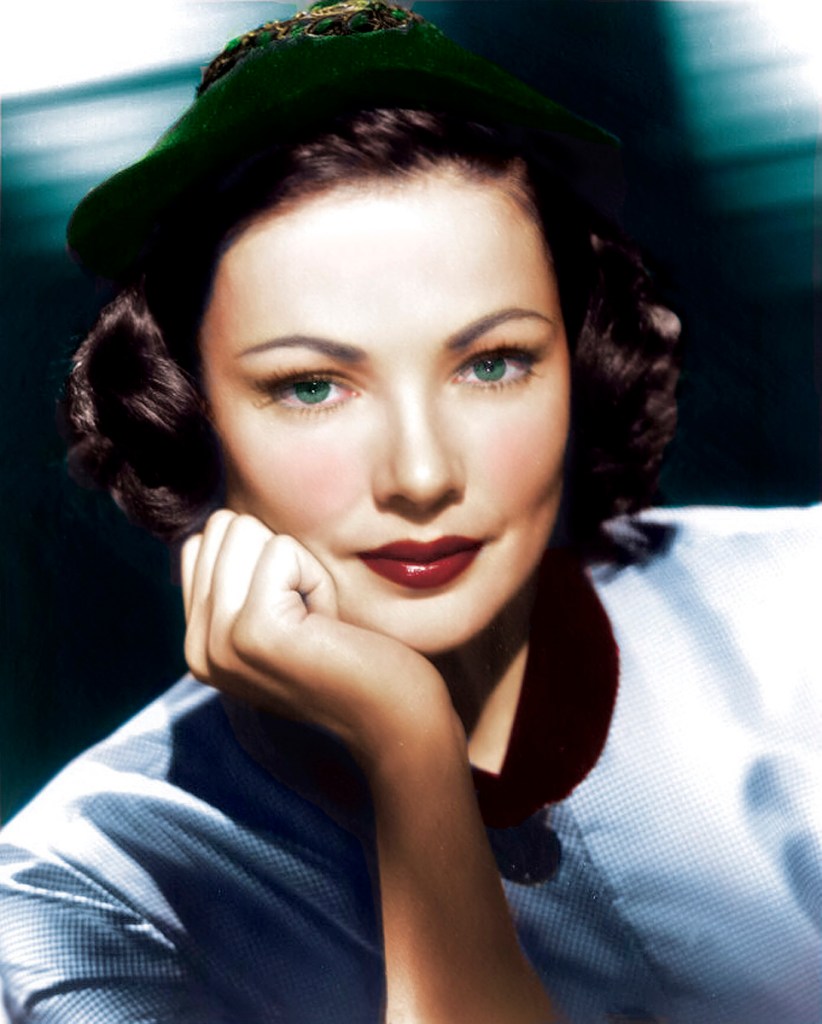
The Later Years
Tierney’s career slowed, though she returned memorably in The Left Hand of God (1955) opposite Humphrey Bogart and in Advise & Consent (1962). But her greatest work was already behind her, and she lived much of her later life in Texas with her second husband, oil baron W. Howard Lee.
She died in 1991, at the age of 70, leaving behind not just films but an aura: the memory of a woman who embodied both the dream of Hollywood and the weight of its illusions.
Legacy of a Haunted Beauty
Gene Tierney’s legacy is paradoxical. She was the goddess and the victim, the star and the woman who longed for a life beyond the studio’s grip. Her performances, especially in Laura and Leave Her to Heaven, remain among the most memorable of the 1940s, touchstones for actresses who seek to merge beauty with psychological intensity.
Her life story also humanizes an era too often painted in gold. Tierney reminds us that behind the glamour of Old Hollywood were real women, carrying invisible burdens beneath the glittering facade. In her struggles, she prefigures the stories of many actresses who would come after: women caught between the public’s demand for perfection and the private desire simply to live.
Gene Tierney endures as one of cinema’s most captivating enigmas. To watch her on screen is to be reminded of the intoxicating, sometimes destructive power of beauty—and of the resilience it takes to survive in its shadow.
Selected Filmography & Resources
- Heaven Can Wait (1943) – Lubitsch’s sophisticated comedy of manners.
www.imdb.com/title/tt0035979/ - Laura (1944) – Noir classic; Tierney’s defining role.
www.imdb.com/title/tt0037008/ - Leave Her to Heaven (1945) – Academy Award–nominated turn as Ellen Berent.
www.imdb.com/title/tt0037865/ - Dragonwyck (1946) – Gothic drama opposite Vincent Price.
www.imdb.com/title/tt0038451/ - The Ghost and Mrs. Muir (1947) – A romantic fantasy still beloved.
www.imdb.com/title/tt0039420/ - The Left Hand of God (1955) – Pairing with Humphrey Bogart.
www.imdb.com/title/tt0048280/ - Advise & Consent (1962) – A rare later triumph in political drama.
www.imdb.com/title/tt0055728/
For further exploration, Tierney’s autobiography Self-Portrait (1979) remains a poignant account of her battles with fame, beauty, and mental illness.
 My World of Interiors