
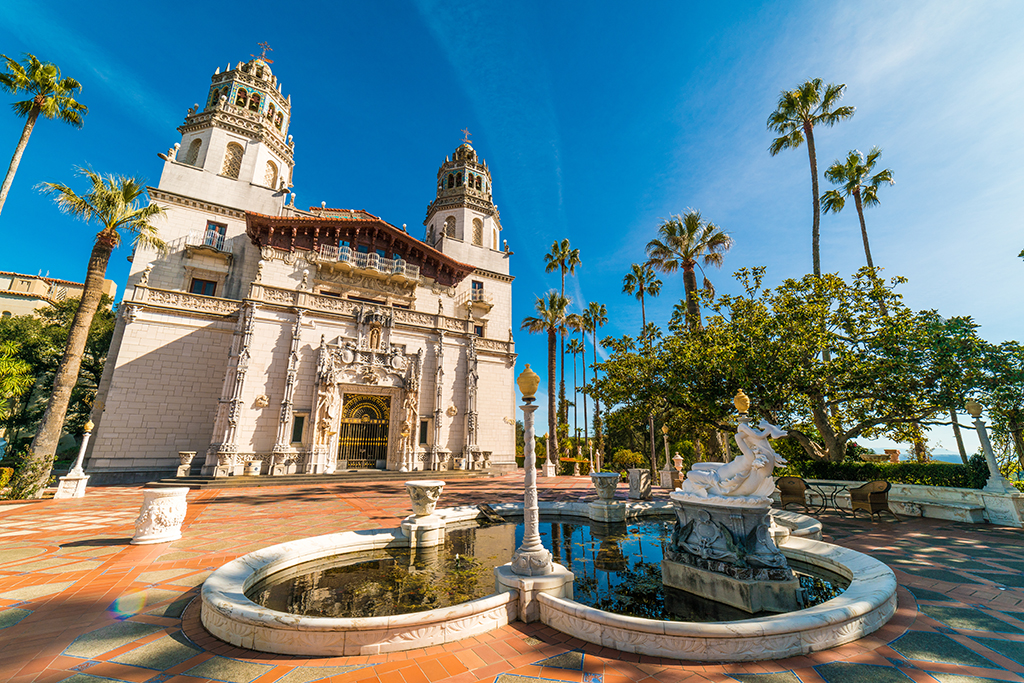
Perched high above the Pacific on the rolling hills of San Simeon, Hearst Castle is less a house than a vision. Built by publishing magnate William Randolph Hearst with architect Julia Morgan over nearly three decades (1919–1947), it stands as one of the most extravagant private residences in America — a gilded fantasy that fuses Mediterranean grandeur with Californian audacity. Today, as a California State Park, it is not merely a monument to excess but a window into an era when wealth, power, and taste collided to create a distinctly American Versailles.
The Origins of a Dream
Hearst inherited 250,000 acres of ranchland from his father in 1919. What he wanted, he famously told Julia Morgan, was “something a little more comfortable” than the family tent encampment he had grown up with. The result was La Cuesta Encantada — The Enchanted Hill.
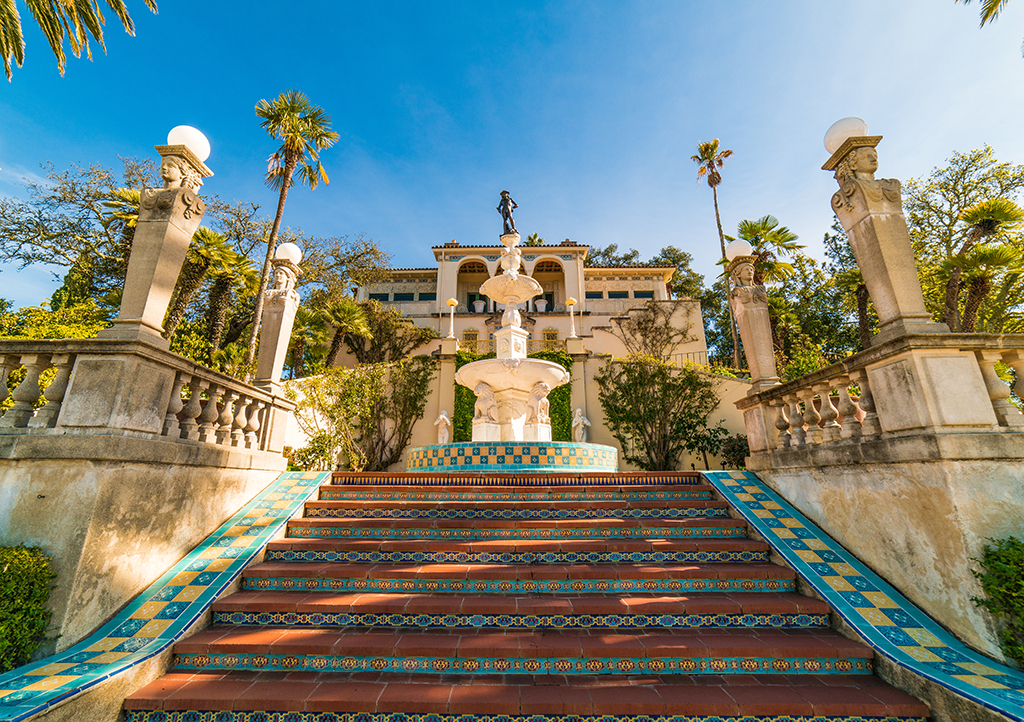
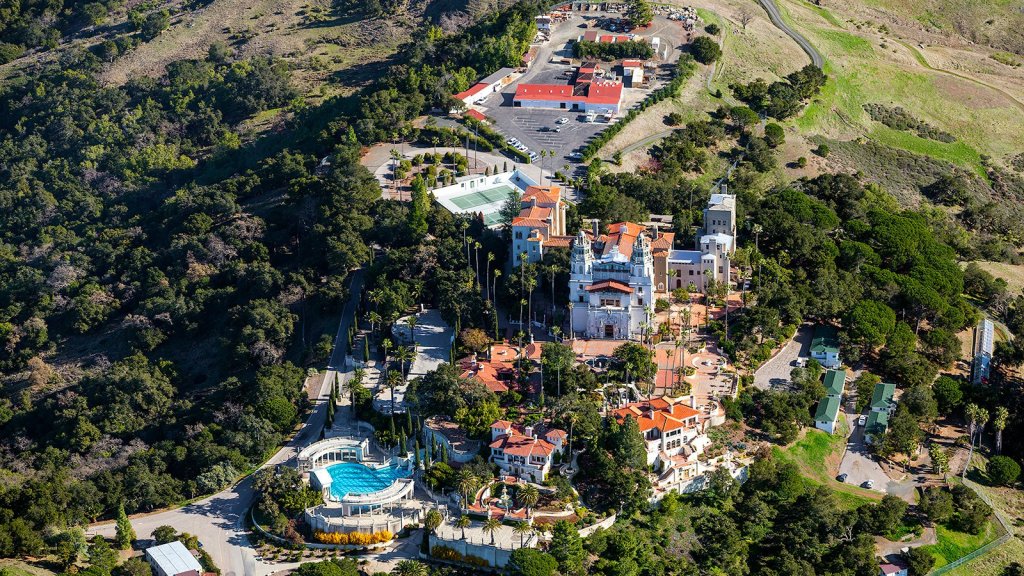
Morgan, one of the first prominent female architects in the United States, oversaw every detail. Together, Hearst and Morgan designed a sprawling estate of more than 90,000 square feet, including Casa Grande, three guesthouses, and terraces, pools, and gardens. Hearst imported entire ceilings from Spanish monasteries, Roman mosaics, and Renaissance fireplaces. The effect is eclectic yet strangely coherent — a pastiche of Old World grandeur staged under the California sun.
The Gilded Age in California
In its heyday during the 1920s and ’30s, Hearst Castle was the West Coast epicenter of Hollywood and political glamour. Guests included Charlie Chaplin, Cary Grant, Greta Garbo, Winston Churchill, and Clark Gable. Evenings were choreographed performances: cocktails by the Neptune Pool, dinner at the 82-foot-long refectory table, films screened in the private cinema.
Yet beneath the pageantry lay contradictions. Hearst himself, a titan of media power and inspiration for Orson Welles’s Citizen Kane, saw the castle as both retreat and stage. It was home, but it was also theater — a place to cultivate influence through spectacle.
Architecture as Fantasy
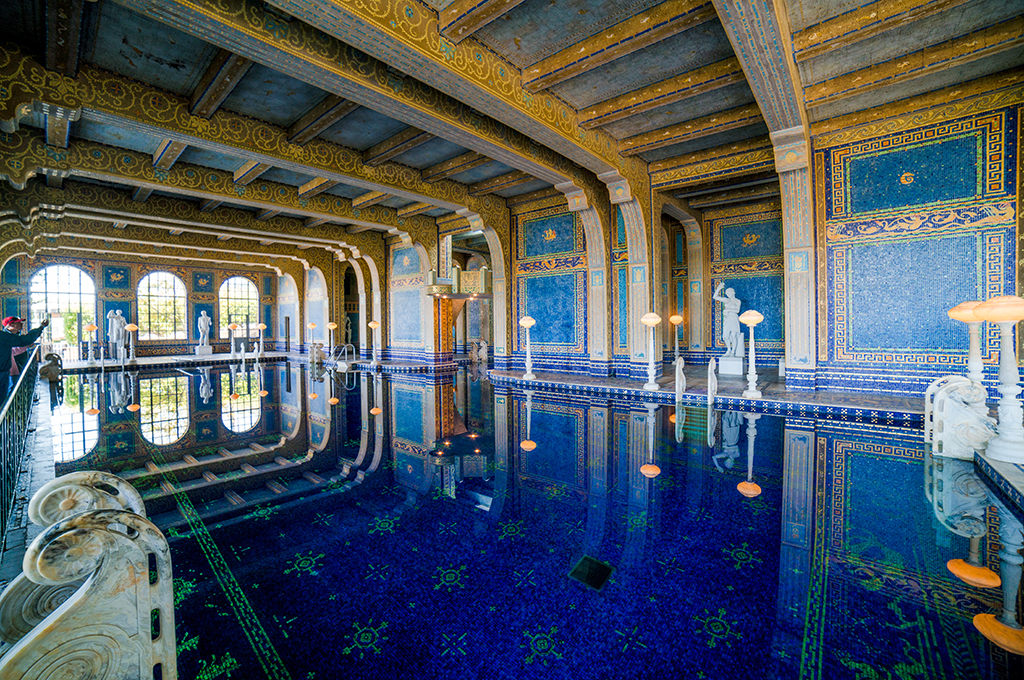
Hearst Castle’s design is a collision of styles. The main house, Casa Grande, resembles a Spanish cathedral, its twin bell towers modeled on a church in Ronda. The interiors overflow with European treasures: 15th-century choir stalls, Flemish tapestries, ancient Roman statues. Outside, the Neptune Pool dazzles with Greco-Roman columns, while the indoor Roman Pool glitters in cobalt and gold mosaic tiles.
What holds it together is Julia Morgan’s architectural discipline. She blended imported artifacts with California’s landscape, balancing theatricality with craftsmanship. The castle is eclectic, but it never collapses into chaos. It remains a triumph of architectural curation — the art of making a dream habitable.
Visiting Today
Hearst Castle is now a California State Park, with guided tours offering access to different sections of the estate. Visitors can choose between grand rooms, upper suites, gardens, or evening tours lit as they were in Hearst’s time. The site also features an excellent visitor center with exhibitions and a film on its history.
Practical Info:
- Location: San Simeon, halfway between Los Angeles and San Francisco on California’s Highway 1.
- Tickets: Tours must be booked in advance through the official site (hearstcastle.org).
- Best Time to Visit: Spring and autumn, when the coastal fog lifts and the light gilds the hills.
Where to Stay Nearby
- Cavalier Oceanfront Resort (San Simeon): Comfortable and close to the Castle, with sweeping Pacific views.
Website: http://www.cavalierresort.com - Cambria Pines Lodge (Cambria): Nestled in a forested setting, with rustic charm, gardens, and a spa.
Website: http://www.cambriapineslodge.com - Moonstone Beach Hotels (Cambria): Options such as Blue Dolphin Inn and Cambria Shores Inn offer boutique accommodations directly overlooking the ocean.
Website: http://www.visitcambriaca.com - Allegretto Vineyard Resort (Paso Robles): For those wanting luxury inland, this Tuscan-inspired resort offers vineyards, spa, and art-filled courtyards about 45 minutes from Hearst Castle.
Website: http://www.allegrettovineyardresort.com
Where to Eat
- Robin’s (Cambria): A beloved local spot with globally inspired California cuisine, set in a charming adobe house.
Website: http://www.robinsrestaurant.com - Sea Chest Oyster Bar (Cambria): Classic, no-reservations seafood spot overlooking Moonstone Beach. Fresh oysters, cioppino, and Pacific sunsets.
Website: seachestoysterbar.com - Madeline’s Restaurant & Wine Cellar (Cambria): Refined bistro dining with an excellent wine list, highlighting Paso Robles vintages.
Website: http://www.madelinescambria.com - Paso Robles Wineries: Extend the trip inland to sample some of California’s finest wines at estates like Tablas Creek and Justin Vineyards.
Conclusion: The Enchanted Hill Endures
Hearst Castle is many things at once: architectural folly, cultural museum, Hollywood legend, political theater. To walk its terraces is to step into a fantasy that remains startlingly intact, a dreamscape where antiquity, Renaissance Europe, and 1930s Hollywood converge under the California sky.
But the castle is more than spectacle. It is also a testament to Julia Morgan’s architectural brilliance, to the ambitions of William Randolph Hearst, and to the complicated legacies of wealth and power in America. Fifteen decades after its conception, it still enchants — not because it is coherent, but because it dares to be excessive.
On the road trip up Highway 1, where rugged coastline meets golden hills, Hearst Castle rises like a mirage: a reminder that the American Dream has always been part fantasy, part theater, and part architecture.
 My World of Interiors