
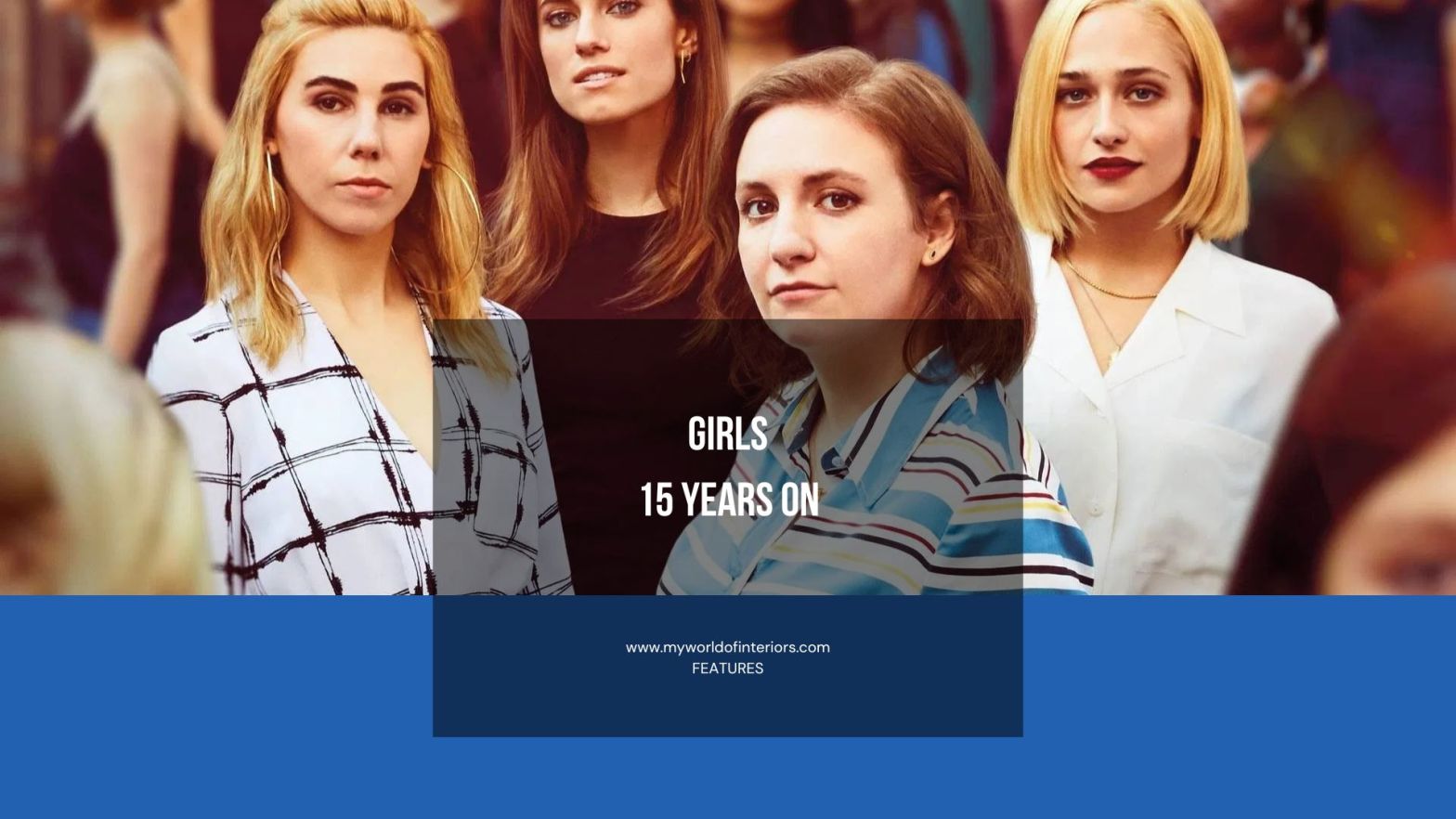
When Girls premiered on HBO in April 2012, it landed like a grenade in the cultural conversation. Created by Lena Dunham at just 25 years old, the series was messy, raw, self-absorbed, and startlingly honest. It followed four twenty-something women in Brooklyn — Hannah, Marnie, Jessa, and Shoshanna — as they stumbled through friendship, sex, work, and identity. For some, it was a revelation; for others, a provocation.
Fifteen years later, Girls remains one of the defining cultural texts of its era — not because it was flawless, but because it dared to be flawed. It put millennial womanhood on screen before the word “millennial” had calcified into cliché. It documented a generation’s anxieties and contradictions, even as it became a lightning rod for debates about privilege, representation, and feminism. To revisit it now is to revisit a time when television was just beginning to embrace the anti-heroine, and when the internet still believed that cultural criticism could reshape the world.
The Shock of the Real
Girls was born in the shadow of Sex and the City, to which it was inevitably compared. But where Carrie Bradshaw floated through Manhattan in Manolos, Hannah Horvath struggled to pay rent in Greenpoint while wearing ill-fitting rompers. The sex was awkward, often bad, sometimes degrading. The apartments were shabby. The friendships were brittle, tinged with competitiveness and betrayal.
Dunham’s insistence on showing the female body — specifically, her own body — in all its unfiltered reality was groundbreaking at the time. She challenged Hollywood’s beauty norms, turning vulnerability into defiance. Hannah’s nakedness, often unflattering, was political in its ordinariness. For some viewers, it was liberating; for others, it was unbearable. But it forced a confrontation with how women’s bodies were represented on television.
The Ensemble as Archetypes
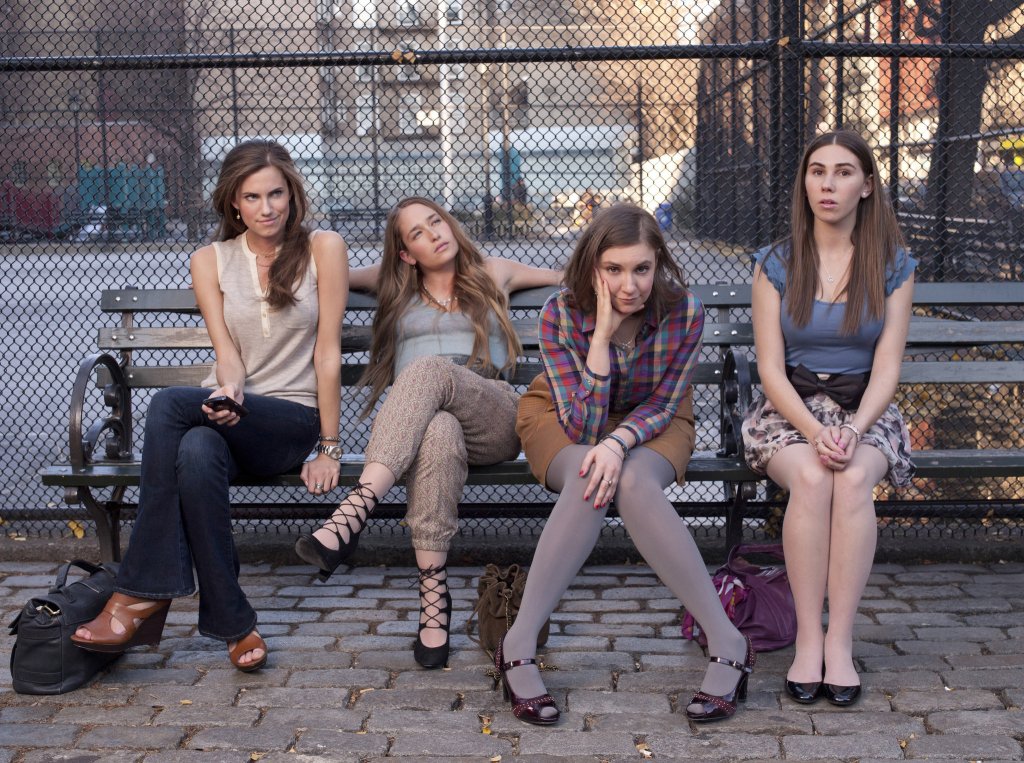
Each of the four women became an archetype of millennial femininity:
- Hannah (Lena Dunham): self-absorbed, aspiring writer, messy and self-destructive yet oddly charismatic in her honesty.
- Marnie (Allison Williams): polished, ambitious, desperate to project control while secretly hollow with insecurity.
- Jessa (Jemima Kirke): bohemian, seductive, allergic to responsibility, embodying both the fantasy and the danger of “freedom.”
- Shoshanna (Zosia Mamet): initially comic relief, a naïve NYU student, who grew into perhaps the most grounded and pragmatic of them all.
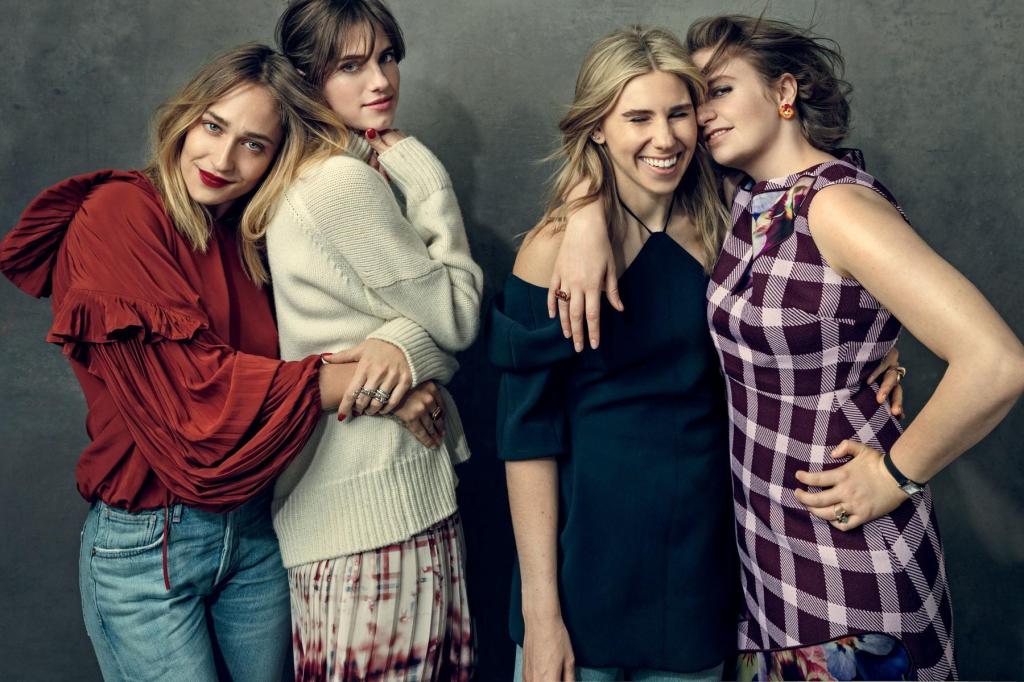
Together, they formed a portrait of friendship that was not idealized but fraught — friendships sustained less by loyalty than by inertia and shared history. This was itself radical: female friendships on television had long been framed as supportive sanctuaries; Girls suggested they could be toxic, competitive, and yet somehow still essential.
Lena Dunham: The Lightning Rod
Any discussion of Girls is inseparable from its creator. At 25, Lena Dunham became not only a showrunner but a generational figure. She wrote, directed, and starred in a series that mirrored her own life with often uncomfortable intimacy.
Dunham was hailed as a prodigy — her debut film Tiny Furniture had already won awards — but Girls thrust her into a new level of scrutiny. She became a symbol of millennial creativity and entitlement all at once: praised for her candor, criticized for her privilege, and dissected relentlessly by the media.
The backlash was swift and enduring. Dunham’s autobiographical style was seen by some as bravery and by others as narcissism. Her political interventions, often outspoken and sometimes tone-deaf, made her a lightning rod in feminist discourse. And yet, with hindsight, her audacity looks historic. Few women of her age had ever been given the keys to HBO, and fewer still reshaped the television landscape so decisively.
Fifteen years on, Dunham’s legacy is not uncontroversial, but it is undeniable. She cracked open doors for younger female creators — Issa Rae, Phoebe Waller-Bridge, Michaela Coel — who could tell their own messy, specific stories. If she bore the brunt of a generation’s debates about representation, she also created a space where new, more diverse voices could flourish.
Controversy as Currency
From the start, Girls was embroiled in controversy. Its lack of diversity was glaring, especially in a city like New York. Its characters were unapologetically privileged, and critics argued that the show’s insularity mirrored Dunham’s own background. Each season seemed to spark debates — about consent, race, nepotism, the politics of nudity.
But controversy was also its cultural fuel. Girls arrived at the height of internet think-piece culture, when Twitter discourse and online essays amplified every episode into a referendum on feminism, sex, or millennial values. It was perhaps the first television show to be lived as much through online debate as through viewing.
Legacy: The Anti-Heroine and Beyond
Looking back from 2026, Girls feels like the bridge between Sex and the City and Fleabag, between glossy escapism and raw self-examination. It made space for complicated, unlikeable female protagonists — women who could be selfish, neurotic, even cruel, and still command narrative centrality.
Its DNA is visible in a host of later shows: Broad City, Insecure, Fleabag, I May Destroy You. Each built on Girls’ willingness to foreground women’s interior lives without smoothing their edges. Even prestige dramas such as Euphoria owe something to Girls’ insistence that young adulthood deserved serious, unflinching representation.
Sidebar: Five Essential Episodes
1. “Pilot” (Season 1, Episode 1)
Where it all began: Hannah’s parents cut her off financially, setting in motion her faltering attempts at independence. The episode established the show’s tone — awkward, confessional, sharply observed.
2. “Hannah’s Diary” (Season 1, Episode 3)
A crystallization of Dunham’s comedic voice: Hannah’s personal writings are exposed, blurring the line between private confession and public humiliation.
3. “One Man’s Trash” (Season 2, Episode 5)
Perhaps the show’s most polarizing episode, a bottle story in which Hannah has a brief affair with an older man. Celebrated by some as a dreamlike meditation, derided by others as self-indulgent.
4. “Beach House” (Season 3, Episode 7)
A turning point for the ensemble, where simmering tensions explode during a weekend getaway. The choreography of a silent dance sequence captures the fraught bonds of female friendship.
5. “Goodbye Tour” (Season 6, Episode 9)
The penultimate episode, where the group fractures for good. The painful recognition that some friendships are not forever made this the true finale for many viewers.
Where They Are Now
- Lena Dunham (Hannah): After Girls, Dunham published essays, directed films (Sharp Stick), and created Camping for HBO. She remains a polarizing figure — admired for her candor, criticized for her missteps — but her place in television history is secure as a pioneer who made space for other women’s stories.
- Allison Williams (Marnie): Williams reinvented herself as a “scream queen” in Jordan Peele’s Get Out and Blumhouse’s M3GAN, showing her knack for playing unsettling, brittle characters.
- Jemima Kirke (Jessa): Kirke pursued both acting (Sex Education) and visual art, often blurring the lines between performance and self-presentation, much as she did on Girls.
- Zosia Mamet (Shoshanna): Mamet found success in The Flight Attendant and on stage, proving her comic timing and emotional range.
- Adam Driver (Adam): The show’s breakout star, Driver vaulted from Girls to global stardom in Star Wars, Marriage Story, and Annette. His presence in Girls now looks like the first act of one of the most significant careers of his generation.
The Reread in 2026
Rewatching Girls fifteen years on, some of its flaws are more glaring — its whiteness, its occasional tone-deafness, its claustrophobic self-involvement. But its achievements remain striking. The performances feel fresh, the writing sharp, the commitment to awkward honesty still bracing in an era when “authenticity” is often polished into brand strategy.
Perhaps most enduring is its refusal of resolution. The finale left the women not triumphant but uncertain, still muddling through. That, in hindsight, was its most truthful gesture. Adulthood, Girls suggested, is not arrival but perpetual improvisation.
Still Difficult, Still Necessary
Girls was always a difficult show to love, but it was impossible to ignore. It polarized, provoked, and sometimes exhausted its audience. But it also cracked open television for a new generation of female storytellers, pushing the medium toward a more intimate and less idealized honesty.
Fifteen years later, its legacy is not perfection but provocation. It remains a mirror of millennial contradictions — narcissism and vulnerability, privilege and insecurity, freedom and paralysis. To watch Girls now is to remember what it felt like to be young in the 2010s: messy, broke, ambitious, self-obsessed, and desperate to make meaning of it all.
The world has changed, but Girls still holds up — not because it solved its contradictions, but because it embodied them.
 My World of Interiors