
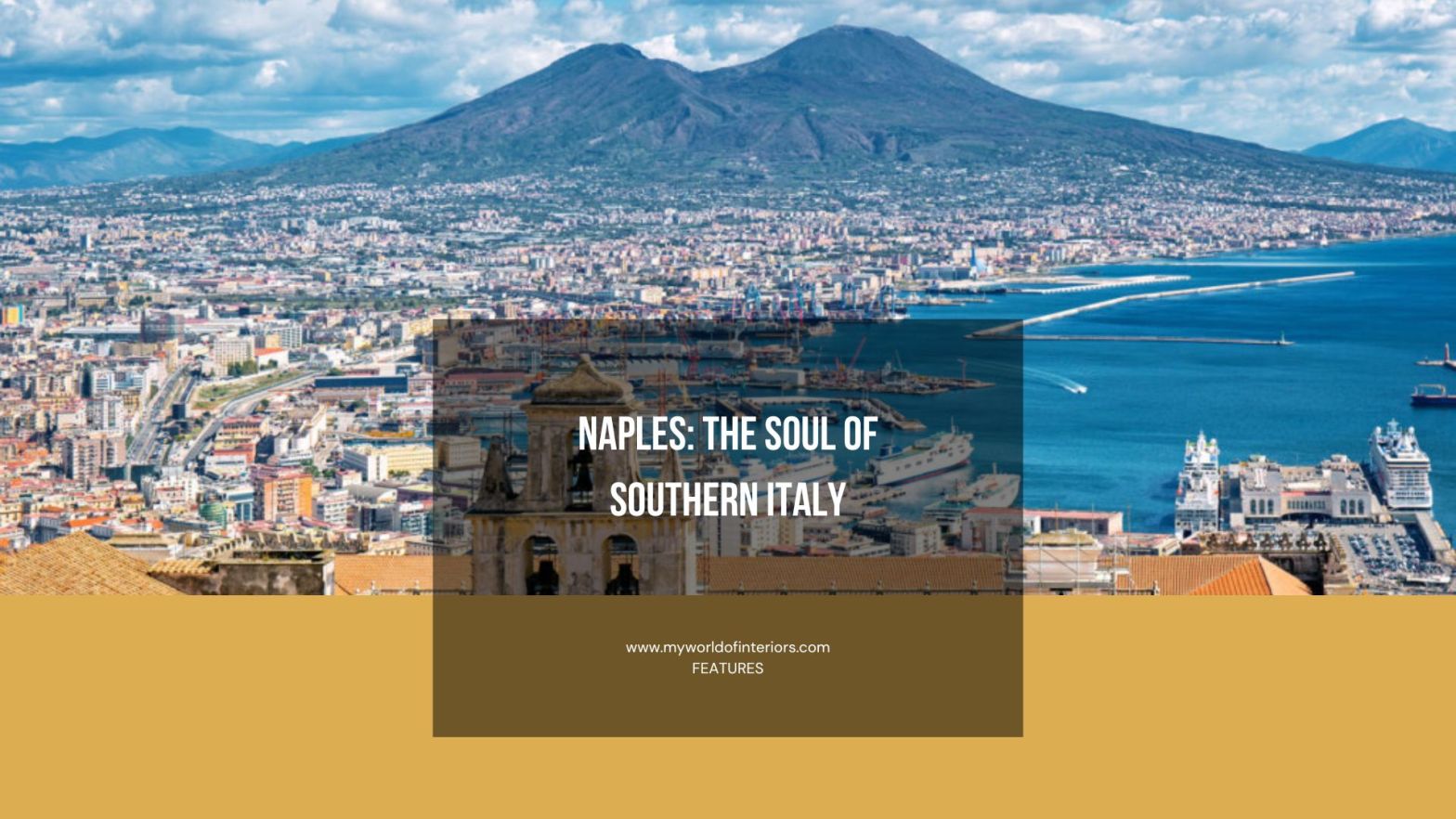
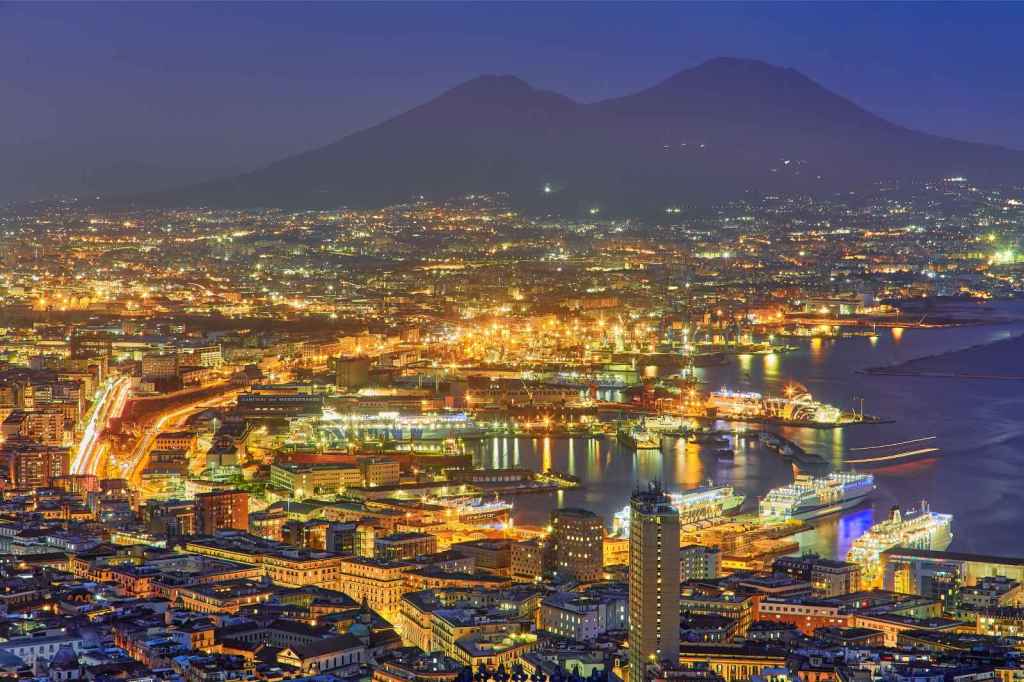
Naples is not a city that seduces quietly. It dazzles, confronts, overwhelms. Set between the shadow of Vesuvius and the glittering expanse of the Bay, it is a place where history collides with raw vitality — baroque churches next to crumbling palazzi, operatic gestures in markets, chaos harmonized into a kind of symphony. Naples is less polished than Rome or Florence, but its magnetism lies precisely in that: an authenticity that resists being tamed.
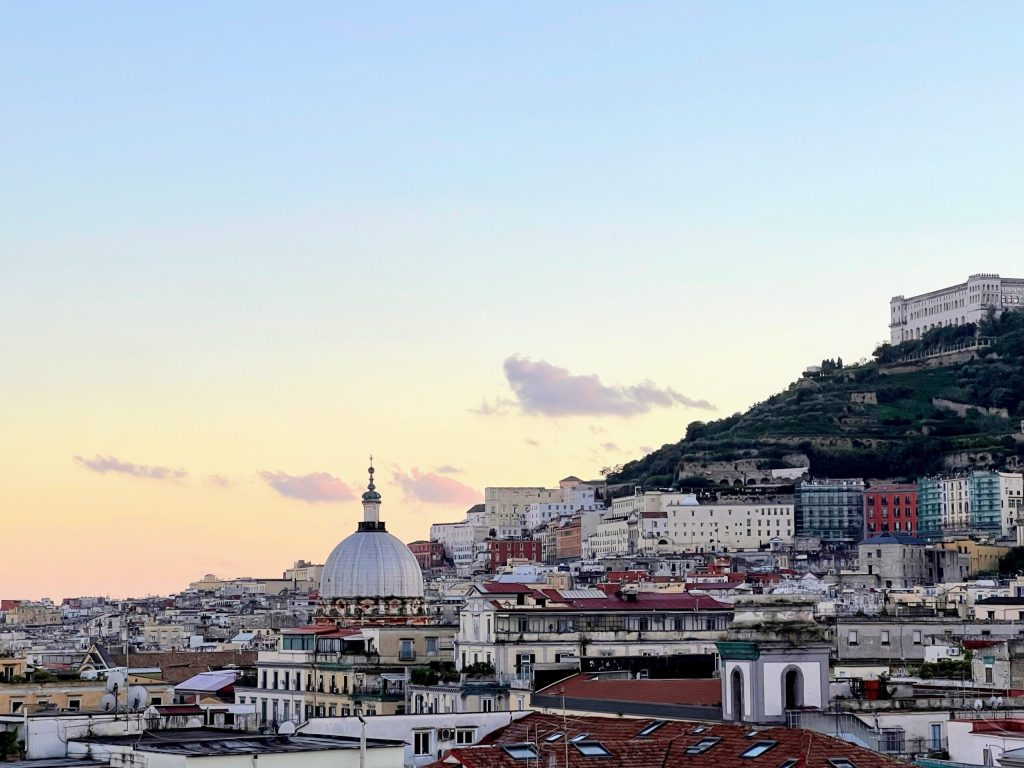
For centuries, it has been a cultural crossroads. Founded by the Greeks in the 8th century BCE as Neapolis — the “new city” — it became Roman, then Byzantine, then Norman, then Spanish. Each era left an imprint: Greek walls still visible underground, Roman theaters lying beneath modern streets, Renaissance cloisters blooming with majolica, and Bourbon palaces rivaling those of Versailles. This layering gives Naples its richness. To visit is to walk through a palimpsest where antiquity, baroque, and modernity coexist — sometimes uneasily, always vibrantly.
Where to Stay
Grand Hotel Vesuvio
Since 1882, this grande dame has welcomed everyone from Oscar Wilde to Enrico Caruso. Overlooking the bay, it carries with it the aura of fin-de-siècle elegance — the period when Naples was a cosmopolitan port of the Grand Tour.
http://www.vesuvio.it
Palazzo Caracciolo MGallery
Once the residence of a noble Neapolitan family, this 13th-century palazzo reflects Naples’ medieval past while offering contemporary boutique comfort. Its cloisters whisper of the Angevin dynasty that ruled the city and left it a center of European politics.
http://www.all.accor.com/hotel/5565
Romeo Hotel
By contrast, the Romeo Hotel represents Naples’ modern face: sleek architecture by Kenzo Tange’s studio, Michelin dining, and a glass-and-steel gaze on the harbor that was once the gateway to Spain’s empire.
http://www.romeohotel.it
Suites in the Spanish Quarter
For those who prefer immersion, Naples offers elegant apartments in the Spanish Quarter — narrow streets alive with daily theater — where balconies bloom with laundry and conversation.
Example: http://www.booking.com/hotel/it/casa-d-anna-ai-quartieri-spagnoli
What to See
The Archaeological Museum
Naples was once the glittering southern capital of the Roman world. The Archaeological Museum preserves its legacy: mosaics and frescoes from Pompeii and Herculaneum, bronzes from villas lost to Vesuvius, and mythological works that reveal a culture intoxicated by beauty.
http://www.mann-napoli.it
The Veiled Christ at Cappella Sansevero
A single marble sculpture that alone justifies a visit to Naples. Sanmartino’s Cristo Velato (1753) belongs to the Bourbon era of the city, when Enlightenment thinkers, scientists, and artists turned Naples into a laboratory of ideas. Its uncanny realism is part sculpture, part alchemy.
http://www.museosansevero.it
Baroque Splendor
Naples was a capital of the Spanish Empire, and the baroque here is more intense, more theatrical, than in Rome. Gesù Nuovo, Certosa di San Martino, and the gold-drenched Cappella San Gennaro testify to a city that expressed faith in opulence.
Gesù Nuovo: http://www.chiesagesunuovo.com
Certosa di San Martino: http://www.museiitaliani.it/musei.php?id=418
Cappella San Gennaro: http://www.cappelladelsangennaro.it
Underground Naples
Beneath the chaos lies history: Greek aqueducts, Roman theaters, early Christian tombs, and WWII shelters. Napoli Sotterranea shows how each civilization used — and reused — the city’s porous tufa foundations.
http://www.napolisotterranea.org
Day Trips to Antiquity
From Naples, Pompeii and Herculaneum are within easy reach. Both cities were destroyed by the eruption of Vesuvius in 79 CE, but their remains — frescoes, bread still in ovens, bodies frozen in ash — form one of the most vivid glimpses into antiquity anywhere on earth.
Pompeii: http://www.pompeiisites.org
Herculaneum: ercolano.beniculturali.it
Where to Eat
Naples is the birthplace of pizza, and its culinary culture reflects centuries of ingenuity, necessity, and abundance. Spanish rule brought tomatoes from the New World; fertile volcanic soil around Vesuvius made them flourish. Combined with buffalo mozzarella from Campania’s plains, they created the margherita — a dish so simple, yet so emblematic of Naples that UNESCO declared Neapolitan pizza part of the world’s cultural heritage.
- L’Antica Pizzeria da Michele and Sorbillo are institutions where the margherita becomes a revelation: blistered crust, sweet tomatoes, creamy mozzarella.
http://www.damichele.net
http://www.sorbillo.it - For refinement, Palazzo Petrucci (Michelin-starred, overlooking the sea) and Veritas reinterpret Campanian ingredients with contemporary flair.
http://www.palazzopetrucci.it
http://www.veritasrestaurant.it - Street food reflects Naples’ popular genius: cuoppo (cones of fried seafood), frittatina di pasta (fried pasta pie), sfogliatella pastries with ricotta and citrus — best tried at SfogliateLab — and espresso so intense it is more ritual than beverage, ideally at Gran Caffè Gambrinus.
http://www.sfogliatelab.com
http://www.grancaffegambrinus.com
Naples as Theatre
To understand Naples is to understand its theatricality. The Spanish Quarter, with its balconies strung with laundry, is a living stage. Conversations are public, gestures operatic, and devotion intense — nowhere more so than in the cult of San Gennaro, the city’s patron saint, whose blood is said to liquefy miraculously each year.
http://www.cappelladelsangennaro.it
This theatricality extends to its cultural life. Caravaggio, exiled from Rome, found refuge here and painted works of shocking realism that mirrored Naples’ chiaroscuro existence. The Seven Works of Mercy, still hanging in the Pio Monte della Misericordia, is one of the most powerful paintings in European art. The Teatro di San Carlo, opened in 1737, is Europe’s oldest working opera house, still hosting performances that embody the grandeur of Bourbon Naples.
Pio Monte della Misericordia: http://www.piomontedellamisericordia.it
Teatro di San Carlo: http://www.teatrosancarlo.it
Practical Notes
- Best time to visit: Spring (April–June) and autumn (September–October), when weather is mild and the bay gleams.
- Getting around: Walking immerses you in the atmosphere; metro and taxis cover longer distances. Ferries link Naples to Capri, Ischia, and the Amalfi Coast.
- For the arts: Balance history with the contemporary at the MADRE Museum.
http://www.madrenapoli.it
Naples as Experience
Naples is not a city to be skimmed; it must be absorbed. It is a place where contradictions define identity: sacred and profane, ancient and modern, opulent and gritty. Its genius lies in this layering — a Greek city that became Roman, Spanish, Bourbon, and yet remained stubbornly Neapolitan.
To stay in Naples is to live inside a palimpsest, where the past erupts through the present like Vesuvius through the skyline. It is a city that insists on being felt, tasted, heard — a city that reminds us that history is not something preserved in museums but lived daily on its streets.
To come to Naples is not only to visit Italy. It is to encounter life itself, in all its drama, beauty, and imperfection — an opera staged against the sea, still ongoing, forever captivating.
 My World of Interiors