
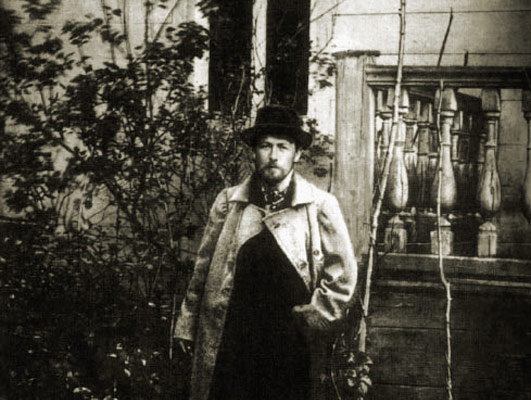
Anton Chekhov quietly yet radically redefined literature. His achievement lies not in flamboyant experimentation but in a subtler revolution: the elevation of the ordinary. In his plays and short stories, Chekhov dismantled the machinery of nineteenth-century drama and narrative, replacing melodrama with silence, event with atmosphere, and resolution with ambiguity. He made space for hesitation, irony, and yearning — for the life that happens between climaxes.
Chekhov’s best work does not shout; it listens. And in listening, it discovers the drama of boredom, the tragedy of wasted time, and the comedy of human pretensions. He remains one of the most performed playwrights in the world and one of the most widely read short story writers, precisely because he understood that literature’s true subject is not the extraordinary but the texture of the everyday. To say I love his work woudl be an understatement.
The Physician of Literature
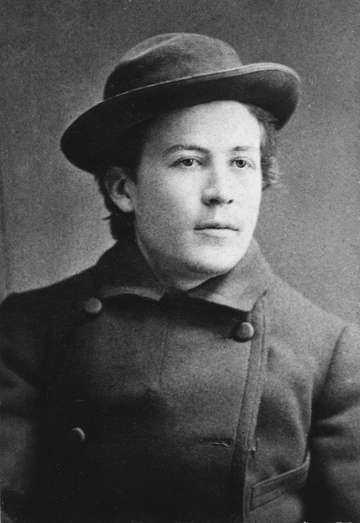
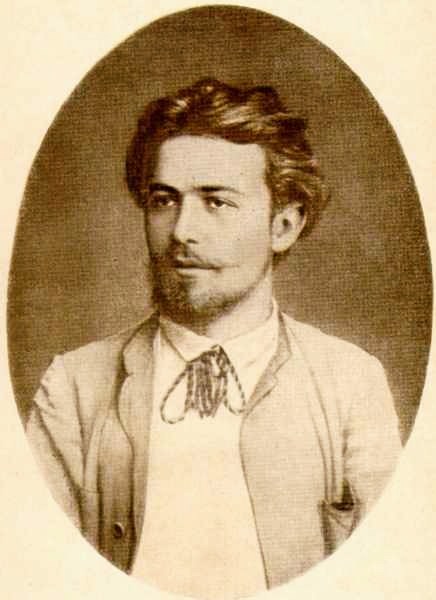
Born in 1860 in Taganrog, a provincial town in southern Russia, Chekhov was trained as a physician, and he never abandoned the vocation. “Medicine is my lawful wife,” he once said, “and literature my mistress.” The remark is ironic, but telling: Chekhov’s medical training shaped his literary practice. He diagnosed characters with the precision of a clinician, attentive not only to physical detail but to the psychological symptoms of longing, fear, and inertia.
That doubleness — doctor and writer — gave Chekhov a special authority in Russian letters. He was neither purely an aesthete nor merely a social chronicler. He studied suffering not to sentimentalize it but to record it honestly, with a clarity that is as unsparing as it is humane.
The Short Story: A Revolution in Miniature
Chekhov’s revolution began in the short story. In works such as The Steppe (1888), Ward No. 6 (1892), and The Lady with the Dog (1899), he broke with conventional narrative form. Where his predecessors leaned on moral lessons or dramatic plots, Chekhov embraced inconclusiveness. His stories often end without closure, their significance residing in mood and implication rather than resolution.
The Lady with the Dog, for example, resists the arc of romantic fiction. A chance affair between a married man and woman becomes not a scandalous passion but a meditation on the persistence of yearning in ordinary life. Its power lies in understatement, in the sense that the story continues beyond the page.
Chekhov’s style is deceptively simple: lean prose, concrete imagery, and dialogue that conceals as much as it reveals. Yet beneath this restraint lies psychological acuity. He captures fleeting impressions — a gesture, a pause, a sudden shift in weather — and lets them resonate. His stories are case studies in how the smallest details can expose entire worlds.
The Plays: Silence on Stage
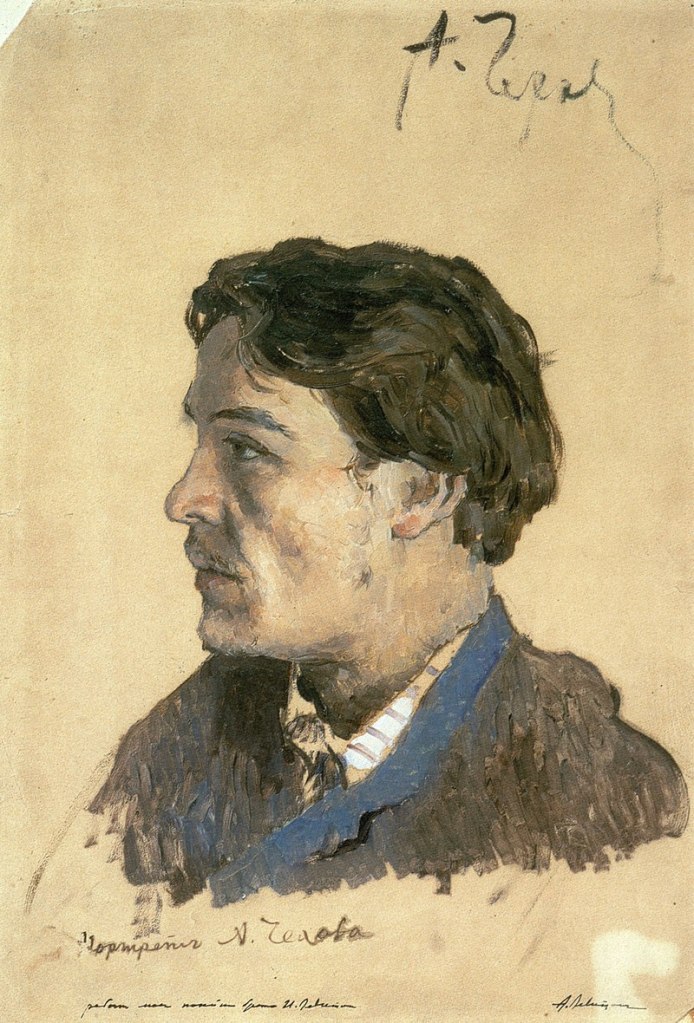
If the stories revolutionized narrative, the plays remade drama. Beginning with Ivanov (1887) and culminating in The Seagull (1896), Uncle Vanya (1899), Three Sisters (1901), and The Cherry Orchard (1904), Chekhov transformed theatrical expectations.
He rejected the contrivances of well-made plays: no overheard secrets, no last-minute rescues, no climactic duels. Instead, his dramas unfold as portraits of inertia and unfulfilled desire. In Uncle Vanya, years of quiet resentment erupt into a single, failed act of violence, only to subside back into monotony. In Three Sisters, the longing for Moscow — never fulfilled — becomes a metaphor for all human yearning.
Chekhov’s “subtext” is his greatest innovation. On stage, characters chatter about trifles — tea, weather, gossip — while beneath the dialogue pulse their deepest frustrations and desires. The true drama is invisible, lodged in what is unsaid. Konstantin Stanislavski, who staged many of Chekhov’s plays at the Moscow Art Theatre, called them works of “everyday life on stage.” Audiences initially resisted their quietness, but they have since become foundational to modern theatre.
Comedy and Tragedy Entwined
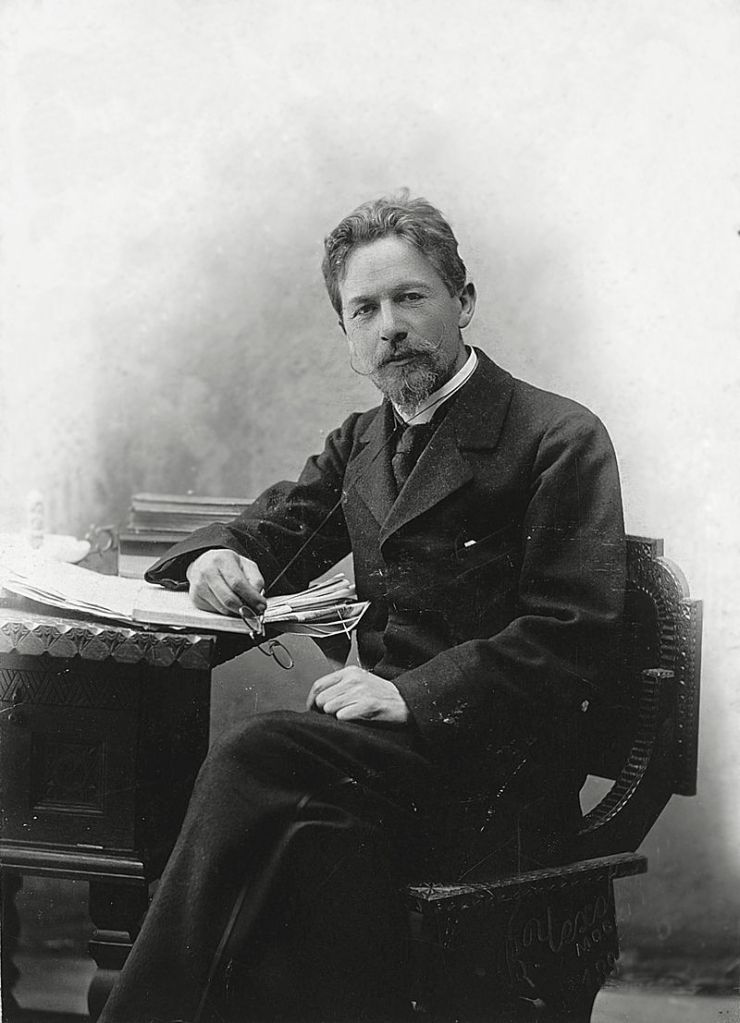
Chekhov himself insisted his plays were comedies, though directors often staged them as tragedies. The truth is that they are both. In Chekhov, the comic and tragic coexist, often in the same moment. A character’s despair can be ridiculous; their foolishness can be heartbreaking. Life, for Chekhov, is neither purely tragic nor comic, but an admixture of both.
This tonal ambiguity has made his work perennially modern. Contemporary audiences, skeptical of neat categories, recognize in Chekhov’s irony a worldview that feels true to experience: laughter and tears as inseparable companions.
Best Works: A Reader’s Guide
- Short Stories
- Ward No. 6 (1892): A devastating allegory of power, madness, and moral indifference.
- The Lady with the Dog (1899): A masterclass in restraint, capturing the complexity of love and longing.
- The Steppe (1888): A lyrical landscape piece, blending natural description with a child’s interior world.
- Plays
- The Seagull (1896): A play about art, love, and the futility of both, in which theatre itself becomes the subject.
- Uncle Vanya (1899): A portrait of wasted potential and corrosive resentment, laced with dark humor.
- Three Sisters (1901): A meditation on time, memory, and the unfulfilled dream of elsewhere.
- The Cherry Orchard (1904): Chekhov’s final play, both elegiac and comic, chronicling the passing of an aristocratic world.
Influence and Afterlife
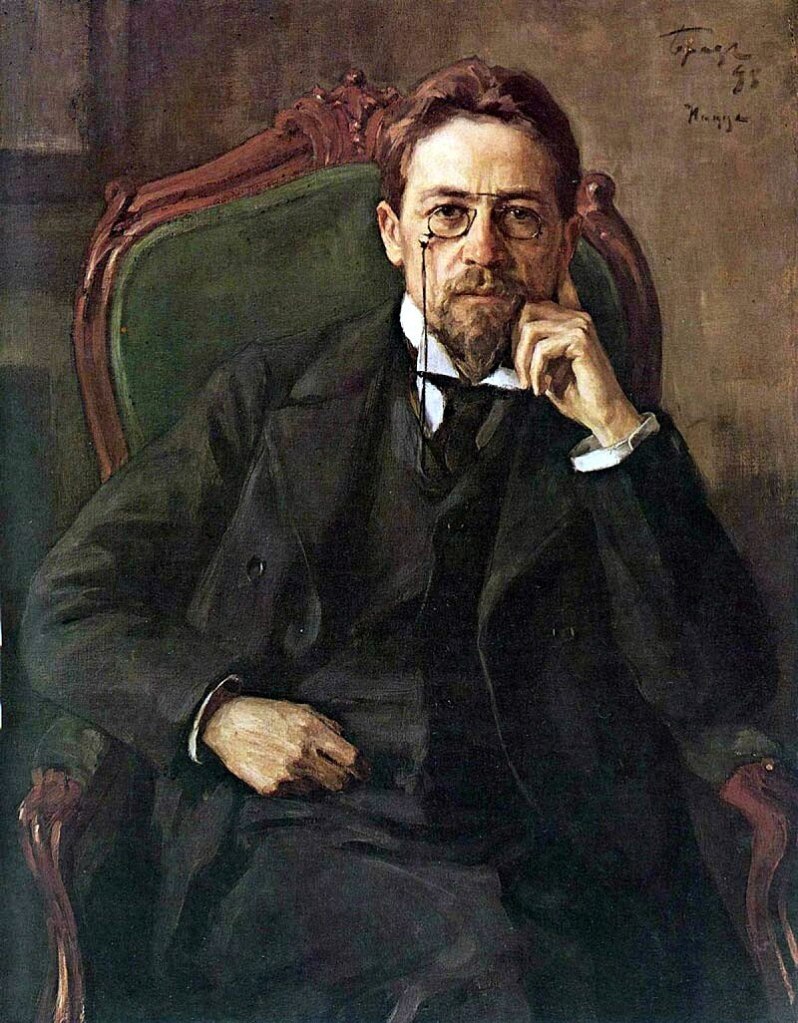
Chekhov’s influence is incalculable. His short stories shaped modernist prose, from Katherine Mansfield to Raymond Carver. His plays transformed theatre, laying the groundwork for Ibsen, Beckett, and Pinter. His method — understatement, subtext, the elevation of the ordinary — is now so absorbed into the bloodstream of literature that it feels natural, though in his time it was radical.
He also bequeathed a moral vision: one that refuses melodrama, sentimentality, or certainty, but insists on empathy. Chekhov does not resolve the contradictions of life; he represents them. He recognizes that the human condition is defined by yearning without fulfillment, suffering without resolution, comedy without punchlines.
The Quiet Radical
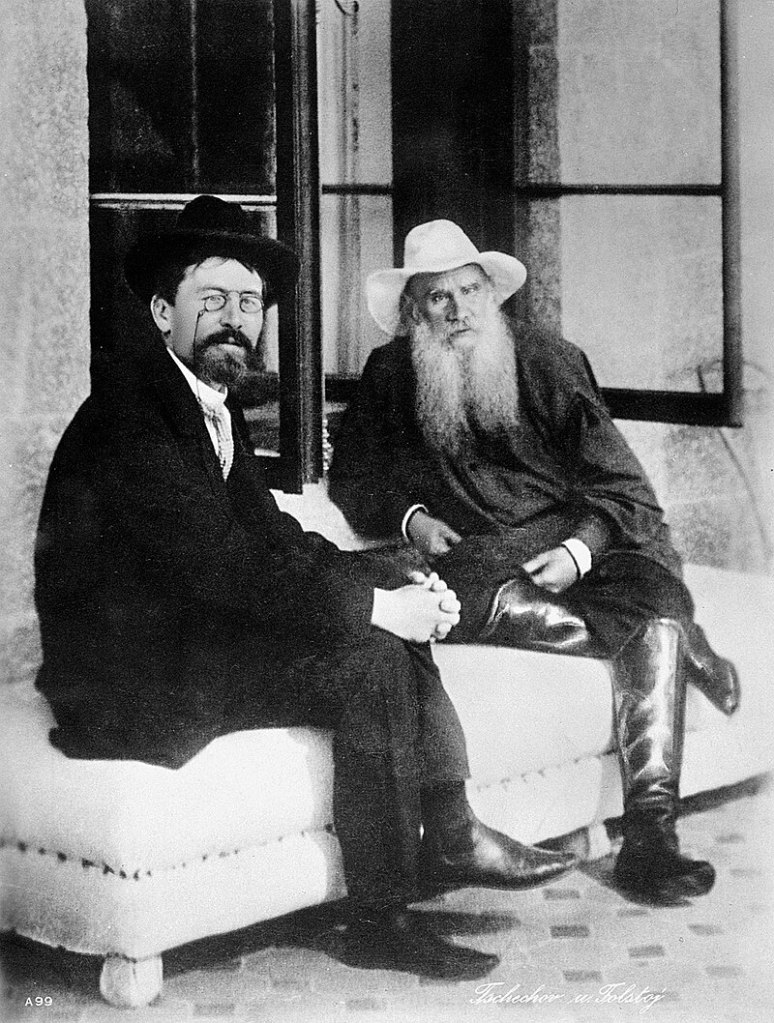
Anton Chekhov died in 1904 at the age of 44, felled by tuberculosis, but his work remains astonishingly alive. He redefined both story and stage not through spectacle but through silence, not through resolution but through openness.
To read Chekhov today is to be reminded that literature’s highest task may not be to explain or to console, but to observe — to pay attention to the fragile, absurd, tender textures of life. His best works still ask us to listen: to pauses, to silences, to the comedy of futility and the tragedy of time passing.
Chekhov’s genius was not to provide answers but to show us that the unanswered — the unfinished, the unresolved — is where human truth resides.
 My World of Interiors