
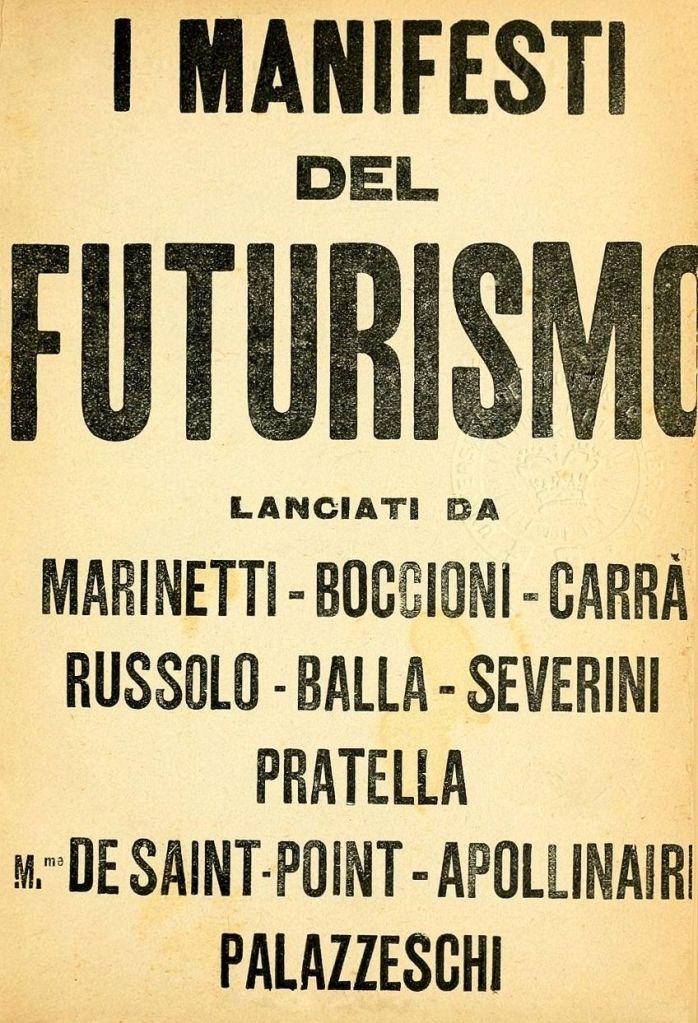
At the dawn of the twentieth century, a manifesto shook European culture like a thunderclap. Published in Le Figaro on February 20, 1909, Filippo Tommaso Marinetti’s Manifesto of Futurism declared war on the past and consecrated a new aesthetic: speed, violence, machinery, the beauty of the modern city, and the intoxicating promise of technology. “A racing car,” Marinetti announced, “with its hood adorned with great pipes, like serpents of explosive breath… is more beautiful than the Victory of Samothrace.”
The provocation was the point. Futurism was not just an art movement but a cultural insurgency, rejecting the weight of tradition in favor of rupture. In painting, sculpture, literature, and design, it sought to capture dynamism itself: motion as essence, the machine as muse. Yet its story is more complicated than youthful rebellion. Tied to Italian nationalism and later entangled with Fascism, Futurism embodies both the utopian intoxication of modernity and its darker, destructive energies.
The Manifesto as Performance
Unlike earlier avant-gardes, Futurism began not with objects but with a manifesto. Marinetti, a poet rather than a painter, understood that in the age of mass media, polemic could be as powerful as canvas. The Manifesto of Futurism was itself a work of art, written in incendiary prose that called for the destruction of museums, libraries, and academies — the symbolic killing of the father to make space for the child.
This rhetoric was performative, even theatrical. Futurist artists staged confrontational evenings of declamation, noise, and spectacle, provoking riots in Italian theaters. The movement announced itself as a new religion of energy, with the manifesto as scripture.
Futurism in Paint: Motion Made Visible
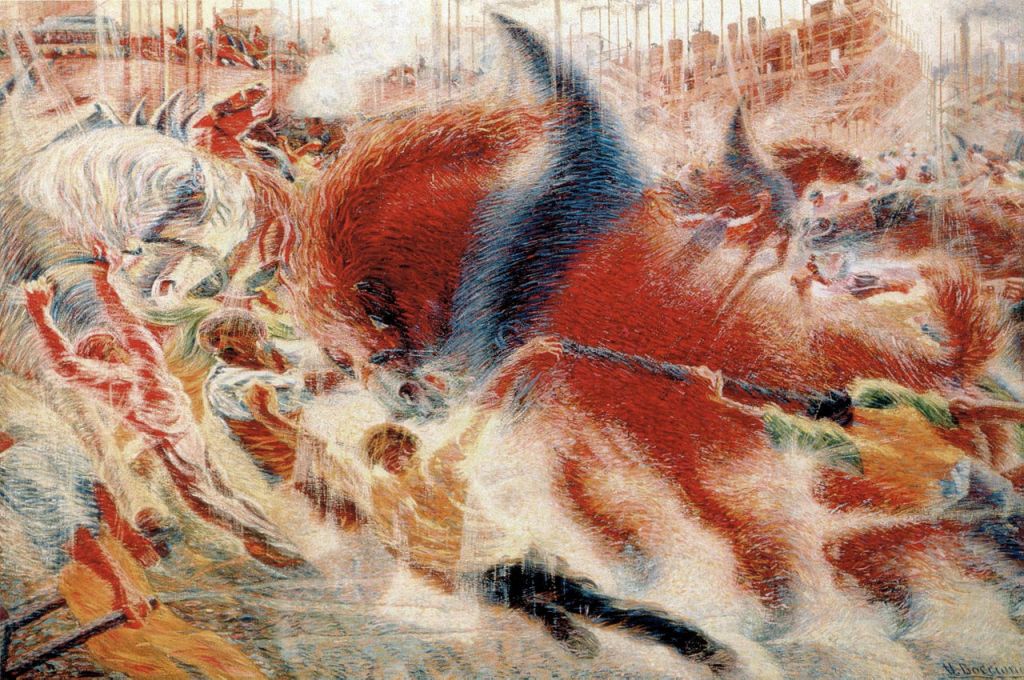
In visual art, Futurism found its most coherent expression. Painters such as Umberto Boccioni, Giacomo Balla, Gino Severini, and Carlo Carrà sought to depict not objects but the sensation of movement. Influenced by Cubism but rejecting its analytical stillness, they layered figures in successive stages of motion, fracturing form into rhythmic planes.
Boccioni’s The City Rises (1910) surges with muscular horses and laborers, bodies dissolving into waves of color. Balla’s Dynamism of a Dog on a Leash (1912) humorously multiplies the paws and tails of a dachshund until it becomes pure velocity. Severini’s Armored Train in Action (1915) translates modern warfare into kaleidoscopic geometry.
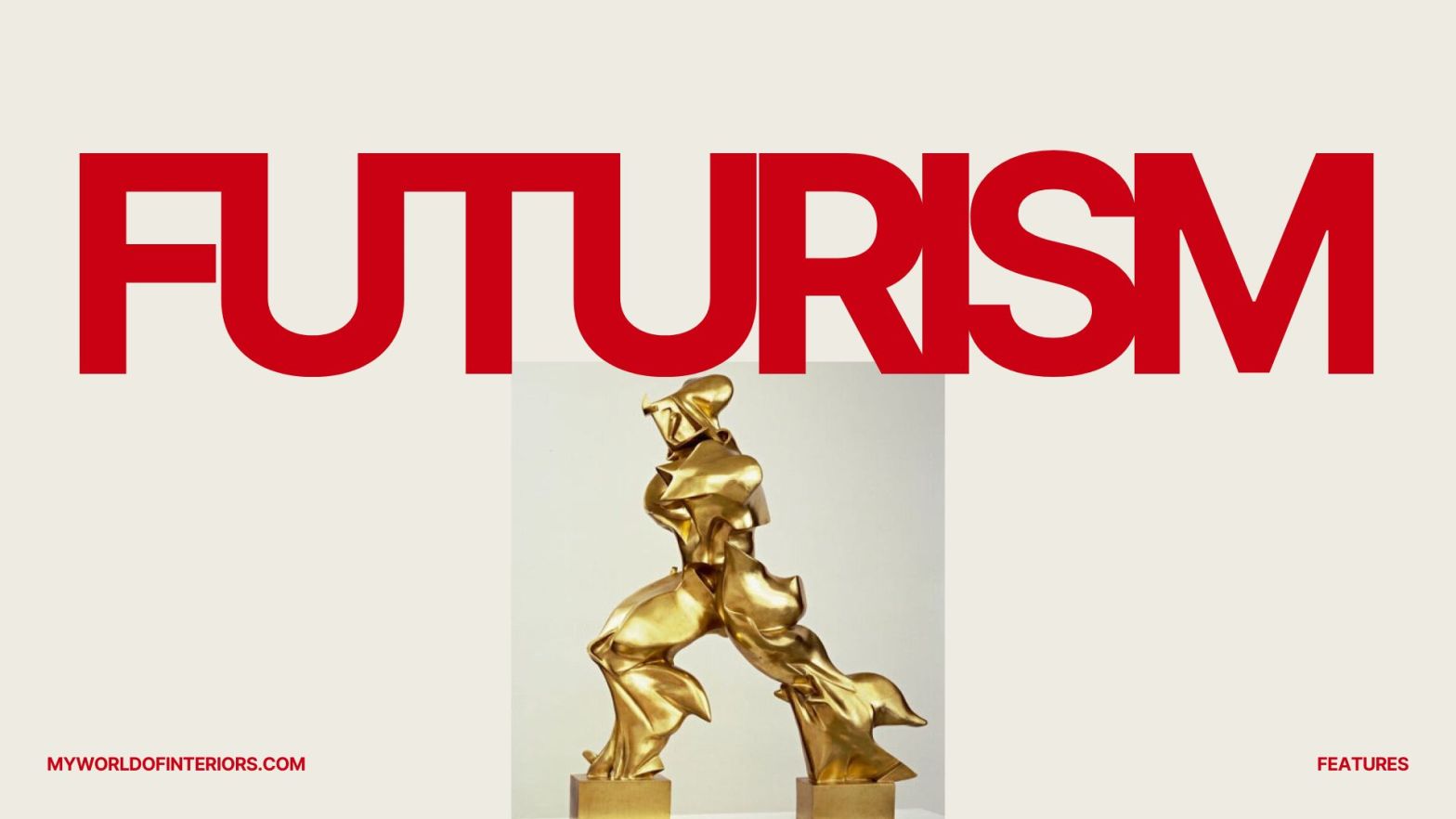
In sculpture, Boccioni’s Unique Forms of Continuity in Space (1913) remains Futurism’s most enduring icon: a bronze figure striding forward, limbs elongated into aerodynamic curves, human anatomy fused with the machine.
Futurism and the Machine
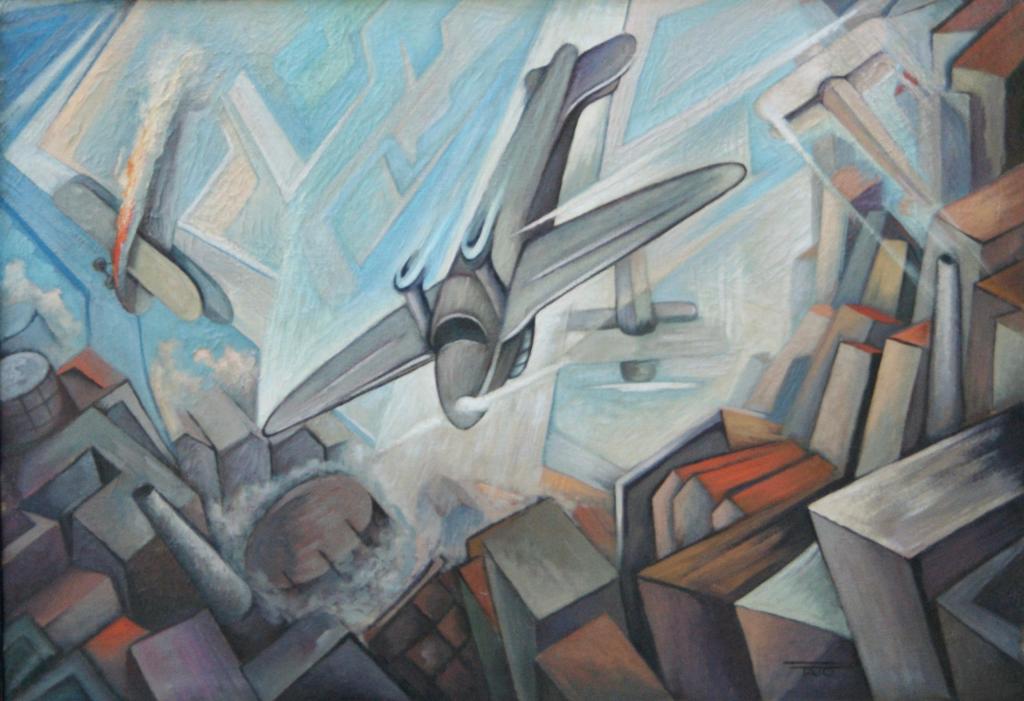
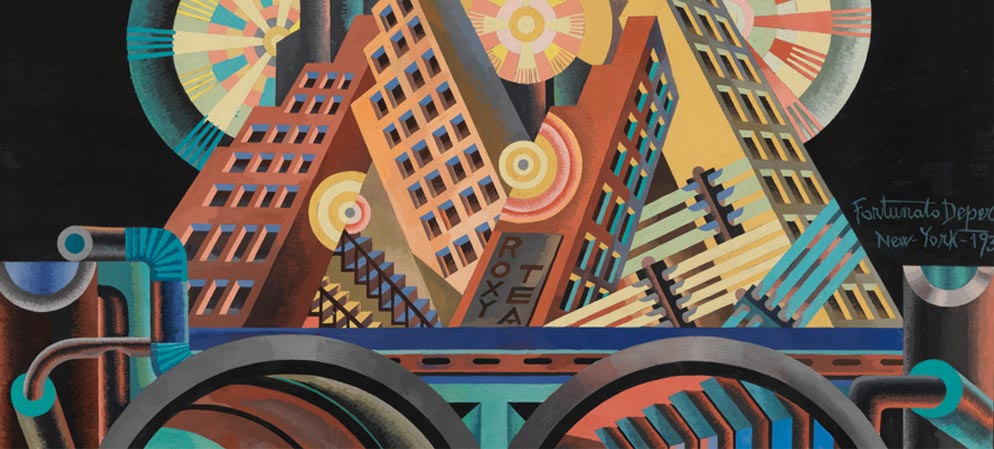
The machine was not merely a motif but a metaphysics. Futurists embraced the aesthetics of factories, locomotives, and airplanes as symbols of human transcendence. Motion was liberation; the motor was destiny. This worship of machinery aligned with the emerging rhetoric of modernity in Italy, a country seeking to shed its agrarian past and assert itself as an industrial power.
But this embrace of machinery was not neutral. The Futurists glorified violence and war as “the world’s only hygiene,” envisioning destruction as creative renewal. In retrospect, the rhetoric foreshadows the catastrophes of the twentieth century: the mechanized slaughter of World War I, the alignment of Futurism with Mussolini’s Fascism, the troubling conflation of art, technology, and political violence.
Beyond Painting: Poetry, Architecture, and Design
Futurism was a total project. In poetry, Marinetti invented parole in libertà (“words in freedom”), scattering text across the page, using typography, punctuation, and noise-sounds to simulate battlefields and city streets. This was poetry as visual score, a forerunner of concrete and visual poetry.
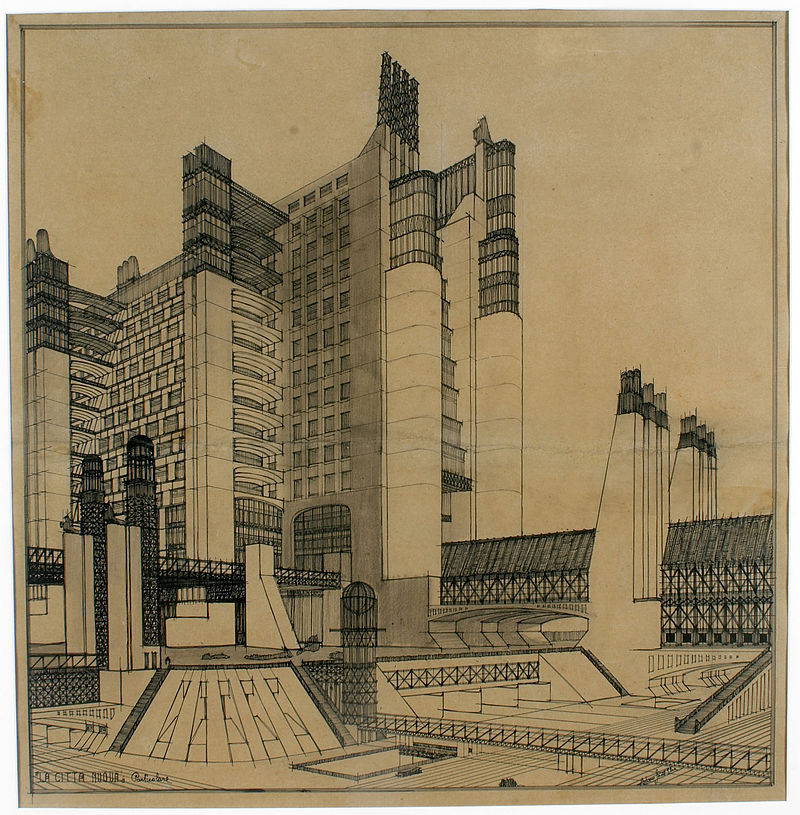
In architecture, Antonio Sant’Elia imagined a Futurist city of colossal towers, conveyor belts, and bridges — sketches that prefigure later visions of modernist urbanism. Though Sant’Elia died in World War I, his designs influenced generations of architects, from Le Corbusier to postwar brutalists.
In music, Luigi Russolo’s The Art of Noises (1913) argued for an expanded sonic palette, embracing the sounds of engines, sirens, and factories. He even built instruments called intonarumori to generate mechanical noise. These radical ideas anticipated electronic music and sound art by decades.
The Shadow of Politics
Futurism’s fate was bound to Italian politics. Its cult of speed and violence meshed with the ethos of Fascism, and Marinetti himself aligned with Mussolini. Though some Futurist artists distanced themselves, the movement’s reputation has remained tainted by this association. Unlike Cubism or Surrealism, Futurism cannot be fully disentangled from authoritarian aesthetics.
Yet it is precisely this tension — between avant-garde radicalism and reactionary politics — that makes Futurism such a revealing chapter in modernism. It demonstrates how aesthetic exhilaration can slide into ideological danger, how the dream of acceleration can become complicit with destruction.
Legacy and Afterlife
Despite its contradictions, Futurism exerted immense influence. Its experiments with form and motion anticipated abstraction, kinetic art, and digital aesthetics. Its typographic innovations informed Dada, Constructivism, and later graphic design. Its fascination with machinery found echoes in Bauhaus design, modernist architecture, and even contemporary sci-fi visual culture.
In many ways, Futurism’s vision has been realized — not in the utopian city of Sant’Elia, but in the acceleration of the digital age. Our culture of speed, perpetual connectivity, and technological intoxication is recognizably Futurist, if stripped of its early naïveté.
Sidebar: Futurism Timeline
- 1909 – Marinetti publishes The Manifesto of Futurism in Le Figaro.
- 1910–11 – Boccioni, Carrà, Russolo, and Severini sign the Technical Manifesto of Futurist Painting.
- 1913 – Boccioni sculpts Unique Forms of Continuity in Space; Russolo publishes The Art of Noises.
- 1914–18 – World War I: Sant’Elia dies in battle; Futurists glorify war as renewal.
- 1920s – Marinetti aligns with Mussolini, embedding Futurism within Fascist politics.
- Post-1945 – Futurism’s reputation dims, but its influence radiates into modernism, design, and contemporary culture.
- Today – Futurism reexamined as both thrillingly avant-garde and disturbingly complicit with authoritarianism.
Conclusion: The Beauty and the Danger of Speed
Futurism remains both exhilarating and cautionary. Its art pulses with vitality, celebrating the machine as muse and motion as meaning. Yet its embrace of violence and its entanglement with Fascism remind us that aesthetic radicalism can be politically dangerous.
To study Futurism is to confront modernity in its purest, most ambivalent form: a belief that the future belongs to acceleration, that tradition is dead weight, and that art must become an engine of transformation. It is a vision that still resonates — and warns — in an age where speed and technology continue to define the human condition.
 My World of Interiors