
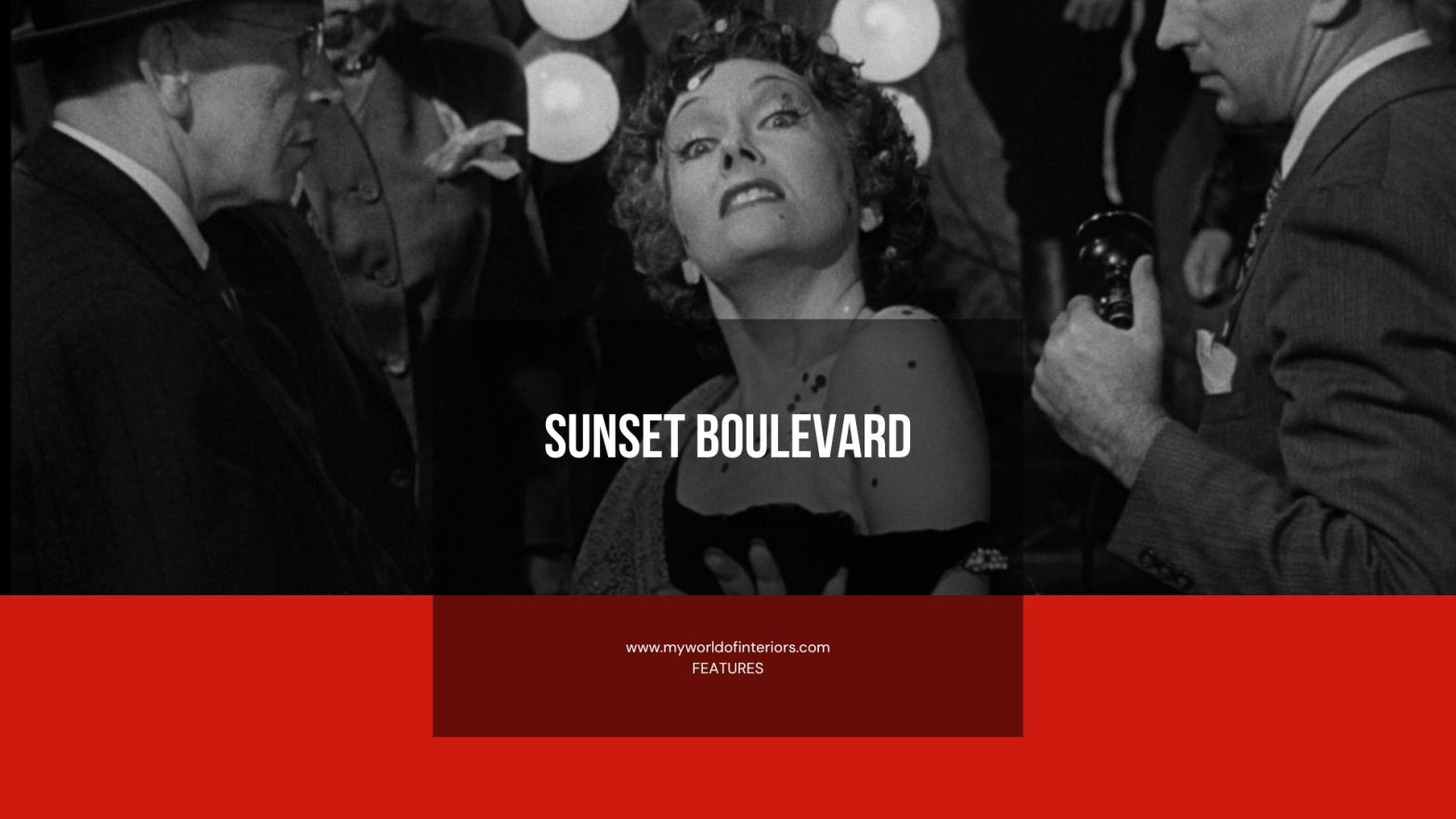
No other film has captured the pathology of Hollywood with the same precision and venom as Billy Wilder’s Sunset Boulevard (1950). At once noir, satire, and gothic melodrama, the film is less a portrait of one delusional actress than an x-ray of an entire industry addicted to spectacle and terrified of obsolescence. Its famous opening image — a dead man floating in a swimming pool, narrating his own demise — sets the tone: mordant, theatrical, and unflinchingly ironic.
Seventy-five years on, Sunset Boulevard remains a mirror held up to cinema itself, both fascinated by its illusions and horrified by its casualties. It is not only a story about Norma Desmond, the forgotten silent star, but also about Hollywood’s refusal to acknowledge its own mortality.
The Context: Hollywood in Transition
When Wilder began working on Sunset Boulevard, Hollywood was still reeling from the sound revolution of the late 1920s. The arrival of “talkies” had dethroned countless silent stars — their faces no longer sufficient when their voices failed to match audience expectations. Some adapted, but many vanished. By 1950, that generational wound had calcified into myth, and Wilder mined it with scalpel-sharp irony.
The film industry itself was also under siege: television threatened cinema’s supremacy, the Paramount Decree was dismantling the studio monopoly, and the glamour of the Golden Age had begun to tarnish. Into this moment Wilder inserted a story about faded glory, desperate reinvention, and the price of stardom.
Norma Desmond: The Gothic Actress
Gloria Swanson’s Norma Desmond is one of cinema’s most indelible creations — a grotesque, tragic, and oddly sympathetic embodiment of Hollywood’s excess. Living in a decaying mansion on Sunset Boulevard, she surrounds herself with mementos of past triumphs, tended by her butler and former director Max (Erich von Stroheim, himself a silent-era casualty).
Swanson, herself a silent film icon, plays Norma as both larger than life and heartbreakingly fragile. Every gesture is exaggerated, as though she is still acting for a silent camera. Her famous line — “I am big. It’s the pictures that got small” — distills her delusion but also Hollywood’s. She is grotesque because she refuses to accept erasure, but she is sympathetic because the industry built and then abandoned her.
Joe Gillis: The Hollywood Everyman
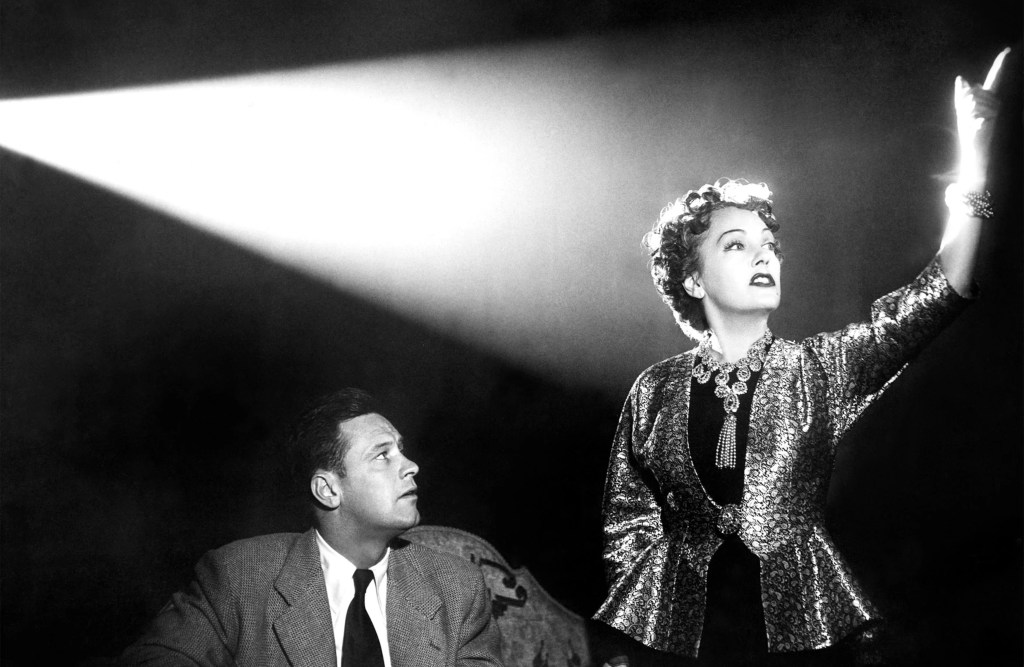
Opposite Norma stands Joe Gillis (William Holden), a struggling screenwriter who becomes both her kept man and her reluctant collaborator. Gillis is cynicism incarnate: too jaded to believe in Hollywood dreams, too desperate to leave them behind. His narration, dripping with noir fatalism, frames the story as both confession and autopsy.
Through Gillis, Wilder exposes Hollywood’s other casualty: not just stars who fell from grace, but writers whose work was chewed up and discarded by the system. If Norma embodies the past, Gillis represents the expendable present — ambitious, morally compromised, and ultimately doomed.
The House as Mausoleum
The Desmond mansion itself is one of the great sets in film history: a baroque Gothic palace rotting from within, filled with photographs, wax figures, and screenings of old reels. It is both museum and mausoleum, a physical manifestation of Norma’s psyche. Wilder shoots it as though it were haunted, with deep shadows, winding staircases, and oppressive décor.
The house becomes a character, an emblem of Hollywood’s inability to let go of its ghosts. When Norma descends its staircase in the final scene, believing herself on a film set, the house becomes a stage — and the line between performance and reality dissolves entirely.
Style: Noir Meets Satire
Formally, Sunset Boulevard blends genres with audacity. The dead narrator’s voiceover is pure noir, as is the fatalistic trajectory of Gillis’s story. The mansion and Norma’s theatrics belong to gothic melodrama. The cameos — Cecil B. DeMille playing himself, Buster Keaton and other silent comedians as Norma’s “waxworks” bridge partners — push the film into self-reflexive satire.
Wilder and cinematographer John Seitz shoot with noir chiaroscuro but also baroque flourishes, framing Swanson in close-ups that exaggerate her theatricality. The result is a film that critiques Hollywood while luxuriating in its visual language, both indictment and love letter.
The Ending: Madness as Performance
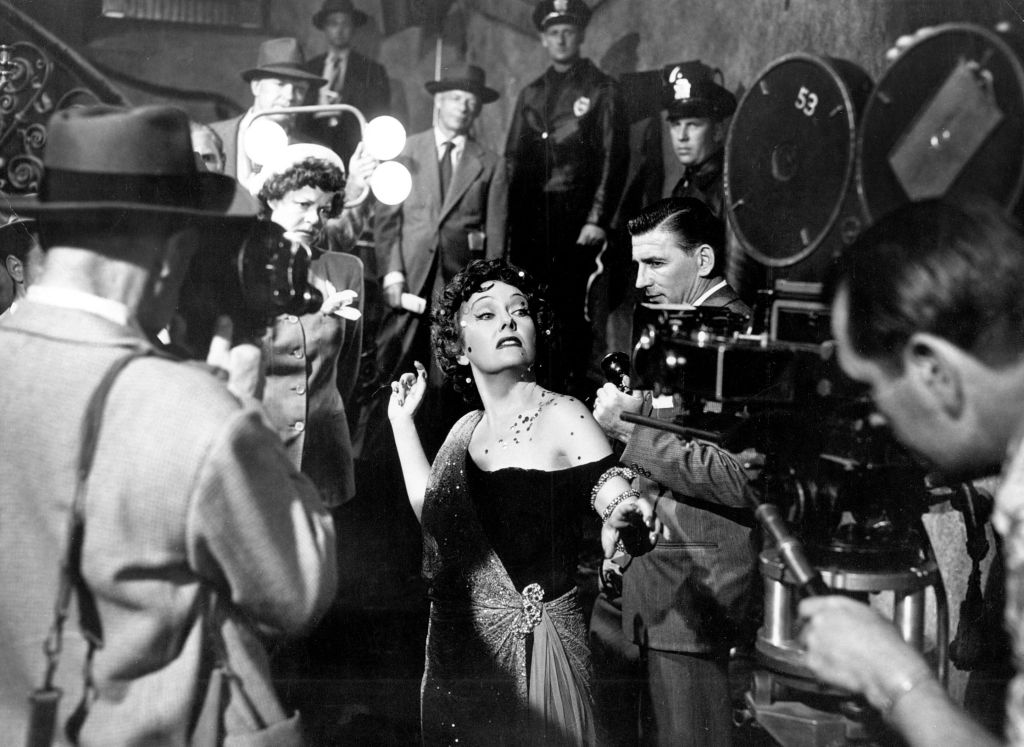
The final scene remains one of cinema’s most chilling: Norma, having murdered Joe, descends her staircase, believing she is on a set, delivering a performance for DeMille. “All right, Mr. DeMille, I’m ready for my close-up.” The line has become cliché, but in context it is devastating: an actress retreating fully into delusion, performance devouring reality.
It is also Wilder’s indictment of Hollywood’s complicity. Norma is mad, but her madness mirrors the industry’s: an obsession with close-ups, with youth, with the denial of time. She is both villain and victim, monster and martyr.
Sidebar: Five Defining Moments in Sunset Boulevard
1. The Pool Opening
Joe Gillis narrating his own death from a swimming pool — an audacious, fatalistic beginning that redefined noir narration.
2. “I am big. It’s the pictures that got small.”
Norma’s declaration of grandeur, encapsulating both her delusion and Hollywood’s fear of irrelevance.
3. The Waxworks Game
Buster Keaton, Anna Q. Nilsson, and H.B. Warner as Norma’s bridge partners — a haunting tableau of silent stars reduced to ghosts.
4. The DeMille Cameo
Cecil B. DeMille directing Samson and Delilah at Paramount, a meta-moment where Hollywood myth and reality intertwine.
5. The Final Descent
Norma’s mad “close-up” as she descends her staircase, a performance both triumphant and annihilating.
Legacy
Upon release, Sunset Boulevard shocked Hollywood. Some stars bristled at its cruelty; others recognized its truth. Over time it has come to be seen not only as Wilder’s masterpiece but as one of cinema’s great self-portraits. It has influenced generations of filmmakers, from Mulholland Drive to The Player, each grappling with Hollywood’s blend of glamour and decay.
Swanson’s Norma Desmond remains an archetype: the faded star, grotesque and glorious, clinging to relevance. Holden’s Gillis remains the prototype of the jaded insider. The film itself remains a mirror: each new generation sees in it not only the Hollywood of 1950 but the industry’s ongoing cycle of worship and erasure.
Hollywood’s Eternal Close-Up
Sunset Boulevard endures because it is not merely a satire of its moment but a parable of fame itself. It understands that Hollywood does not just produce films; it produces myths, devours its own, and leaves ruins in its wake. Norma Desmond is unforgettable not because she is singular but because she is archetypal — every industry has its Normas, stars built for adoration and abandoned when the light shifts.
Wilder’s genius was to recognize that the close-up — cinema’s ultimate gesture of intimacy — is also its ultimate cruelty. In Sunset Boulevard, the close-up becomes both benediction and annihilation, the moment where illusion and madness are indistinguishable.
Hollywood, like Norma, never stops believing it is ready for its close-up. That is both its glory and its curse.
Sunset Boulevard — Influence and Afterlife
1. Mulholland Drive (2001, David Lynch)
Lynch’s surrealist noir borrows Sunset Boulevard’s DNA: Los Angeles as dream and nightmare, the haunted actress, the collapsing boundary between performance and delusion.
2. The Player (1992, Robert Altman)
A savage Hollywood satire where the industry devours its own. Altman’s film echoes Wilder’s cynicism, replacing the silent star with the disposable executive.
3. Broadway & Beyond
The 1993 Andrew Lloyd Webber musical adaptation, starring Glenn Close in later revivals, reintroduced Norma Desmond as a tragic diva for a new generation, proving her mythic endurance.
4. American Horror Story: Sunset Boulevard Echoes
TV has repeatedly mined the film’s archetypes — the faded starlet, the Gothic mansion, the price of fame. Series like Feud: Bette and Joan and AHS borrow its tropes wholesale.
5. The Archetype of Norma
From Black Swan to Babylon, filmmakers continually return to the figure of the actress consumed by her role. Norma Desmond is less a character than a permanent symbol of Hollywood’s self-destruction.
 My World of Interiors