
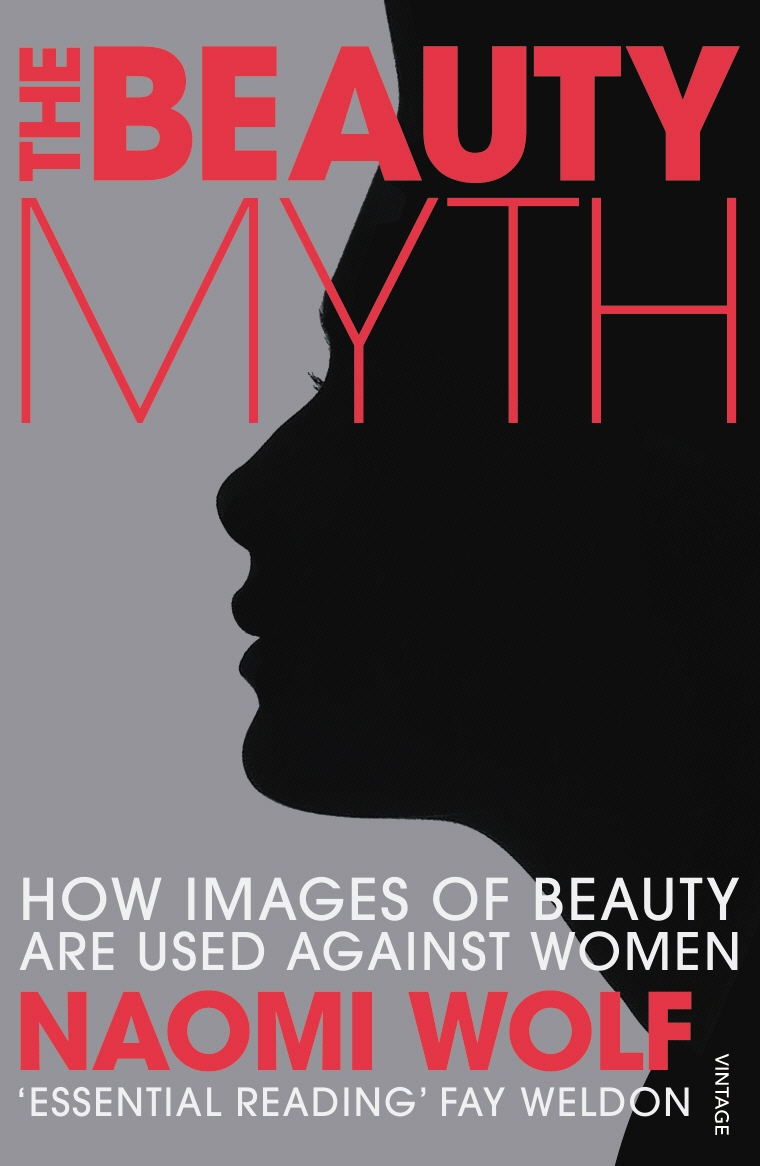
When The Beauty Myth appeared in 1990, it was like a flare shot into the cultural night sky. Naomi Wolf, then in her late twenties, took the vocabulary of feminism and applied it to the terrain of bodies, beauty, and image — the very spaces where women were told power could never exist. Her argument was urgent and radical: just as women had begun to win political and professional rights, a new form of control emerged, not through law or institution, but through ideals of beauty.
More than thirty years on, Wolf’s book remains a landmark in feminist thought. It reframed the beauty industry as a system of power, and it invited women to see their reflections differently — not as evidence of failure, but as sites of resistance. I can tell you one thing for sure, when I read it in my twenties, it changed everything about how I viewed society.
The Argument That Changed Everything
Wolf’s thesis was deceptively simple: “The beauty myth” is the idea that women must adhere to an unattainable standard of beauty, and that this standard tightens as women gain other forms of freedom. As barriers fell in the workplace, in education, and in politics, the pressure of thinness, youth, and flawlessness became sharper, more punishing.
The myth was not timeless, Wolf argued, but historical. It was a backlash mechanism, a way to absorb women’s energy and attention, to keep them perpetually occupied by self-surveillance. Dieting, cosmetic surgery, the billion-dollar industries built around beauty — these were not simply personal choices, but political structures.
A Positive Lens: Liberation Through Awareness
What made The Beauty Myth transformative was not just its critique, but its invitation. Wolf did not ask women to abandon beauty; she asked them to interrogate who defined it, and to imagine beauty on their own terms.
For readers in 1990, the book offered a profound shift in perspective. Suddenly, the “failure” to match an airbrushed model was no longer individual weakness but cultural conditioning. The guilt of “not enough” — not thin enough, not young enough, not flawless enough — could be re-read as resistance. Awareness itself became a form of liberation.
Cultural Shockwaves
The book hit during the rise of supermodels, aerobics culture, and glossy magazine perfection. It landed like a challenge to the visual order of the late 20th century. Media critics, fashion editors, and psychologists debated its claims. For many women, it was the first articulation of something felt but unnamed: that beauty was not neutral, but political terrain.
It also reshaped feminist discourse. Second-wave feminism had won legal rights; Wolf, part of the so-called third wave, argued that the battle had shifted to images, ideals, and representation. By calling beauty a “myth,” she gave women a tool to decode the endless churn of advertising and media.
Legacy and Afterlife
More than three decades later, The Beauty Myth has aged unevenly in places — some statistics dated, some arguments generalized. Yet its central insight remains powerful, especially in the digital age. Today, social media platforms amplify ideals at dizzying speeds, algorithms curate body standards, and filters create new impossibilities. Wolf’s warning feels prescient: as freedom expands, the beauty myth adapts.
At the same time, her call for resistance has blossomed into movements she could only have glimpsed: body positivity, body neutrality, campaigns for authentic representation in fashion and film. Younger generations read Wolf alongside Roxane Gay, bell hooks, and Chimamanda Ngozi Adichie, extending the conversation she began.
Why It Still Matters
Reading The Beauty Myth today is less about diagnosing a problem than about remembering a spark. It is about reclaiming time, attention, and joy from systems that profit by siphoning them away. Wolf’s gift to readers was not despair but perspective: once you see the myth, you can refuse its power.
The book continues to remind us that beauty can be redefined — as confidence, as presence, as individuality, as joy. That women’s worth cannot be measured in inches or years. And that freedom, once won, must always be defended, even in the mirror.
10 Books That Carry the Conversation Beyond The Beauty Myth
1. Fat Is a Feminist Issue by Susie Orbach (1978)
A pioneering exploration of body image and compulsive eating, linking personal struggles to political structures.
2. The Second Sex by Simone de Beauvoir (1949)
A foundational feminist text that examines how “woman” has been constructed as the “other” throughout history.
3. Hunger: A Memoir of (My) Body by Roxane Gay (2017)
An intimate, unflinching account of body, trauma, and desire, reframing how we speak about size and survival.
4. Women, Race & Class by Angela Davis (1981)
A landmark analysis of how feminist struggles intersect with race and class, essential for expanding Wolf’s framework.
5. We Should All Be Feminists by Chimamanda Ngozi Adichie (2014)
A modern manifesto — brief, powerful, and accessible — that brings feminism into everyday conversation.
6. The Female Eunuch by Germaine Greer (1970)
A radical classic challenging traditional views of female sexuality and domesticity.
7. Beauty Sick by Renee Engeln (2017)
A contemporary continuation of Wolf’s arguments, showing how beauty obsession undermines women’s health and happiness.
8. Sister Outsider by Audre Lorde (1984)
A collection of essays and speeches that insist on difference, intersectionality, and the politics of identity.
9. Feminism Is for Everybody by bell hooks (2000)
A concise, accessible overview of feminist theory with an emphasis on inclusivity and everyday practice.
10. Invisible Women by Caroline Criado Perez (2019)
Data-driven analysis revealing how systemic gender bias shapes everything from city planning to healthcare.
 My World of Interiors