
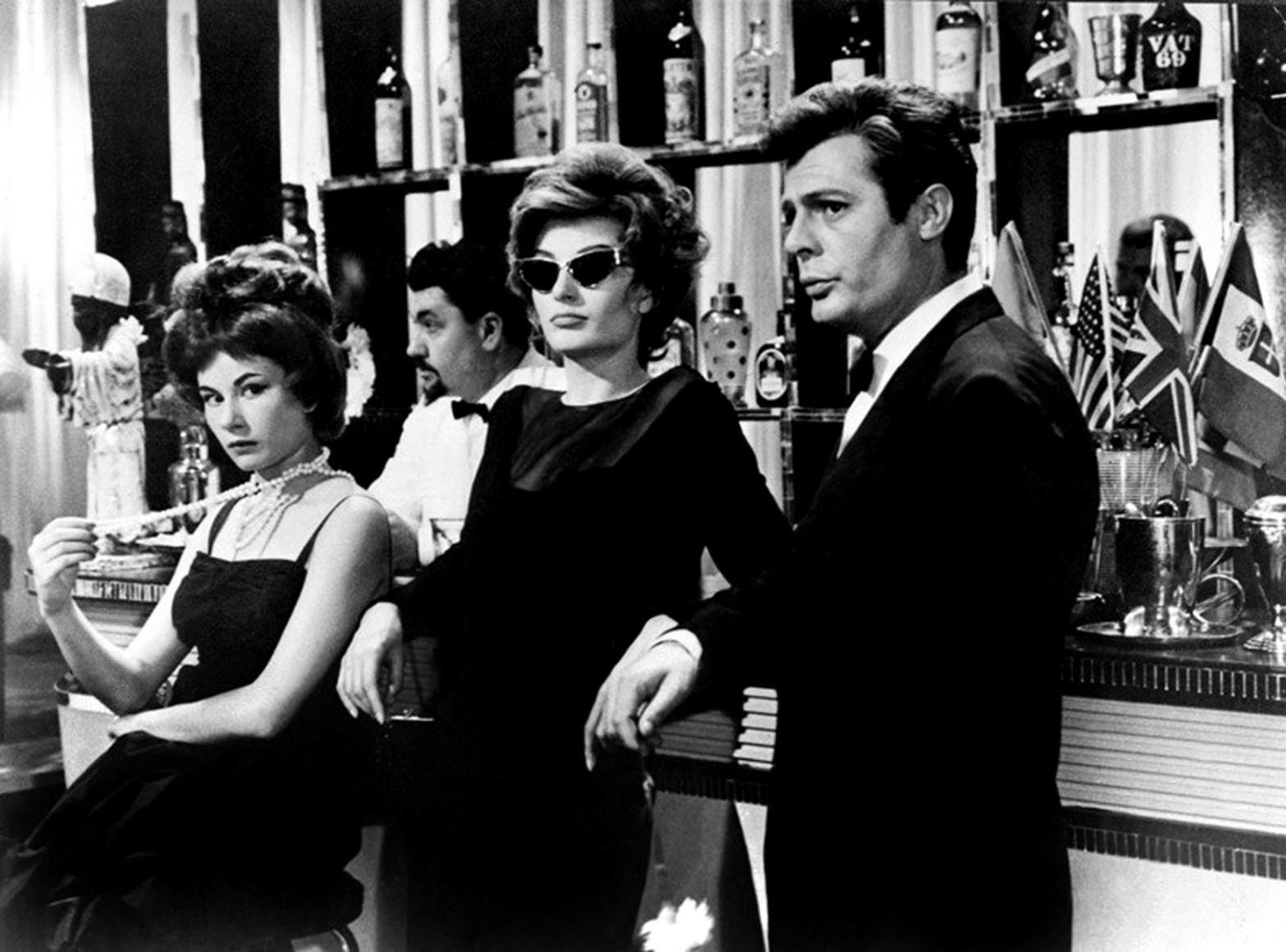
Cinema has always been more than storytelling: it is costume, architecture, gesture, and atmosphere. Some films linger in memory not just for their narratives but for the way they look, for the styles they crystallise, the aesthetics they immortalise. Here are five films whose style shaped fashion, design, and the cultural imagination.
La Dolce Vita (1960) – Federico Fellini
Rome, via Fellini, became the capital of cinematic chic. Marcello Mastroianni’s tailored suits and Anita Ekberg’s unforgettable plunge into the Trevi Fountain defined a moment when Italy was the epicentre of style. Cinecittà studios and the Via Veneto nightlife became synonymous with elegance and excess. More than a film, La Dolce Vita was a manifesto of modern glamour, inspiring generations of designers and filmmakers.
Bonnie and Clyde (1967) – Arthur Penn
Faye Dunaway’s berets, bias-cut skirts, and silk blouses paired with Warren Beatty’s sharp tailoring turned Depression-era criminals into fashion icons. Costume designer Theadora Van Runkle created looks that were both historically evocative and utterly of their time—echoing Paris runways of the late 1960s. The film’s mix of violence, romance, and impeccable style reset how America saw both fashion and rebellion.
Barry Lyndon (1975) – Stanley Kubrick
Kubrick’s eighteenth-century epic is one of cinema’s greatest achievements in visual style. Shot with natural light and candlelight, using specially adapted NASA lenses, the film recreates the look of period paintings. Costumes by Milena Canonero and Ulla-Britt Söderlund—powdered wigs, embroidered waistcoats, silk gowns—embody both grandeur and decay. Rarely has cinema so precisely fused style and substance.
American Gigolo (1980) – Paul Schrader
Richard Gere’s Giorgio Armani wardrobe in American Gigolo did more than dress a character—it launched a brand into global consciousness. Armani’s relaxed tailoring, neutral palette, and luxurious fabrics became the uniform of 1980s sophistication. Gere’s smooth surfaces, paired with the sleek interiors and Blondie’s “Call Me,” created a style portrait of urban desire and disillusion.
In the Mood for Love (2000) – Wong Kar-wai
Few films capture the poetics of style as Wong Kar-wai’s Hong Kong masterpiece. Maggie Cheung’s procession of cheongsams—each patterned differently, each meticulously cut—became visual shorthand for restrained passion. Tony Leung’s slim suits and the saturated cinematography by Christopher Doyle further heightened the sense of elegance. Every scene feels like a painting: slow, composed, and steeped in longing.
Style as Cinema, Cinema as Style
From Fellini’s Rome to Wong Kar-wai’s Hong Kong, from Armani’s 1980s tailoring to Kubrick’s candlelit canvases, these films demonstrate how style can define cinema as much as plot or dialogue. They are reminders that movies are not just stories on screen—they are worlds to inhabit, and fashions to remember.
 My World of Interiors