
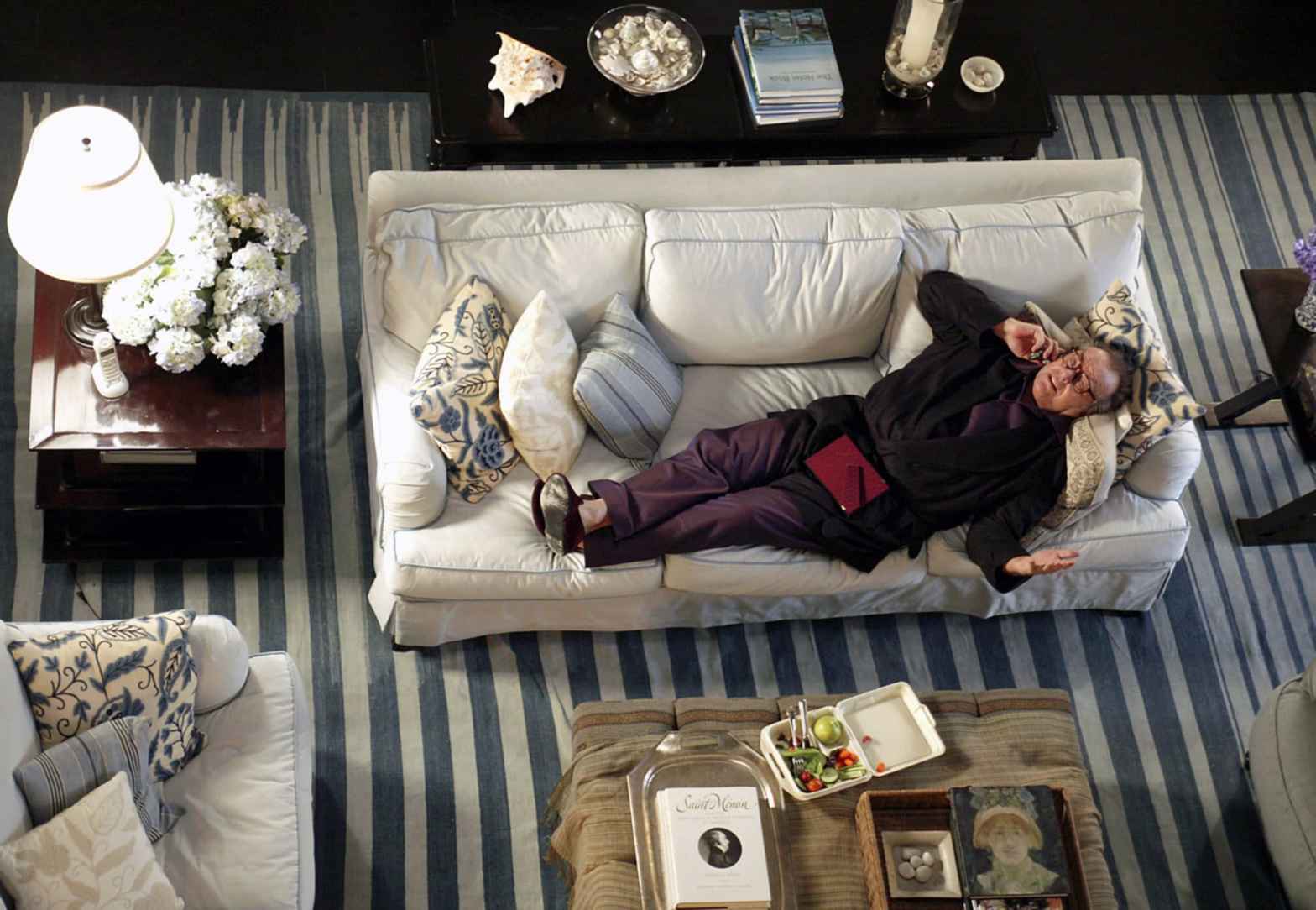
Step into a Nancy Meyers film, and you step into a world where interiors are as memorable as the dialogue. From Something’s Gotta Give to It’s Complicated, Meyers has created not just romantic comedies but architectural fantasies—homes so perfectly layered, so warmly lit, that they have become cultural icons in their own right.
The Signature Style
Meyers’ interiors are instantly recognisable: light-filled kitchens with generous islands, cream-toned slipcovered sofas, French doors opening onto manicured gardens, bookshelves styled with equal parts precision and ease. They are not just sets but environments that reflect her characters’ lives—aspirational, lived-in, and effortlessly chic.
Her palette leans toward neutrals—soft whites, warm taupes, pale woods—punctuated by natural textures and subtle colour accents. It is a style that feels Californian in its airiness, New England in its polish, and Parisian in its romance.
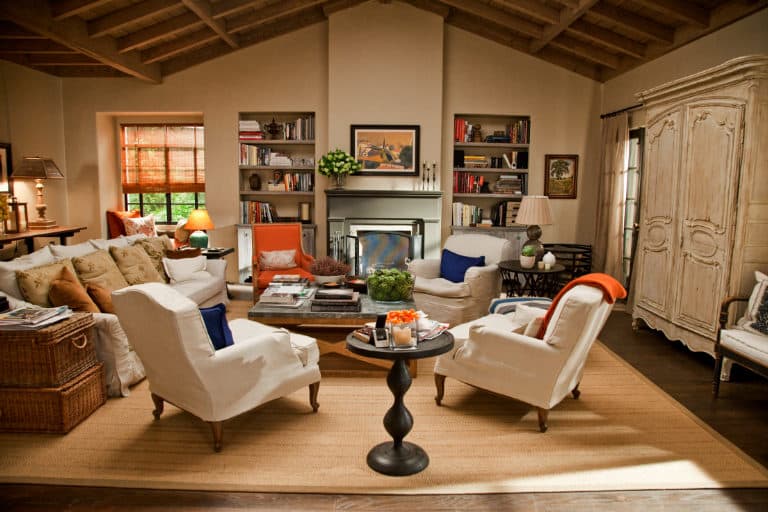
The Kitchen as Stage
No director has done more to turn the kitchen into the emotional heart of the home. In Meyers’ films, kitchens are vast, open, and meticulously detailed: marble countertops, copper pots, double ovens, farmhouse sinks. They are spaces for conversation, flirtation, and catharsis.
Think of Meryl Streep kneading croissant dough in It’s Complicated, or Diane Keaton cooking midnight pancakes in Something’s Gotta Give. These kitchens are not props; they are characters—symbols of comfort, creativity, and abundance.
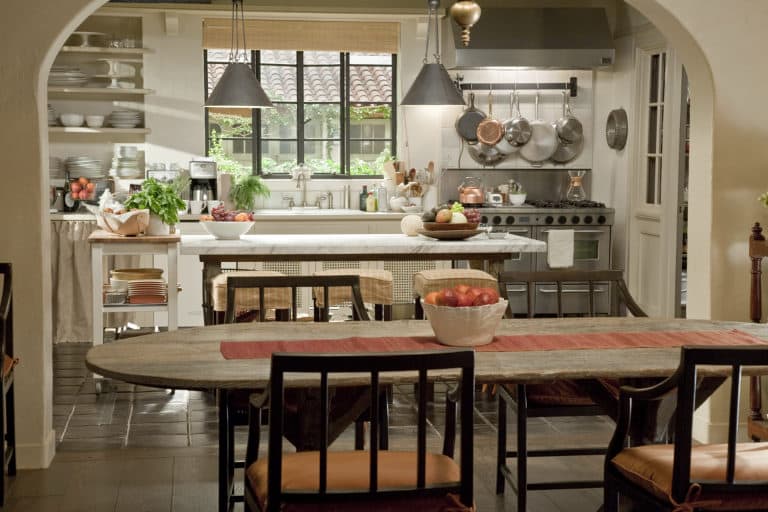
Layered Luxury
Meyers’ homes are rarely ostentatious, but they exude a quiet, layered luxury. Each detail matters: sisal rugs, antique side tables, vases of hydrangeas, woven baskets, carefully chosen art. Rooms are meticulously styled yet never sterile—they suggest a life well lived, with objects collected over time.
This layering is what separates Meyers’ style from showroom minimalism. Her interiors invite us to imagine ourselves there: cooking, reading, entertaining, falling in love.
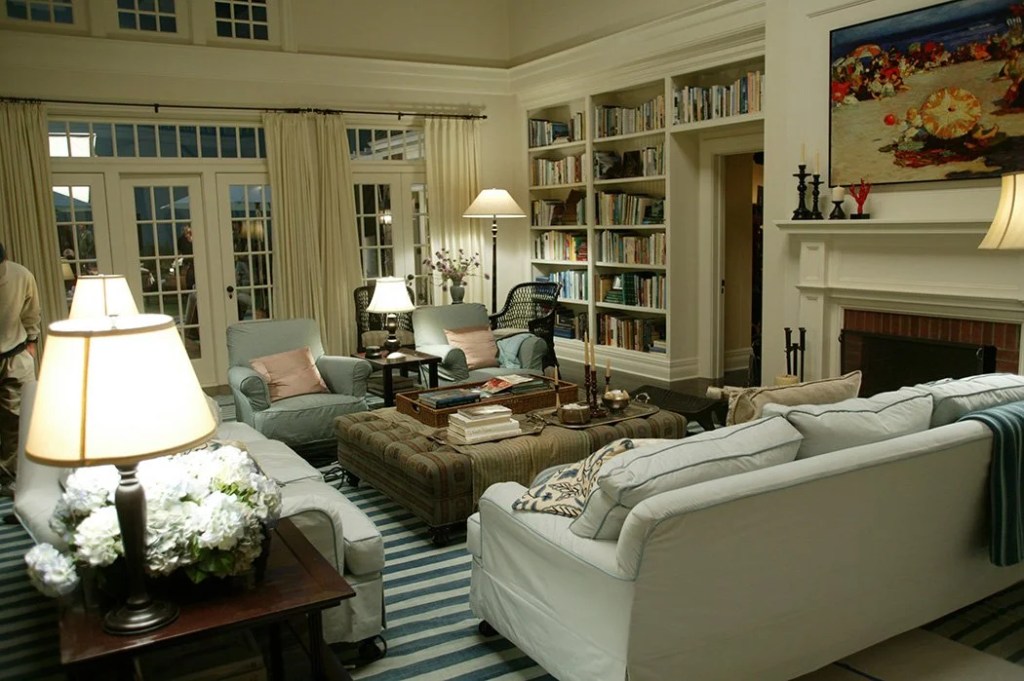
Influence Beyond the Screen
The “Nancy Meyers interior” has become a design genre in itself, endlessly imitated by Pinterest boards, Instagram moodboards, and real estate staging. Her houses inspire kitchen renovations, furniture lines, and countless magazine spreads.
Architectural Digest has dissected them; design blogs recreate them piece by piece. For many viewers, the plot of a Meyers film fades, but the kitchen island remains indelible.
More Than a Set
What makes Meyers’ interiors powerful is not only their beauty but their emotional resonance. They are spaces where characters find themselves, where stories unfold, where viewers project their own longings. They embody the fantasy of home as sanctuary: elegant but welcoming, aspirational but attainable.
In Meyers’ world, love may be complicated, but interiors are never anything less than perfect.
Nancy Meyers Interiors: A Film-by-Film Guide to Cinematic Style
Nancy Meyers has created some of the most recognisable interiors in cinema. Each of her films features a house so finely detailed, so layered with personality, that it becomes a character in its own right. Here is a guide to her most beloved sets, and the design elements that define them.
Something’s Gotta Give (2003)
The Hamptons beach house where Diane Keaton’s character writes, cooks, and ultimately falls in love is perhaps the most famous Nancy Meyers interior of all time.
Key Features:
- Open, sunlit spaces in shades of cream and white
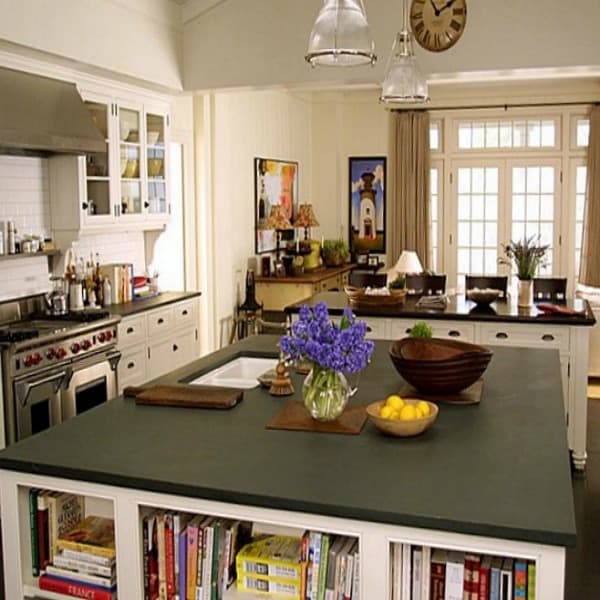
- A vast kitchen with a central island, double ovens, and French farmhouse details
- Slipcovered sofas, seagrass rugs, and built-in bookshelves
- Breezy French doors leading to a patio with ocean views
This house became the blueprint for the “Meyers aesthetic”: coastal, comfortable, and casually luxurious.
The Holiday (2006)
Two houses define this transatlantic romance: Cameron Diaz’s sleek Los Angeles mansion and Kate Winslet’s picture-book English cottage.
Key Features:
- The LA home: expansive glass walls, a neutral palette, minimalist lines softened by plush textiles
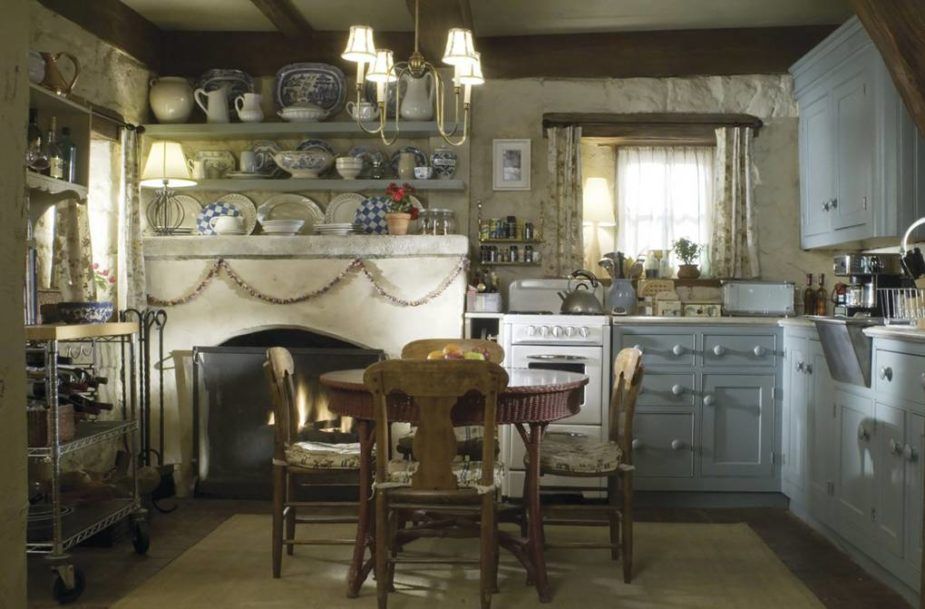
- The Surrey cottage: timber beams, floral prints, overstuffed chairs, a roaring hearth, and intimate scale
Together, they show Meyers’ gift for contrast: urban sophistication against rustic charm, each equally irresistible.
It’s Complicated (2009)
Meryl Streep’s Santa Barbara home is quintessential Meyers: Mediterranean influences, warm tones, and a kitchen that practically steals the film.
Key Features:
- A sprawling kitchen with marble counters, copper cookware, and room to bake
- French doors leading to lush gardens
- Soft neutral interiors with splashes of terracotta and greenery
- A home office lined with books and personal touches
The house radiates comfort and abundance—perfect for Streep’s character, who finds joy in cooking, hosting, and navigating her tangled romantic life.
The Intern (2015)
Set in Brooklyn, Meyers shifts to a younger, urban aesthetic, with Anne Hathaway’s townhouse reflecting modern family life.
Key Features:
- Exposed brick walls paired with clean white finishes
- A contemporary kitchen with subway tiles and polished fixtures
- Mid-century modern furniture alongside softer traditional pieces
- Open-plan living with layered lighting and textured accents
It’s less beach house fantasy, more city-savvy chic—but still unmistakably Meyers in its warmth and balance.
The Nancy Meyers Aesthetic
Across all her films, certain signatures repeat: the kitchen as stage, a palette of creams and soft neutrals, French doors and generous windows, natural textures layered with subtle luxury. These are houses designed for conversation, cooking, and connection.
Meyers’ interiors endure because they are not just sets—they are aspirational visions of home, lived-in yet perfect, cinematic yet attainable. They remind us that in her world, architecture is always part of the love story.
Discover more from My World of Interiors
Subscribe to get the latest posts sent to your email.

