
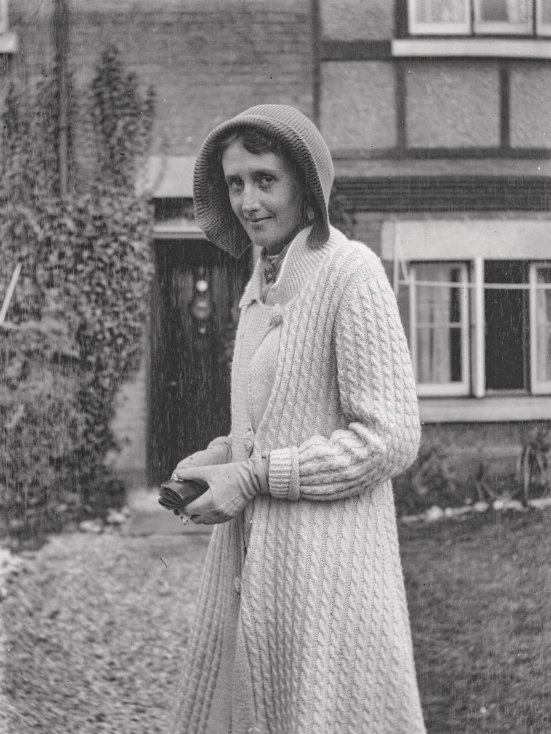
“Arrange whatever pieces come your way.” – Virginia Woolf
She was born into the last glow of Victorian London, in 1882, in a house on Hyde Park Gate filled with books, paintings, and the chatter of intellectuals. Virginia Woolf came of age in a world weighted by tradition, but she would dismantle that tradition word by word, sentence by sentence. A century later, her name is shorthand for modernist genius, feminist icon, and the writer who taught us that life is made of impressions, not plots.
The Making of a Modernist
Virginia Stephen, as she was known then, grew up in a home of contradictions: her father, Sir Leslie Stephen, was one of the leading men of letters of his day, while her mother, Julia, a Pre-Raphaelite beauty, embodied a more decorative ideal of womanhood. From the start, Virginia was conscious of being both privileged and constrained.
Loss marked her early life. By 22, she had buried both parents and a sister, griefs that triggered her first mental collapses. Yet in that crucible of mourning, she also discovered the instinct that would define her: to translate the intangible into art.
When the Stephens moved to Bloomsbury, the younger siblings formed the nucleus of what became the Bloomsbury Group—that coterie of writers, artists, and economists who championed sexual freedom, intellectual daring, and aesthetic experimentation. Among them were Lytton Strachey, E.M. Forster, Maynard Keynes. To Woolf, Bloomsbury was not just companionship, it was liberation: the air to write.
“A woman must have money and a room of her own if she is to write fiction.”
Shaping a New Language
Woolf’s first novel, The Voyage Out (1915), hinted at her ambitions, but it was with Jacob’s Room (1922) that she found her voice—a voice not bound to conventional plot, but to consciousness itself. Then came the works that secured her place in the modernist pantheon:
- Mrs Dalloway (1925) — A single June day in London unfurls into a prism of memory, trauma, and desire. Clarissa Dalloway prepares for a party; Septimus Warren Smith unravels from shell shock. Between them lies the modern city, humming with time’s fragility.
- To the Lighthouse (1927) — Part elegy, part meditation, this is Woolf’s most intimate novel. Inspired by her own family holidays in Cornwall, it captures not events but the passage of time, the ebb of grief, the permanence of longing.
- Orlando (1928) — A love letter to Vita Sackville-West and one of the most daring books of its age. Orlando lives for centuries, shifting genders, moving from Elizabethan courts to modern London—a celebration of identity as fluid and unbounded.
- A Room of One’s Own (1929) — Not fiction, but manifesto. In these pages, Woolf distilled the condition of women in art: they must have money and a room of their own if they are to write. It remains the foundational text of modern feminist thought.
- The Waves (1931) — Her most experimental work, six consciousnesses merging into one symphonic meditation on friendship, mortality, and the rhythm of existence.
Her genius was to make prose ripple like thought itself, to show that the novel could be less about what happens than how it feels.
“Mrs Dalloway said she would buy the flowers herself.”
The Woman Behind the Words
Her marriage to Leonard Woolf was a partnership of deep devotion. Together, they founded the Hogarth Press, which not only published her novels but also gave the world T.S. Eliot’s The Waste Land and Freud’s essays.
But Virginia’s affections also turned toward women. Her affair with the aristocratic writer Vita Sackville-West fed her imagination and gave us Orlando. Their love letters remain among the most candid, sparkling documents of queer literary history.
Yet her brilliance was always shadowed by illness. Periods of intense creativity alternated with breakdowns, hallucinations, and despair. By 1941, with war raging and the Blitz reducing London to rubble, Woolf felt she could no longer endure. She walked into the River Ouse, her pockets filled with stones. She was 59.
Legacy and Endurance
Woolf’s death was tragic, but her afterlife has been extraordinary. Today, she is both the subject of academic reverence and a pop-culture icon. Nicole Kidman won an Oscar portraying her in The Hours. Her face graces bookshop windows, her words animate feminist marches. But what matters most are the works themselves: novels that still pulse with immediacy, essays that still argue with the world, language that still glitters with life.
She captured what it feels like to be alive in time—moments of rapture, of despair, of connection, fleeting but eternal once described. “Nothing has really happened until it has been described,” she once wrote. By that measure, she ensured life itself could never again go unnoticed.
“Nothing has really happened until it has been described.”
Virginia Woolf endures not only as a novelist but as a way of seeing. She wrote to rescue the shimmer of thought from silence, to insist that women’s voices matter, to prove that literature could flow like a tide. More than a century later, we are still caught in her current.
 My World of Interiors