

Stanley Kubrick’s The Shining (1980) is remembered for its haunting images — Jack Nicholson’s manic grin, Danny’s tricycle in the corridor, the tide of blood spilling from an elevator. But beneath the horror lies another, subtler masterpiece: the interiors of the Overlook Hotel. Designed with meticulous care, these spaces are not mere backdrops but characters in their own right, embodiments of psychological unease and architectural ambiguity.
A Collage of American Grandeur
The Overlook is a composite of real places and imagined spaces. Kubrick based the exteriors on the Timberline Lodge in Oregon, while the interiors were modeled on iconic American hotels: the Ahwahnee Hotel in Yosemite, the Stanley Hotel in Colorado, and the Biltmore Hotel in Arizona. Production designer Roy Walker and Kubrick’s team recreated these inspirations on soundstages at Elstree Studios in England, constructing a hotel that never truly existed but feels uncannily real.
The Colorado Lounge
At the heart of the film lies the Colorado Lounge, with its soaring double-height ceilings, monumental stone fireplace, and Native American motifs in textiles and wall hangings. Its symmetry and scale suggest grandeur, but the emptiness turns it uncanny. The vast room dwarfs Jack Torrance, amplifying his isolation, even as its décor evokes an America haunted by its past.

The Corridors of Infinity
Perhaps the most iconic spaces are the endless corridors, patterned in bold geometric carpet by David Hicks. The hexagonal motif — red, orange, brown — is now design legend, endlessly referenced in contemporary interiors. The repetition of doors, lights, and patterns creates an architecture of disorientation: a hotel that feels infinite, inescapable, and cyclical.

The Gold Room
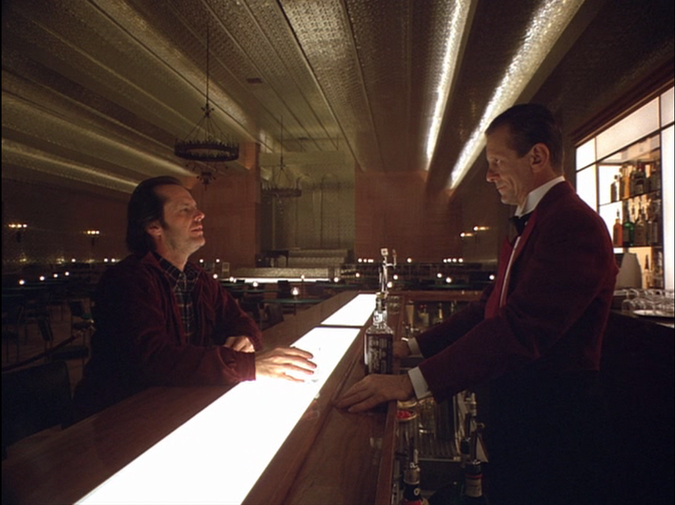
A shrine to American decadence, the Gold Room is where Jack encounters the spectral bartender Lloyd. Gilded walls, mirrored surfaces, and chandeliers evoke the glamour of 1920s ballrooms, yet its opulence feels sterile, drained of warmth. Here Kubrick fused luxury with menace, turning a place of celebration into one of damnation.
Room 237
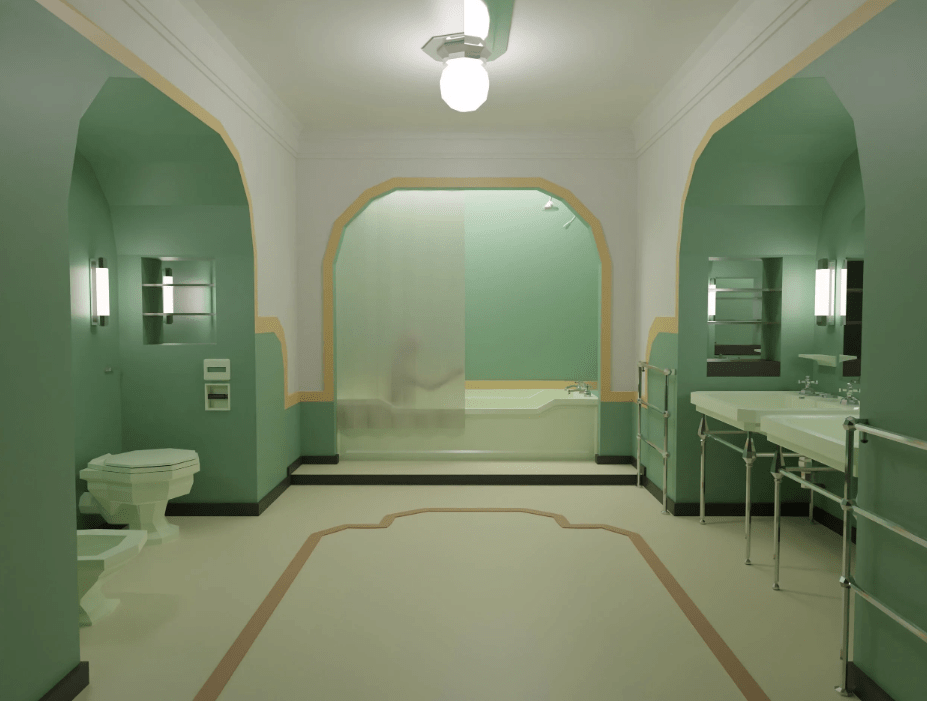
The infamous Room 237 is designed as domestic comfort curdled into nightmare. Its green-and-gold Art Deco bathroom — with its perfect tiles, gleaming fixtures, and full-length mirrors — is pristine yet oppressive. The space becomes theatre for one of the film’s most disturbing scenes, where beauty and horror collapse into one.
The Kitchen and Service Spaces
The Overlook’s kitchen, with its bright industrial lighting and endless rows of tins and freezers, suggests order and abundance. Yet the sheer scale — food enough for an army — becomes surreal when contrasted with the emptiness of winter isolation. These spaces underscore Kubrick’s obsession with scale as a vehicle for dread.
Architecture as Horror
The interiors of The Shining are more than set design: they are psychological architecture. Every space is slightly “off” — too vast, too symmetrical, too silent. The impossible geography (windows where no exterior exists, corridors leading to nowhere) deepens the disquiet. The hotel itself becomes a labyrinth, mirroring the hedge maze outside, a prison built of comfort and grandeur.
The Design Legacy of The Shining
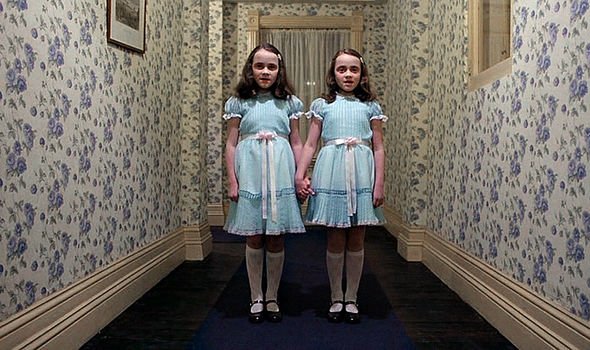
The Overlook’s interiors have cast a long shadow over design and popular culture.
- Carpet Iconography – David Hicks’s hexagonal carpet pattern has been endlessly reproduced in fashion, rugs, and hotel lobbies, becoming a shorthand for uncanny design.
- Fashion Runways – Designers from Prada to Raf Simons have referenced the film’s symmetry, palette, and unsettling atmosphere in collections.
- Boutique Hotels – Properties in London, Tokyo, and Los Angeles have directly echoed The Shining in corridors or lounges, using its motifs as markers of cinematic chic.
- Pop Culture Homages – From Toy Story’s carpeted hallway to music videos by artists like Ariana Grande, the Overlook lives on as visual vocabulary.
- Design Theory – Scholars have analysed The Shining as a meditation on architecture as psychology, placing it alongside Le Corbusier and Piranesi in discussions of built space as narrative.
Kubrick’s interiors endure because they transcend horror. They are as much about design as dread — about how space itself can unsettle, influence, and define the stories we tell.
Key Design References
- Timberline Lodge, Oregon – Exterior model for the Overlook.
- Ahwahnee Hotel, Yosemite – Inspiration for the Colorado Lounge.
- The Stanley Hotel, Colorado – Stephen King’s inspiration for the novel.
- David Hicks Carpeting – The bold geometric patterns that became design icons.
TL;DR
In The Shining, the interiors of the Overlook Hotel are as unsettling as its ghosts. Drawing from real American landmarks yet constructed on a London soundstage, they embody scale, symmetry, and strangeness. From the Gold Room’s sterile opulence to the Hicks-patterned carpets of its corridors, Kubrick’s interiors are not décor but destiny: design that imprisons, disorients, and haunts forever.
 My World of Interiors