
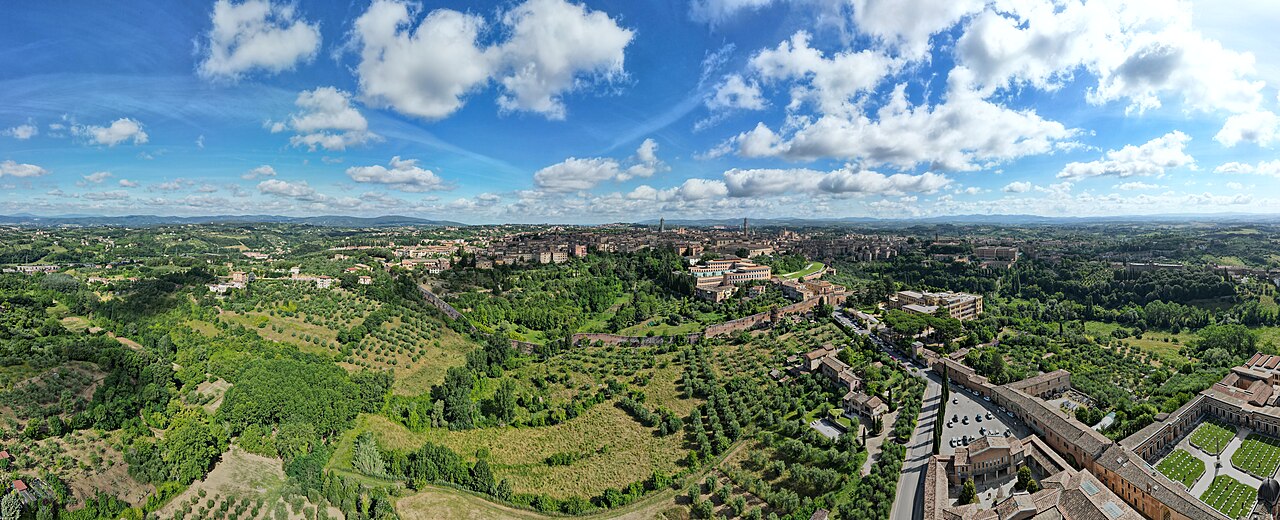
If Florence is the Renaissance jewel of Tuscany, Siena is its medieval soul. A city of terracotta brick and Gothic spires, winding alleys and sudden piazzas, Siena seems suspended in time, as if the 14th century never ended. Its streets breathe with ritual and rivalry, its architecture glows with harmony, and its traditions — most famously the Palio horse race — make it one of Italy’s most captivating destinations.
The Piazza del Campo: Siena’s Beating Heart
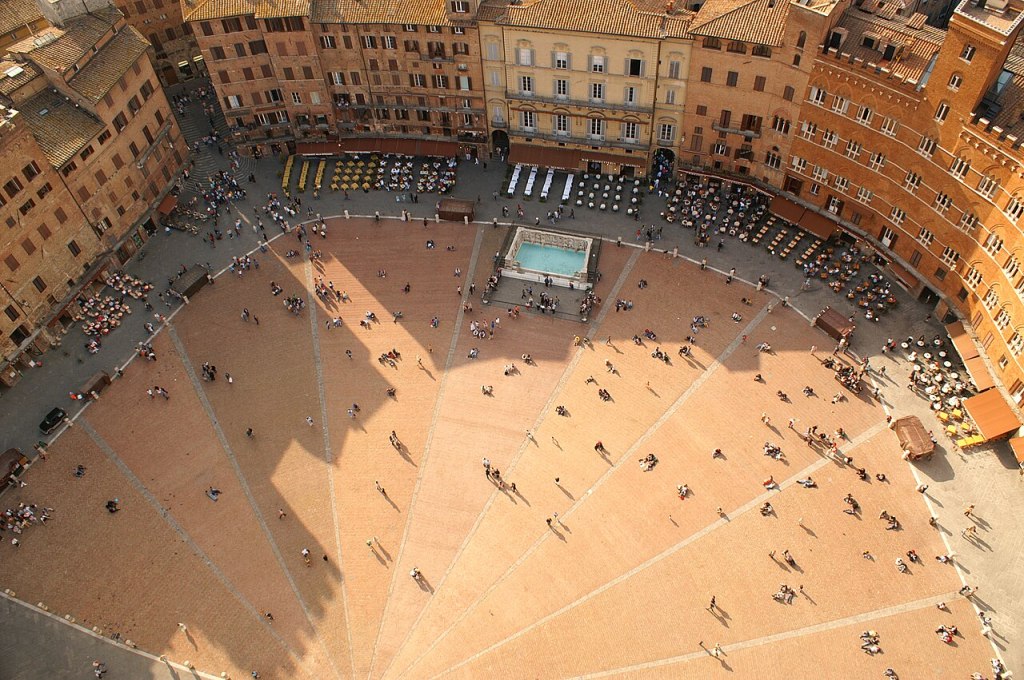
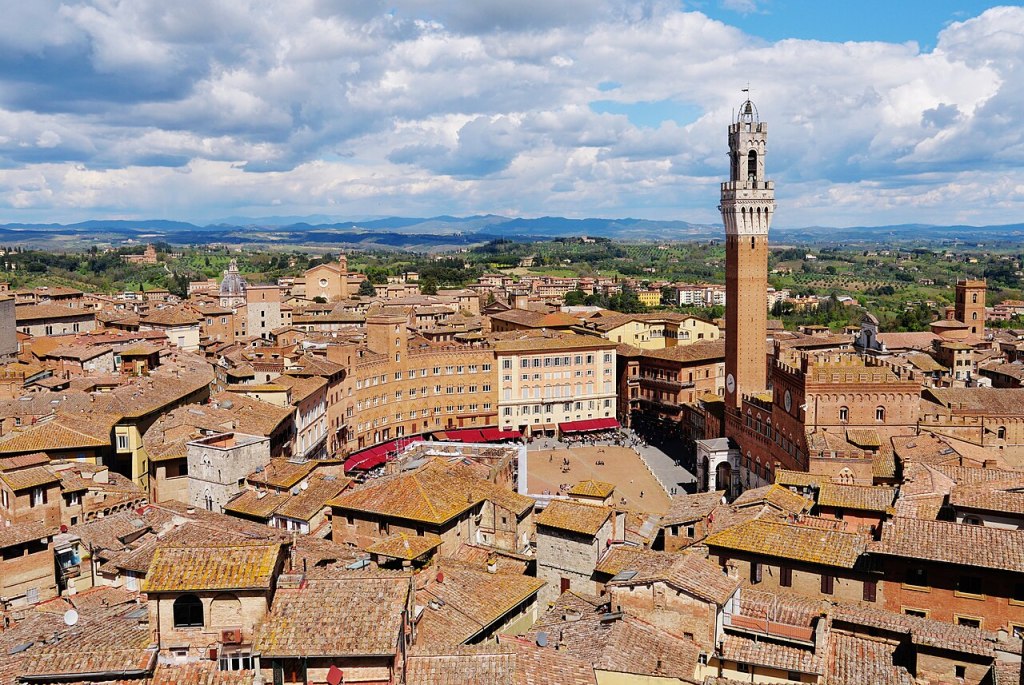
At the center lies Piazza del Campo, perhaps the most beautiful square in Europe. Shaped like a scallop shell, its brick pavement fans out toward the Palazzo Pubblico, the Gothic town hall with its soaring Torre del Mangia. Cafés and palazzi ring the square, where students, travelers, and locals gather under the Tuscan sun. Twice each summer, the square becomes the stage for the Palio di Siena, a fierce bareback horse race between the city’s 17 contrade (neighborhoods), a tradition unchanged since the Middle Ages.
Gothic Grandeur
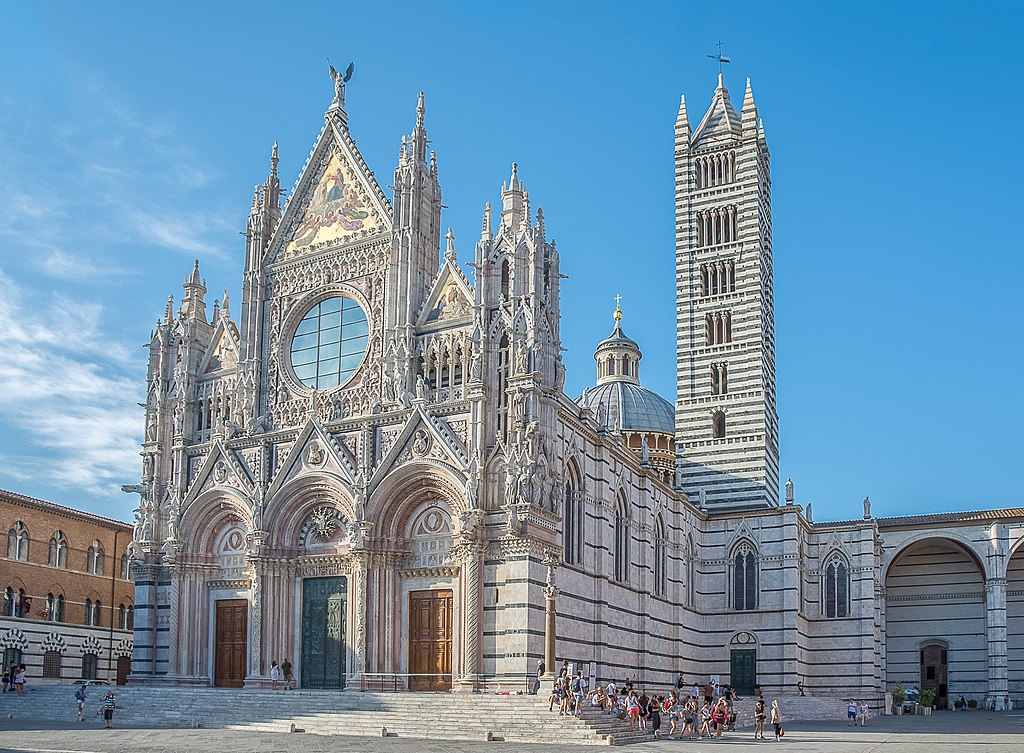
Siena’s Duomo di Santa Maria Assunta is a triumph of Italian Gothic: striped black-and-white marble, Pisano’s carved pulpit, Donatello’s statues, and mosaics by Pinturicchio. Its inlaid marble floor, revealed only on select days, is among Italy’s greatest artistic treasures. Nearby, the Biblioteca Piccolomini, painted by Pinturicchio for Pope Pius II, dazzles with Renaissance frescoes of myth and history.
Contrade: A City of Neighborhoods
Siena is not just a city, but a federation of 17 contrade (districts), each with its own animal emblem, museum, fountain, and fierce identity. Walking through the city means crossing invisible borders: from the Unicorn to the Giraffe, the She-Wolf to the Dragon. This structure gives Siena its unique intimacy — a city where community is ritual and rivalry still animates daily life.
Culinary Traditions
Tuscan cuisine in Siena is rustic, rich, and deeply local. Specialties include:
- Pici – Thick hand-rolled pasta, often served with peppery cacio e pepe or rich ragù.
- Ribollita – A peasant soup of beans, vegetables, and bread, slow-cooked to comfort.
- Panforte – A dense spiced cake of nuts, honey, and candied fruit, invented by medieval apothecaries.
- Chianti Classico – Just outside the city, vineyards produce one of Italy’s most famous wines, ideal for pairing with the hearty Sienese table.
Art and Culture
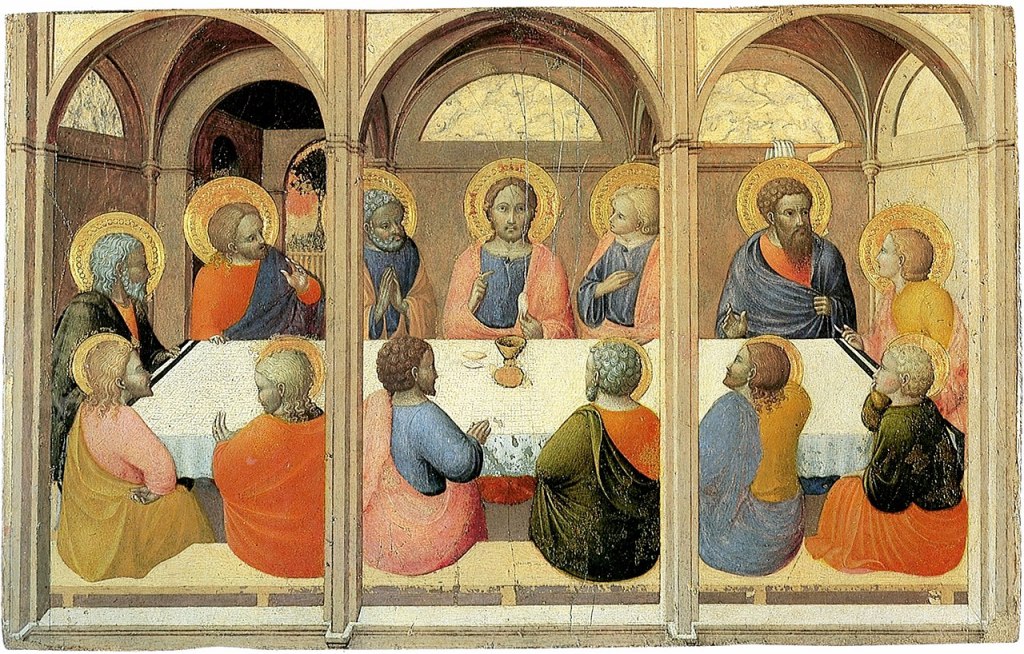
Beyond its cathedral and square, Siena offers treasures at every turn. The Museo dell’Opera del Duomo holds Duccio’s Maestà, a defining masterpiece of early Italian painting. The Pinacoteca Nazionale preserves the brilliance of Sienese school artists, whose golden altarpieces rivaled Florentine innovations. Even Siena’s hospitals were works of art: the Santa Maria della Scala, once a medieval hospital for pilgrims, is today a cultural center with frescoed halls and archaeological remains.
Where to Stay
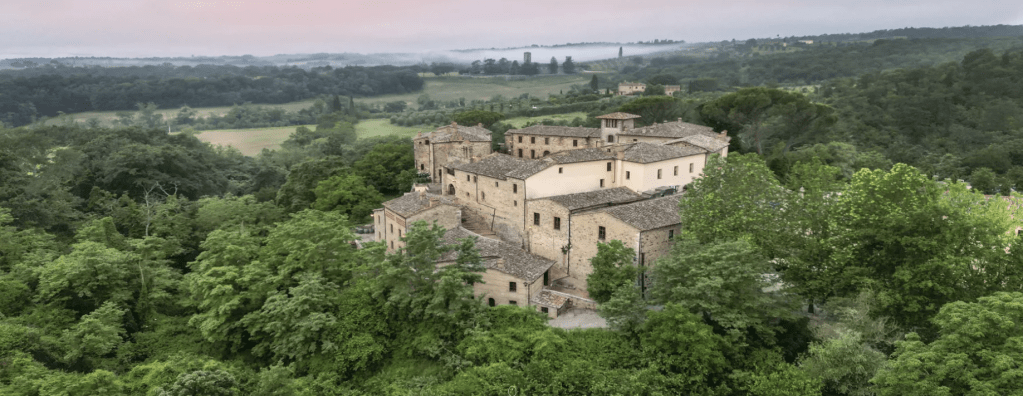
- Castel Monastero – A 1,000-year-old monastery turned luxury retreat, just outside Siena.
- Grand Hotel Continental Siena – The city’s only five-star hotel, set in a 17th-century palazzo.
- Hotel Certosa di Maggiano – A historic monastery with rustic-chic interiors and gardens.
Siena Beyond Time
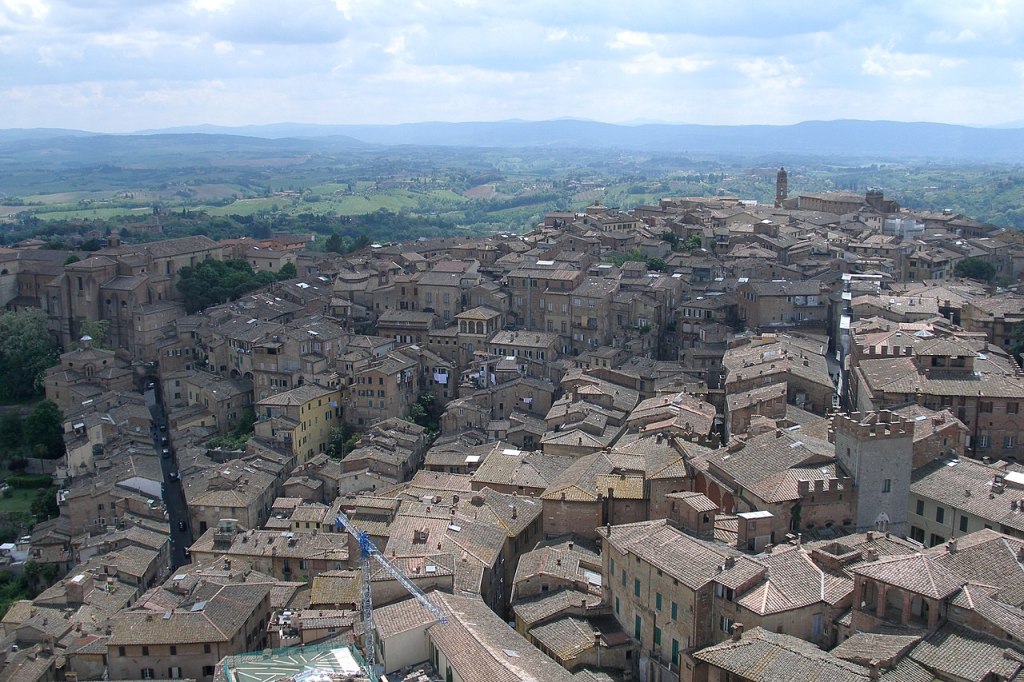
To wander Siena is to move through centuries: frescoed chapels and shadowed streets, wine cellars tucked into medieval vaults, flags of the contrade fluttering from balconies. Yet it is also alive with modern energy — university students filling trattorie, artisans crafting leather and ceramics, festivals animating the calendar. Siena thrives because it never abandoned its essence: a city where history is lived, not displayed.
Experiences
- Climb the Torre del Mangia – Panoramic views over Siena’s terracotta rooftops and Tuscan hills.
- Attend the Palio – July 2 and August 16: pageantry, rivalry, and drama condensed into 90 unforgettable seconds.
- Wine tours in Chianti Classico – Vineyards such as Castello di Ama and Castello di Brolio.
- Day trips – San Gimignano, with its medieval towers, or Montepulciano for its famed Vino Nobile.
TL;DR
Siena is Tuscany at its most medieval and most alive. From the scallop-shell perfection of the Piazza del Campo to the contrade rivalries, the Duomo’s marble floor to a slice of panforte, it is a city where history is not backdrop but heartbeat. To visit is to step into a ritual that has endured for centuries — and continues to glow with life.
 My World of Interiors