
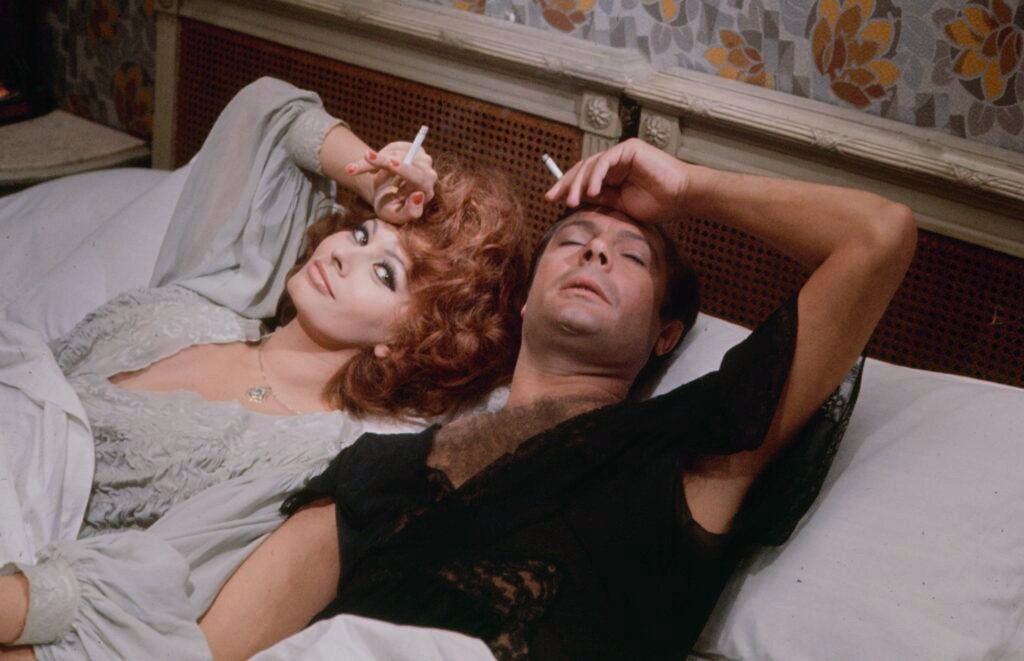
Few cinematic partnerships radiate as much charm, wit, and sensual electricity as Marcello Mastroianni and Sophia Loren. For more than three decades, they embodied the vitality of Italian cinema, appearing together in 14 films that spanned neorealism, romantic comedy, and social satire. Their on-screen chemistry was as natural as it was carefully crafted, turning them into global ambassadors of Italian style and soul.
Postwar Italian Cinema Reborn
The 1950s and ’60s marked the golden age of Italian film. Neorealism had given the world gritty portraits of poverty and resilience, but by mid-decade, a new kind of cinema emerged: sophisticated, glamorous, satirical. Mastroianni, with his soft eyes and ironic detachment, and Loren, with her earthbound beauty and volcanic presence, became its twin faces.
Their pairing reflected Italy itself: masculine nonchalance meeting feminine fire, the urbane and the earthy, the ironic and the passionate. Together, they transformed stories into allegories of postwar identity, desire, and reinvention.
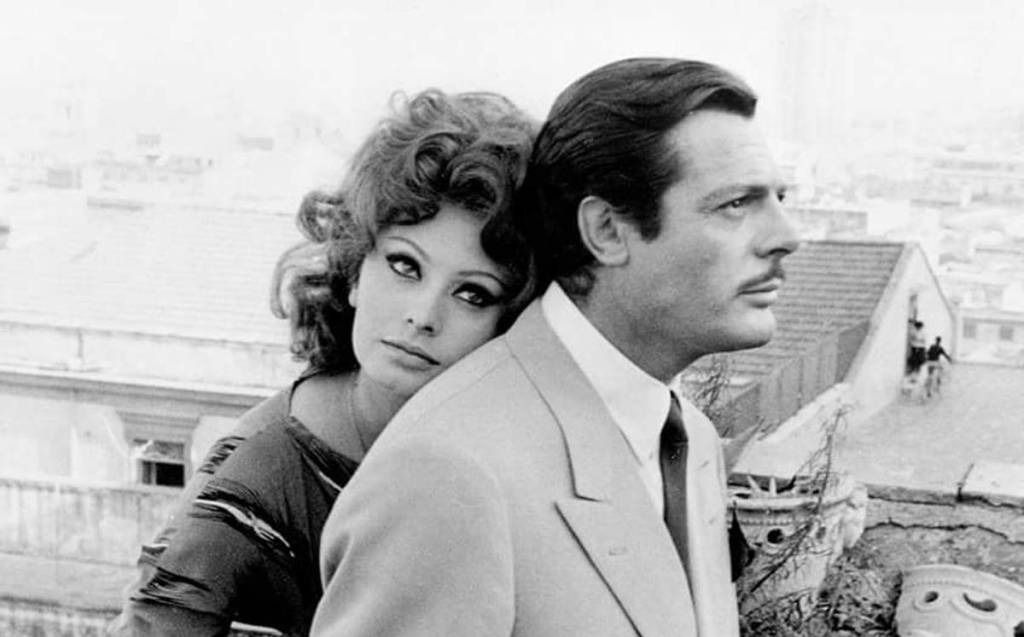
Marriage Italian Style (1964)
Perhaps their most celebrated collaboration, Vittorio De Sica’s Marriage Italian Style paired Loren’s fiery Filumena with Mastroianni’s charming but selfish Domenico. Adapted from Eduardo De Filippo’s play, it was a battle of wits and wills: Loren, desperate to secure her children’s future, faking a deathbed marriage; Mastroianni, seducer turned reluctant husband. Their performances embodied both comedy and pathos, winning Loren an Academy Award nomination.
Yesterday, Today and Tomorrow (1963)
Also directed by De Sica, this triptych of tales showcased their range. Loren played three very different women — a smuggler, a bored bourgeois wife, a high-class prostitute — while Mastroianni matched her in sly versatility. The final segment, with Loren’s famous striptease for a frustrated Marcello, became one of cinema’s most enduring images of erotic comedy.
A Special Day (1977)
By the 1970s, their partnership had matured into something more subdued. In Ettore Scola’s A Special Day, set during Mussolini’s alliance with Hitler in 1938, Loren played a weary housewife and Mastroianni a persecuted homosexual. Stripped of glamour, their performances revealed vulnerability, quiet dignity, and unexpected intimacy. The film won Golden Globe and César awards, cementing their status as actors of depth, not just icons of beauty.
The Chemistry of Opposites
What made their pairing extraordinary was its balance of contrasts. Mastroianni’s languid charm could turn cynical, yet Loren’s vitality anchored him in emotional gravity. He was irony; she was intensity. Together, they reflected Italy’s dual identity — sophisticated and provincial, cynical and passionate, fractured yet resilient.
Global Icons
Their collaborations carried Italian cinema far beyond Rome and Naples. Hollywood adored them, but they remained resolutely European, never surrendering their cultural specificity. Loren became the face of Mediterranean femininity, Mastroianni the symbol of Italian modern manhood. Their films were not just entertainment but cultural export, carrying with them a vision of postwar Italy’s wit, sensuality, and humanity.
A Legacy of Light and Shadow
Mastroianni and Loren worked together into the 1990s, their later films tinged with nostalgia for their earlier triumphs. Loren, reflecting on their bond, once remarked: “Marcello and I never had to act being in love; we simply were, in our own way.” Their partnership endures because it was never merely professional. It was symbiosis: two performers who, together, revealed something truer than either could alone.
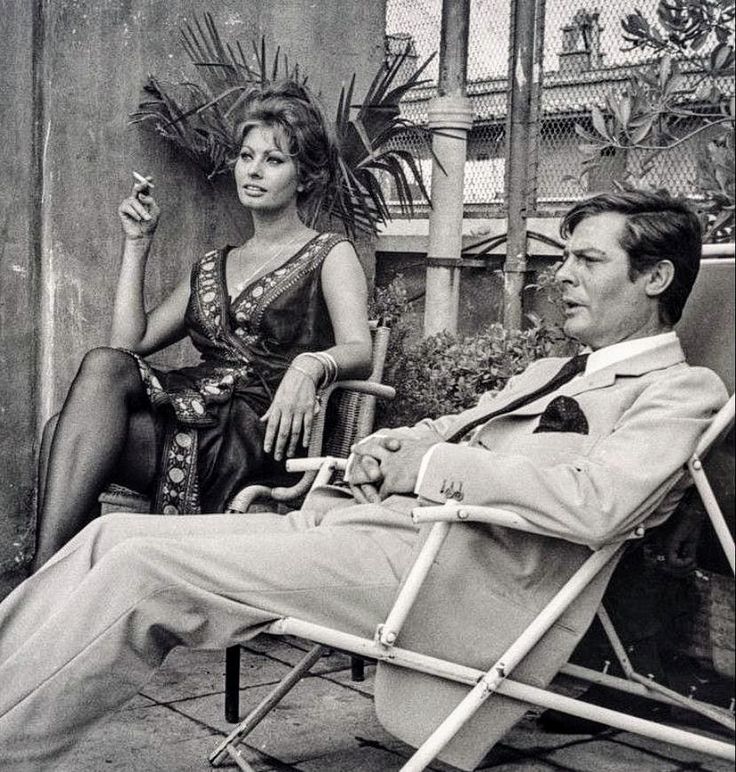
Five Essential Marcello & Sophia Films
- Yesterday, Today and Tomorrow (1963, dir. Vittorio De Sica)
– Loren’s striptease, Mastroianni’s desperation: erotic comedy at its most iconic.
– IMDb - Marriage Italian Style (1964, dir. Vittorio De Sica)
– A battle of love, deception, and survival; Loren’s defining role.
– IMDb - A Special Day (1977, dir. Ettore Scola)
– Intimate, political, tragic; two stars stripped to raw humanity.
– IMDb - Sunflower (1970, dir. Vittorio De Sica)
– A tragic wartime romance that showcased their dramatic chemistry.
– IMDb - Prêt-à-Porter (1994, dir. Robert Altman)
– A playful epilogue: Loren and Mastroianni reunited in a fashion-world satire.
– IMDb
Where to Watch
- Criterion Channel – Hosts Marriage Italian Style and A Special Day with critical essays.
- Cineteca di Bologna – Restores and screens Italian classics.
Books
- Sophia Loren, Yesterday, Today, Tomorrow: My Life – Memoir reflecting on her collaborations.
- Marcello Mastroianni: Ritratto di un Attore – A photographic chronicle of his career.
Cultural Pilgrimage
- Cinecittà Studios, Rome – The heart of Italian postwar cinema.
- Naples & Pozzuoli – Loren’s roots; their films often carried echoes of southern Italy.
TL;DR
Marcello Mastroianni and Sophia Loren defined the golden age of Italian cinema. Their partnership — spanning comedy, tragedy, politics, and romance — captured Italy’s contradictions and exported them to the world. Together, they made chemistry into art, turning every glance and gesture into history.
 My World of Interiors