
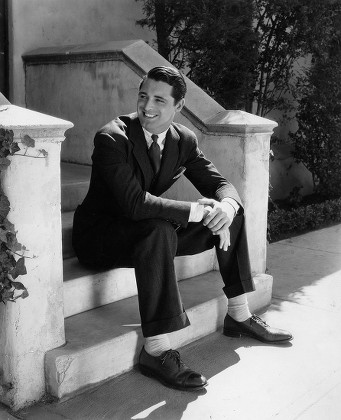
Some stars fade into nostalgia, tethered to their moment. Cary Grant is different. More than thirty years after his death, he remains the epitome of effortless style — a man whose presence on screen and off continues to define what it means to be well-dressed. His elegance was never just about clothes; it was about poise, timing, and the art of living gracefully.
From Bristol to Hollywood
Born Archibald Leach in Bristol, England, in 1904, Grant’s early life was marked by hardship. He left school at 14, joined a vaudeville troupe, and crossed the Atlantic as a teenage acrobat. Reinvention was his greatest role: he shed his Cockney accent, trained his voice into a transatlantic lilt, and transformed himself into Cary Grant — a name as streamlined as his tailoring. His style was, from the beginning, an act of authorship.
The Uniform of Elegance
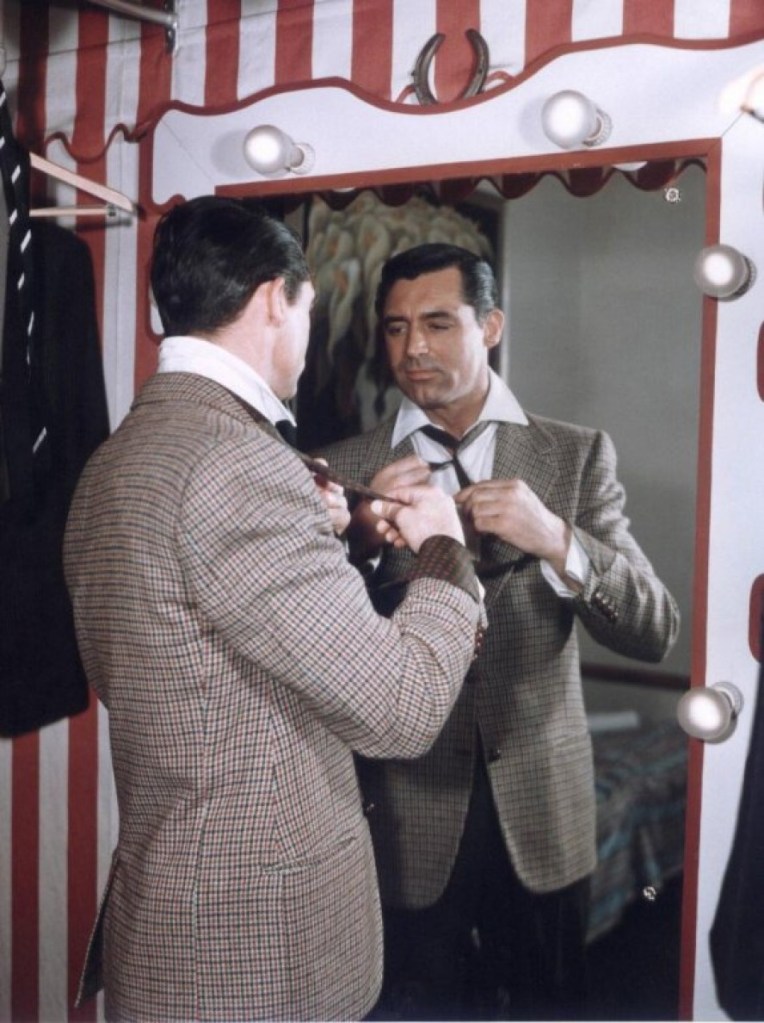
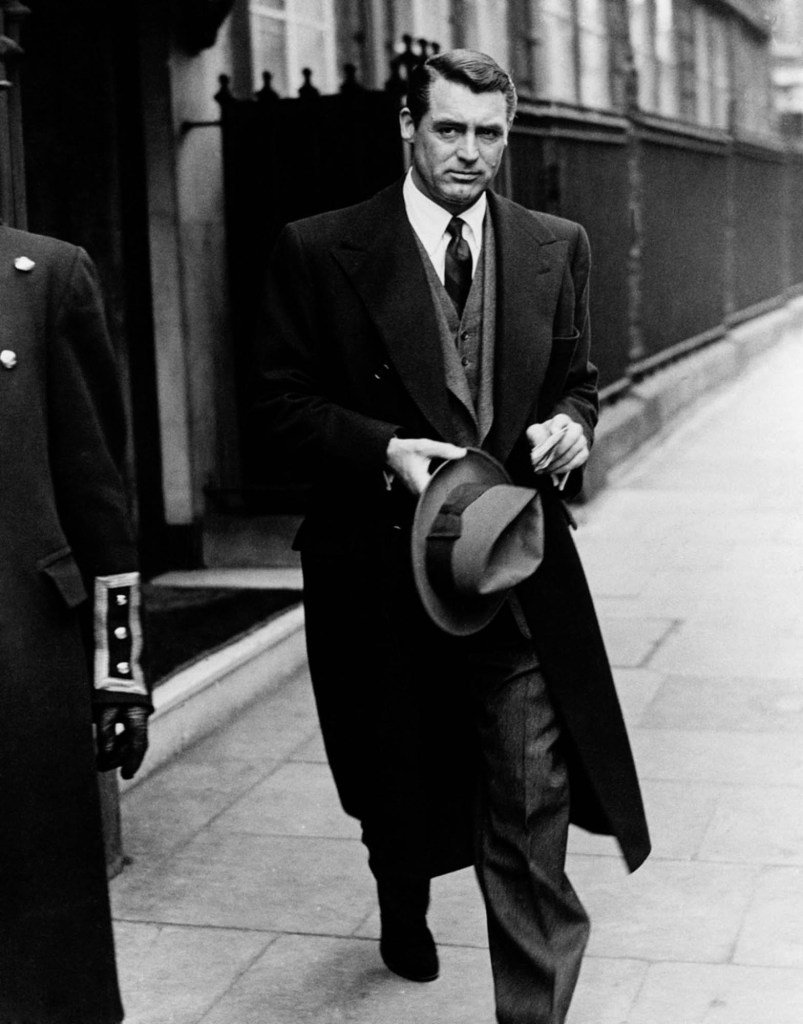
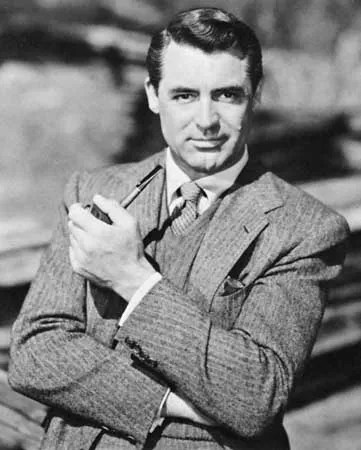
Grant’s wardrobe was deceptively simple. He favoured impeccably tailored suits in navy, grey, or subtle pinstripes; crisp white shirts; polished shoes. He avoided fuss, eschewing trends for refinement. “It is better to buy one good suit and wear it often,” he once remarked, “than to have many poor ones.”
He preferred English tailoring — strong shoulders, clean lines, restrained lapels — but wore it with an ease that was wholly his own. His suits never wore him; he wore them, whether running across Mount Rushmore in North by Northwest or trading witticisms with Katharine Hepburn in Bringing Up Baby.
Style on Screen
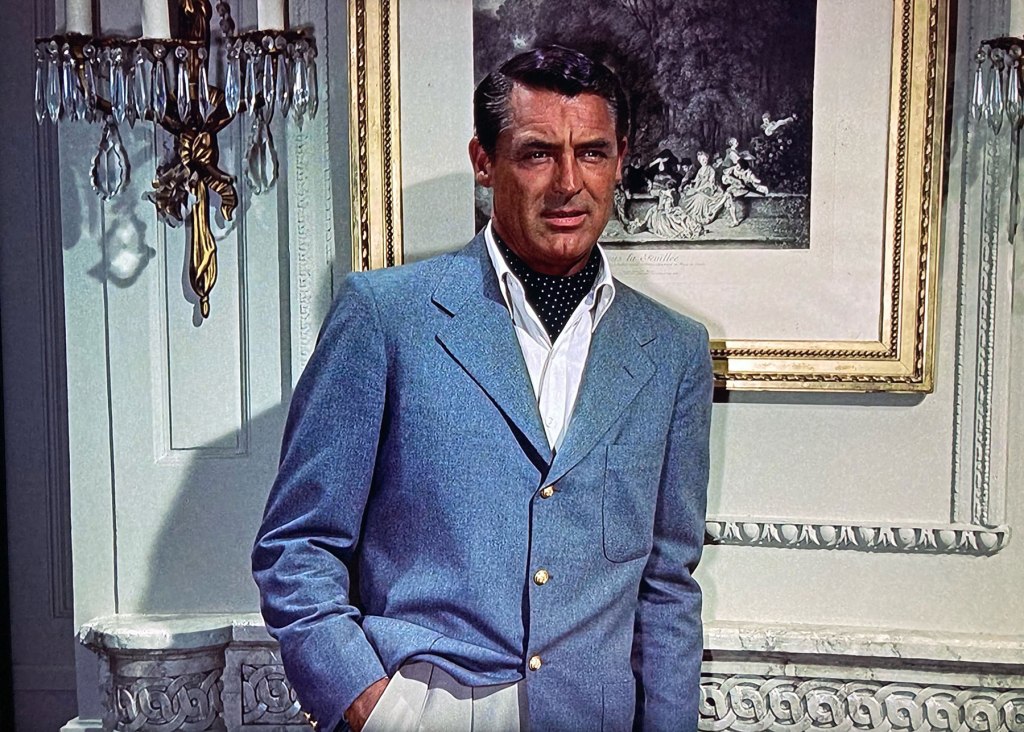
Grant’s filmography is a study in style. In Alfred Hitchcock’s To Catch a Thief (1955), he embodies Riviera chic: open-neck shirts, linen trousers, sunglasses against Mediterranean light. In North by Northwest (1959), his grey Glen plaid suit became one of the most famous in cinematic history — tailored perfection in motion, equally convincing in boardrooms and on crop-duster-swept plains.
Even in comedy, Grant’s wardrobe reinforced his persona: urbane but playful, impeccable yet approachable. His clothing was never costume; it was character.

Off-Duty Refinement
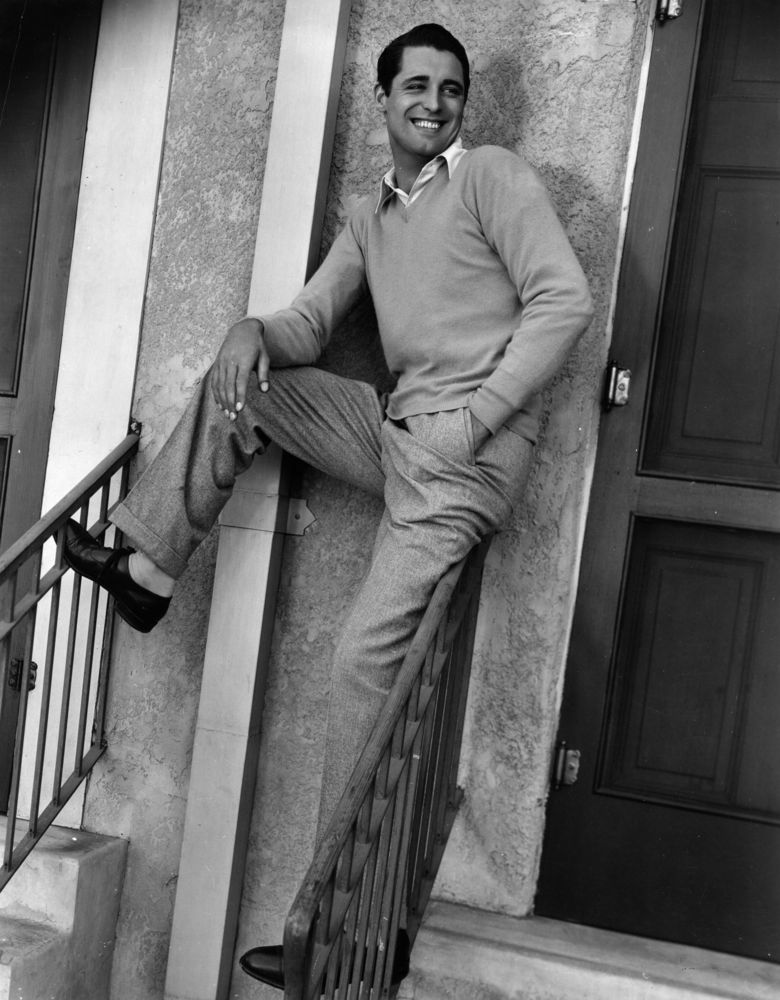
Grant’s personal style was consistent with his on-screen image. Photographs show him in cashmere sweaters, white trousers, loafers — an off-duty look that balanced leisure with polish. He embodied a principle often forgotten in fashion: that style is continuity, the alignment of one’s private and public selves.
Influence and Afterlife
Designers from Ralph Lauren to Tom Ford have cited Cary Grant as an eternal touchstone. His pared-back wardrobe resonates in today’s world of quiet luxury: understated, perfectly cut, and devoid of excess. In an age of fast fashion and flamboyant statements, his style feels more radical than ever.
Grant himself resisted mythologising. “I pretended to be somebody I wanted to be,” he once said, “and finally I became that person.” His greatest role, then, was Cary Grant — a performance of elegance so complete that it became reality.
The Eternal Gentleman
Cary Grant’s style endures because it was never about novelty. It was about fit, proportion, bearing — qualities that outlast trends. He understood that elegance was not display but discretion, not excess but precision. To watch him now is to be reminded that true style is eternal, and Cary Grant remains its most persuasive argument.

Five Style Principles of Cary Grant
- The Grey Suit
– His Glen plaid in North by Northwest is perhaps the most iconic suit in cinema. Neutral, versatile, impeccably cut, it showed how simplicity can become legend. - Continuity Over Fashion
– He wore variations of the same uniform — navy blazers, grey flannels, white shirts. Consistency was his hallmark. - Fit Above All
– Grant insisted on perfect tailoring. Shoulders, cuffs, and trouser break were always exact. The result: clothes that never distracted from the man. - Leisure with Elegance
– Off-duty, he favoured lightweight knits, white trousers, and loafers — a Riviera ease that felt polished, never sloppy. - Persona as Style
– His greatest accessory was himself: posture, voice, wit. Cary Grant proved that style is inseparable from the way one carries a suit, a sweater, or a simple white shirt.
Five Films to Watch for Cary Grant’s Style
- North by Northwest (1959)
– The Glen plaid suit: tailored perfection, iconic across every scene, from Madison Avenue to Mount Rushmore. - To Catch a Thief (1955)
– Riviera elegance: open-neck shirts, lightweight suits, and the ease of Mediterranean glamour opposite Grace Kelly. - Charade (1963)
– Sophisticated outerwear: turtlenecks, slim coats, and eveningwear that matched Audrey Hepburn’s chic. - An Affair to Remember (1957)
– Classic evening style: Grant’s black tie scenes embody timeless romance and urbanity. - Bringing Up Baby (1938)
– Early comic style: tailored suits softened by playfulness, showing how polish could coexist with humor.
Books
- Cary Grant: A Brilliant Disguise by Scott Eyman – A definitive biography.
- Cary Grant: Style Icon by Richard Torregrossa – Focused on his sartorial legacy.
Cultural Legacy
- Ralph Lauren and Tom Ford consistently reference Grant as a muse.
- His cultivated transatlantic accent remains as iconic as his tailoring — a lesson in self-invention and performance of elegance.
TL;DR
Cary Grant authored his own style with discipline and grace. His uniform of perfectly tailored suits, his Riviera casualwear, and his effortless continuity on and off screen created an image of eternal elegance. His greatest role was himself — the eternal gentleman, proof that true style never dates.
 My World of Interiors