
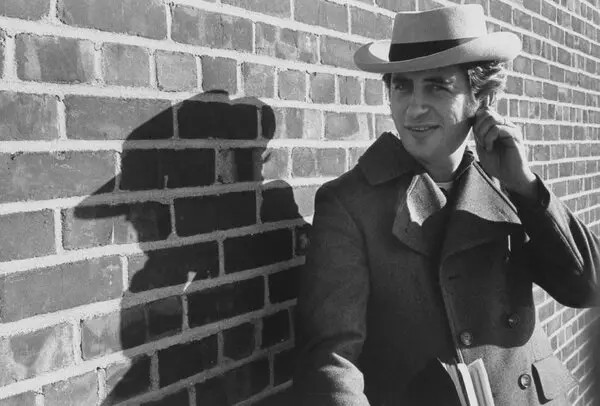
Robert Downey Sr. occupies a singular, unresolved position in American film history. Too unruly for canonisation, too intellectually rigorous for cult marginality, his work resists assimilation into the stabilising narratives of New Hollywood, experimental cinema, or political satire. Yet it is precisely this resistance—formal, ideological, and temperamental—that marks Downey Sr. as one of the most genuinely radical figures in postwar American cinema.
Working largely outside the studio system, Downey developed a body of work that dismantled narrative authority, attacked institutional hypocrisy, and exposed the absurdities of American capitalism with a ferocity unmatched by his contemporaries. His films do not merely critique power; they sabotage it formally, refusing coherence, decorum, or psychological reassurance. What emerges is not chaos for its own sake, but a sustained philosophical inquiry into the mechanisms by which meaning, legitimacy, and hierarchy are produced.
An Anti-Cinema of Intelligence
Downey Sr.’s cinema is often described as anarchic, improvised, or absurdist. These descriptors are accurate, but insufficient. Beneath the surface disorder lies a formidable intelligence—one acutely aware of cinematic language and its ideological uses. Downey understood that classical narrative cinema does not simply tell stories; it trains spectators in obedience, continuity, and emotional compliance. His films operate as counter-instructions.
From Chafed Elbows (1966) onward, Downey rejected conventional plotting in favour of accumulation, interruption, and contradiction. Scenes appear to sabotage one another; performances oscillate between sincerity and parody; the camera behaves less as an observing eye than as an accomplice in mischief. This is not incompetence or amateurism. It is a deliberate refusal of cinematic “good behaviour.”
Downey’s editing strategies in particular anticipate later theoretical critiques of narrative cinema. Meaning is not allowed to settle. Jokes curdle into discomfort; political points are undercut before they can congeal into slogans. The spectator is forced into a position of active interpretation, deprived of the passive pleasures of identification or moral certainty.
Putney Swope and the Satire of American Capital
Downey’s most recognised film, Putney Swope (1969), is frequently mischaracterised as a straightforward satire of advertising culture. In fact, it is far more corrosive. The film does not merely mock the advertising industry; it exposes the structural absurdity of representation itself.
Putney’s accidental rise to power—a Black man elected chairman of a Madison Avenue firm through a procedural loophole—reveals how corporate authority is both arbitrary and performative. Once in charge, Putney’s attempt to impose ethical purity only accelerates the firm’s collapse. Idealism proves as destructive as cynicism, suggesting that the system cannot be morally corrected because it is structurally incoherent.
Formally, Putney Swope embodies its own critique. The famously dubbed voice of Arnold Johnson destabilises identity itself: the protagonist is never fully present, never fully authentic. This disjunction between body and voice mirrors the advertising world’s separation of image and meaning. Downey does not explain this fracture; he enacts it.
The film’s racial politics are deliberately uncomfortable, refusing liberal consolation. Downey offers no redemptive arc, no progressive resolution. Instead, race functions as a stress test for American institutions, revealing their dependence on spectacle, tokenism, and contradiction.
Bodies, Performance, and Disorder
One of Downey Sr.’s most under-acknowledged contributions lies in his treatment of the human body. His actors do not behave “naturally” in the Stanislavskian sense; they perform disruption. Gestures are exaggerated, rhythms unstable, speech erratic. Dance appears unexpectedly, not as expression but as interruption.
These bodily eruptions—such as Paulette Marron’s street dance in Putney Swope—operate as moments of spatial and narrative insubordination. The body refuses its assigned role within the frame. Streets become stages; movement becomes critique. In this sense, Downey anticipates later theoretical work on space and everyday resistance, particularly the idea that subversion occurs not only through speech or ideology, but through bodily practice.
Women in Downey’s films occupy a similarly complex position. They are neither idealised nor marginalised in predictable ways. Instead, they are often agents of disruption—figures who destabilise male authority, narrative progression, and tonal consistency. This refusal to “explain” female presence frustrates easy feminist categorisation but aligns with a broader anti-essentialism in Downey’s worldview.
Downey Sr. and the Limits of New Hollywood
Although often grouped with New Hollywood figures, Downey stands apart from directors such as Scorsese, Coppola, or Altman. Where New Hollywood sought to modernise classical cinema, Downey sought to dismantle it. Where others aimed for psychological realism, Downey pursued epistemological sabotage.
His films lack the tragic grandeur or mythic ambition that allowed some of his contemporaries to be absorbed into the canon. They are smaller, cheaper, messier—and more dangerous. They do not invite reverence. They provoke irritation, laughter, and unease.
This may explain why Downey Sr.’s influence is more subterranean than visible. His legacy is felt not in direct imitation but in attitude: in the refusal to behave, the distrust of polish, the suspicion of narrative closure. Traces of his sensibility appear in later American underground cinema, in certain strains of punk aesthetics, and in contemporary forms of media satire that privilege disruption over persuasion.
Creative Genius Without Resolution
To speak of Downey Sr.’s “creative genius” is not to claim mastery in the traditional sense. His genius lies precisely in his refusal of mastery—of form, of audience, of meaning. He does not resolve contradictions; he preserves them. He does not smooth experience into coherence; he exposes its fractures.
In an era increasingly dominated by algorithmic storytelling, brand-safe transgression, and carefully curated rebellion, Downey Sr.’s work feels newly urgent. His films remind us that true artistic subversion is not a style, but a method—a willingness to risk confusion, failure, and misunderstanding in pursuit of intellectual honesty.
Robert Downey Sr. did not build monuments. He planted explosives. That many of them are still going off is a measure of how deeply he understood the structures he set out to dismantle.
 My World of Interiors