
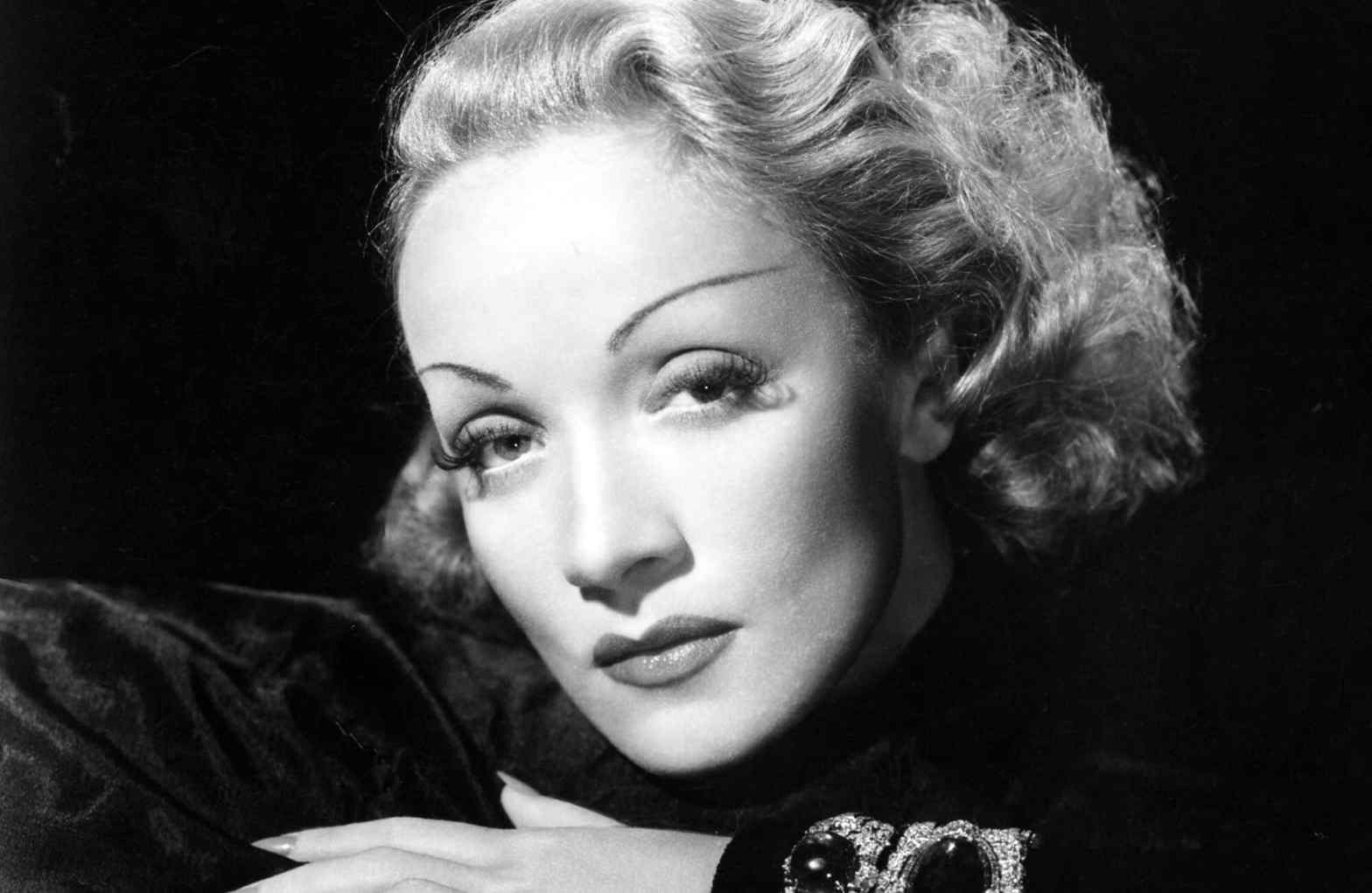
There are movie stars, and then there is Marlene Dietrich—a figure so luminously strange, so disciplined in her myth-making, that she remains less a screen persona than a cultural temperature. To watch Dietrich today is to witness a kind of controlled detonation: the narrowed gaze, the sculptural cheekbones, the drawling wit that lands like a gloved slap. She was a woman who knew the value of her own silhouette, but she was also a woman who understood the geometry of desire—how light, shadow, and suggestion could refract an identity far more potent than biography.

Born in Berlin in 1901, Dietrich became, almost accidentally, one of the great artistic exports of Weimar culture. Yet she was never merely its product. Even in early photographs, her eyes seem to be evaluating the world with a kind of amused suspicion, as if she were already plotting a future much larger than the cabarets and studios that first moulded her. That future would arrive in 1930 with The Blue Angel, Josef von Sternberg’s film in which Dietrich—lounging in a tuxedo, legs crossed, top hat tilted at a precarious angle—emerged fully formed as a new cinematic grammar.
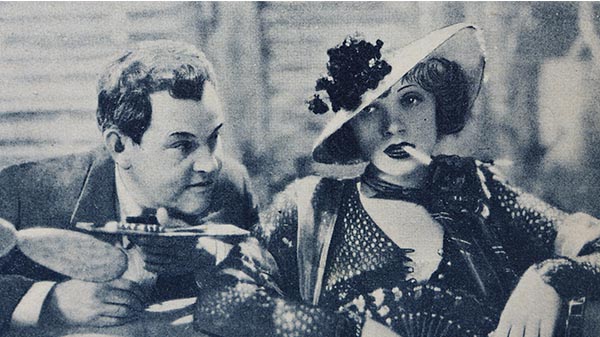
Von Sternberg did not “discover” Dietrich; he refined her, and she collaborated in her own refinement with a level of precision that bordered on the militant. She worked on her lighting, angles, posture, costumes, even the atmospheric density of the smoke that curled around her. Her artistry was not improvisational but architectural. She built the Dietrich myth with the meticulousness of a cathedral, every gesture a deliberate stone in its vaulting.
Yet she was never only the seductress. Dietrich’s aloofness was part of her glamour, but it also shielded something more nuanced: an intellect that refused convention. During the Second World War, when much of Hollywood maintained convenient neutrality, Dietrich made the opposite choice. She became a naturalised American citizen, toured with the USO for the troops, and performed within earshot of German artillery. Her voice—smoky, sardonic, unmistakably her own—became a curious balm for soldiers who recognised that behind every torch song lurked steel.
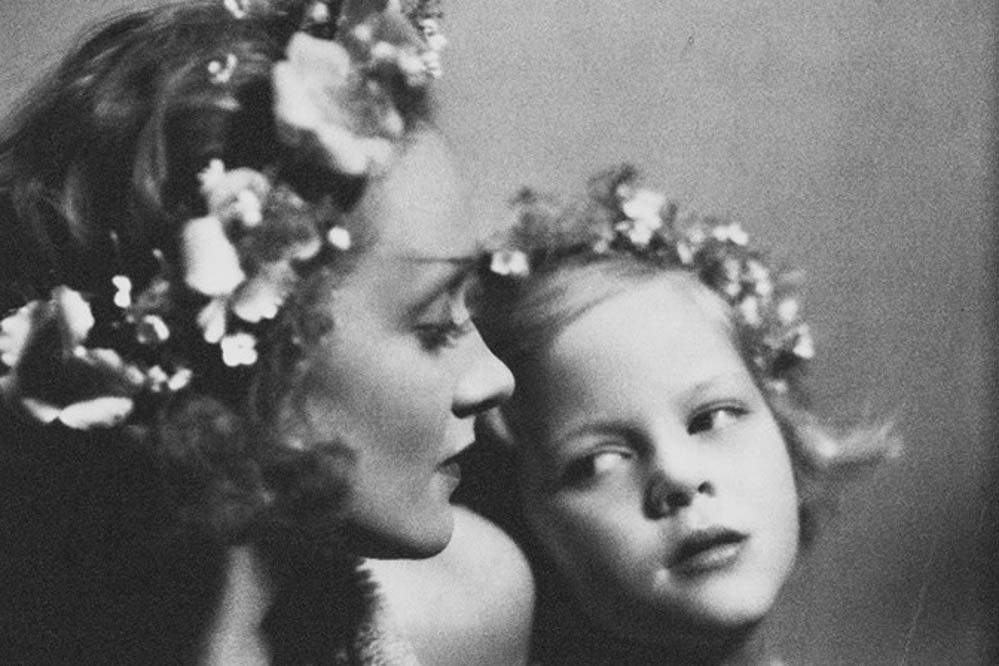
The contradiction at the core of her legend is that she was both untouchable and deeply humane. Her anti-fascist work was not performative but personal. Her rejection of the Nazi regime was absolute, and it cost her dearly in Germany, where propaganda painted her as a traitor. She never returned to live there. What she returned to, instead, was the quiet but enduring allegiance of the queer communities who saw in her gender play a form of liberation long before such language existed.
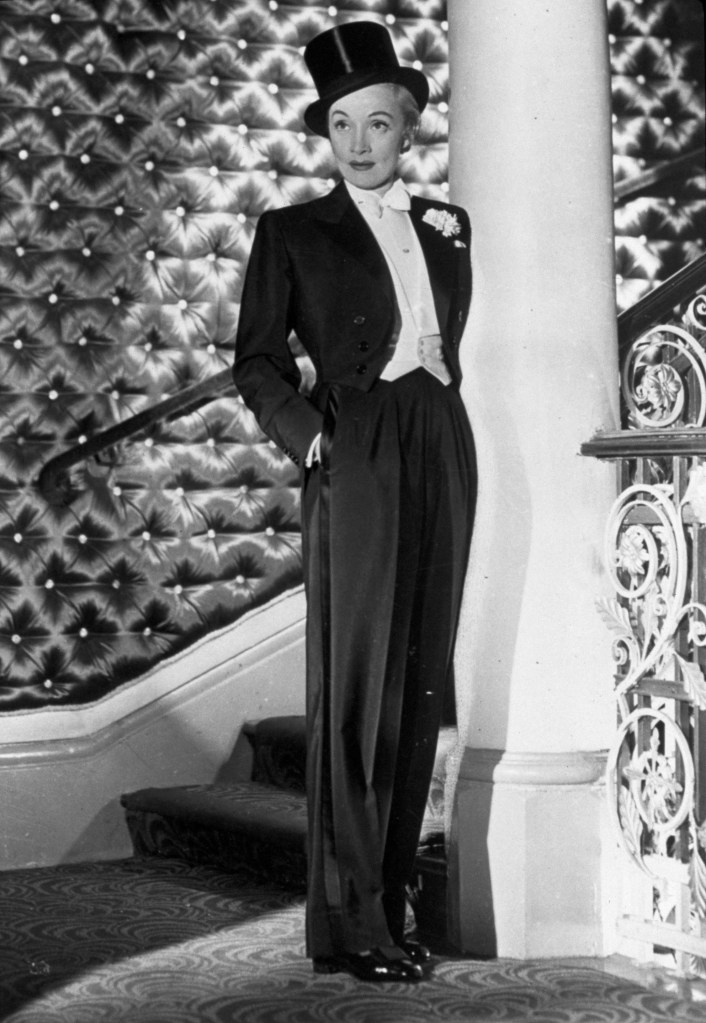
Dietrich’s drag—her tuxedos, her bow ties, her refusal to apologise for masculine chic—was an invitation and a provocation. It dismantled the idea that femininity needed to be soft, or that masculinity needed to be hard. She understood gender as performance decades before scholars would theorise it. And she performed it with the kind of savoir faire that made imitation both pointless and faintly embarrassing.
Her later life, increasingly reclusive, was lived largely behind closed curtains in her Paris apartment. She spent years writing letters, recording voice messages, obsessively editing her own story. For a woman who built her image from shadows, the impulse toward control was both inevitable and touching. When she died in 1992, the world marvelled at her long life, but few were surprised by its fierce privacy.
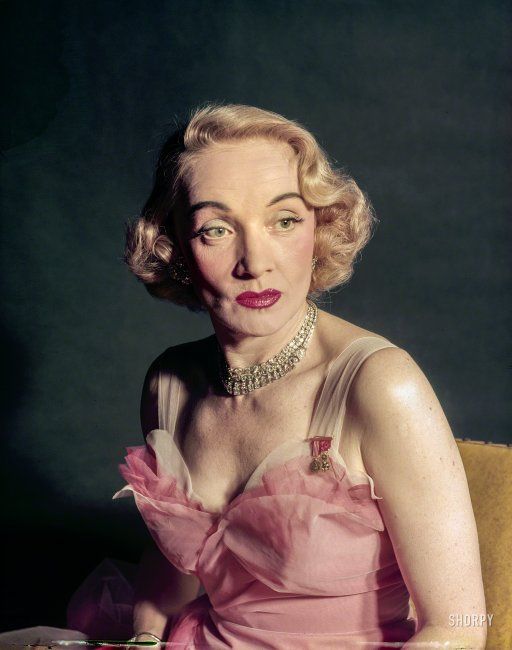
To speak of Dietrich is to speak of the treacherous art of building the self—for the screen, for society, and finally for history. She understood that beauty is ephemeral but mystique is engineered. And she engineered hers with unmatched poise, intelligence, and ambiguity.
In her own wry, whispered way, Dietrich taught us that the border between truth and myth is a very thin line. She walked it in heels—and she never stumbled.
Marlene Dietrich’s Best Films
1. The Blue Angel (1930)
The film that made her an international phenomenon. Lola Lola remains one of cinema’s most hypnotic performances.
2. Morocco (1930)
Dietrich in a tuxedo, kissing a woman, then walking into the desert in heels. A masterpiece of sexual and visual daring.
3. Shanghai Express (1932)
Perhaps the most exquisite of the Sternberg–Dietrich collaborations—baroque lighting, outrageous glamour, and Dietrich at her cool, impenetrable peak.
4. Dishonored (1931)
A romantic spy drama where she plays Agent X-27. Sleek, stylised, and devastating.
5. Destry Rides Again (1939)
Her great comedic turn. A western where she reinvented herself yet again, this time with bawdy humour and grit.
6. Witness for the Prosecution (1957)
A brilliantly controlled performance in Billy Wilder’s courtroom classic—sharply delivered, morally ambiguous, unforgettable.
7. A Foreign Affair (1948)
Dietrich’s Berlin performance—acidic, elegant, and historically resonant—anchored this postwar satire.
Marlene Dietrich — Her Life in Years
1901 — Born Marie Magdalene Dietrich in Berlin-Schöneberg.
1920s — Works in cabaret, theatre, and silent film; cultivates her signature androgynous style.
1930 — Breakthrough in The Blue Angel; moves to Hollywood.
1930–1935 — Creates the iconic Von Sternberg film cycle, becoming one of Hollywood’s defining faces.
1937 — Declines lucrative offers from the Nazi regime; leaves Germany for good.
1939 — Becomes a US citizen.
1944–1945 — Tours with the USO; performs for Allied troops near front lines.
1950s — Reinvents herself as a global concert performer, dazzling audiences with her disciplined glamour.
1960s–1970s — Continues stage work while increasingly withdrawing from public life.
1980s — Lives in near-total seclusion in Paris, communicating largely through letters and telephone.
1992 — Dies in Paris at age 90; buried in Berlin at her own request.
Legacy — A pioneer of gender play, anti-fascist activism, cinematic modernism, and the art of self-invention.
 My World of Interiors