

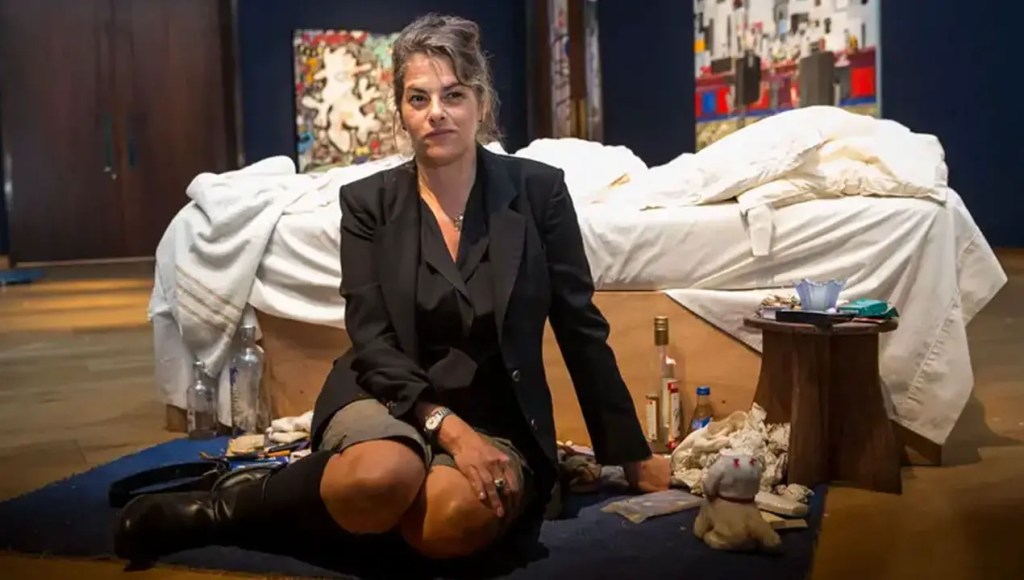
Tracey Emin has always been more than the enfant terrible of the Young British Artists. Emerging in the 1990s as one of the central figures of Cool Britannia, she became a cultural lightning rod: provocative, confessional, uncompromising. Her work — from the notorious My Bed (1998) to her searing neon texts — has often been reduced to scandal or sensationalism. Yet, with distance, it is clear that Emin’s greatest achievement lies not in shock, but in her creation of an artistic language where vulnerability itself becomes a form of strength.
The 1990s: Art and Cool Britannia
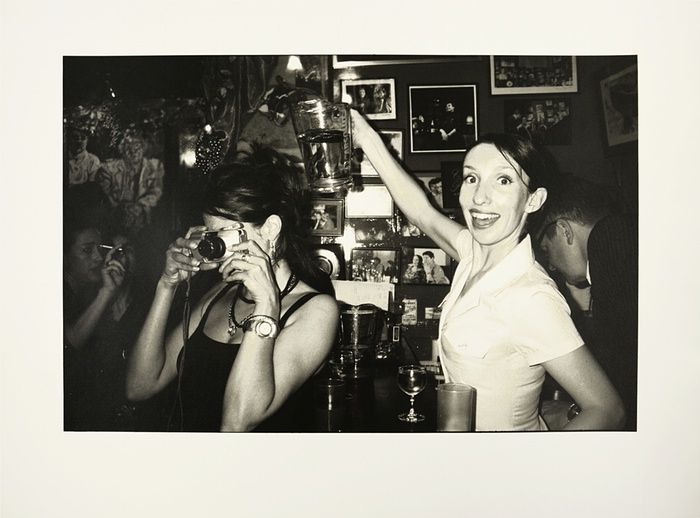
In the heady years of 1990s Britain, when Oasis ruled the airwaves and Britpop optimism seeped into politics and art, Emin embodied the raw, unvarnished edge of the moment. Alongside Damien Hirst, Sarah Lucas, and others, she was part of the Young British Artists who redefined what art could look like in a media-saturated age.
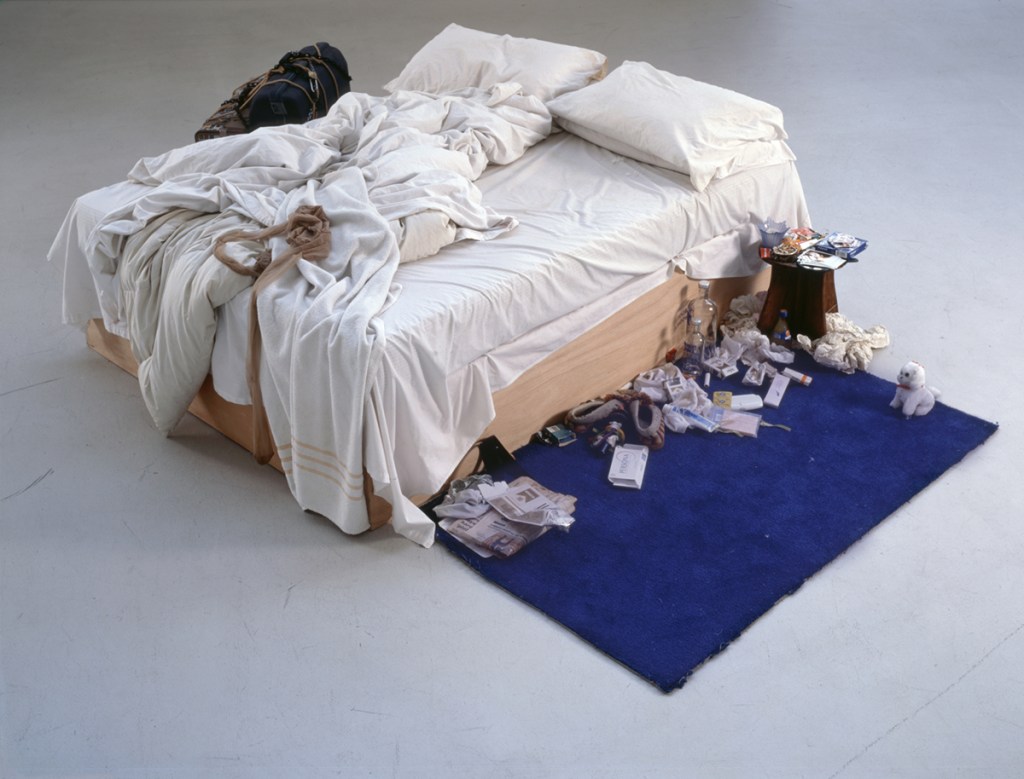
Her breakthrough works — Everyone I Have Ever Slept With 1963–1995, a tent appliquéd with names, and My Bed, shown at the Turner Prize exhibition in 1999 — were deeply personal, blurring autobiography and installation. They shocked, but also spoke with unusual intimacy. Where others sought irony, Emin offered confession.
Feminist Confessionalism
What distinguished Emin then, and continues to now, is her insistence on autobiography as valid art. She mined her own life — sexual histories, abortions, heartbreaks, alcoholism — and turned them into installations, drawings, videos, and texts. Critics often debated whether it was “art” or “therapy,” but for audiences, her work resonated because it was fearless in its honesty.
This confessional mode placed Emin within a lineage of feminist artists such as Louise Bourgeois, Carolee Schneemann, and Cindy Sherman, yet her aesthetic — messy, immediate, emotional — felt unmistakably her own.
Beyond the Shock
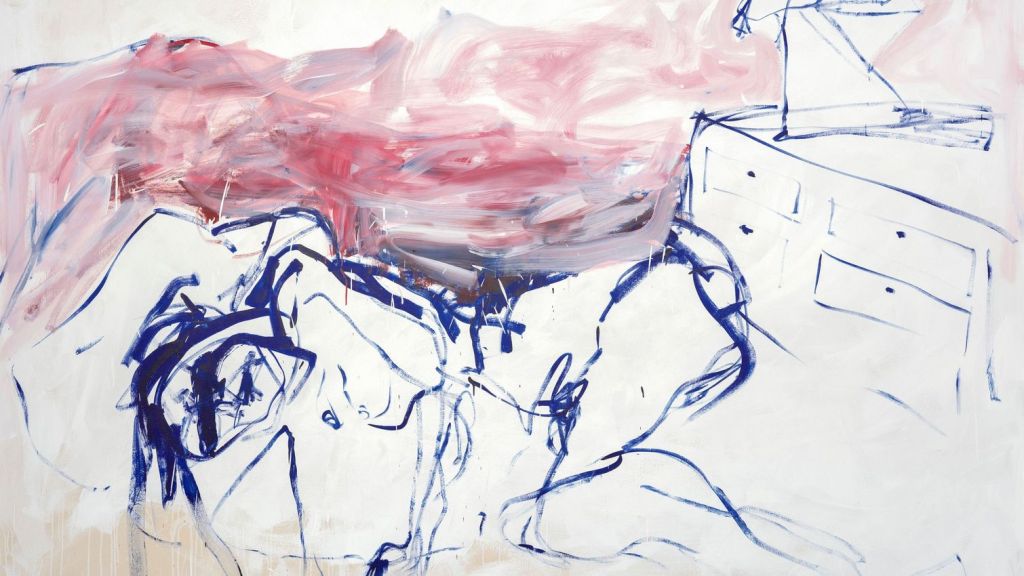
Over time, Emin’s art matured into quieter but no less powerful forms. Her neon works, with phrases like You Forgot to Kiss My Soul or I Want My Time With You, are simultaneously intimate and universal. Her paintings and sculptures, particularly in the last decade, have shown her return to the body, rendered with a raw, gestural energy that recalls Expressionism.
Recognition has followed. In 2011, she was appointed Professor of Drawing at the Royal Academy, one of the first women to hold the position. In 2020, she faced a life-threatening battle with cancer, which has only deepened the poignancy of her recent work, much of it reflecting on mortality and survival.

Legacy and Influence
Tracey Emin’s legacy is not only about her individual works but about the space she carved out for honesty in contemporary art. She shifted the boundaries of what could be shown in a gallery: messy beds, intimate histories, fragile emotions. In doing so, she created permission for future generations of artists to embrace subjectivity without apology.
From the swagger of Cool Britannia to the introspection of her later years, Emin’s journey mirrors the cultural arc of Britain itself — from the exuberance of the 1990s to the more fractured, reflective 21st century.
Tracey Emin: Key Works
- Everyone I Have Ever Slept With 1963–1995 (1995) – A tent appliquéd with names, destroyed in the 2004 Momart warehouse fire, but legendary in impact.
- My Bed (1998) – A Turner Prize entry, both reviled and celebrated, now a canonical piece of late 20th-century art.
- The Last Thing I Said to You is Don’t Leave Me Here (1999) – Film installation, layering intimacy with performance.
- Neon Works (2000s–present) – Iconic handwritten light sculptures, poetic and confessional.
- The Mother (2022) – Monumental bronze sculpture unveiled in Oslo, reflecting her late style’s focus on endurance and the maternal.
Where to See Emin Now
- Tate Britain, London – Home to My Bed and other key works in the permanent collection.
http://www.tate.org.uk - Saatchi Gallery, London – Longtime supporter of the Young British Artists, often featuring Emin in major surveys.
http://www.saatchigallery.com - The Royal Academy of Arts, London – Emin is a Royal Academician and former Professor of Drawing; her work regularly features in exhibitions.
http://www.royalacademy.org.uk - MUNCH, Oslo – Her monumental bronze sculpture The Mother stands permanently by the fjord outside the museum.
http://www.munchmuseet.no - White Cube Gallery, London – Emin’s primary gallery, which showcases her latest works in neon, painting, and sculpture.
whitecube.com
TL;DR
Tracey Emin’s work continues to resist easy categorisation. It is deeply personal yet publicly resonant, scandalous yet tender, fragile yet enduring. From Cool Britannia to her present-day role as elder stateswoman of British art, she has remained committed to telling her truth — a truth that is jagged, luminous, and profoundly human.
Her legacy lies not only in the art objects themselves, but in the courage to insist that life — in all its messiness — belongs at the centre of art.
 My World of Interiors